REVIEW · PARIS
Paris and Parisians During WWII | Private Walking Tour
Book on Viator →Operated by MY PRIVATE PARIS · Bookable on Viator
Paris during World War II is not just a story of armies and generals. It is also a story of streets, public buildings, political choices, fear, courage, and ordinary people trying to live under Nazi rule. This 2.5-hour walking tour connects those larger events to central Paris, with stops at City Hall, Cité Island, and the Holocaust Memorial.
I like the small group limit of 10 people, since that gives you a better chance to ask questions and hear the guide clearly. I also like the focus on both sides of the period: life under occupation and the French Resistance that helped bring about the Liberation of Paris. The main drawback is the price, $278.09 per person, which is a serious outlay for a walking tour, even with a private group and specialist subject.
In This Review
- Key points to know before booking
- Why this Paris occupation tour matters
- Starting at Saint-Paul Saint-Louis
- City Hall and the political story of occupation
- Cité Island, Notre Dame, and the Holocaust Memorial
- From Nazi occupation to the French Resistance
- What a small private group changes
- Is $278.09 per person fair value?
- Guide style and the importance of Marie
- Who should book this experience?
- Practical details for a smoother walk
- My final take on this WWII walking tour
- FAQ
- Where does the tour begin?
- Where does the tour end?
- How long does the walking tour last?
- How many people can join the group?
- What places are included on the route?
- Is hotel pickup included?
- Can I cancel for a full refund?
Key points to know before booking
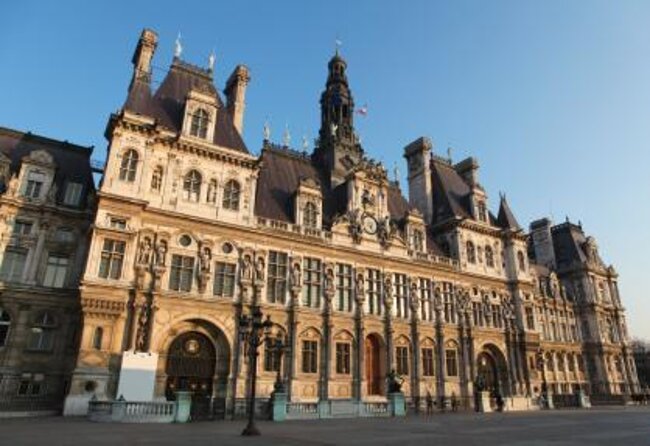
- City Hall brings the political story into focus: You learn about the decisions and events connected with one of Paris’s major civic buildings.
- The Holocaust Memorial adds a solemn human dimension: This is not only a military or political tour, but also a route that addresses persecution and loss.
- The tour covers occupation, Resistance, and liberation: You get a broad view of four difficult years rather than a single narrow theme.
- Groups are limited to 10 people: This suits visitors who want live conversation instead of a large crowd following a flag.
- Guide Marie has earned special praise: She is described as pleasant and expert in Paris, with a style that made the experience memorable.
- The tour starts and ends at Saint-Paul Saint-Louis: You need to make your own way there, and food, drinks, and hotel transfers are not included.
Why this Paris occupation tour matters
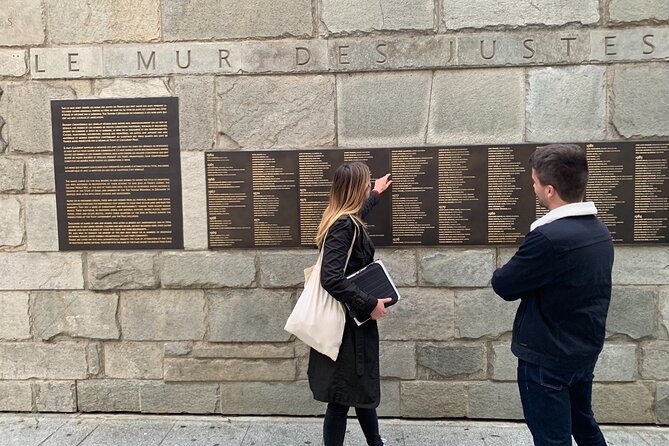
Many Paris tours concentrate on royal grandeur, famous art, or grand avenues. This one asks you to look at the city through a much harder lens. For four years, Paris functioned under Nazi occupation, and the tour explores what that meant for political life, daily existence, resistance, and the eventual return of French control.
I find that approach useful because World War II can feel distant when it is presented only through dates and battle names. A walking tour gives the subject a physical setting. You are moving through central Paris while the guide explains how important events took place in the same civic and historic spaces around you.
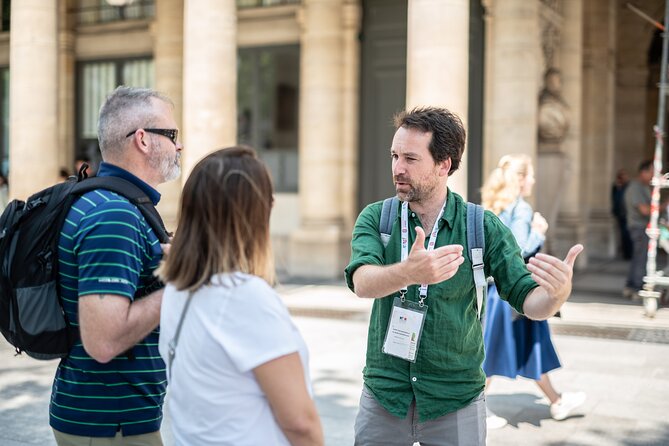
The tour is led by a local English-speaking expert with live commentary. That matters here. A subject this sensitive needs explanation and context, not just a list of plaques or dates. You should expect the guide to connect the places you see with the decisions, experiences, and acts of courage tied to them.
The provider is MY PRIVATE PARIS, and the activity is private, meaning only your group participates. The group can include up to 10 people, so the experience is more intimate than a large public walk, though it is not necessarily a one-to-one tour.
You can also read our reviews of more walking tours in Paris

Starting at Saint-Paul Saint-Louis
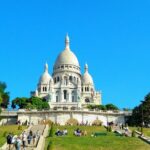
The meeting point is Paroisse Saint-Paul Saint-Louis, at 99 Rue Saint-Antoine in the 4th arrondissement. This is a practical starting place for a tour centered on historic Paris, and it gives you a fixed location that is easy to identify before the walk begins.
You will need to arrive independently. Hotel pickup and drop-off are not included, and no food or drinks are provided. Plan accordingly, especially if you are scheduling the walk close to lunch or dinner.
Because the tour lasts about two and a half hours, comfortable shoes are sensible. The route takes place on foot in central Paris, and the exact pace can depend on the group, the guide’s explanations, and the amount of discussion.
I would arrive with a few minutes to spare. A private tour works best when the group begins together, and a late arrival could cut into the time available for questions and interpretation.
City Hall and the political story of occupation
One of the listed stops is the City Hall of Paris, where political decisions took place. This gives the tour a strong civic focus. Instead of treating the occupation only as something imposed from outside, the discussion can address how power operated in Paris and how political choices shaped life in the city.
City Hall is also a useful place to consider the difference between a city’s public identity and the reality of occupation. Paris remained a functioning city, but that did not mean life continued normally. The guide’s role is to explain the tension between official decisions, control, compliance, and resistance.
I like this stop because it offers more than a photo opportunity. The building becomes a way to understand the political side of the period, including the forces that helped shape the city before liberation.
The value of the stop will depend heavily on the guide’s storytelling. That is one reason the small group matters. With only your group taking part, you can ask for clarification if a political term, event, or name is unfamiliar.
Cité Island, Notre Dame, and the Holocaust Memorial
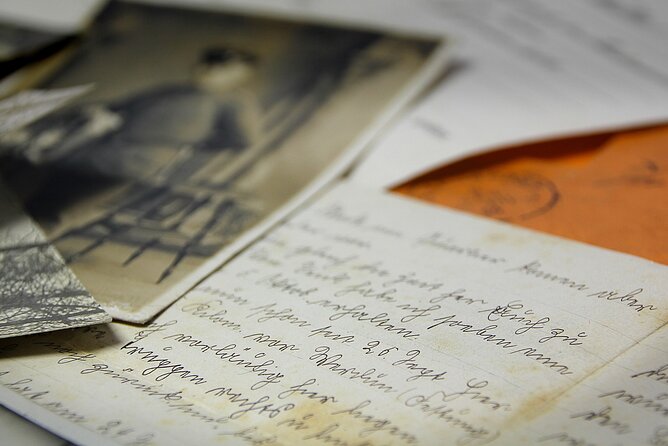
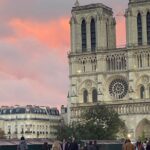
The route also goes to Cité Island, near Notre Dame. This places the tour in one of the best-known parts of central Paris, but the subject changes the way you look at the area. The route is not simply a walk past a famous cathedral. It uses the setting to discuss war, occupation, and the people affected by Nazi persecution.
The Holocaust Memorial is a particularly serious part of the experience. Its presence broadens the tour beyond military conflict and political change. You are asked to consider the human cost of the period, including the victims of Nazi persecution and the memory preserved in Paris.
I appreciate that this stop keeps the tour from becoming a polished story about heroic resistance alone. The Resistance and the Liberation of Paris are important themes, but they belong beside the suffering, fear, and loss experienced during the occupation.
You should also be prepared for a reflective tone here. This is not a light sightseeing walk, and the memorial may feel emotionally weightier than the other stops. That is a strength for visitors who want an honest account, but it may not suit someone looking for a casual introduction to Paris.
From Nazi occupation to the French Resistance
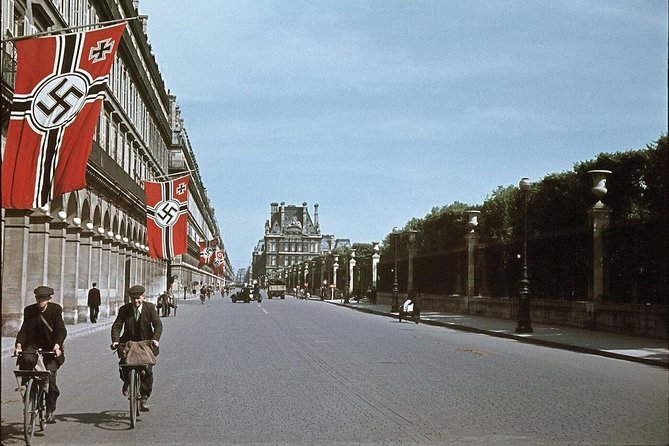
The tour promises an overview of what life was like under four years of Nazi occupation. That broad period matters because occupation was not one single event. It affected public life, personal choices, political authority, and the way people moved through their own city.
The guide also discusses the French Resistance. This lets you see how opposition developed and how different forms of courage contributed to the eventual defeat of Nazism in France. The tour then moves toward the Liberation of Paris, giving the story a clear arc from occupation to freedom.
I like this structure because it avoids presenting the Resistance as a separate legend detached from daily life. The most useful tours show how ordinary city spaces could become connected to political action and personal risk.
At the same time, you should keep your expectations measured. The walk lasts about 150 minutes and includes only a small number of named stops. It can give you a well-shaped overview, but it cannot cover every battle, resistance network, political figure, or wartime memorial in Paris.
You can also read our reviews of more private tours in Paris





What a small private group changes
A maximum of 10 people is one of the strongest practical features. You are less likely to lose the guide’s voice in street noise, and the guide can respond to questions without turning every pause into a long delay.
The private format gives you another advantage: your group shares the experience. If you are traveling with family or friends, you can discuss difficult points together and ask for explanations that match your interests.
That does not automatically make the tour better for everyone. If you are traveling alone, the per-person cost may feel high. If you prefer the energy of a large public tour or want the lowest possible price, this will not be the economical choice.
The description also notes group discounts. Since no discount amount is provided, check the final price for your party before booking. For a full group of 10, the cost may make more sense when divided among several people, but you should still compare the total with other private walking tours.
Is $278.09 per person fair value?
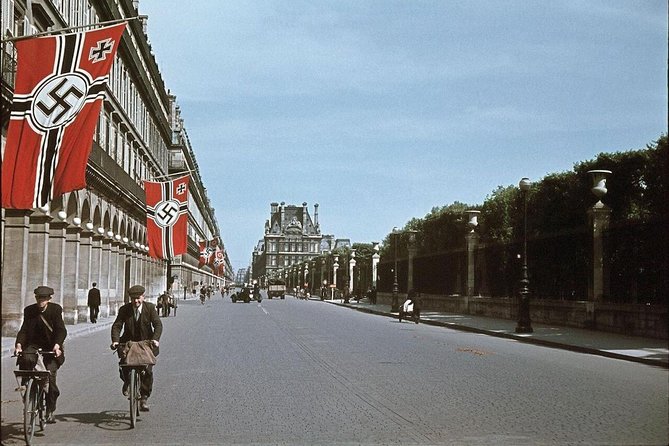
At $278.09 per person, this is an expensive walking experience. The price is not paying for meals, transport, entry tickets, or hotel service. Its value comes from the private format, the specialist subject, the English-speaking guide, and the time set aside for live explanation.
I would judge the price by your interest in the topic. If World War II in France is central to your Paris visit, a focused guide can save you the work of piecing together scattered sites and background on your own. You are paying for interpretation and conversation rather than physical extras.
The cost is harder to justify if you only have a passing interest in wartime history. Paris offers many free public spaces connected with the period, and a general history walk may cover more landmarks for less money.
The strongest value comes when several people share the private booking and want a serious, personal discussion. It is also more appealing if you have already seen the major tourist sights and want a different way to understand central Paris.
Guide style and the importance of Marie
The guide is a key part of this experience. One named guide, Marie, received especially warm praise for being extremely knowledgeable and pleasant, and for making the walk memorable. I would take that as a useful sign that the experience can feel personal rather than stiff or purely academic.
The guide is described as a history enthusiast with live comments throughout the tour. That means you should expect spoken explanation while walking, not an audio guide or a self-guided route.
No individual guide is guaranteed in the information provided, so you should not book on the assumption that Marie will lead your group. Still, her strong mention gives you a clear idea of the kind of guide the provider aims to offer: well prepared, friendly, and able to make a difficult subject engaging.
For this particular topic, personality matters. A guide needs to be clear without making suffering feel like entertainment. The best moments should help you understand the choices and pressures of the time while keeping respect for the victims and survivors.
Who should book this experience?
I would recommend this tour to visitors who want:
- A focused look at Paris during the Nazi occupation
- More attention to the French Resistance and Liberation
- A serious visit to the Holocaust Memorial
- A private walk with no more than 10 people
- A chance to ask questions directly
- A different subject from the usual art, food, and royal tours
It is a good fit for adults, students, history enthusiasts, and families with older children who can engage with difficult material. The activity notes that most participants can take part, but it does not promise a fully step-free route or describe the walking distance in detail.
I would be more cautious about booking it for very young children. The subject includes Nazi persecution, the Holocaust, and life under occupation, so the tone may be too heavy for children who are not ready for that discussion.
This is also not the best choice if you want a relaxed stroll with plenty of free time for photos. The live commentary is the main event, and the historical subject deserves your attention.
Practical details for a smoother walk
The tour lasts approximately two hours and 30 minutes. Since you are walking through central Paris, wear shoes you can comfortably use for that length of time and keep your schedule free enough that you do not need to rush away at the end.
The walk begins and ends at the Saint-Paul Saint-Louis meeting point. You should not expect a hotel transfer, a meal stop, or included refreshments, so handle those needs before or after the tour.
Mobile ticketing is available, which makes the booking easier to keep on your phone. Confirmation is normally provided at booking, but reservations made within seven days of the tour may receive confirmation within 48 hours, subject to availability.
Service animals are allowed, and the meeting point is near public transportation. The activity states that most people can participate, but if you have specific mobility needs, confirm the route details before paying.
Free cancellation is available until 24 hours before the local start time. If you cancel later, the payment is not refunded, and changes made within that same 24-hour window are not accepted.
My final take on this WWII walking tour
I would book Paris and Parisians During WWII if you want a serious, place-based introduction to occupation, resistance, and liberation, and if you value a private guide enough to pay a premium. The City Hall stop gives the story a political center, while Cité Island and the Holocaust Memorial add a more personal and solemn side.
I would skip it if your main goal is a low-cost overview or a broad sightseeing route. The price is high, the tour has a limited number of stated stops, and the subject can be emotionally difficult.
For the right visitor, though, this is a thoughtful way to see central Paris differently. You leave the usual postcard view behind and pay attention to the choices, suffering, and courage that shaped the city during one of its darkest periods.
FAQ
Where does the tour begin?
The tour begins at Paroisse Saint-Paul Saint-Louis, 99 Rue Saint-Antoine, 75004 Paris, France.
Where does the tour end?
The activity ends back at the meeting point.
How long does the walking tour last?
The tour lasts approximately two hours and 30 minutes.
How many people can join the group?
The group is capped at 10 people. It is a private activity, so only your group participates.
What places are included on the route?
The listed stops include the City Hall of Paris and Cité Island near Notre Dame. The experience also includes the Holocaust Memorial.
Is hotel pickup included?
No. Hotel pickup and drop-off are not included.
Can I cancel for a full refund?
Yes. You can cancel for a full refund if you do so at least 24 hours before the experience start time. Cancellations made less than 24 hours before the start are not refunded.