REVIEW · PARIS
Paris: 2-Hour Orsay Museum Masterpieces Guided Tour
Book on Viator →Operated by City Wonders Ltd · Bookable on Viator
Two hours. One of Paris’s best museums. This guided Musée d’Orsay experience is a fast, smart way to see major Impressionist works (and the stories behind them), with reserved admission that keeps your day from turning into museum line chaos. I love the focus on masterpieces tied to artists and ideas, and I also love that you get headsets when needed so your guide’s explanations don’t get swallowed by the crowd.
The one possible catch: hearing can vary depending on where you stand and how the guide speaks, and headset setup can take a few minutes at the start. If you’re sensitive to audio or are hard of hearing, plan to get close early and don’t be shy about asking for a louder volume.
In This Review
- Key highlights to know before you go
- Orsay in 2 hours: what this guided format really gives you
- Finding your meeting point near 5 Rue de la Légion d’Honneur
- Reserved entry: the value of skipping the door-stress
- Inside Musée d’Orsay: how the Impressionist highlights get explained
- Renoir, Degas, Monet: why these artists matter in one route
- Van Gogh and the Arles connection: spotting meaning beyond the label
- The “2 hours” reality: time management inside a crowded museum
- Headsets and group size: choosing the right comfort level
- Pacing and photo time: what you can expect in the galleries
- Who this tour fits best (and who might want a different plan)
- Price and value: does $71.20 make sense for Orsay?
- The small snags to plan around before you go
- Should you book this Musée d’Orsay 2-hour masterpieces tour?
- FAQ
- How long is the Musée d’Orsay 2-hour guided tour?
- What is the price per person?
- Is the tour in English?
- Where do I meet the tour?
- Where does the tour end?
- Is museum admission included?
- Are headsets provided?
- How big are the groups?
- Does the tour include hotel pickup or drop-off?
- What’s the cancellation policy?
Key highlights to know before you go
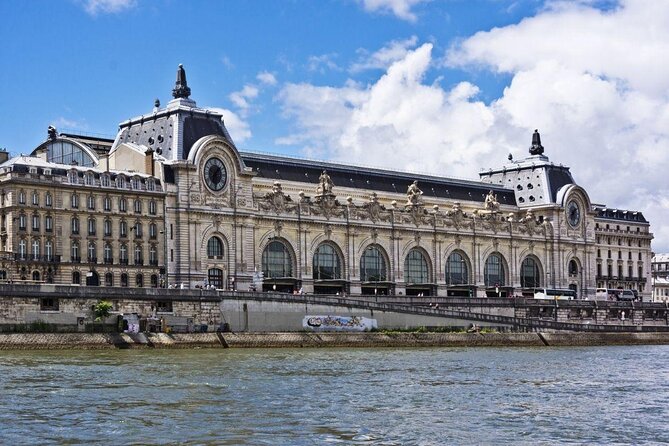
- Reserved entry means you’re not gambling on tickets or wasting time at the door
- English-speaking art historian guides connect paintings to the period and the artists’ lives
- Impressionism spotlight includes big names like Renoir, Degas, Monet, and even Van Gogh’s Arles connection
- Headsets when necessary help you hear your guide clearly in busy galleries
- Small-group options are available, with a capped maximum group size
- You end at the Orsay rather than being marched to another stop
Orsay in 2 hours: what this guided format really gives you
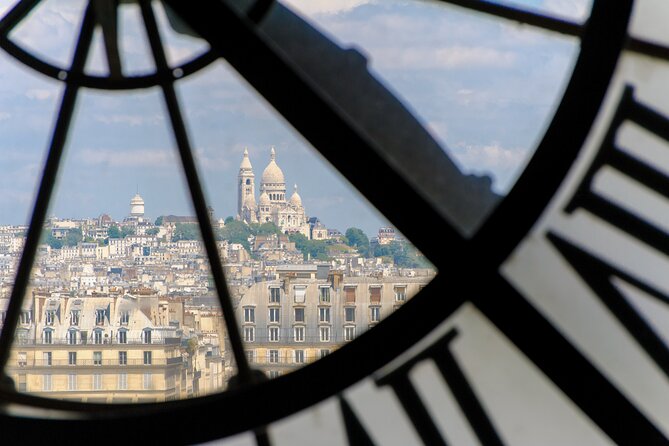
The Musée d’Orsay is one of those places where you can easily do it wrong. You either wander alone, miss key works because you’re pulled in 12 directions, or you stare at art without the context that makes it click. This tour is designed to solve the second problem fast: you get a curated path with an expert who explains what matters and why it mattered at the time.
I like the way the tour isn’t just a checklist of famous paintings. The emphasis is on the artists and the Impressionist shift—how brushwork, subject matter, and even the public reaction were part of the story. That turns your visit from I saw a painting into I understand what changed.
The other practical win is time. At Orsay, “we’ll just go see a few things” turns into a half-day plan in a flash. With a 2-hour guided route, you get momentum and structure. You can still stay after the tour to wander on your own, but you’ll leave with a better sense of where to look next.
You can also read our reviews of more guided tours in Paris



Finding your meeting point near 5 Rue de la Légion d’Honneur
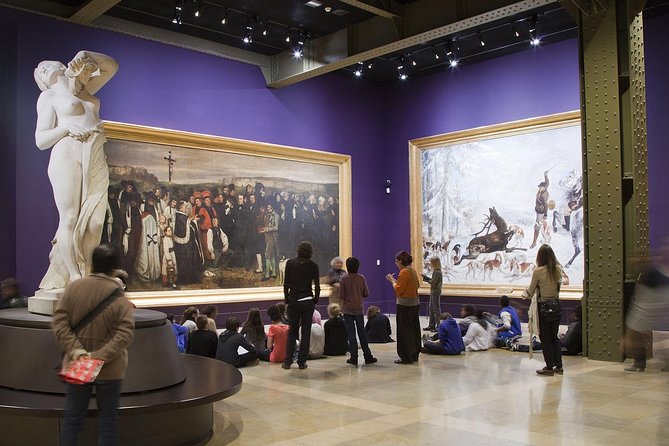
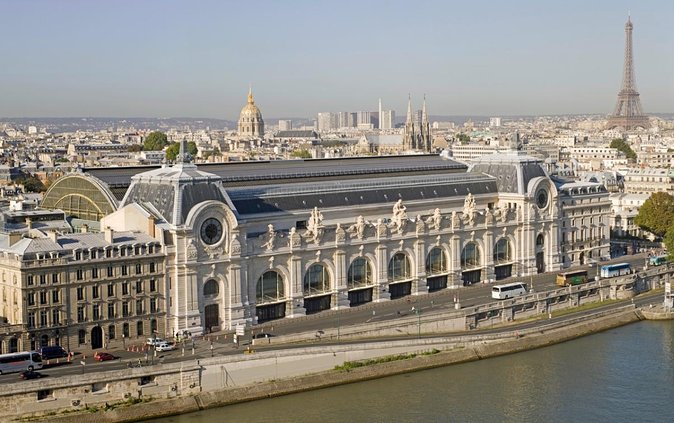
You start at 5 Rue de la Légion d’Honneur, 75007 Paris, and the tour ends at the Musée d’Orsay Esplanade Valéry Giscard d’Estaing. That’s useful because it anchors your day: you’ll start just outside the museum area rather than chasing instructions across multiple streets.
Here’s the practical advice: show up early. Even when the instructions are good, Orsay’s entrances can be packed, and groups can tangle up in the same bottleneck. One recurring frustration in this kind of tour is not the museum itself, but the human moment of finding the right guide. I’d rather you feel slightly early than suddenly rushed.
I recommend you:
- Arrive 10–15 minutes before your start time
- Have the meeting address handy on your phone
- If there’s a lot going on, look for your group’s color/branding or any staff marker (not just the general crowd)
Reserved entry: the value of skipping the door-stress
A huge chunk of the Orsay experience is logistics. The museum is popular, and when it’s busy, even a short delay at the entrance can snowball into a late start and a shorter gallery experience than you planned.
This tour includes entrance ticket and reservations fee, so you’re pre-booked. That matters because it lets your guide get moving instead of working around ticket lines. In the same 2 hours, that can be the difference between seeing a handful of masterpieces and actually getting a sense of the museum’s flow.
Think of reserved entry as the tour’s “quiet superpower.” It’s not flashy, but it makes your visit feel smoother.
Inside Musée d’Orsay: how the Impressionist highlights get explained
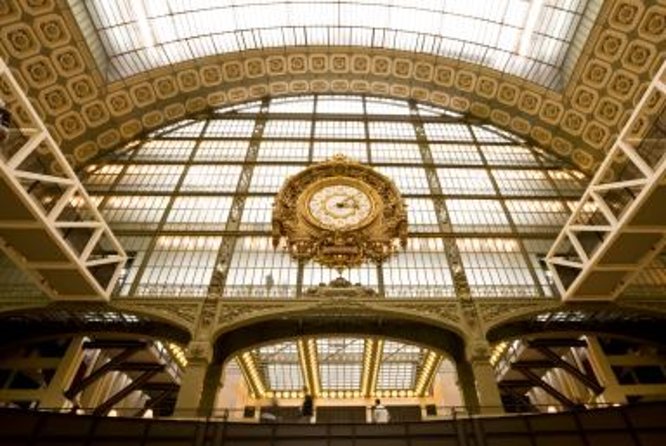
Orsay’s core strength is 19th-century art—especially Impressionism and its surrounding currents. This tour leans hard into that. You’ll learn about the period through the museum’s standout holdings, including the world’s largest collection of Impressionist paintings (as described for this experience).
What I like about the guide’s approach is how it ties technique to reaction. The tour doesn’t treat brushstrokes as decorative details. It frames them as something the public questioned at the time. That gives you a sharper eye when you’re standing close to the canvas.
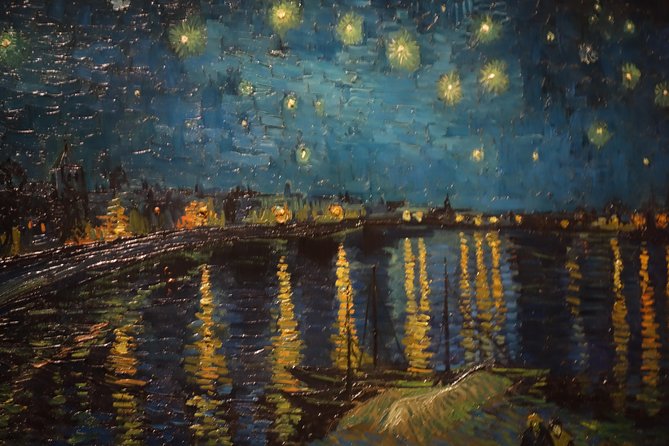
During the tour, you’ll cover works by French masters such as Renoir, Degas, and Monet, with time spent on famous scenes and what they say about Paris life. There’s also a useful way the tour handles national and artistic context. Van Gogh was Dutch, but his Starry Night is presented here in a France-linked way—connected to his depiction of Arles and the Rhône. It’s a reminder that Impressionism-era art didn’t stay inside one country’s boundaries.
And yes, the tour aims to get you close enough to notice real paint texture. When you can see individual strokes and how they build form, the art stops being a flat image and starts being physical.
Renoir, Degas, Monet: why these artists matter in one route
If you’ve ever left a museum thinking you saw a lot of “famous stuff” but didn’t know what you were looking for, this is where the guided format helps most.
Renoir is highlighted with Dance at Le Moulin de la Galette, a scene that captures a Sunday afternoon in Montmartre. Instead of treating it as a pretty snapshot, the guide’s job is to connect what you see—people, light, movement—to the era’s style shift.
Degas and Monet fit in because they represent different angles of the same revolution. Impressionism isn’t one look. It’s a way of seeing. You’ll get that sense from how the tour moves through works tied to French everyday life and changing artistic priorities.
One advantage of staying with a plan is that you don’t waste time arguing with yourself about what to see first. Your guide’s choices are meant to build a storyline. By the time you hit the bigger centerpiece works, you’re already primed to notice the right things.
You can also read our reviews of more museum experiences in Paris





Van Gogh and the Arles connection: spotting meaning beyond the label
Orsay isn’t only Impressionists in the strictest sense. That’s part of what makes it satisfying. This tour brings in the kind of cross-current connections that help you read the period as a whole.
For example, the tour frames Van Gogh’s Starry Night as a representation of the French city of Arles, overlooking the Rhône. That framing matters because it changes how you interpret the painting’s mood and setting. You’re not only thinking about famous stars; you’re thinking about place.
You may already know the headlines about Van Gogh. What this tour helps with is noticing how Orsay’s curatorship places works and ideas next to each other, so you can spot the conversation between artists.
The “2 hours” reality: time management inside a crowded museum
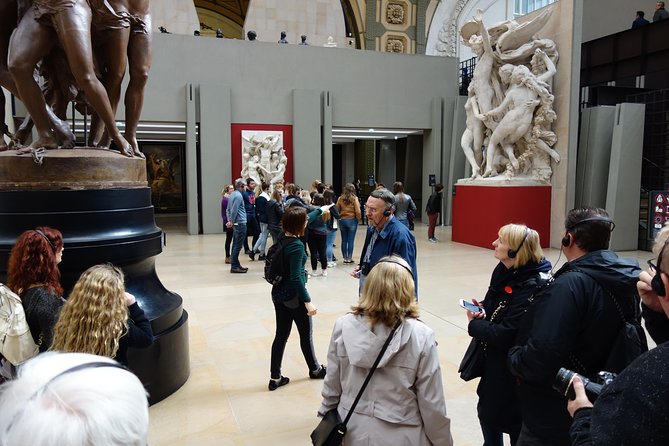
In theory, you’re in the museum with your guide for about 2 hours, and the tour includes admission. In practice, that time has to cover setup moments—getting everyone gathered and sorting headsets.
Some people love the audio system because it makes hearing effortless in large rooms. Others find that if the headsets aren’t sorted fast, the start feels a little slow. That’s normal for small-group audio tours, especially when the museum is busy and everyone arrives at slightly different moments.
Here’s how to make it work for you:
- Be ready when the group starts moving
- Don’t wander off to take photos until your headset is confirmed and you know the next stop
- If you’re near the end of the group, stand a little closer after the first stop so you can track the guide
When the pacing works, you end up with that rare win: you see the highlights without feeling like you got rushed.
Headsets and group size: choosing the right comfort level
This experience uses headsets when necessary, which is a big deal in a museum where people naturally talk and move around. When audio works well, it changes everything—you can hear art-history explanations without turning your head toward the guide every 10 seconds.
Group size is also part of the comfort equation. The tour offers small-group options (including a format capped at 6 people or fewer if you choose that option), and there’s also a larger-group option with an overall maximum listed at 20 travelers.
If you prefer quieter interaction or lots of questions, you’ll probably feel better in the smaller option. If you just want a strong overview and don’t mind a bit less back-and-forth, the standard group size is usually fine.
Also keep in mind: a couple of people had hearing problems when a guide spoke too softly or the volume wasn’t clear enough. That doesn’t mean the tour is broken; it means you should take control—ask for adjustments and stand where you can hear naturally.
Pacing and photo time: what you can expect in the galleries
A good guided museum tour doesn’t bully you through. It gives you enough breathing room to actually look, then gives you the story behind what you’re seeing.
The positive pattern in this experience is that the guide keeps a pace that feels manageable, with time for questions and opportunities to take pictures. That matters because Orsay is visually intense. If you’re racing, you only catch fragments. If you slow down just enough, the masterpieces start to look like real objects rather than images you’ve seen online.
If you’re the type who wants to linger with one painting for a long time, the tour might feel like it passes quickly. But that’s where the smart strategy comes in: use this tour to get your bearings, then stay afterward to see what grabbed you.
Who this tour fits best (and who might want a different plan)
This is a great fit if you:
- Want a guided overview of Impressionism without doing the research homework first
- Like learning the meaning behind brushwork and subject choices
- Appreciate reserved entry so you can focus on art, not lines
- Prefer an English guide with headsets in busy rooms
It may be less ideal if you:
- Are very sensitive to audio issues and can’t tolerate imperfect headset sound
- Need a lot of silent time and don’t want a guide speaking continuously
- Get frustrated in crowded indoor spaces where group logistics can feel tight
Also, if your art style is hyper-specific—like you only care about one artist—this tour might feel broad. Still, it can be useful as a map. You’ll know what you should return to.
Price and value: does $71.20 make sense for Orsay?
$71.20 for a 2-hour guided experience can sound high until you compare what you’re actually buying.
You’re getting:
- A reserved ticket component (so you’re not losing time at the door)
- An English-speaking art historian guide
- A route designed to hit the most important pieces
- Headsets when necessary to make the explanations audible
In other words, you’re paying for time-saving and meaning-making. Orsay without guidance can be beautiful, but it’s easy to leave with a vague feeling of having seen “a lot.” With guidance, you leave with a clearer idea of what you saw and why it mattered.
If you’re in Paris for a short window and Orsay is a priority, this price often feels fair. If Orsay is more of a “maybe,” then you might choose a lower-cost strategy—like independent entry and a focused self-guided route.
The small snags to plan around before you go
No tour is perfect. A few recurring issues showed up in the overall feedback pattern for this type of experience, and it’s smart to plan for them.
Possible snags:
- Hard to hear if you get farther from the guide or if speaking is too soft
- Headset setup delays at the start can shorten in-gallery time
- Guide positioning can be awkward if the presenter turns away from the group
- Meeting point confusion can happen in a crowded entrance area
The easiest fix for most of these is simple: arrive early, keep your headset on once it’s sorted, and be vocal if something’s wrong with audio. You’re paying for a guided experience; it’s reasonable to expect you can hear it.
Should you book this Musée d’Orsay 2-hour masterpieces tour?
If Orsay is on your must-see list, I’d book it—especially if you want Impressionism explained with real attention to technique and period context. The reserved entry alone helps, and the guide-led route keeps you from wandering past the best parts while you’re busy trying to figure out where to look.
I would choose this tour if:
- You want a strong overview in a short time
- You’ll benefit from an English guide and headsets
- You like seeing the “why” behind famous paintings
Skip or reconsider if:
- You strongly prefer silent museum time
- You know you have trouble with audio headsets and can’t adjust volume
- You’re the kind of visitor who only cares about one narrow slice of the museum
If you do book it, take advantage of the setup time: get your headset sorted quickly, position yourself where you can hear, and treat the tour like a map. Then stay afterward and revisit the works that made you stop.
FAQ
How long is the Musée d’Orsay 2-hour guided tour?
It runs for about 2 hours.
What is the price per person?
The price is $71.20 per person.
Is the tour in English?
Yes, the tour is offered in English.
Where do I meet the tour?
You meet at 5 Rue de la Légion d’Honneur, 75007 Paris, France.
Where does the tour end?
It ends at the Musée d’Orsay Esplanade Valéry Giscard d’Estaing, 75007 Paris, France.
Is museum admission included?
Yes. The entrance ticket and reservations fee are included.
Are headsets provided?
Yes, headsets are provided when necessary so you can hear your guide.
How big are the groups?
The experience lists a maximum of 20 travelers, and it also offers small-group options when selected.
Does the tour include hotel pickup or drop-off?
No. Hotel pickup and drop-off are not included.
What’s the cancellation policy?
You can cancel for a full refund up to 24 hours before the experience start time.