REVIEW · BAYEUX
Omaha Morning Half Day Tour to visit the landing areas at Omaha Beach
Book on Viator →Operated by OVERLORDTOUR · Bookable on Viator
A quiet morning with loud history. This half-day Normandy tour focuses on the exact landing-area terrain at Omaha Beach, then pairs it with two of the most moving memorial stops in the region. If you want a fast, clear understanding of D-Day without spending the whole day on the road, this format is built for you.
I love how the tour turns the battle into something you can actually see, using maps and period photos to explain the sectors and strongpoints before you walk the shoreline. I also love the balanced pacing: you get guided context, then enough time to take it in at each stop. One thing to consider: it’s a morning-only schedule, so if you want deep layering (more stops, more time per site), you may end up wishing you had booked a full day.
In This Review
- Key Points to Know Before You Go
- Starting from Place du Québec: Your Bayeux Morning Advantage
- 4 Hours, 3 Stops: How the Timing Really Works
- Omaha Beach Strongpoints (WN 62, WN 65, WN 73) and the Terrain You’ll Actually See
- Normandy American Cemetery: 172.5 Acres of Honor and Quiet
- Pointe du Hoc: The 100-Foot Cliff and the Rangers’ Story
- What You Get for the Money (and What You’ll Bring Yourself)
- How to Dress, Plan, and Choose This Tour for Your Trip
- Should You Book the Omaha Beach Landing Areas Morning Tour?
- FAQ
- FAQ
- Where does the tour start and end?
- What time does the tour begin?
- How long is the Omaha Beach landing areas tour?
- How many people are in the group?
- Is the tour in English?
- What’s included in the price?
- What should I bring since food and drinks aren’t included?
- Is free cancellation available?
Key Points to Know Before You Go
- Small group (up to 16 people): easier questions and a calmer feel at solemn sites.
- Landing-area strongpoints at Omaha Beach: you’ll visit specific WN emplacements across American landing sectors.
- Stop-by-stop structure: Omaha Beach, the American Cemetery, then Pointe du Hoc, all within about four hours.
- Maps and photographs with the guide: the terrain and timelines make more sense when explained clearly.
- Free admission at the stops: helps the value if you’re budgeting tightly.
Starting from Place du Québec: Your Bayeux Morning Advantage
This tour begins in Bayeux at Place du Québec (Pl. du Québec, 14400 Bayeux) at 8:20 am, and you’ll end back at the same meeting point. The big practical win is that you’re not starting from a far-flung hotel zone or needing a complicated meet-up. Bayeux is also ideal for a Normandy first-timer because it’s walkable and easy to orient yourself.
Another smart perk: the tour departs from Place du Québec, which makes it simple to add the Bayeux Tapestry before or after your morning. Even if you only have a short window, that location choice can save you time and stress.
There’s no hotel pickup or drop-off listed, so you should plan your own route into Bayeux early. If you’re staying in or near the center, this kind of start is usually painless. If you’re staying farther out, factor in travel time the morning of.
A few more Bayeux tours and experiences worth a look

4 Hours, 3 Stops: How the Timing Really Works
At about four hours total, this is designed to hit the core D-Day highlights without turning your day into a long bus ride. The schedule is compact enough that it tends to work well for people with limited time, a busy travel plan, or those who want “the main story” first and deeper exploration later.
Each stop includes time on the ground, with the itinerary allocating around 40 minutes at Omaha Beach and around 40 minutes at the American Cemetery, plus time for Pointe du Hoc. That structure matters because it avoids the two extremes: either rushing past everything, or spending so long at one place that you lose the bigger picture.
Also, with a maximum of 16 travelers, you’re more likely to hear details clearly and get answers without the group getting chaotic. It’s still a tour, so you’ll move as a unit—but it’s the kind of small group that usually feels respectful at memorial sites.
Omaha Beach Strongpoints (WN 62, WN 65, WN 73) and the Terrain You’ll Actually See
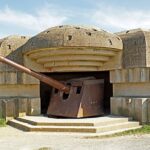
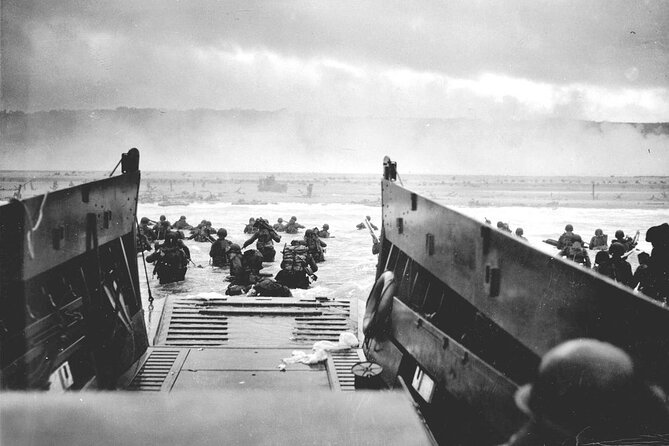
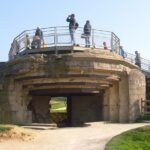
This is the heart of the experience: you’ll visit the landing-area emplacements known as WN (Wiederstandnest) strongpoints. These weren’t random bunkers scattered around the beach—they were defensive positions designed to make the assault extremely costly.
The tour focuses on WNs stretching from Sainte-Honorine-des-Pertes to Vierville, and it specifically plans stops at:
- WN 62 and WN 65 in the American landing sectors (Fox Green and Easy Red)
- WN 73 in Dog Green at Vierville
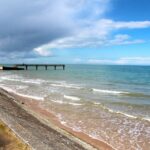
What makes this valuable is that it connects “what happened” to “where it happened.” From a visitor perspective, Omaha Beach can feel like a long shoreline with tragic scale. But once you understand the strongpoint logic—where the defenders could concentrate fire, where the attackers had the hardest time getting traction—the beach starts to tell a more precise story.
You’ll also get the larger operational picture: this assault was assigned to US V Corps under General Gerow. The force listed for Force O included the 1st Infantry Division, the 29th Infantry Division, the Rangers, and several attached units. Even if you don’t memorize every unit name, knowing this helps you understand why the plan required multiple units at once—and why gaps and delays mattered so much.
A realistic consideration: Omaha Beach is outdoors, and strongpoints are uneven terrain. Wear shoes you’re happy to walk in for a while. In colder months, bring layers; in rainy weather, pack a waterproof outer layer and expect the experience to be more about resilience than comfort.
Normandy American Cemetery: 172.5 Acres of Honor and Quiet
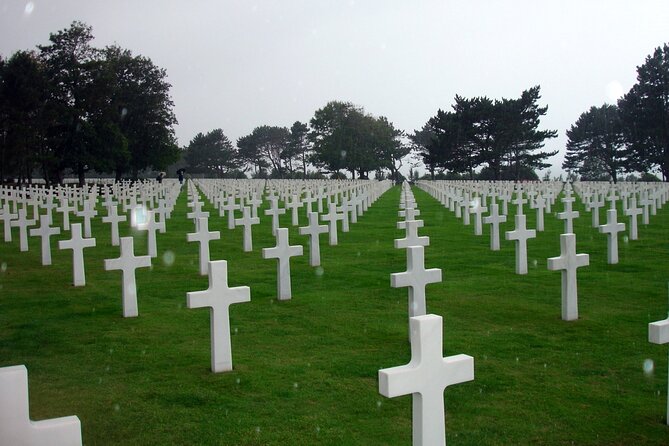
After the beach, you move to a very different kind of site: the Normandy American Cemetery (near Colleville). This cemetery covers 172.5 acres and is one of fourteen permanent American World War II cemeteries built on foreign soil.
The scale is hard to grasp until you’re there. The cemetery contains the remains of 9,387 servicemen and women. That number is important because it turns the experience from “a beautiful memorial” into something more human: thousands of people who didn’t come home.
What I appreciate about putting this stop after Omaha Beach is the change in tempo. The beach is about movement and impact; the cemetery is about stillness and consequence. The tour description frames it as a place with honor, peace, and serenity—and that tone matters. Your guide’s job here isn’t to loud-talk over the setting. It’s to help you focus on what you’re seeing.
Expect to spend about 40 minutes here. That’s enough time to read key sections, notice the layout, and step away from the group for personal reflection without feeling rushed. If you’re the type who likes a minute to just stand and absorb, this is one of those stops where that works.
Pointe du Hoc: The 100-Foot Cliff and the Rangers’ Story
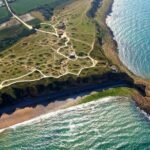
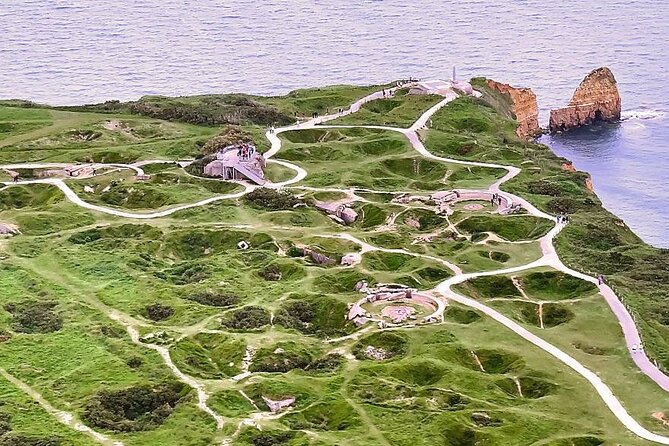
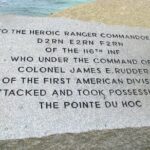
Pointe du Hoc is located about eight miles west of the cemetery, and it’s framed as a monument created by France to honor elements of the 2nd Rangers Battalion under LTC James E. Rudder. This is where the narrative leans into one of the most dramatic parts of the Normandy story: the cliff.
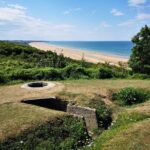
You’ll hear that the Rangers scaled a cliff estimated at 100 feet. That’s the sort of detail that’s easy to treat like trivia when you read it, but much harder to ignore when you stand near the monument and look at the height and the terrain.
The historical anecdote shared in the tour description also helps you feel the stakes. An intelligence officer, Admiral Hall, was skeptical and suggested the Rangers couldn’t do it. Rudder’s reply to General Bradley is described as a firm promise that his Rangers could carry out the task.
That combination—real geography plus real mission pressure—makes the stop hit harder than it might on paper. It’s also a good contrast to Omaha Beach. Omaha is about a massive assault across wide space; Pointe du Hoc is about a targeted strike that depended on nerve, timing, and climbing a near-vertical obstacle.
You’ll get about 40 minutes at each main stop, so at Pointe du Hoc you’ll have enough time to take photos, read the monument information, and—most importantly—connect the story to what your eyes can judge on the spot.


What You Get for the Money (and What You’ll Bring Yourself)
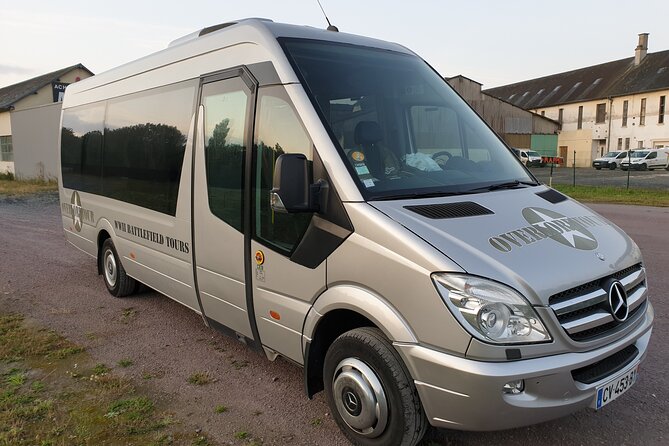
At $118.56 per person for about four hours, the value here is mostly about direction and access. You’re paying for a local guide, planning, and the structure that gets you from site to site without you having to figure out sequencing on your own.
The stops also list admission ticket free, which helps. When major memorial sites don’t require extra pay, your budget stretches further toward the parts that really cost money—food and drinks.
What’s not included is equally important:
- No food or drinks are included
- No hotel pickup/drop-off
That means you should plan a water strategy and a snack mindset, especially if you’re traveling with kids or you tend to get hungry early. Even if it’s just an outdoor morning, a bottle of water and something small to eat can keep the pace comfortable.
Also, because you’re starting at 8:20 am, you might be glad you packed breakfast or bought something quickly in Bayeux before you meet the group. The tour runs in English and uses a mobile ticket, so make sure your phone battery is ready for check-in.
Finally, this tour is offered by Overlordtour and has a listed maximum of 16 travelers, which is a big part of what you’re paying for—quiet, orderly time at the sites, and a guide who can keep up with questions.
How to Dress, Plan, and Choose This Tour for Your Trip
This is a great option if you’re trying to do Normandy justice but your calendar is tight. The half-day format is ideal for:
- first-timers who want the clearest “DDay highlights” sequence
- people staying in the Bayeux area
- anyone who prefers a guided explanation at the key moments, then quiet time afterward
- history-minded travelers who want maps and photos to connect the dots
It may be less ideal if you’re the kind of person who needs lots of walking and lots of time at each stop to read every sign slowly. The schedule is efficient. You’ll see the essentials—but it’s not built to be a slow, self-paced museum experience.
Weather is a real factor. Normandy mornings can shift fast, and the tour happens outdoors. The guides have been able to manage rain situations by keeping things workable, but your best move is to show up ready with layers and waterproof gear.
One small but practical tip: bring a light folder of questions. With a smaller group, it’s easier to ask for clarifications like why certain strongpoints were prioritized, how the sectors relate to the assault routes, or what the Rangers’ mission timing depended on.
Should You Book the Omaha Beach Landing Areas Morning Tour?
If you want a high-impact D-Day introduction in one morning, I’d book it. The strongest reason is simple: you get the landing-area story with specific strongpoints (WN 62, WN 65, WN 73), then you transition to two memorial stops that help you feel the meaning of what you just learned.
This is also the right choice when you’re trying to balance emotion, context, and time. The compact schedule respects your day, but the guide-led explanation and the built-in quiet at sites keep it from feeling like a checklist.
If you have the time for a fuller day, a longer itinerary can let you go slower and see more. But if your goal is to understand Omaha Beach quickly—and do it with a thoughtful guide and manageable group size—this half-day tour is a strong match.
FAQ
FAQ
Where does the tour start and end?
The tour starts at Place du Québec (Pl. du Québec, 14400 Bayeux) and ends back at the same meeting point.
What time does the tour begin?
The start time is 8:20 am.
How long is the Omaha Beach landing areas tour?
It runs for about 4 hours (approx.).
How many people are in the group?
This tour has a maximum of 16 travelers.
Is the tour in English?
Yes, it’s offered in English.
What’s included in the price?
A local guide is included. The tour also lists admission ticket free for the main stops.
What should I bring since food and drinks aren’t included?
The tour does not include drinks or food, so plan to bring water and a small snack, especially since it’s a morning start.
Is free cancellation available?
Yes. You can cancel up to 24 hours in advance for a full refund.