REVIEW · BAYEUX
Normandy American & British DDay Beaches Halfday Tour from Bayeux
Book on Viator →Operated by GoldBeachCompany · Bookable on Viator
Five hours. Four D-Day stops that hit hard. This half-day tour from Bayeux is a practical way to see the places that shaped June 6, 1944, with a guide who connects the history to what you’re actually looking at. You get round-trip transport in a small air-conditioned minivan, plus an English-speaking guide to keep the story clear and respectful.
I especially like how the logistics are easy: a centrally located meeting point, a comfortable ride, and drop-off back at your starting spot. I also love the emotional center of the route, especially the American cemetery overlooking Omaha, where the guide helps you notice the details you’d otherwise miss. The one drawback to think about is that this is a packed half-day, so you may have less time to wander on your own than you hoped—especially at the cemetery and on the beaches.
Even with the tight timing, this tour works well if you want a focused hit of Normandy without committing to a full day in the car.
In This Review
- Key highlights in plain English
- Price and logistics: a half-day that doesn’t waste your time
- Omaha Beach: start where the day began
- The American cemetery at Colleville-sur-Mer: where details matter
- Longues-sur-Mer Atlantic Wall battery: how the fortifications worked
- Mulberry port vestiges and the tide problem Britain had to solve
- Guides and pacing: what you can realistically expect
- What to wear (and what to bring) for respectful beach time
- Who this tour suits best
- Should you book this Normandy D-Day half-day tour?
- FAQ
- What time does the tour start?
- How long is the tour?
- Where does the tour meet in Bayeux?
- Does the tour include lunch?
- What sites do we visit?
- Is the tour offered in English?
- Is free cancellation available?
- Is there a group size limit?
Key highlights in plain English
- Small group, max 8 people: easier questions and calmer walking than big buses
- Omaha Beach first: you start at the heart of the American landing sector
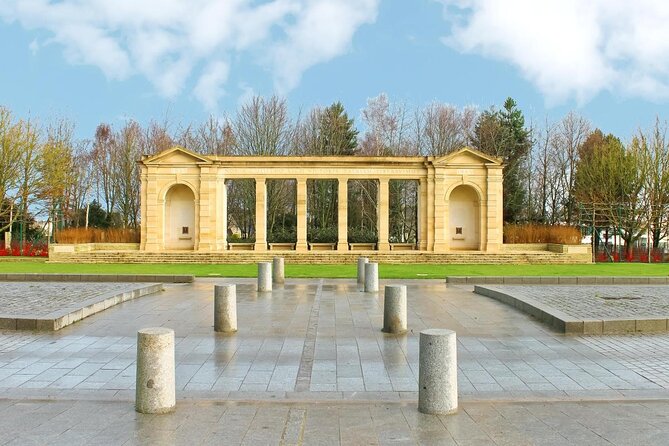
- Colleville-sur-Mer American Cemetery: time for reflection with guide-led context
- Longues-sur-Mer Atlantic Wall battery: you see how a German fortification was built and used
- Mulberry port vestiges: a real engineering story, tied to Normandy’s extreme tides
Price and logistics: a half-day that doesn’t waste your time
This is a 5-hour tour that runs roughly from 1:00 pm. You meet at Place du Québec in Bayeux, and the tour ends back at the same meeting point. That matters, because Normandy day trips can turn into a game of “where exactly do we wait?” The meeting spot here is set, and the rhythm stays tight.
The transport is part of the value. You’re in an air-conditioned minivan for round-trip service, and the group size caps at 8 travelers, which keeps it personal and manageable. You don’t need to rent a car or figure out parking, and you avoid the stress of stitching together multiple sites on your own.
The price is $114.93 per person. For Normandy, that’s not cheap, but it does cover three things that cost time and energy if you DIY: guided interpretation, door-to-meeting-point transport, and access to a route that makes sense for a half-day. The trade-off is that you’re not getting an unhurried day with long free wandering—this is designed to fit several major WWII stops into one afternoon.
You can also read our reviews of more tours and experiences in Bayeux.
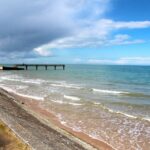
Omaha Beach: start where the day began
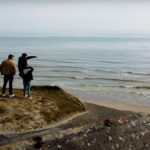
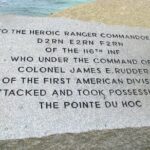
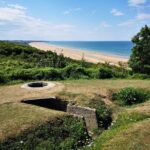
Your first stop is Omaha Beach, in the American landing sector. This is where troops of the 1st and 29th American Infantry Divisions came ashore on June 6, 1944. The tour does not treat Omaha as a generic beach stop. Instead, the guide walks you through the events so the place feels real, not like a movie set.
You get about 45 minutes here. Also, there’s no admission ticket cost listed for this stop. Practical tip: come with good expectations. Omaha is broad and open, but it can also feel abstract if you don’t have the “what happened here” framework. That’s where the guide earns their keep.
One thing to consider is how you’ll feel standing there. Omaha is emotionally heavy, and if you’re the type who likes lots of quiet time, you may wish you had more than 45 minutes. If you’re okay with listening, pausing, and absorbing in shorter bursts, this stop is the strongest anchor for understanding the whole campaign.
The American cemetery at Colleville-sur-Mer: where details matter

Next comes Cimetiere Americain de Colleville-sur-Mer, a cemetery overlooking Omaha Beach. It’s described as extremely rich in symbolism, and that’s exactly how it plays out on the ground: you’re looking out over the same coastline while the scale of loss becomes impossible to ignore.
You’re scheduled for about 1 hour at the cemetery, and admission is also free. The guide’s job here is not just facts. The emphasis is on helping you notice what you’re seeing—names, layout, viewpoints—so the site lands with meaning instead of becoming a checklist stop.
This is the part of the tour where many people feel the day shift from history lesson to something more personal. If you’re visiting Normandy to honor the human cost, this is the stop that tends to do the most work.
Just keep your expectations aligned with the half-day format. You may not get as much unstructured exploring time as you’d like, because the guide will likely share a lot while you’re there. If you love walking slowly without commentary, you may want to follow up on your own later in the day or during another visit.
Longues-sur-Mer Atlantic Wall battery: how the fortifications worked
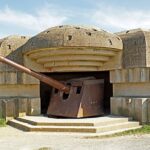
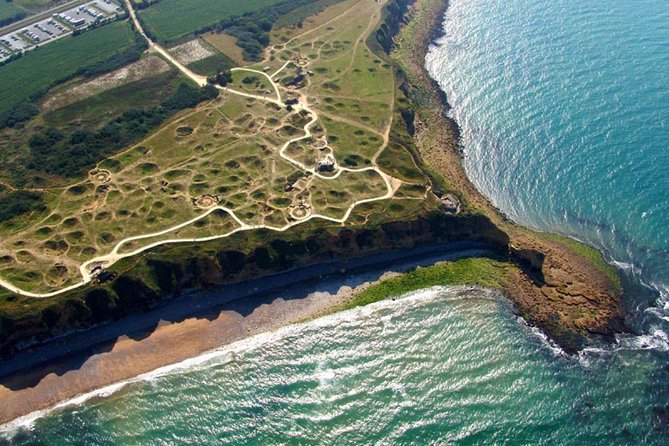
Then you head to Batterie Allemande de Longues-Sure-Mer, on the British sector of Gold. This is one of the best-known symbols of the Atlantic Wall, and it changes the tone. You go from the beach and cemetery—where the story is about men coming ashore—into fortifications built to stop them.
This stop is shorter, around 15 minutes, and it’s also listed as free to enter. In that brief time, the guide focuses on how the battery functions and what you’re looking at, including the original cannons.
Even for such a short visit, it helps you understand why the landings were so hard. The artillery wasn’t random fear tactics. It was engineering and planning—meant to control angles, fields of fire, and timing. You don’t need a technical background to get value here. You just need a guide willing to translate what you’re seeing into plain terms.
Quick practical note: this is a stand-and-look stop. If your ideal tour is lots of wandering, you’ll probably prefer spending more time at Omaha and the cemetery. But as a supporting piece of the story, Longues does a lot in 15 minutes.
Mulberry port vestiges and the tide problem Britain had to solve
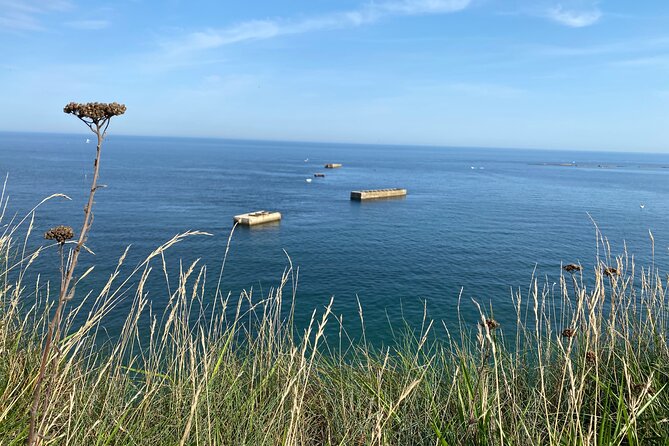
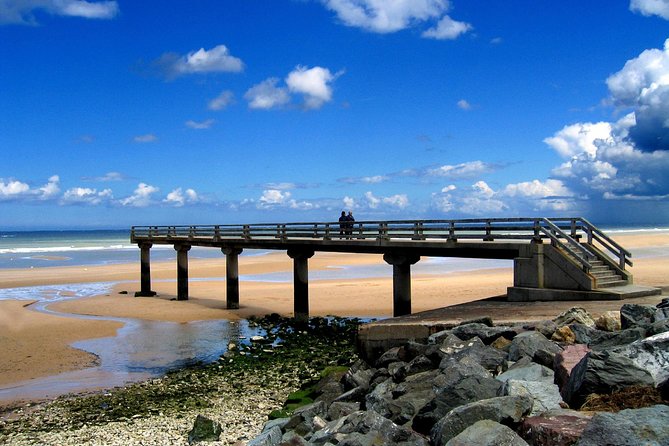
The final stop is Vestiges du Port de Mulberry—the remnants of the floating ports the British engineered for the battle. Normandy is famous for extreme tides, and the point here is simple: getting supplies ashore in the chaos of June 1944 was a serious problem. Mulberry was designed to keep the supply chain moving even when conditions made it difficult.
This stop is also about 15 minutes, with admission free. The guide explains why it mattered: if supplies had been compromised, the outcome could have shifted.
If you’ve only ever heard Normandy described as land-based heroics, Mulberry is the correction. It’s a reminder that battles are won by logistics as much as courage. Seeing the vestiges is one way to understand how engineering and planning worked as force multipliers.
This stop is quick, but it gives you a broader view of the landing’s success—and it pairs well with what you’ve already learned at Omaha.


Guides and pacing: what you can realistically expect

This tour is built for a small group, with a maximum of 8 travelers. That size helps you get answers without shouting across a bus. It also keeps the schedule tight enough that you actually see multiple sectors without spending half your time in transit.
From the guide style described across the route, you can expect a mix of storytelling and on-the-spot explanation. Names that come up in the tour’s guide roster include Philippe, Amandine, Lauren, Thierry, David, Adrian, Marian, and Igor. Different guides bring different rhythms, but the through-line is that they connect what you see to what happened in June 1944.
Pacing is the main thing to watch. The tour includes several short stops (Longues and Mulberry are both about 15 minutes), plus the emotional heavy hitters (Omaha and the cemetery). That means you may spend more time “standing with the group and listening” than “walking freely and wandering.”
If you’re okay with learning in short bursts, you’ll get a lot. If you want maximum quiet time on your own at each site, you might feel compressed.
What to wear (and what to bring) for respectful beach time
The tour lists a formal dress code. That doesn’t mean you need a suit, but do plan to look “put together” rather than sporty beach casual. Normandy weather can also change fast, and you’ll be outside for parts of the tour.
Bring:
- Comfortable walking shoes you can stand in for a while
- A layer for cool wind near the coast
- Water, especially for the 1:00 pm start
- A small notebook or notes app if you like writing down questions for your guide
Also consider this simple strategy: at Omaha and the cemetery, decide ahead of time how you want to use your minutes—listen closely first, then take a short quiet walk afterward. That way the emotional impact doesn’t feel rushed.
Who this tour suits best

This is a strong fit if you:
- Want major D-Day sites without renting a car
- Like guided interpretation more than self-guided driving
- Prefer a half-day that still includes the cemetery and an Atlantic Wall fortification
- Are traveling with people who want clarity and structure, not endless routes
It may be less ideal if you:
- Crave long, unstructured time on your own at each stop
- Know you get impatient with stand-and-listen pacing
- Want the kind of slow, lingering experience where every turn is yours
If you’re doing other Normandy stops on the same trip, a half-day like this can be a perfect backbone. You’ll come away with the framework, then you can return later (or explore nearby sites) with better context.
Should you book this Normandy D-Day half-day tour?
Book it if you want a high-impact route with easy transportation, a tight schedule, and a guide who explains what you’re seeing in plain, human terms. The biggest strength is that it hits the core of the story: Omaha Beach, the American cemetery, the Atlantic Wall battery, and the Mulberry engineering lesson in one afternoon.
Hold off or pair it with something else if you think you’ll need a lot of free roaming time to enjoy these sites. The half-day format means you’ll learn a lot fast, and that’s not the same as drifting through at your own pace.
My practical recommendation: if you have only one afternoon for D-Day beaches from Bayeux, this is a smart choice.
FAQ
What time does the tour start?
The tour starts at 1:00 pm.
How long is the tour?
It lasts about 5 hours.
Where does the tour meet in Bayeux?
You meet at Place du Québec, 14400 Bayeux, France.
Does the tour include lunch?
No. Lunch is not included.
What sites do we visit?
The tour visits Omaha Beach, Cimetiere Americain de Colleville-sur-Mer, Batterie Allemande de Longues-Sure-Mer, and the Vestiges du Port de Mulberry.
Is the tour offered in English?
Yes, it’s offered in English.
Is free cancellation available?
Yes. You can cancel up to 24 hours in advance for a full refund.
Is there a group size limit?
Yes. This tour has a maximum of 8 travelers.