REVIEW · BAYEUX
Historic Bayeux Daily Group City Tour In English 2 hrs (Apr-Sept)
Book on Viator →Operated by Discovery Walks Bayeux · Bookable on Viator
Two hours and Bayeux starts making sense fast. This English walking tour threads together the city’s medieval trades, ancient layers, and modern turning points, with photo-backed storytelling that’s more fun than reading guidebooks. I love how it steers you off the usual checklist so you notice details you’d miss on your own. I also like the pacing: short stops, clear explanations, and a finish in the center so you can keep exploring right after.
One watch-out: it’s mostly standing/walking with no built-in museum time, and there aren’t scheduled bathroom stops, so plan for comfort before you go.
In This Review
- Key Things I’d Highlight Before You Go
- Why This Bayeux English Walk Works So Well in 2 Hours
- Meet at Rue Saint-Jean: How the Tour Sets the Tone
- Rue des Teinturiers and the River Aure: Medieval Work You Can Still Feel
- Allée des Augustines: Where the Bayeux Tapestry Story Starts to Take Shape
- The Arbre de la Liberté: A Single Tree With a Big Political Story
- Cathedrale Notre-Dame: What You’ll Notice from the Outside
- Roman Castrum and Celtic Roots on Rue Léonard Lambert Leforestier
- Place Charles de Gaulle: Liberation Day and a Modern Hero Moment
- What You Actually Get (and Don’t Get) for $24.20
- Logistics That Matter: Shoes, Rain, and Staying Comfortable
- Who This Tour Fits Best (and Who Might Want Something Else)
- How the Guides Bring Bayeux to Life
- Should You Book This Historic Bayeux Walking Tour?
- FAQ
- How long is the Historic Bayeux city tour in English?
- When does this tour operate?
- Is the tour in English?
- Does the tour include museum entry or the cathedral interior?
- Is there a mobile ticket?
- Where does the tour start and end?
- Can I record or tape the guide during the tour?
- How big is the group?
Key Things I’d Highlight Before You Go
- A 2-hour English tour with an enthusiastic guide and a big focus on explanation over sightseeing checkboxes
- Historic Bayeux, not just the big hits: Roman ruins, medieval industry streets, and Revolution clues
- Photo support during the walk, including a binder-style set of visuals used by guides like Christele and Marie-Noëlle
- No cathedral interior and no museums included, so you’re paying for context, not ticketed entry
- Small group size (max 20), which keeps the conversation moving and the tour feeling personal
- Seasonal schedule (March to September), so timing your visit matters
Why This Bayeux English Walk Works So Well in 2 Hours
If your Bayeux plan is short, this is the kind of tour that gives you momentum. You spend the time learning how the pieces fit: older foundations under newer streets, political shifts written into place names, and everyday medieval life hinted at by building types and lanes. It’s not a museum loop. It’s a guided walk that turns the streets themselves into “pages.”
For $24.20 per person, you’re really buying interpretation. The tour includes a “cheerful and informative” commentary with a large photo selection, and it’s designed to make you look twice at what you’re already standing in front of. That’s good value for a first visit, especially if you want to understand Bayeux before you pick which museum tickets to add.
The walking style is the main trade-off. Expect lots of stops and plenty of time on your feet. I’d treat this as a morning or early afternoon activity and keep your evening flexible.
You can also read our reviews of more city tours in Bayeux

Meet at Rue Saint-Jean: How the Tour Sets the Tone
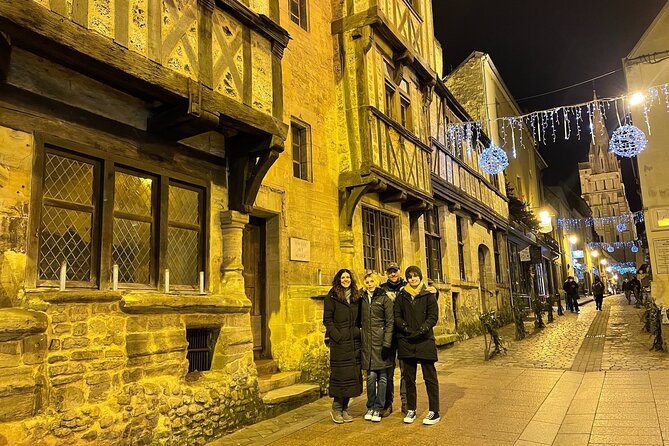
You start at 3 Rue Saint-Jean, 14400 Bayeux, at the meeting point near the tourist office (L’Office de tourisme de Bayeux Intercom area). The first part matters because your guide quickly orients you to the “why” behind the places you’ll see later.
This opening is also where you can feel the tour’s format: frequent orientation points, lots of conversational history, and interactive touches (the guide uses linguistic expressions and local habits as part of the storytelling). That approach helps when you’re learning a lot in a short time. You’re not just getting facts. You’re building a mental map.
If you prefer quiet sightseeing, this won’t be your style. But if you like a guide talking clearly and making history feel human, you’ll likely enjoy the pace.
Rue des Teinturiers and the River Aure: Medieval Work You Can Still Feel
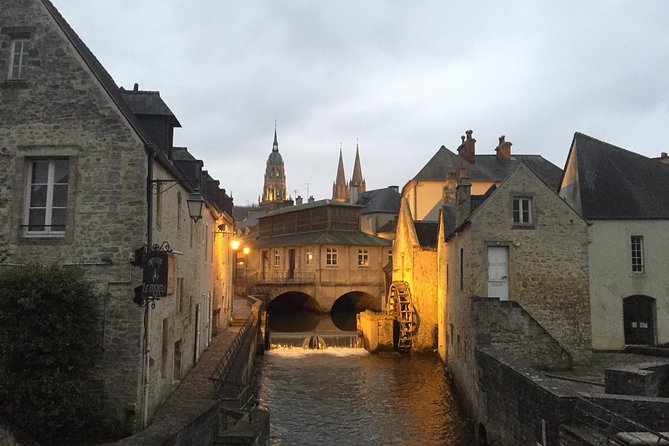
One of the best stops for turning abstract “medieval” into something real is Rue des Teinturiers. This is where the tour connects Bayeux’s past to hands-on industries—especially tanning and dyeing—and explains why the River Aure mattered.
Here’s what you should watch for: you’ll be learning what the street was for, not just what it looks like now. That makes the old town feel functional, not postcard-only. It’s the kind of explanation that changes how you walk through other French historic cities too: you start reading water, materials, and trade patterns instead of just buildings.
It’s a short stop, so it doesn’t bog down. But it’s the sort of context that keeps paying off when you later see other historic neighborhoods.
Allée des Augustines: Where the Bayeux Tapestry Story Starts to Take Shape
Next comes Allée des Augustines, a stop that packs several layers into one walk. The guide covers the influence of the Augustine sisters on Bayeux, including a surprising legacy connected to a country now called Canada. Then the route links straight into the famous Battle of Hastings era and William the Conqueror’s rise to the English throne.
Even if the Tapestry Museum is closed until October 2027, the tour still gives you a strong foundation. Your guide talks about the events and characters tied to the embroidery and explains how it was made, so you’re not arriving at that story cold later. In other words: you get the “why this image matters” before you see the “what it shows.”
One practical note: since this stop is tied to the Tapestry Museum area, it’s a good moment to mentally decide what you’ll do next. If you’re going to add the museum afterward, you’ll walk in with better context. If you’re not, you’ll still leave with clearer understanding of what that iconic work represents.
The Arbre de la Liberté: A Single Tree With a Big Political Story
At Arbre de la Liberté, you’ll learn why this 200+ year old sycamore is called a Liberty Tree and how it connects to the French Revolution. This is a perfect example of what makes the tour different from a checklist.
A tree can’t compete with grand monuments at first glance. But once you understand the symbolism, the stop becomes memorable. It’s also a nice breather: short, outdoors, and easy to follow with clear meaning attached.
You can also read our reviews of more historical tours in Bayeux

Cathedrale Notre-Dame: What You’ll Notice from the Outside
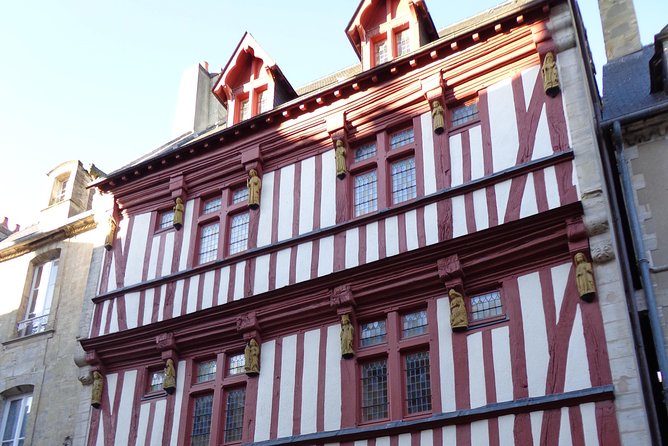
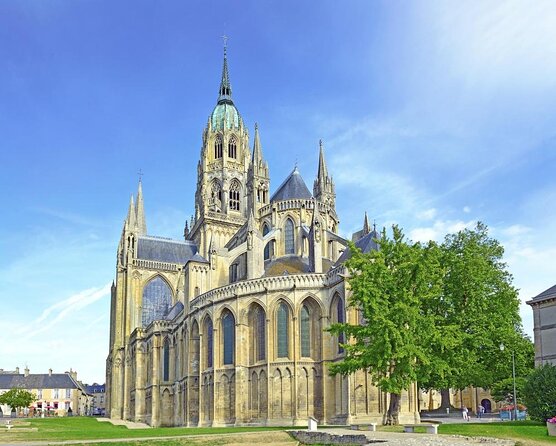
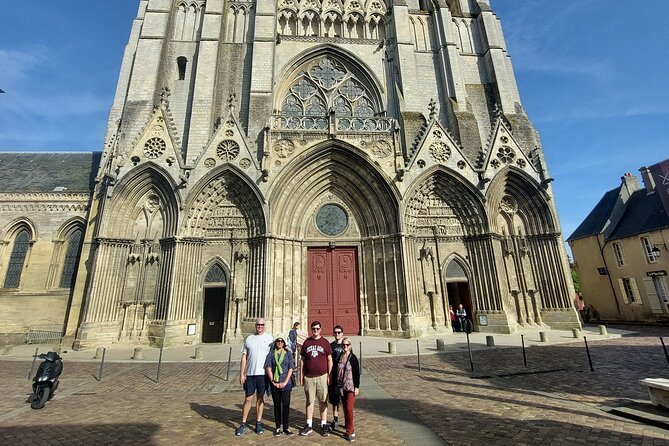
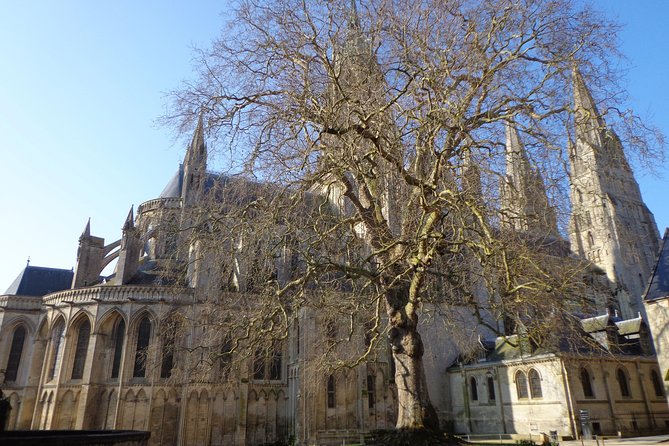
The tour includes a stop at Cathedrale Notre-Dame, with explanations about the different stages of construction and its architectural features. Importantly, the tour does not include the cathedral interior. So you’re focusing on what you can see from the outside and around the surrounding streets.
This is still valuable. Construction stages are easiest to spot when someone points out what to look for—style shifts, how different sections read visually, and what those changes can signal about time periods and resources. Even without entering, you come away with a more educated gaze.
If your priority is to tour the interior or spend museum-level time in the building, you’ll still need to plan that separately. But as part of a first pass through Bayeux, this stop gives you a framework for your later choices.
Roman Castrum and Celtic Roots on Rue Léonard Lambert Leforestier
On Rue Léonard Lambert Leforestier, the tour moves backward even further. You’ll hear how the origins of Bayeux go back to Celtic times and you’ll also see clues tied to the Roman castrum—including ruins connected to the old Roman fortification.
This is one of the stops that makes the walk feel “properly” historical rather than just medieval sightseeing. Bayeux’s layers are real. A good guide helps you understand that the street you’re on has been used in different ways across centuries.
The potential drawback here is simply time and attention. If you’re tired, ancient history can feel like a lot at once. But the tour’s stop lengths help you manage it. You’ll get enough detail to remember, without being stuck in one place forever.
Place Charles de Gaulle: Liberation Day and a Modern Hero Moment
The walk finishes with Place Charles de Gaulle, where the guide tells you about the liberation of Bayeux on June 7 and the first visit of General de Gaulle in this square.
This is a smart inclusion because it pulls you out of far-off centuries and into the 20th-century story that directly shaped what the city became. Even if World War II isn’t the focus of your trip, it’s worth knowing that Bayeux isn’t only “old stone.” It also has living memory.
After this, you end near Au Comptoir des Saveurs (45 Rue Saint-Martin), right in the heart of town near museums and close to the cathedral area. That means you can keep going without needing extra transit or a big change of plans.
What You Actually Get (and Don’t Get) for $24.20
This tour is priced reasonably for what’s included: a walking guided group tour exclusively in English with a rich commentary supported by lots of visuals. There’s also a clear effort to make stops short and digestible, with a maximum group size of 20 travelers.
What it does not include is equally important:
- No museums
- No cathedral interior
- You’re not getting paid entry time into major attractions
So I recommend thinking of this as an orientation and context tour, not a replacement for ticketed visits. If you want the full Bayeux “greatest hits,” you’ll usually add at least one museum or another guided experience afterward. But if you do just this first, it helps you choose what to prioritize with less guesswork.
Also note the language rules. There’s no simultaneous translation, so you need a good level of English to follow along comfortably. The upside is that the guide can keep the flow without delays.
Logistics That Matter: Shoes, Rain, and Staying Comfortable
This is a walking tour, and you’ll be standing for parts of it. Wear comfortable shoes. The route also doesn’t offer planned bathroom stops during the 2-hour stretch, so plan ahead before you meet.
A small-group walk still has real-world pacing issues: the tour mentions that standing might become tiring for back sufferers or pregnant ladies. If that’s you, bring a foldable stool if you’re able. The guide will use public benches when possible, but you’ll feel better if you come prepared.
Weather is another practical point. Bayeux weather can be changeable, and I’d strongly consider bringing an umbrella, just in case. The tour is short, but rain can make stone streets and long standing feel harder.
Recording or taping the guide isn’t permitted. If you like taking photos, standard sightseeing photos are fine, but keep your focus on listening rather than filming.
Who This Tour Fits Best (and Who Might Want Something Else)
This tour is ideal if you:
- Want a first visit to Bayeux with clear context
- Like history that connects politics, architecture, and everyday life
- Enjoy guided storytelling more than solo wandering
- Prefer a manageable time commitment (about 2 hours)
It may not be your best choice if you:
- Want museum entry or cathedral interior access built in
- Struggle with frequent standing and stop-start movement
- Need a translated experience beyond English
The best sign of fit is the type of questions you enjoy. If you like learning why a place is named what it is—or how industries shaped streets—you’ll get a lot from this.
How the Guides Bring Bayeux to Life
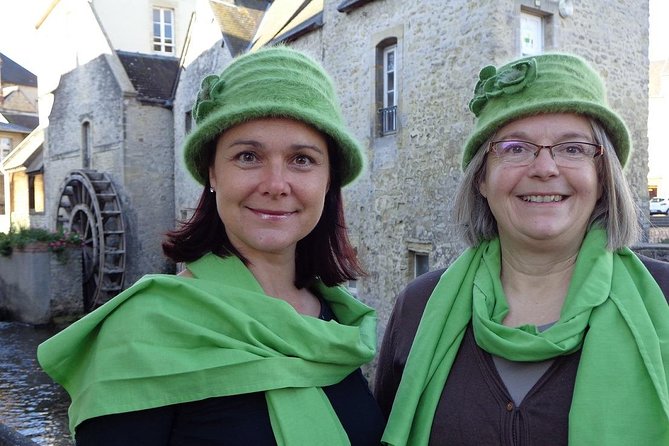
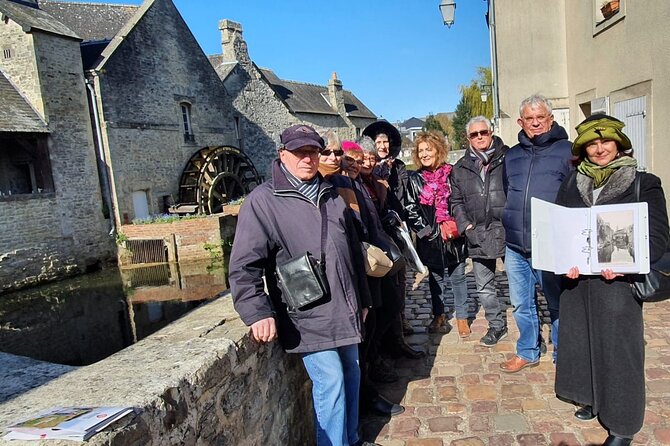
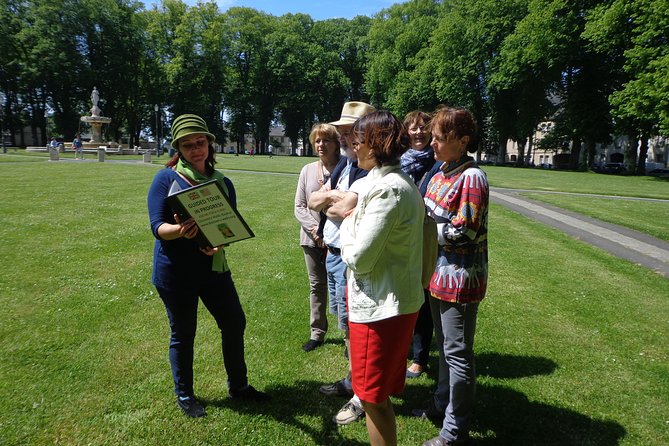
A big reason this walk earns top marks is the delivery style. Guides such as Christele and Marie-Noëlle are described as professional, friendly, and big on entertaining anecdotes. You’ll also hear that they use photo materials to support the commentary, including a binder-style set of visuals.
That matters because Bayeux’s stories are visual. The Battle of Hastings details, the embroidery narrative, and architectural construction stages are easier to understand when someone pairs images with explanation. If you learn best through seeing, you’ll like the format.
And the storytelling approach doesn’t just spit out dates. It connects the human side—religious communities, political symbols like the Liberty Tree, and modern milestones like June 7 liberation.
Should You Book This Historic Bayeux Walking Tour?
Book it if you want a smart, efficient start to Bayeux. This is one of the best ways to build real understanding fast, especially if you’re planning to visit the cathedral area and museums afterward. The small group size, English-only commentary, and photo-supported storytelling make the time feel well spent.
Skip it or pair it differently if you’re mainly chasing indoor ticketed experiences. This tour is about streets, explanations, and context—not museum entry. If you want the interior of the cathedral or extended time in major exhibits, you’ll need to add those separately.
FAQ
How long is the Historic Bayeux city tour in English?
It’s about 2 hours.
When does this tour operate?
It runs between March and September only.
Is the tour in English?
Yes, the tour is offered in English. There is no simultaneous translation, so you should have a good level of English.
Does the tour include museum entry or the cathedral interior?
No. It does not include any museums or the inside of the cathedral.
Is there a mobile ticket?
Yes, you’ll receive a mobile ticket.
Where does the tour start and end?
It starts at 3 Rue Saint-Jean, 14400 Bayeux and ends at Au Comptoir des Saveurs, 45 Rue Saint-Martin, 14400 Bayeux.
Can I record or tape the guide during the tour?
No, recording or taping the guide is not permitted.
How big is the group?
The tour has a maximum of 20 travelers.