REVIEW · CAEN
Normandy D-Day British and Canadian Sector Guided Tour
Book on Viator →Operated by NORESTA TOURS · Bookable on Viator
History feels close at Pegasus Bridge. This private British-and-Canadian D-Day tour starts at Pegasus Bridge, then moves you along the Normandy coast and inland battle areas with real context, not just names. I especially like the calm, respectful pacing you get in an air-conditioned vehicle, plus practical touches like bottled water. One drawback to plan around: lunch isn’t included.
You’ll be in a small group (up to 8) and the day is guided in English, with pickup offered in the Caen area. If you’re the type who wants to ask questions and actually get answers, this format fits well, and you won’t feel herded. On many departures, the crew is known for punctual timing without rushing you through each stop.
You’ll also appreciate the logistics: a mobile ticket, admission noted as free for the main stops, and a schedule that typically runs about 4 to 7 hours. It’s the kind of rainy-day-friendly plan that still works, because the stops are designed for looking, walking, and listening in short, manageable chunks.
In This Review
- Quick takeaways before you head to Normandy
- Why Pegasus Bridge makes the whole day click
- British and Canadian beaches: seeing Sword, Juno, and Gold with purpose
- The inland battle sites: the part people often skip at their own cost
- Private transportation that stays comfortable when the day runs long
- English guidance that keeps the facts human
- Value: what $903.08 per group really buys you
- Timing and what a 4 to 7 hour day feels like
- Who this tour suits best
- Should you book this Normandy British and Canadian sector tour?
- FAQ
- What’s the duration of the Normandy D-Day British and Canadian sector tour?
- What’s included in the price?
- Is lunch included?
- Is this tour offered in English?
- How big is the group for a private booking?
- Can I get a full refund if I cancel?
Quick takeaways before you head to Normandy
- Pegasus Bridge as the first stop gives you the Allied plan in one clear stroke before you see the beaches.
- British and Canadian coastline focus helps you connect the dots between landings and later fighting.
- Small private group (up to 8) means you get more back-and-forth and less “group shuffle.”
- English guiding with calm pacing is a big part of the experience, especially at emotional sites.
- Air-conditioned transport + bottled water keeps the day comfortable even when weather turns.
- Lunch not included means you should pack a snack or plan an easy meal afterward.
Why Pegasus Bridge makes the whole day click
Starting at Pegasus Bridge is smart, because it’s an early objective that helps you understand why D-Day wasn’t just one landing—it was a chain reaction. Instead of jumping straight to the beaches, you get the story of how British troops carried out the glider assault that helped secure the bridge early in the operation. That early win matters, because it created a path for the Allied advance rather than leaving everything to chance.
You’ll also find that this opening stop makes the shorelines you see later feel more purposeful. When you know what the Allies were trying to secure in the first hours, even a quick look at the coastline can turn into a real “now I get it” moment. The visit also runs about 2 hours, and the admission for this stop is listed as free, which helps you keep the day’s budget predictable.
One practical tip: bring your curiosity. At this point in the tour, it’s easy to get lost in facts. Try asking simple questions like how terrain affected movement or why an early crossing changed what came next. It’s the kind of stop where an attentive guide can tie the event to the geography around you in a way that sticks.
You can also read our reviews of more guided tours in Caen

British and Canadian beaches: seeing Sword, Juno, and Gold with purpose
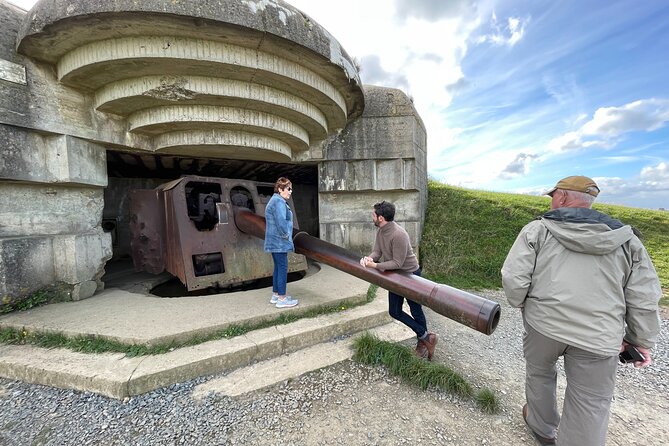
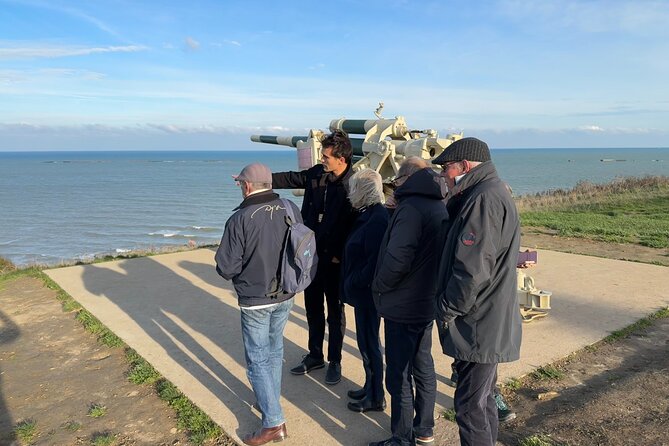
After Pegasus Bridge, you head to the Normandy coast in the British and Canadian sectors. This is where you’ll stand on the sands and connect the landings to the real shape of the shoreline. Depending on the season and preferences, you can visit beaches such as Sword, Juno, and Gold, which helps the tour avoid the “same stop, same story” feeling you sometimes get with battlefield days.
What I like about this beach portion is the balance between emotion and clarity. It’s not only about solemn moments; it’s also about terrain—how beaches, access points, and nearby ground features affected what soldiers faced in the first minutes after landing. That’s why the guide’s approach matters. In multiple departures with different guide-driver teams (including people named Norman, Olivier, and others), the explanation style is described as personable and respectful, with enough detail to make you feel oriented rather than overwhelmed.
The tour time for this main coastal-and-inland segment is about 5 hours. That’s enough time to do the essentials without turning the day into a sprint. And if weather shows up (Normandy can be dramatic), the itinerary is still workable. One review even linked heavy rain to a stronger sense of what landing conditions must have felt like—so if you end up in showers, don’t assume it’s wasted time.
One consideration: this is real walking and looking time on active coast paths. Wear shoes that handle wet conditions, and if you’re sensitive to cold wind off the water, plan a light layer even in warmer months.
The inland battle sites: the part people often skip at their own cost

Beach tours can turn into a series of photographs. This one tries to do better by moving inland to the battle sites where the campaign to liberate Normandy continued. That inland portion is key, because it answers a question beaches alone can’t: what happened after the first push?
You’ll get guidance on strategies and the challenges Allied forces faced as they fought inland from the landing areas. Even without a long list of named sites, the structure is useful. You’re not just absorbing the idea of “advance inland”—you’re learning how the fight changed as distance from the coast increased, and how the ground itself influenced decisions.
This is also where the tour can become unexpectedly personal. At emotional places included on some British-Canadian routes (for example, stops connected to Canadian service and remembrance), the guides described the tone as respectful and prepared. That preparation matters. The goal isn’t shock; it’s understanding, with your pace protected so you can take in what you’re seeing.
Because the inland segment is part of a timed block, I’d treat it like a conversation, not a checklist. If something feels confusing—why a move made sense, or how one area tied to another—this is exactly when to ask. That’s often where the tour’s story starts to feel whole.
Private transportation that stays comfortable when the day runs long
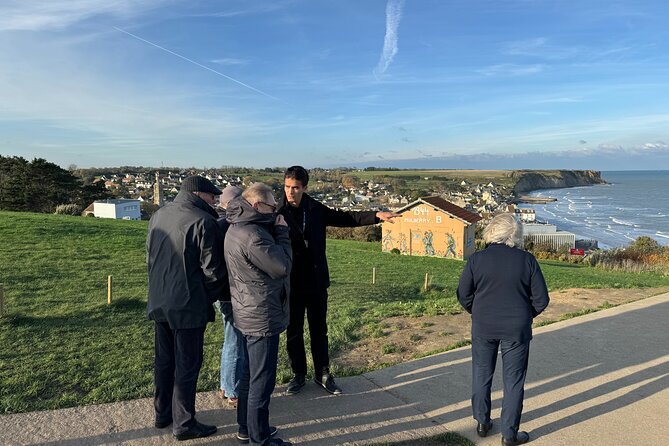
This tour is private for your group, with room for up to 8 people. That small size is more than a perk. It usually means fewer time losses—no waiting for stragglers, no awkward standing around, and fewer “everyone follow me” moments.
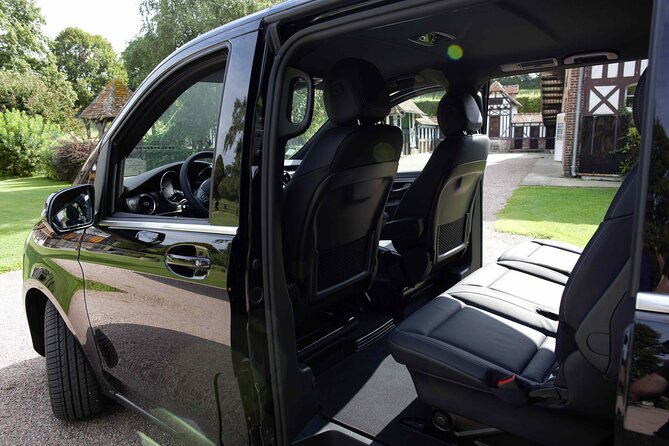
The vehicle is air-conditioned, and you’ll have bottled water included. Those two details sound minor until you’re out for hours with a sun-to-rain weather swing. Reviews also describe drivers as careful and considerate, and even note helpful practical gestures like providing chargers or extra support when needed. That level of service is part of why the experience can feel easy, even when the subject matter is heavy.
Pacing is another big deal here. People praised the fact that the crew was prompt on timings but didn’t rush exploration. That combo is rare. A good D-Day tour shouldn’t feel like you’re speed-reading a war. It should feel like you’re being guided through a set of locations where each piece connects to the next.
If you’re coming from outside Caen or coordinating with a cruise day, pickup is offered. In one case, the guide met the group at a cruise port terminal right after disembarkation. I’d still confirm your exact meeting point when you book, because pickup plans can vary by where you’re staying or arriving.
English guidance that keeps the facts human
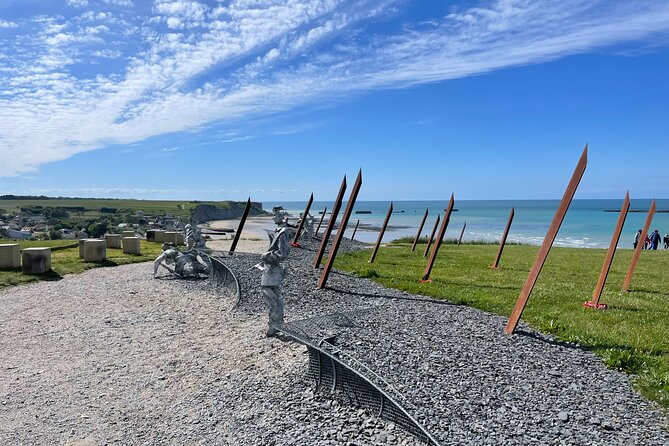
Language quality is one of those things you only notice when it’s bad. Here, English guiding is explicitly offered, and the feedback on the guides is strongly positive: people describe the explanations as knowledgeable in the literal sense—clear, structured, and tied to what you’re seeing—and also as personable.
You’ll often get a quick briefing before reaching key sites, plus maps and contextual info that help you orient yourself. That matters because Normandy is large. Without orientation, it’s easy to see a beach and still not understand where you are relative to the wider campaign.
One review also highlighted a guide adjusting the day based on the group’s desires, staying within the time window while still fitting meaningful stops. That’s the kind of flexibility that makes private tours feel worth the price.
If you like history with room for questions, this style is a good match. If you want a strictly silent, museum-only approach, you might find the conversation-and-context format a little interactive. Either way, you’ll be in control of how much you engage.


Value: what $903.08 per group really buys you
The listed price is $903.08 per group (up to 8), which is worth analyzing by how this tour handles costs. You’re not just paying for a driver. The package includes all fees and taxes, private transportation, bottled water, and a mobile ticket. It also lists admission tickets for key stops as free, which helps keep the day from turning into surprise on-site spending.
If your group fills to 8 people, the per-person cost works out to roughly $113. If you travel with fewer people, the per-person cost rises, but you still keep the benefits of a private vehicle, English guiding, and a paced route that won’t be trimmed down to fit a big coach schedule.
Also note the timing. This tour is typically booked about 20 days in advance on average. I’d treat that as a signal to book sooner rather than later, especially if you’re traveling in peak seasons or on a tight schedule from a cruise.
And yes, lunch isn’t included, so you should budget for at least snacks or a meal afterward. If you’re the kind of person who gets hungry fast while walking and reading, pack a light bite. You’ll enjoy the day more when you’re not thinking about food.
Timing and what a 4 to 7 hour day feels like
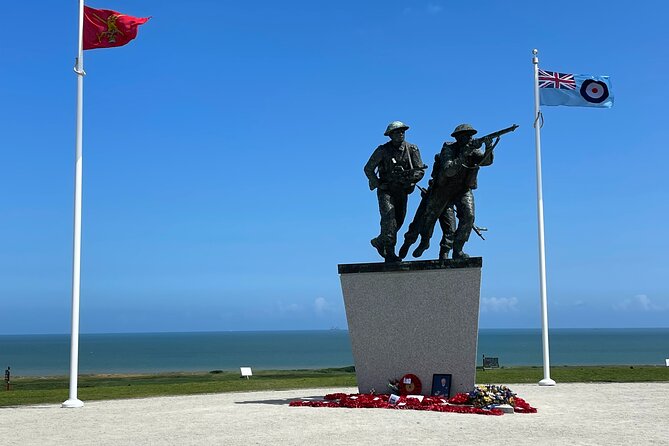
The experience runs about 4 to 7 hours depending on the exact route and time at each stop. That range is useful. It means you can fit it into a day without eating your entire itinerary, but you still get enough time to absorb the main locations.
A common pattern is:
- Start with Pegasus Bridge (about 2 hours)
- Then spend several hours on the British/Canadian coastal sector and inland sites (about 5 hours for that block)
That structure also protects you from fatigue. You get an early “anchor” location that sets the story, then a longer segment for exploring and connecting the dots.
If you’re visiting with kids or extended family, this length is often workable because it can be paced through multiple stops instead of one long slog. One review specifically described the tour as enjoyable for a whole family, which tracks with the way the day is structured.
Who this tour suits best
This Normandy British and Canadian sector tour is a strong fit if:
- you want the Allied story organized around specific early objectives and sectors
- you prefer a private day with room for questions
- you care about respectful handling of remembrance sites
- you want a route that works even when weather isn’t perfect
It’s also a good choice for first-timers. Instead of trying to cover everything on your own, you get a curated flow that helps you understand why each location matters. And because pickup is offered and the vehicle is comfortable, it’s easier than stitching together separate buses and tickets.
If you’re an ultra-nerdy history buff who wants deep technical detail on every single unit and position, you might still enjoy it, but you may want to pair the tour with extra independent reading afterward. The value here is clarity and coherence, not an overwhelming info dump.
Should you book this Normandy British and Canadian sector tour?
I think you should book it if you want a day that’s structured, respectful, and practical, with English guidance and private transportation built in. The strongest reason to choose it is the sequence: Pegasus Bridge first, then beaches like Sword/Juno/Gold, then inland battle sites. That order helps you understand D-Day as a connected campaign rather than disconnected photo spots.
Before you go, do two simple things: plan for lunch (or snacks) and wear shoes you can trust on wet ground. If you do that, you’ll end up with a day that feels both meaningful and manageable.
If your schedule is tight and you’re deciding between this and a bigger-group option, the private group size is the deciding factor. It protects your time and lets the guide tailor the pace to your group.
FAQ
What’s the duration of the Normandy D-Day British and Canadian sector tour?
The tour typically runs about 4 to 7 hours, depending on the route and how much time you spend at each stop.
What’s included in the price?
It includes all fees and taxes, private transportation, an air-conditioned vehicle, and bottled water. A mobile ticket is provided.
Is lunch included?
No. Lunch is not included.
Is this tour offered in English?
Yes, the tour is offered in English.
How big is the group for a private booking?
This is a private tour/activity, and only your group will participate, with a maximum of up to 8 people.
Can I get a full refund if I cancel?
Yes. Free cancellation is offered, and you can cancel up to 24 hours in advance for a full refund.