REVIEW · CAEN
Normandy: D-Day British and Canadian Sector Guided Tour
Book on GetYourGuide →Operated by Noresta · Bookable on GetYourGuide
Pegasus Bridge gives this Normandy tour a strong opening. Before you reach the beaches, you see the bridge seized by British glider troops in the first hours of D-Day, then follow the Allied advance through British and Canadian sectors with a private guide.
I like the small-group format, which lets you ask questions and adjust the day around your interests. I also like the mix of famous sites and less familiar stops, especially with Norman, a local guide praised for his historical knowledge, good humor, and care for his group.
The main drawback is the price if you are traveling alone or with only one other person. At $884 per group of up to eight, the cost is much easier to justify with a full group, and the six-to-seven-hour schedule can feel tight if you want long, quiet visits at every stop.
In This Review
- Key points to know before booking
- Why this D-Day tour works as a full-day introduction
- Longues-sur-Mer puts the German defenses in view
- The British Normandy Memorial adds a human scale
- British and Canadian beaches connect the operation
- The Canadian connection at Queen’s Own Rifles of Canada
- Pegasus Bridge shows the first hours of D-Day
- The inland battle sites fill in what the beaches cannot show
- Norman and the value of a private guide
- Lunch and the practical rhythm of the day
- Is $884 a fair price?
- Who should book this Normandy experience?
- Should you book this tour?
- FAQ
- How long does the Normandy D-Day tour last?
- What is the price of the private tour?
- Where can I be picked up?
- Where can I be dropped off?
- Which D-Day beaches can the tour visit?
- Is Pegasus Bridge included?
- What other historic sites are included?
- What languages are available?
- Is lunch included?
- Can I cancel the booking?
- Are baby seats and booster seats available?
Key points to know before booking
- Pegasus Bridge comes early in the story: You learn how British glider troops secured a crucial crossing before the main beach landings.
- The day covers both British and Canadian sectors: Depending on season and group preferences, the route can include Sword, Juno, and Gold beaches.
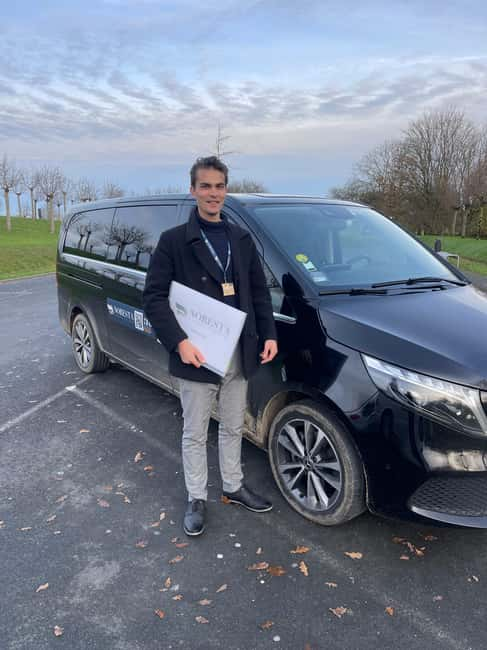
- Norman is the named guide to request or expect: He is local, attentive, good-humored, and able to add less-seen places to the route.
- Longues-sur-Mer adds German coastal defenses: The battery helps explain the firepower facing the Allied fleet.
- The tour is private for up to eight people: This is useful for families and groups who want a flexible pace.
- Lunch is not included: Your guide recommends local restaurants, but you pay for the meal and personal expenses yourself.
Why this D-Day tour works as a full-day introduction
Normandy’s D-Day sites are spread along the coast and inland roads. A guided drive saves you from piecing together the route yourself, and a private vehicle gives you a practical way to see several sectors in one day.
This is not only a beach visit. The route links the opening assault, German defenses, British and Canadian landing areas, the first advance inland, and the human cost of the campaign. That order matters. You can better understand how the operation moved from ships and gliders to bridges, roads, villages, and inland fighting.
The tour lasts six to seven hours. That is enough time for a solid overview, but not enough for every museum and cemetery in the area. You should think of this as a focused introduction to the British and Canadian sectors rather than a complete survey of all Normandy sites.
The private setup is one of the best reasons to choose it. You can ask questions as they come up, request more attention to British or Canadian history, and discuss the day’s pace with your guide. With a shared coach tour, you normally follow a fixed route. Here, the guide can shape parts of the visit around your group, subject to time and seasonal conditions.
You can also read our reviews of more guided tours in Caen


Longues-sur-Mer puts the German defenses in view
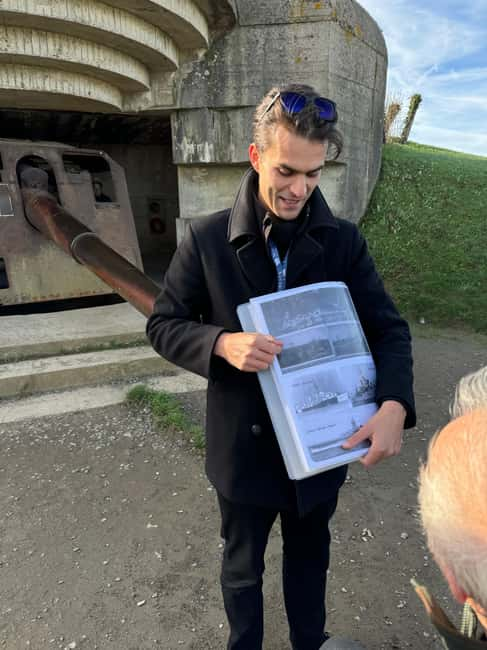
Longues-sur-Mer Battery is scheduled for about an hour with your guide. This stop gives you a useful starting point because it shows the coastal defenses that faced the Allied fleet on D-Day.
The battery is more than a quick photo stop. Its position helps you picture the problem faced by the invasion force: troops had to come ashore while German guns and fortified positions threatened the sea route and landing areas. Your guide can connect the concrete defenses to the wider plan of the operation.
An hour is a sensible amount of time here. You can walk around the site, listen to the explanation, and ask questions without using up the entire day. Wear shoes that handle uneven ground, and bring rain protection. A Canadian passenger who took the tour in heavy rain found that the weather limited the day, although the guide still provided a useful introduction to the events of June 6, 1944.
This is also a good reminder that Normandy weather can change the feel of the tour. Open coastal sites are less enjoyable in steady rain, and you will spend a fair amount of time outside. The experience can still be worthwhile, but a dry day gives you more time to pause and take in the setting.
The British Normandy Memorial adds a human scale
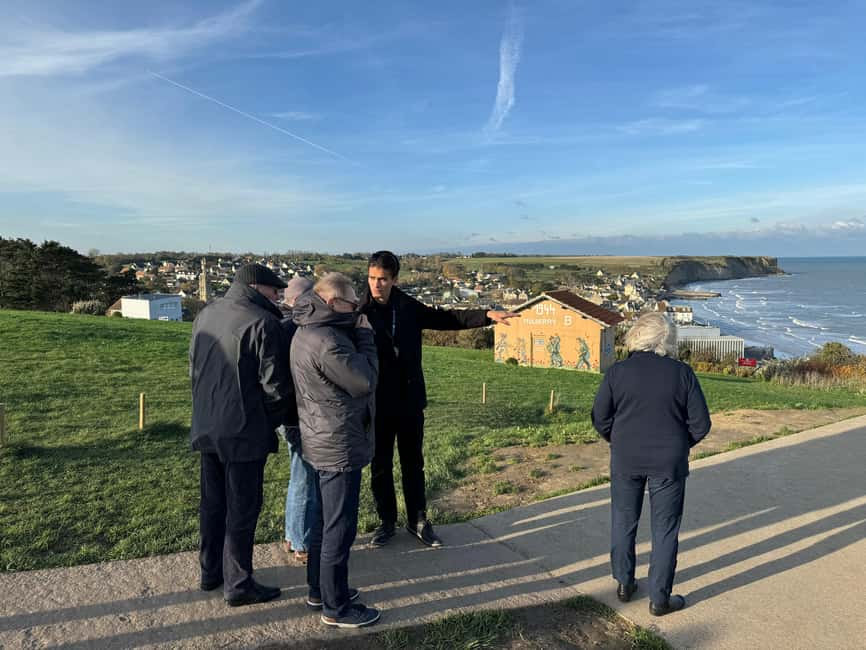
The British Normandy Memorial receives about an hour of guided attention. It honors British personnel who died during the Normandy campaign, and it helps move the story beyond maps and military movements.
At the beaches, it is easy to focus on the scale of the operation. A memorial brings the focus back to individuals and the cost of the advance. Your guide can place the names and remembrance within the larger campaign, helping you understand that the fighting continued well after the first landing.
This stop suits people who want more than battlefield geography. It also gives families a quieter part of the day, though the subject matter is serious. I would allow time for reflection rather than treating the memorial as just another item on a driving route.
The one-hour visit also shows the advantage of a private tour. If your group has questions about British units, the campaign, or the memorial itself, you can ask without worrying about holding up a large coach. The guide’s explanation becomes part of the visit instead of background commentary delivered at a distance.
British and Canadian beaches connect the operation
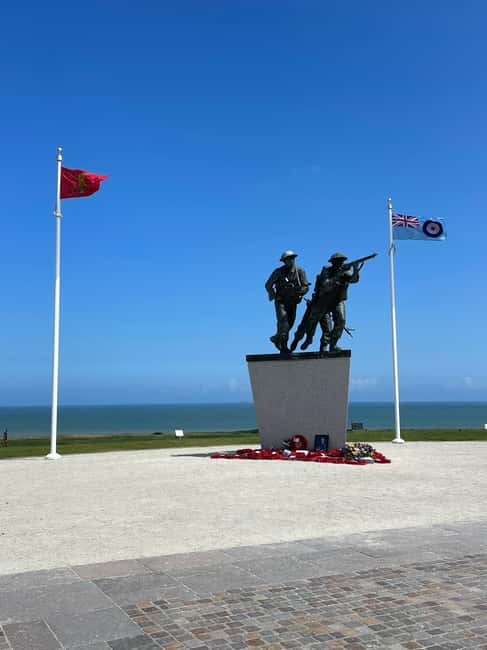
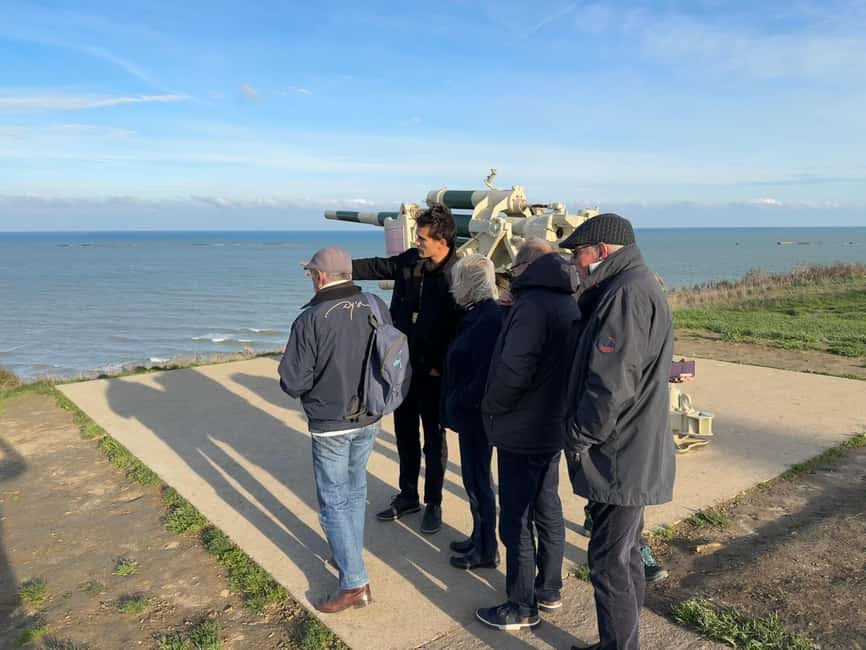
The beach portion is the heart of the day for many people. The route can include Sword, Juno, and Gold, depending on the season and what your group wants to emphasize.
Each beach carries a different part of the British and Canadian story. Seeing them in person gives you a sense of the coast, the open approach, and the distance between the landing areas. It is one thing to read the names on a map. It is another to move from one sector to another and understand how the Allied advance depended on separate forces working toward related goals.
Your guide provides the military context, including the challenges faced by the troops and the effort to move inland after the landings. The tour description does not promise a fixed beach combination, so you should confirm the planned route if one sector matters most to you. If your family has a Canadian connection, ask for the strongest possible focus on Juno and related Canadian sites.
The beaches are exposed and weather can affect your visit. In sunshine, you may want time to walk and look across the shore. In rain or wind, the guide’s explanation becomes even more important because you may prefer shorter outdoor stops and more time in the vehicle.
This part of the tour can be emotional, but it is not presented as a simple sightseeing stop. The value comes from linking the physical shore to the decisions, risks, and movement of the campaign.
The Canadian connection at Queen’s Own Rifles of Canada
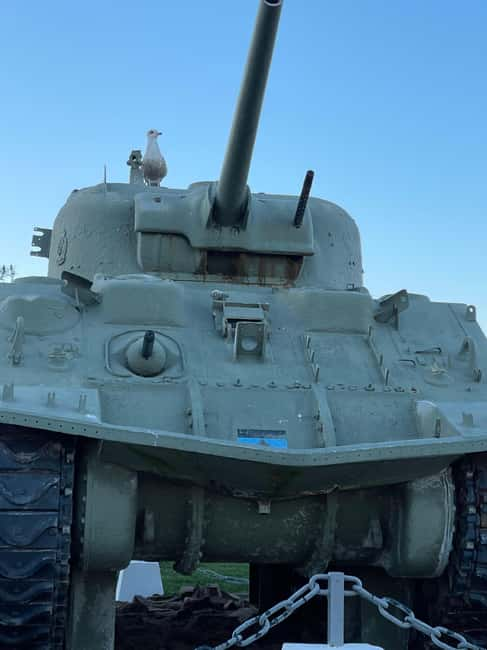
The Maison de Queen’s Own Rifles of Canada receives about 30 minutes of guided time. It is a shorter stop, but it gives Canadian military history a clear place in the route.
For Canadian visitors, this may be one of the most personally meaningful parts of the day. The site connects the broad D-Day story with a specific Canadian regiment. Even if you do not have a family link, the focus helps you see how a large operation was carried out by individual units with defined objectives.
Thirty minutes will not allow for a long museum visit or an extended walk, so keep your expectations in check. This is a concise, focused stop within a wider tour. It works best when your guide explains how the regiment fits into the Canadian landing and the move inland.
The Canadian emphasis also makes this tour a stronger choice than a general Normandy route for people who want British and Canadian history together. You are not limited to one nation’s story, and the guide can help you compare the different sectors as the day unfolds.


Pegasus Bridge shows the first hours of D-Day
Pegasus Bridge receives about an hour, and it is one of the clearest highlights of the tour. British glider troops attacked and secured the bridge early on D-Day, making it an important objective before the main beach landings got fully underway.
The site helps you understand that the invasion began in several places at once. While troops approached the beaches by sea, glider forces were already working inland to protect crossings and support the wider operation. The bridge was not an isolated target. It mattered because movement across the canal and nearby waterways affected the Allied advance.
I like this stop because it gives the day a sense of sequence. You see an early inland action, then follow the campaign through the coastal defenses, beaches, memorials, and inland fighting. The story becomes easier to follow because you are not simply jumping between unrelated monuments.
An hour gives your guide room to explain the assault and its strategic purpose. It also gives you time to look around rather than treating the bridge as a quick roadside stop. Families with older children may find this section especially engaging because the operation has a clear objective and a dramatic beginning.
The inland battle sites fill in what the beaches cannot show
The tour includes guided time at significant inland battle sites, with two itinerary sections listed as one hour each but without named locations. That lack of detail is worth noting. Ask the operator exactly which inland sites are planned for your date, particularly if you have a specific regiment, battle, or village in mind.
These inland visits matter because the D-Day landings were only the start. Allied troops had to push away from the coast, hold key roads and crossings, and fight through the Normandy campaign. Inland sites help you understand the practical difficulty of turning a landing into a sustained advance.
This is where a local guide can add real value. Norman is based in the area and has been praised for taking groups to less-seen locations. That can give your day a more personal feel than a route limited to the most famous names, though the exact extra locations depend on the guide, timing, and preferences of your group.
The inland portion also helps balance the beaches. If you spend every stop looking at the shoreline, you may leave with an incomplete picture of the campaign. The roads and villages beyond the coast show why the operation lasted longer and demanded more than the first successful landings.
Norman and the value of a private guide
Norman is the guide named in the available booking information, and recent guests described him as excellent, informative, attentive, helpful, and fun to spend time with. One particularly useful detail is his local background and willingness to include less-seen locations.
Those qualities matter on a history tour. You need clear explanations, but you also need a guide who notices when your group is tired, confused, cold, or especially interested in one part of the story. A private vehicle makes that personal attention easier.
The tour is offered in English, French, and German. If you book in one of those languages, confirm the preferred language in advance. A multilingual option is helpful for mixed-language families and groups, though the quality of the day still depends on matching your needs with the guide assigned.
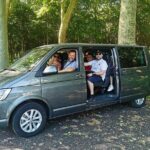
The vehicle was also praised as comfortable and well suited to the day. That matters in Normandy, where you move between coastal and inland sites over several hours. You will want a comfortable base between walks, especially in poor weather.
Lunch and the practical rhythm of the day
Lunch is not included, but the guide recommends local restaurants. This keeps the meal flexible and lets your group choose how much time and money to spend.
You should budget separately for lunch and personal expenses. Since the tour already costs $884 per group, an unplanned meal stop can affect the overall cost. Ask your guide about the likely lunch timing early in the day if you need a quick meal or have dietary concerns. No specific restaurant or menu is promised, so do not book your day around one particular place.
The schedule includes several one-hour visits plus a shorter 30-minute Canadian stop. That is a useful balance, but it leaves little room for long meals, extensive museum visits, or slow photography at every site. I would treat the day as a moving history lesson with regular stops, not as a relaxed coastal outing.
A baby seat and booster seat are available on request. Families should ask for these when booking rather than waiting until pickup. Children who already have some interest in World War II may enjoy the clear sequence of bridges, beaches, defenses, and inland fighting. Very young children may find the long day and serious subject matter harder to manage.
Pickup and drop-off are available in Deauville, Le Havre, Honfleur, Caen, and Bayeux. Pickup from the cruise terminal in Le Havre is also available. This range makes the tour practical for a day from a cruise or as a planned outing from a Normandy base.
Is $884 a fair price?
The price is $884 for a private group of up to eight people. With eight people, that works out to $110.50 per person before lunch and personal costs. With four people, it becomes $221 per person, and with two people, $442 each.
That math should guide your decision. For a full family or friend group, the price can be reasonable because it covers a private vehicle, guide, flexible group format, and several widely separated sites. For one or two people, a shared tour may offer better value if keeping costs down matters most.
The tour includes the guide and transportation, but not lunch. The available details do not state that entrance tickets to any separate museum are included, so ask about admission costs if the route includes a paid indoor site. The itinerary centers on guided locations, beaches, memorials, and historic areas, but the exact inland stops should also be confirmed.
I would pay the private-tour premium if you have a strong British or Canadian family connection, need a particular language, are traveling with children, or want to ask detailed questions. I would hesitate if you mainly want a quick look at the beaches and have a small budget.
Who should book this Normandy experience?
This tour suits you best if you want a structured day without the limits of a large group. It is especially useful for:
- Families or friends who can share the $884 group price
- Canadian visitors interested in Juno and the Queen’s Own Rifles
- British history enthusiasts who want Pegasus Bridge, British beaches, and the memorial
- Cruise passengers needing Le Havre pickup and return
- Visitors staying in Bayeux, Caen, Deauville, or Honfleur
- First-time Normandy visitors who want the major story explained in order
You should consider another option if you want to spend most of the day inside museums, visit every major cemetery, or linger for hours at one beach. The six-to-seven-hour schedule gives you breadth, not unlimited time at each site.
The flexible route is also useful if your group has a clear priority. Tell the guide if your interest is Canadian operations, British airborne forces, coastal batteries, or the inland advance. The stated route allows for seasonal and preference-based changes, but no tour can cover the whole Normandy campaign in one day.
Should you book this tour?
Book it if you want the British and Canadian D-Day story tied together by a local guide, and if you can fill enough seats to make the private price work. Pegasus Bridge, Longues-sur-Mer, the British Normandy Memorial, Canadian sites, beaches, and inland battle areas create a strong six-to-seven-hour introduction.
I would make two checks before paying: confirm which beaches and inland sites are planned, and ask for the guide language and child seats if needed. Also pack for rain. One poor-weather day showed how much the conditions can shape an outdoor tour.
If Norman is assigned, you can expect a guide with local knowledge, a friendly manner, and the ability to add less-seen places. For a group of six to eight, this is a practical and thoughtful way to see the British and Canadian sectors without driving yourself or trying to assemble the route from scratch.
FAQ
How long does the Normandy D-Day tour last?
The tour lasts approximately six to seven hours. Starting times depend on availability.
What is the price of the private tour?
The price is $884 per group of up to eight people. Lunch and personal expenses are not included.
Where can I be picked up?
Pickup is available in Deauville, Le Havre, Bayeux, Caen, and Honfleur. Pickup from the Le Havre cruise terminal is also available.
Where can I be dropped off?
Drop-off is available in Deauville, Le Havre, Honfleur, Caen, and Bayeux.
Which D-Day beaches can the tour visit?
The tour can include British and Canadian beaches such as Sword, Juno, and Gold. The exact selection depends on the season and your group’s preferences.
Is Pegasus Bridge included?
Yes. Pegasus Bridge is a guided stop scheduled for about one hour.
What other historic sites are included?
The route includes Longues-sur-Mer Battery, the British Normandy Memorial, the Maison de Queen’s Own Rifles of Canada, Pegasus Bridge, beach areas, and inland battle sites. Two additional one-hour guided sections are listed without specific site names, so confirm those locations before booking.
What languages are available?
The live guide is available in English, French, and German.
Is lunch included?
No. Lunch is not included, but the guide recommends local restaurants during the day.
Can I cancel the booking?
You can cancel up to 24 hours in advance for a full refund. The tour also allows you to reserve now and pay later.
Are baby seats and booster seats available?
Yes. Baby seats and booster seats are available on request. Ask for them when arranging your booking.