REVIEW · CAEN
Guided Tour in an Old Convertible Car on the Côte de Nacre
Book on Viator →Operated by Normandy Classic Tour · Bookable on Viator
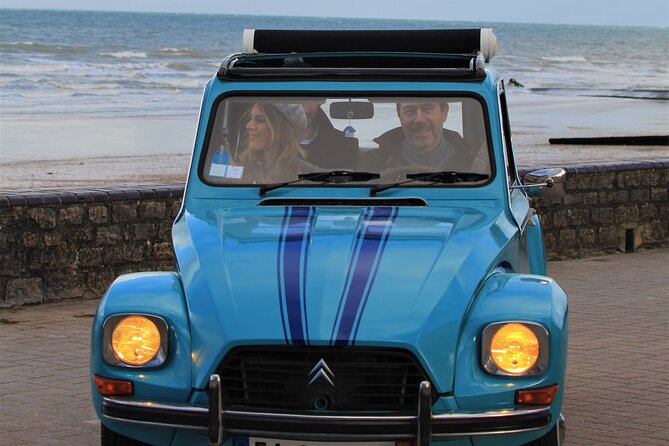
A convertible car makes Normandy feel personal. This 3-hour guided loop on the Côte de Nacre pairs a vintage open-top Citroën Dyane ride with stop-and-stroll commentary through coastal towns, architecture, and World War II landmarks. I particularly love the way the tour mixes architecture cues with plainspoken explanations, and you’ll also get a calm, relaxed pace guided by Bernard, who clearly knows how to turn streets and buildings into stories. One thing to consider: you’ll still do several short walk segments, so bring shoes you’re comfortable in and plan around the coast air and breeze.
Key points if you’re deciding
- Open-top comfort in a classic Dyane: the breeze is part of the fun, not a side effect.
- Stop-by-stop commentary: churches, villas, dikes, castles, and town streets come with context.
- WWII reference points included: Pegasus Bridge is part of the route, not an optional detour.
- A low-stress format: a mix of car time and short walks, with a few towns kept intentionally brief.
- Good value for the format: $108.61 per person for an English guided, private-group style afternoon.
In This Review
- Why the Dyane convertible changes how you see the Côte de Nacre
- Price and what you get for $108.61 per person
- The route starts at Ouistreham and feeds you the right coastal rhythm
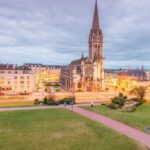
- Stop 1: Eglise Saint-Samson sets the tone before you drive
- Stop 2: Colleville-Montgomery for villas and the dike perspective
- Stop 3: Hermanville-sur-mer and the architectural mix
- Stop 4: Luc-sur-Mer for picturesque streets and a dike walk
- Stop 5: Langrune-sur-Mer and Tournebu Castle area
- Stop 6: Lion-sur-Mer with town hall streets and a castle approach
- Stop 7: Saint-Aubin-sur-Mer for houses by the sea
- Stop 8: Douvres-la-Delivrande and the barony story thread
- Stop 9: Pegasus Bridge and the WWII connection you’ll recognize immediately
- Stop 10: Ouistreham return via Orne, vehicle locks, and the old fishing district
- What it feels like during the ride (and how to make it better)
- Who this tour is best for (and who might want something else)
- Should you book this Côte de Nacre Dyane tour?
- FAQ
- How long is the tour?
- What is the price per person?
- What time does the tour start?
- Where do I meet the guide?
- What language is the tour offered in?
- Is this a private tour?
- Do I need to buy admission tickets for the stops?
- Can I use a mobile ticket?
- Are service animals allowed?
- What is the cancellation policy?
Why the Dyane convertible changes how you see the Côte de Nacre
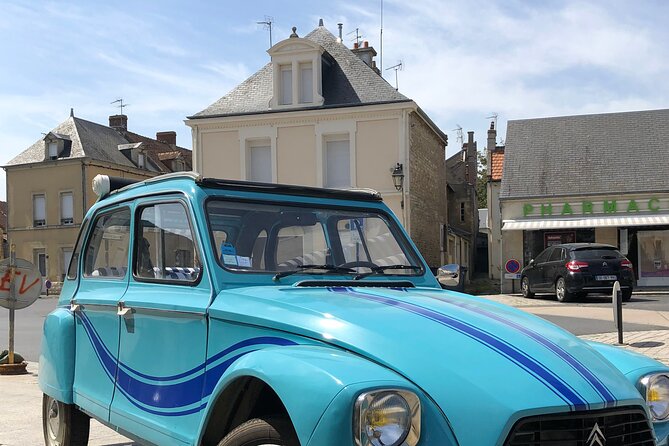
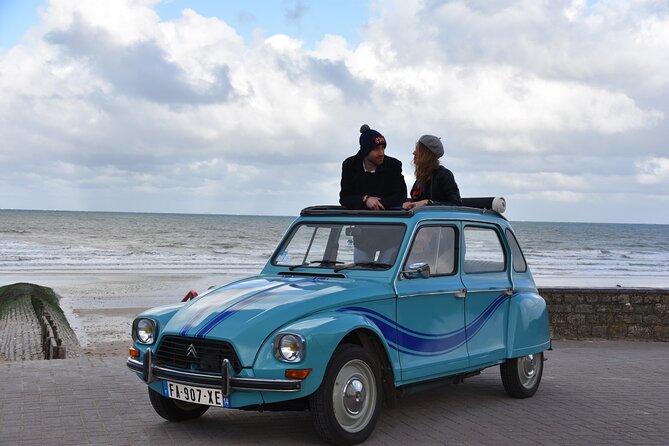
This tour works because it slows you down without putting you in a slow, museum-only mood. You’re in a vintage Citroën Dyane, open-topped, so the coast air and the changing scenery do real work for the experience. Instead of staring at a screen or reading plaques, you’re actually moving through the places as you learn why they matter.
You’ll also notice how the guide steers your attention. Rather than throwing dates at you, the commentary focuses on what you can see right now: styles in the buildings, how towns sit near the sea, and how specific points connect to bigger historical events. That is the kind of guidance that sticks because it’s tied to a view in front of you.
Price and what you get for $108.61 per person
At $108.61 per person for about 3 hours, the value here is mostly about guide time plus the transport format. You’re not just getting a walking tour. You get a narrated drive plus several short stops, which matters on a coastline where some sights are better reached by car.
A small but useful plus: the tour notes group discounts and uses a mobile ticket, which is convenient for planning. Also, this is listed as a private tour/activity, meaning it’s only your group. That typically helps you get more from the conversation, especially when the guide is the kind of person who enjoys explaining how and why things developed.
You can also read our reviews of more guided tours in Caen

The route starts at Ouistreham and feeds you the right coastal rhythm
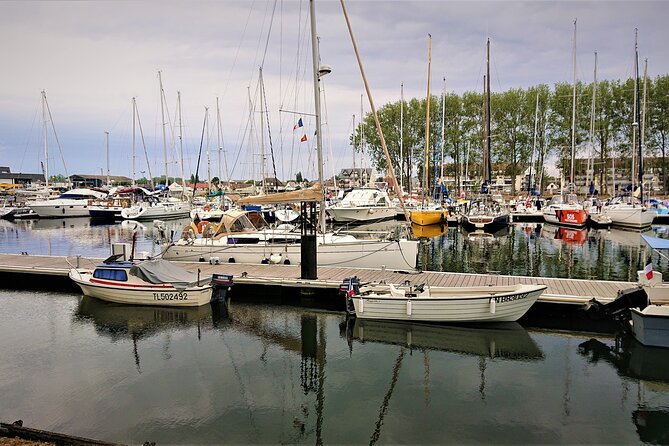
The afternoon begins at 2 Pl. Albert Lemarignier, 14150 Ouistreham, France, and it ends back at the same meeting point. The timing is set for an afternoon run, which is a good match for an open car: you get daylight, but you’re not committing to an all-day schedule.
The route is built like a gentle loop:
- start with a church and introductions,
- move through multiple seaside towns and dike-side views,
- hit a major landmark (Pegasus Bridge),
- return through the Orne area and the old district of Ouistreham.
That back-and-forth is part of why this doesn’t feel like a checklist. You get repeated coastal angles, so the Normandy coastline starts to look like a system, not a pile of separate towns.
Stop 1: Eglise Saint-Samson sets the tone before you drive
You begin with Eglise Saint-Samson, which acts as the warm-up for the whole afternoon. The tour does two smart things here: it introduces the car and gives you the rules of the day, then it frames what you’ll be looking for as you move along the Côte de Nacre.
This kind of start matters because later stops feature multiple architectural styles and local details. If you know what to spot early, the drive becomes more rewarding. Also, the stop is brief, so you’re not stuck hanging around before the fun part begins.
Stop 2: Colleville-Montgomery for villas and the dike perspective
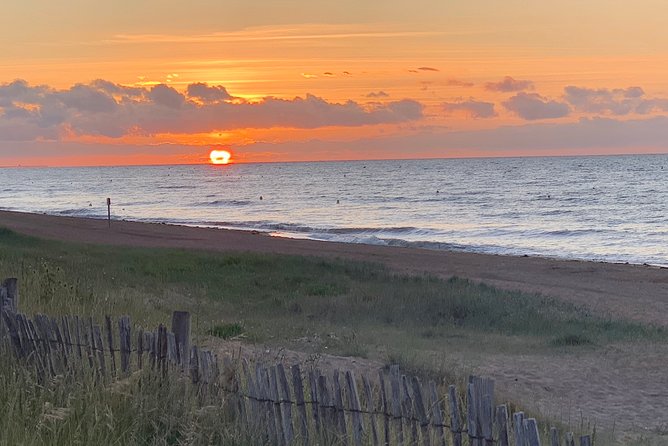
Next comes Colleville-Montgomery, with a focus on remarkable villas and the dike. Even if you’ve seen plenty of coastal towns, a dike view changes the way you understand the shoreline. It’s a practical coastal feature that shapes movement, property lines, and how towns face the sea.
This is also where the guided commentary starts to feel “geography-aware.” You’re learning why the coastline looks the way it does, not just admiring it.
Stop 3: Hermanville-sur-mer and the architectural mix
In Hermanville-sur-mer, the emphasis turns to style: Art Nouveau, Baroque, and Anglo-Norman architecture. That blend is the point. Normandy isn’t one uniform look, and this stop helps you see that quickly.
A quick practical note: architecture stops can be hit-or-miss if you’re only into scenery. Here, the tour ties styles to context through the guide’s explanations, so you’re not just looking at facades. You’re learning what you’re seeing and how it fits into the region’s character.

Stop 4: Luc-sur-Mer for picturesque streets and a dike walk
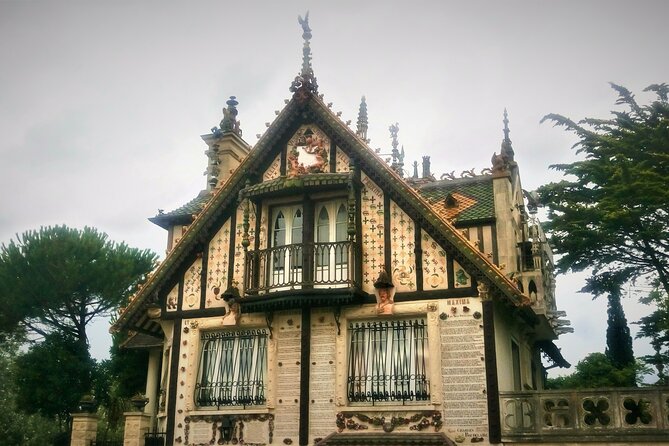
Then it’s Luc-sur-Mer, described as small picturesque streets plus a passage on the dike. This is a good stop when you like small-scale scenes: tight streets, viewpoints, and the sense that you’re moving through a living neighborhood rather than a staged attraction.
The main drawback to keep in mind: this is still a “short stop” environment. Expect quick context, quick photos, and then you’re back in the car. If you love lingering, you may want to plan extra time in your favorite town after the tour.
Stop 5: Langrune-sur-Mer and Tournebu Castle area
At Langrune-sur-Mer, you’ll pass through alleys, see Tournebu castle from the route, and get another stretch near the sea on the dike. This stop balances intimate street views with a stronger visual anchor from the castle area.
If you’re the type who likes to connect the dots—streets leading to landmarks—this stop is satisfying because it gives you that “oh, that’s where you are” feeling. You start to recognize how each town is arranged around its landmarks and access points.
Stop 6: Lion-sur-Mer with town hall streets and a castle approach
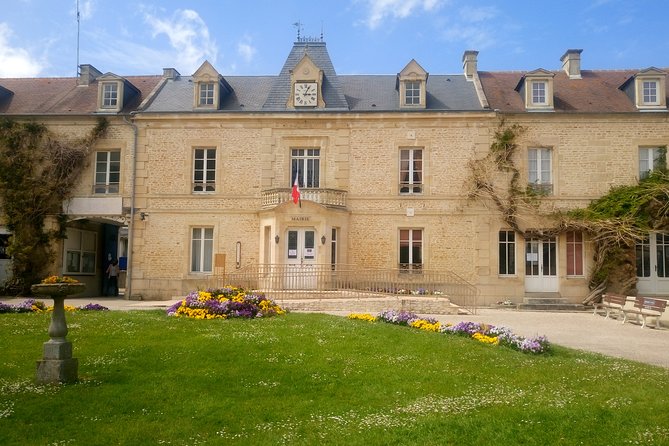
In Lion-sur-Mer, the itinerary highlights picturesque streets, the town hall area, and a passage in front of the castle. This is one of those stops where you benefit from a guide who can point out what might look ordinary at first glance.
Even though the stop is time-limited, it’s long enough to get the main visual and then understand what role those civic and historic structures play in the town’s identity.
Stop 7: Saint-Aubin-sur-Mer for houses by the sea
Saint-Aubin-sur-Mer is shorter—about 10 minutes—but it’s a nice reset. The focus is simply houses by the sea, which is a gentle change from the heavier architecture themes.
This is where you can just breathe and absorb the coastline. It’s also a good moment to look for details you might have missed earlier, because the “sea-front” angle makes patterns easier to spot.
Stop 8: Douvres-la-Delivrande and the barony story thread
Next is Douvres-la-Delivrande, with fine examples of architecture and their stories, including references to the barony. This stop is valuable because it provides a thread, not just a moment.
Instead of treating each town as separate, the guide’s approach helps you understand that local identity often ties back to property, governance, and older power structures. If you’ve ever wondered why certain buildings look the way they do, this is the kind of stop that makes those details feel less random.
Stop 9: Pegasus Bridge and the WWII connection you’ll recognize immediately
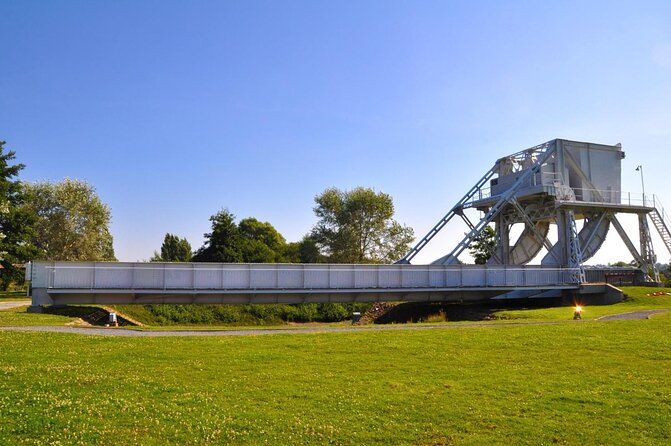
Then you reach Pegasus Bridge, including crossing the bridge and passing by the Gondrée café. This is the route’s most widely recognizable historic name, and it’s here that the tour’s WWII dimension comes into focus.
What I like about this approach is that it doesn’t feel like a lecture stuck in one spot. You’re moving through the area, getting the setting as part of the story. When you leave the bridge, you’ve seen a modern town edge—but you’ve also been reminded that this place sits in a much bigger historical timeline.
Stop 10: Ouistreham return via Orne, vehicle locks, and the old fishing district
The final segment returns to Ouistreham. You’ll drive along the Orne, pass near the lighthouse, and cross vehicle locks, then you’ll walk the old district with fishermen’s houses and Saint Samson church.
This ending matters because it rounds the experience off. Earlier stops lean into architecture and viewpoints. The return walk is more human-scale: fishermen housing and the historic church feel like the everyday layer of the coastline’s story.
Also, the vehicle locks are a great reminder that coastal regions aren’t just about views. Waterways and crossings shape how people live, move, and trade.
What it feels like during the ride (and how to make it better)
The reviews you’ll see about this tour are consistent on one theme: the car experience is genuinely fun. In an open Dyane, your senses do half the work. You get the breeze, the retro drive feel, and a sense of time travel that makes short stops feel more special.
To enjoy it at your best:
- Bring a light layer. Even in good weather, sea wind can cool you quickly.
- Wear shoes for mixed surfaces. You’ll be doing multiple brief strolls.
- Plan for photos, but don’t freeze. The stop times are short by design.
One more tip: if there’s a mid-afternoon break included on your day, it’s worth taking it. Small pause moments help you reset your brain for the next set of streets and architectural details.
Who this tour is best for (and who might want something else)
This is ideal if you like:
- an easy-going pace with short walks,
- architecture and town-street observation,
- history that connects to what you’re actually seeing,
- and a fun transport format that feels local, not “tour bus only.”
It may be less ideal if you want:
- long time inside museums,
- a deep focus on one single site,
- or a fully walking itinerary with no car segments.
The sweet spot is “I want to see a lot, but I want it explained well.” That’s exactly what this route format is built for.
Should you book this Côte de Nacre Dyane tour?
I’d book it if you want a Normandy afternoon that feels like a personal drive with real context. The value isn’t just the novelty of an old convertible. It’s the way the route strings together churches, dikes, architecture styles, and a major WWII landmark into one smooth 3-hour story arc.
Skip it only if you’re very sensitive to short walking segments or you prefer attractions where you stay in one place for a long time. Otherwise, this is a great choice for anyone who wants coast views plus guided interpretation, without turning the day into an endurance test.
FAQ
How long is the tour?
The tour lasts about 3 hours.
What is the price per person?
The price is $108.61 per person.
What time does the tour start?
It starts at 2:00 pm.
Where do I meet the guide?
Meet at 2 Pl. Albert Lemarignier, 14150 Ouistreham, France.
What language is the tour offered in?
The tour is offered in English.
Is this a private tour?
Yes, it’s a private tour/activity, so only your group participates.
Do I need to buy admission tickets for the stops?
Admission tickets for the listed stops are free.
Can I use a mobile ticket?
Yes, the tour includes a mobile ticket.
Are service animals allowed?
Yes, service animals are allowed.
What is the cancellation policy?
You can cancel for a full refund up to 24 hours before the experience’s start time.