REVIEW · CAEN
Discover Caen like never before: Guided tours between history & secrets!
Book on GetYourGuide →Operated by Caen Tourisme · Bookable on GetYourGuide
Caen has stories on almost every corner. This 2-hour guided tour with local historian Thomas connects major monuments and overlooked details, from the Abbaye aux Hommes to the WWII-era rebuilding. I love that the walk is paced for real understanding, not just photo stops, and I love how Thomas turns street corners and facades into clear, human stories you can repeat later.
One thing to plan for: this is a proper on-foot city tour, with cobbles and a fair bit of walking. Bring comfortable shoes, and skip it if you need wheelchair access or if long distances are a struggle.
In This Review
- Key Highlights
- A Two-Hour Walk That Turns Caen’s Sights Into a Story
- Where You Meet in Caen and How the Tour Actually Starts
- Abbaye aux Hommes: Romanesque Power and the William the Conqueror Connection
- Cobblestones and Half-Timbered Houses: Learning to See the City
- Place Saint-Sauveur: Market Streets, Cafés, and a Living Heart
- Château de Caen: Military History and City Views That Stick
- How Thomas Turns Facts Into a Clear, Personal Tour
- The WWII Thread: Why Caen’s Rebuilding Matters
- What This Tour Is Like in Real Life (Pace, Walking, and Wear)
- Value Check: Is $46 Worth It for a Guided Caen Overview?
- Who Should Book This Tour, and Who Should Skip
- Should You Book This Caen Secrets Tour?
- FAQ
- How long is the guided tour of Caen?
- How much does the tour cost?
- Where is the meeting point for the tour?
- How many people are in the group?
- What languages are available?
- What is included in the price?
- Is there free cancellation?
- Do I have to pay right away?
- What should I wear or bring?
- Is it suitable for people with mobility impairments or wheelchairs?
Key Highlights

- Thomas, a Caen native with a history master’s who explains sites with warmth and real pride
- Abbaye aux Hommes and its Romanesque architecture tied to William the Conqueror
- Half-timbered houses and cobbled streets where you’ll learn what to actually look for
- Place Saint-Sauveur for market energy and café culture in the historic center
- Château de Caen for military history plus viewpoints over the city
- Small group of up to 6 people, so you can ask questions and get personal answers
A Two-Hour Walk That Turns Caen’s Sights Into a Story
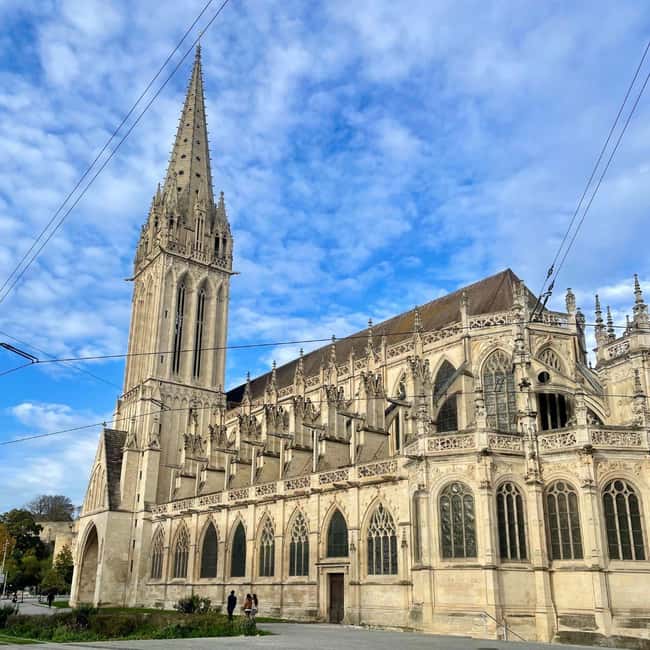
Caen is often described in a single phrase, the City of a Hundred Spires. This tour makes that nickname feel real. You start in the historic center and end with a clearer sense of how the city grew, fought, rebuilt, and kept its character through the centuries.
What works best is the way the guide stitches themes together. You’re not just looking at buildings; you’re learning why they exist and what they meant at the time. That’s also why I like this format so much: it’s short enough to stay fresh, but long enough for a guide to connect the dots without rushing.
The other big win is the group size. With only a handful of people, questions don’t get swallowed. You can ask about a street, a monument, or a detail on a facade and get a straight answer instead of a polite wave-off.
You can also read our reviews of more guided tours in Caen



Where You Meet in Caen and How the Tour Actually Starts
The meeting point is Place Courtonne, Caen. Before you go, the guide contacts you by phone to confirm the visit time and where to meet. In practice, it’s easy to spot the guide because they wear a Caen-colored sweater.
For me, that matters more than you’d think. In a new city, a smooth start keeps you from wasting energy on logistics. And from what I’ve seen in the guide’s communication style, you’re not left guessing. The tour also runs in French or English, depending on what you need.
Abbaye aux Hommes: Romanesque Power and the William the Conqueror Connection

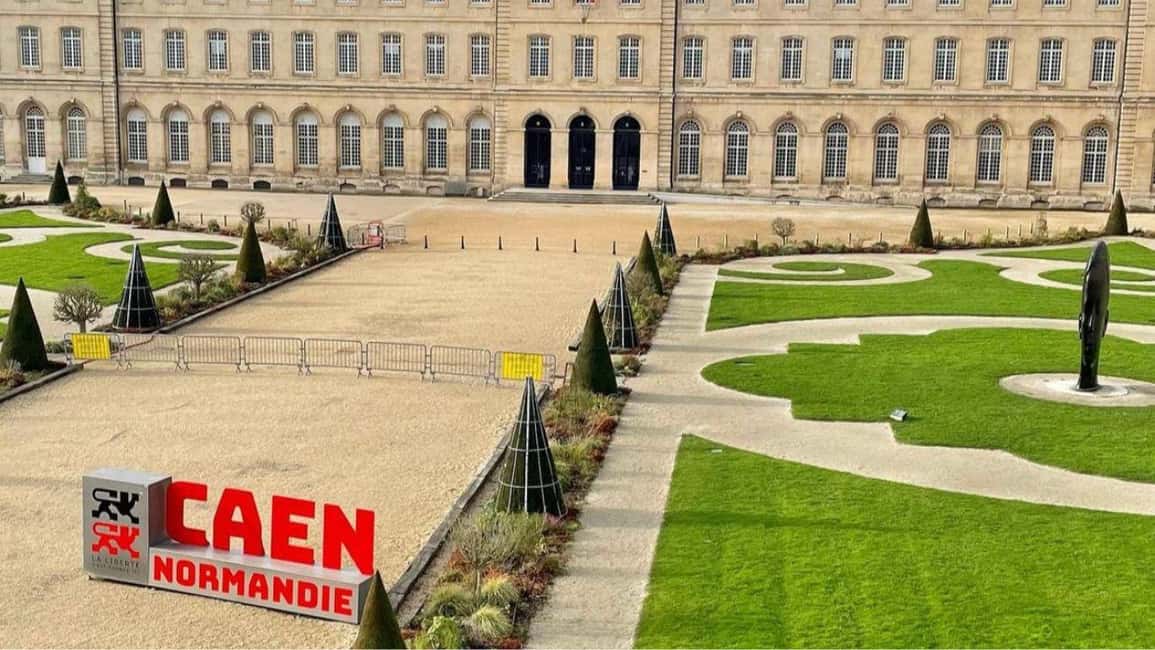
Your walk includes Abbaye aux Hommes, one of Caen’s signature medieval sights. This is not an “okay, here’s a church” stop. The guide frames it as a statement of power and culture, tied directly to William the Conqueror and his influence in the region.
You’ll learn what Romanesque art and architecture are telling you—think stone forms, scale, and design choices that reflect how people wanted to represent authority. If you’ve ever felt lost at big monuments, this helps. Instead of trying to decode everything yourself, you get a short set of lenses you can use on the spot.
Practical note: even when you’re not doing anything physically hard, abbey stops can still involve uneven ground and walking around the complex. Wear shoes you’d trust on cobbles.
Cobblestones and Half-Timbered Houses: Learning to See the City
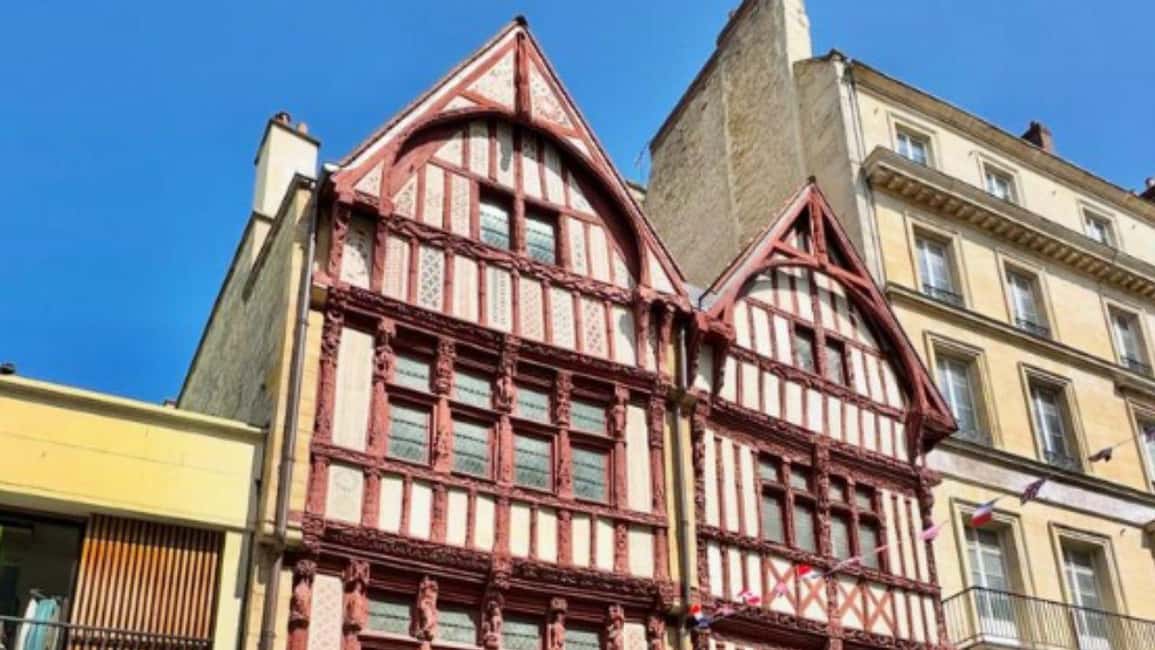
After the abbey, the route turns into the kind of Caen that postcard makers love for a reason: cobbled streets, half-timbered houses, and facades with sculpted details. The magic here is not the vibe. It’s the explanation.
The guide points out the kinds of details you’d usually walk past. You’ll hear stories tied to artisans and merchants—who built, who paid, and who shaped the city’s everyday look. That makes the timber and carvings feel less decorative and more historical.
This is also where the tour earns the “secrets” label, even without sounding dramatic. A secret in a historic city is usually simple: you just didn’t know what to notice yet.
And if you like photos, this stretch gives you good angles. You’ll be walking through the layers, not just stopping at the single most famous wall.
Place Saint-Sauveur: Market Streets, Cafés, and a Living Heart
The tour then moves through the center, and Place Saint-Sauveur is one of the stops that gives the city its pulse. This is the kind of square where you can feel daily life alongside the medieval setting—market energy, cafés, and people doing normal things.
Here’s why it’s worth including. If you only focus on abbeys and castles, you end up with a Caen that feels museum-like. This stop pulls you back into how the city functions now. Even if your plan is sightseeing, you’ll leave with a better sense of where to aim for your next coffee or meal.
It also gives the guide a chance to share practical, local recommendations. In the experiences I read, the guide’s restaurant and café suggestions were a recurring highlight—exactly the kind of help that saves time when you’re hungry and deciding quickly.
You can also read our reviews of more historical tours in Caen

Château de Caen: Military History and City Views That Stick
At Château de Caen, you get the imposing counterpoint to the medieval religious sites. The guide connects the castle to military history, and the stop lands with more meaning once you’ve already learned what Caen’s rulers and institutions tried to do here.
There’s also a viewpoint element. In one experience, the guide even brought a thermos of coffee to warm things up while you looked out over the streets. That kind of small touch might not happen every time, but it signals the overall style: the guide tries to make time outside feel thoughtful, not just a checklist.
Even if you’re not obsessed with castles, you’ll understand why this spot matters in the story of the city. It’s a visual anchor, a place where the past becomes easy to place.
How Thomas Turns Facts Into a Clear, Personal Tour
The standout ingredient is the guide. Thomas comes across as a teacher who genuinely enjoys Caen. He grew up there and holds a master’s in history, and you can feel that combination in how he explains.
A lot of guided tours give you dates. This one gives you relationships between events and places. You hear fun facts, yes, but more importantly you learn what those facts mean when you’re standing in front of the real building.
His explanations also leave room for questions, and that’s a huge difference for learning. If you don’t understand a detail, you can ask. If something reminds you of a topic you care about, you can steer the conversation a bit. With a group capped at six participants, it stays manageable.
I also like that the guide adapts when the group’s mood changes. Some experiences describe tours running longer when there was time and genuine interest. That’s not something you should count on, but it tells you the guide isn’t just reading off a script.
The WWII Thread: Why Caen’s Rebuilding Matters

One of the tour’s most powerful themes is how Caen was affected by World War II and nearly rebuilt afterward. This isn’t treated as a vague tragedy. It’s connected to what you’re seeing today, so the city doesn’t feel frozen in medieval time.
This matters because Caen isn’t only about the medieval period. The city’s modern resilience shapes how the streets and monuments sit together now. When the guide connects the wartime past to the present layout, you start seeing the city as a continuous story rather than separate eras glued on top of each other.
What This Tour Is Like in Real Life (Pace, Walking, and Wear)

This is a 2-hour walk, and “2 hours” can mean different things depending on the city. Here, it’s practical sightseeing: you move from stop to stop, and the guide uses that movement to keep the story flowing.
Expect a longer walk than you might guess from the duration. In feedback, people described it as a long walk, but also said it was worth it because you cover and understand a lot. So think of it as active sightseeing, not a casual stroll.
What to bring is clearly practical: comfortable shoes, and if you have them, hiking or sports shoes. If your feet hate cobbles, plan ahead. Caen’s streets can be charming, but they are still streets.
Value Check: Is $46 Worth It for a Guided Caen Overview?
At $46 per person for a 2-hour tour, the price lands in a reasonable range for a guided, small-group experience—especially with a local guide and access to interpretation you won’t get from a map.
Here’s how I judge value on this kind of tour:
- You’re paying for guided context, not just movement.
- You’re paying for limited group size, which makes Q&A possible.
- You’re covering a compact set of major sites plus the details between them.
The guide’s follow-up recommendations also add real value. In multiple experiences, Thomas provided advice right after the tour for dining and other places to visit. That means the tour doesn’t end when you part ways. It helps you keep exploring more confidently.
If your goal is a first look at Caen with meaning—medieval monuments plus WWII-era context—this is a smart use of a half-day block.
Who Should Book This Tour, and Who Should Skip
This tour is a strong match for:
- History lovers who want a readable story, not just isolated facts
- Families and mixed groups, since it’s built to fit a range of interests
- First-time visitors who want their bearings fast in the historic center
It’s less of a match if:
- You need mobility assistance, wheelchair access, or similar accommodations
- You’re visually impaired and need support tailored to that (this one isn’t suitable)
- You’re over 95, since the activity isn’t recommended for that age range
If any of those apply, it’s better to look for a different format that’s physically easier or designed with accessibility in mind.
Should You Book This Caen Secrets Tour?
If you want a guided introduction to Caen that connects William the Conqueror, medieval architecture, and WWII rebuilding into one clear storyline, I think you should book this tour. The strongest reason is Thomas’s approach: he makes the city’s details usable. You finish with places you can picture in your mind, plus practical ideas for where to eat and what to do next.
Book it especially if you like walking tours where the guide points things out you would otherwise miss. If you prefer minimal walking or need accessibility accommodations, then don’t force it. But for most visitors with decent mobility and a curiosity for how a city really works, this is a very worthwhile way to spend two hours in Normandy.
FAQ
How long is the guided tour of Caen?
The tour lasts 2 hours.
How much does the tour cost?
The price is $46 per person.
Where is the meeting point for the tour?
The meeting point is Place Courtonne, Caen.
How many people are in the group?
The group is small, limited to 6 participants.
What languages are available?
The tour is offered in French and English.
What is included in the price?
The tour includes a local guide, a personalized tour, and a convenient meeting point.
Is there free cancellation?
Yes. You can cancel up to 24 hours in advance for a full refund.
Do I have to pay right away?
No. You can reserve now & pay later.
What should I wear or bring?
Wear comfortable shoes. The tour also suggests hiking shoes or sports shoes.
Is it suitable for people with mobility impairments or wheelchairs?
No. It is not suitable for people with mobility impairments, wheelchair users, visually impaired people, or people over 95 years.