REVIEW · CAEN
Normandy D-Day Beaches Private Tour US sector from Caen
Book on GetYourGuide →Operated by trip my normandy · Bookable on GetYourGuide
The most memorable part of this private Normandy tour is the mix of famous D-Day sites and places you cannot normally enter. You will stand at Omaha Beach, walk among the vast American cemetery, study Pointe du Hoc’s bomb craters, and visit a private bunker filled with original American and German artefacts. Sarah’s clear storytelling has also helped make this a strong choice for history-minded families and small groups.
I like the way the day connects military planning with ordinary French life under occupation. I also like the personal touch: your guide shares his or her family’s story of the French Resistance, then leads you through Norman villages, hedgerows, and Sainte-Mère-Eglise. The main drawback is the price, $931 per group of up to seven, and lunch is extra. It is good value for a full private day, but less so for one or two people.
In This Review
- Key points to know before booking
- Why this private US sector tour works
- Omaha Beach and the American cemetery
- Pointe du Hoc and the German defenses
- A private bunker with original artefacts
- Utah Beach, the hedgerows, and Norman villages
- Lunch at the Roosevelt Café
- Sainte-Mère-Eglise and the airborne story
- The guide makes or breaks this day
- Is $931 good value for up to seven people?
- Who should book this Normandy day?
- Should you book it?
- FAQ
- Where does the Normandy D-Day tour start and finish?
- How long does the tour last?
- Which D-Day sites are included?
- Is lunch included?
- Is the tour private?
- Is the tour available in English and French?
Key points to know before booking
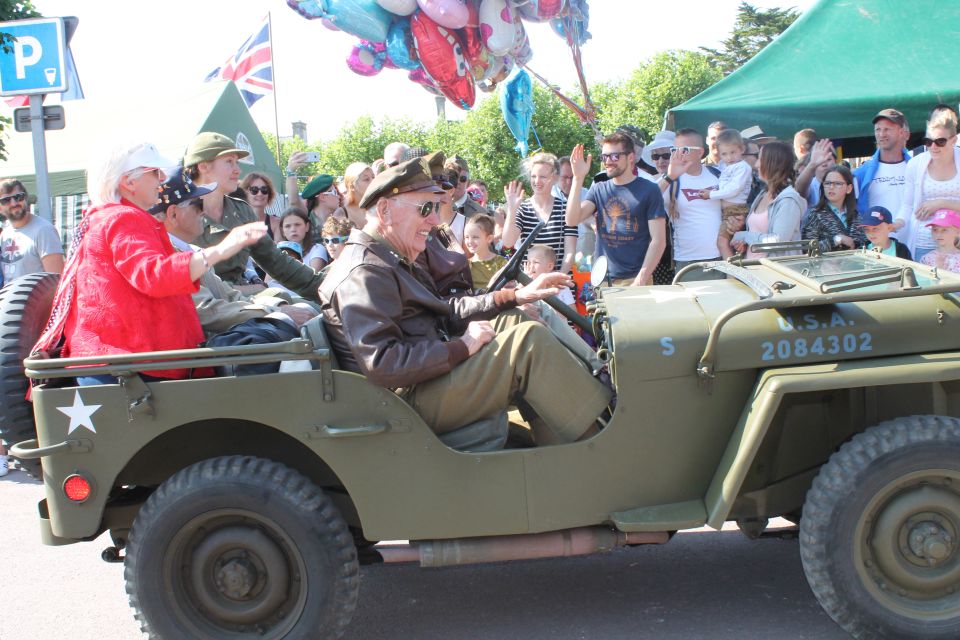
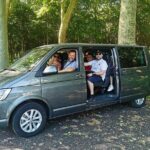
- A private nine-hour route: Travel by air-conditioned van from Caen or Bayeux, with hotel pickup and drop-off.
- The US sector in one day: See Omaha Beach, the American cemetery, Pointe du Hoc, Utah Beach, and Sainte-Mère-Eglise.
- Rare bunker access: Enter a private site not open to the public and see original American and German objects.
- A guide who joins the dots: Hear about ground, naval, and airborne forces, the Atlantic Wall, Fortitude, artificial ports, occupation, and Resistance activity.
- Lunch at the Roosevelt Café: Buy your meal at a café built over a bunker and linked with veterans.
- Suitable for mixed groups: The route is moderate, with customization possible for families and disabled guests on request.
Why this private US sector tour works
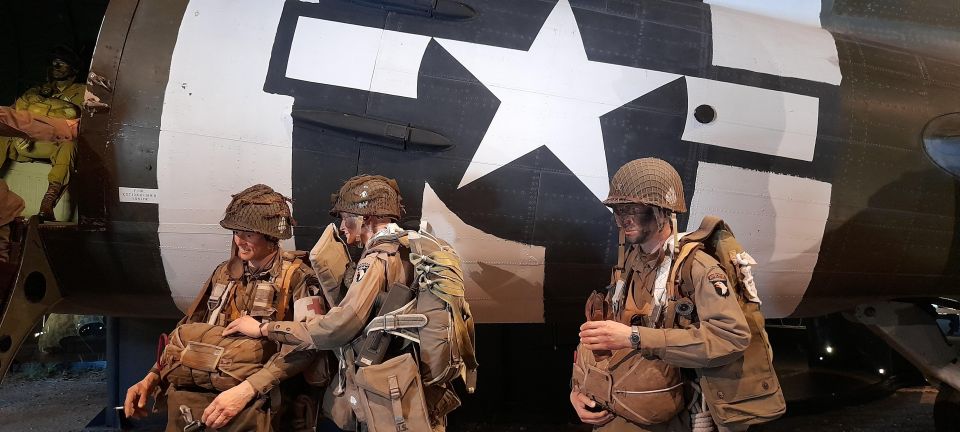
The D-Day coast can feel scattered on a map. Omaha is west of the main landing area, Pointe du Hoc sits between Omaha and Utah, and Sainte-Mère-Eglise lies inland near the airborne landing zone. A private van and a full day give you a practical way to connect these places without trying to piece together local transport.
You will have a guide beside you for the whole route, not just a driver who drops you at monuments. The tour covers the ground troops who landed on the beaches, the naval forces that supported them, and the airborne units dropped behind German lines. It also explains the artificial ports, the Allied decoy plan called Fortitude, the Atlantic Wall, and the effect of occupation on French families.
That wider frame matters. A visit to Omaha Beach can otherwise become a quiet stop at a sign and a view. Here, the beach is tied to the defenses above it, the cemetery nearby, the naval bombardment, and the human cost of the operation.
The group limit is seven. That is large enough for a family or a group of friends, but small enough to keep questions practical. One recent booking included six people, a child, and an infant, and the day went well. The tour also provides a PA audio system in the van, which is useful when everyone needs to hear the guide while driving between sites.
You can also read our reviews of more private tours in Caen


Omaha Beach and the American cemetery
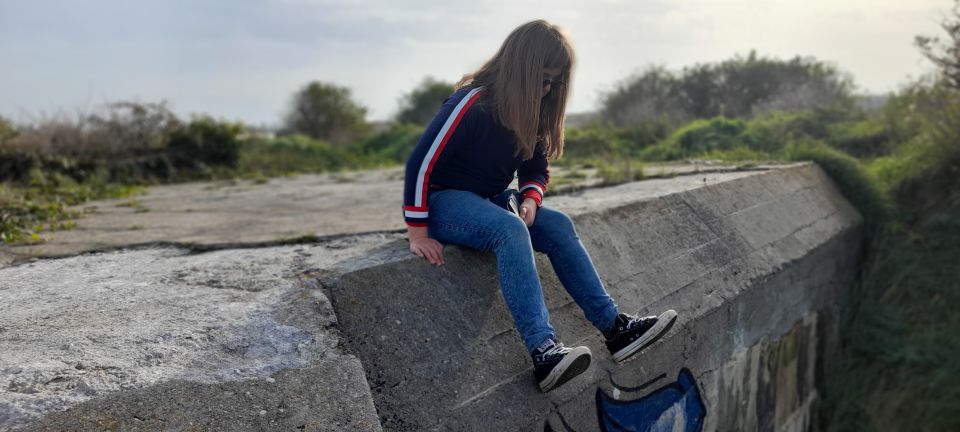
Omaha Beach is the emotional center of the US sector. Your guide will help you understand the physical problem faced by the landing troops: open sand, exposed approaches, German defensive positions, and fire from higher ground. The beach itself is broad and calm today, which makes the contrast with June 6, 1944 especially stark.
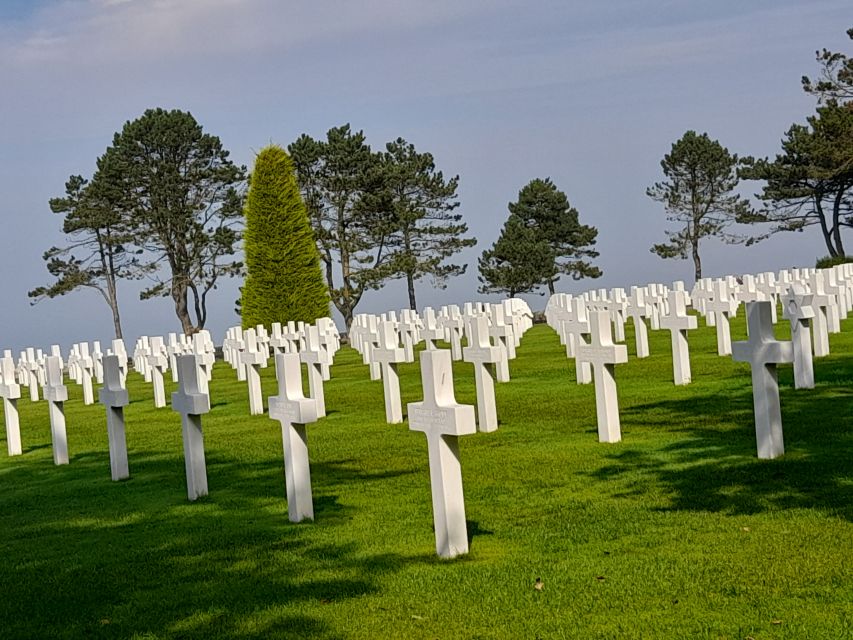
The tour then moves to the American cemetery, where about 10,000 American soldiers are buried or listed as missing in action. Give this stop the attention it deserves. It is not simply a photo break, and the scale can be hard to take in until you walk among the rows and consider the individual lives represented there.
The stated aim of the tour is to keep the soldiers’ stories alive for future generations. That comes through in the focus on personal accounts and individual sacrifice, rather than only dates and troop movements. You should expect a respectful visit, with time to pay tribute and ask questions.
One practical point: the day is built around several outdoor stops, so comfortable shoes and clothing suited to changing weather will help. The activity is described as moderate. The route can be adjusted for families and disabled participants if arranged in advance, and a free wheelchair is available.
Pointe du Hoc and the German defenses
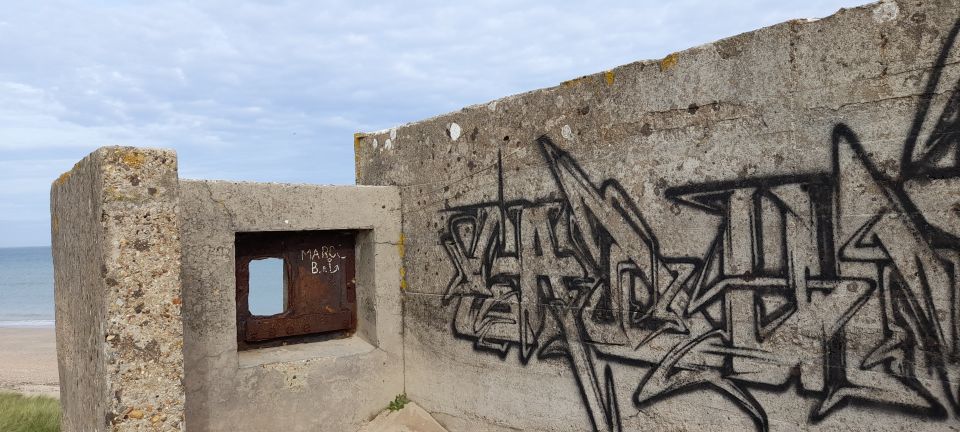
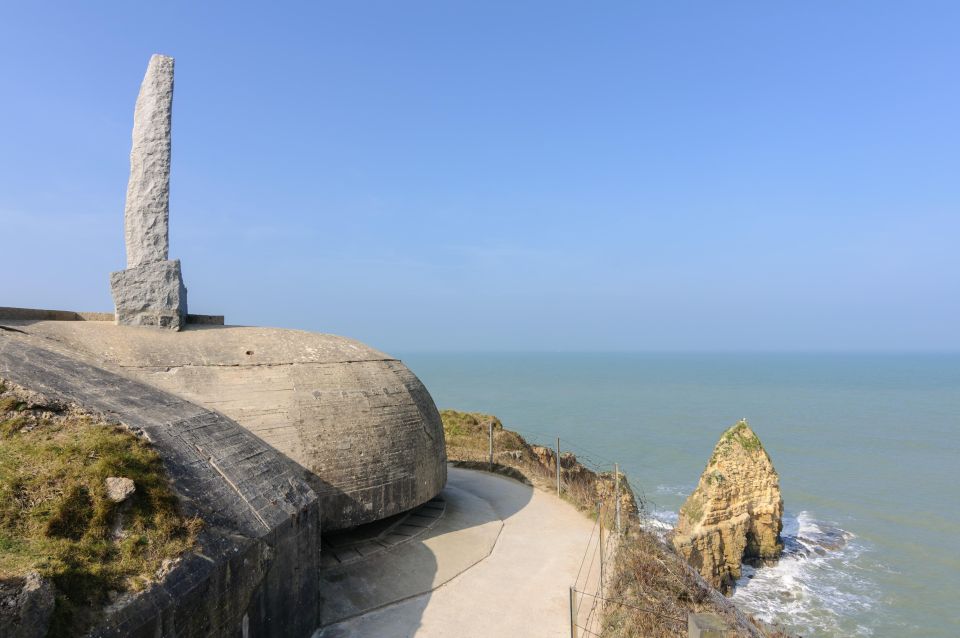
Pointe du Hoc is one of the most striking military sites on the route. Huge craters from naval and aerial bombardment remain visible, giving you a direct sense of the force used against the German position. It is one thing to hear about shelling; it is another to see the ground broken apart around concrete defenses.
The site also helps explain the scale of the assault. Around 225 Army Rangers climbed cliffs about 100 feet high to reach the German position. Your guide will use the bunkers, strongpoints, and surrounding terrain to show why the operation was so difficult.
I like this stop because it makes the Atlantic Wall easier to understand. The defenses were not just one wall or line. They included bunkers, gun positions, obstacles, and strongpoints placed to control the coast. Pointe du Hoc lets you see how those pieces worked together.
The ground may be uneven, and the tour classifies the day as moderate. If you have limited mobility, ask about customization before booking. The supplied information confirms that the experience is wheelchair accessible, but outdoor military sites can still vary in ease from one area to another.
A private bunker with original artefacts
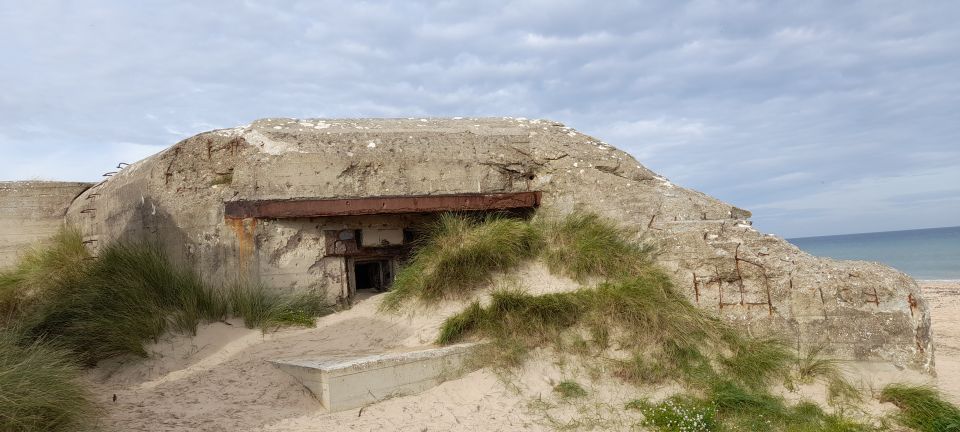
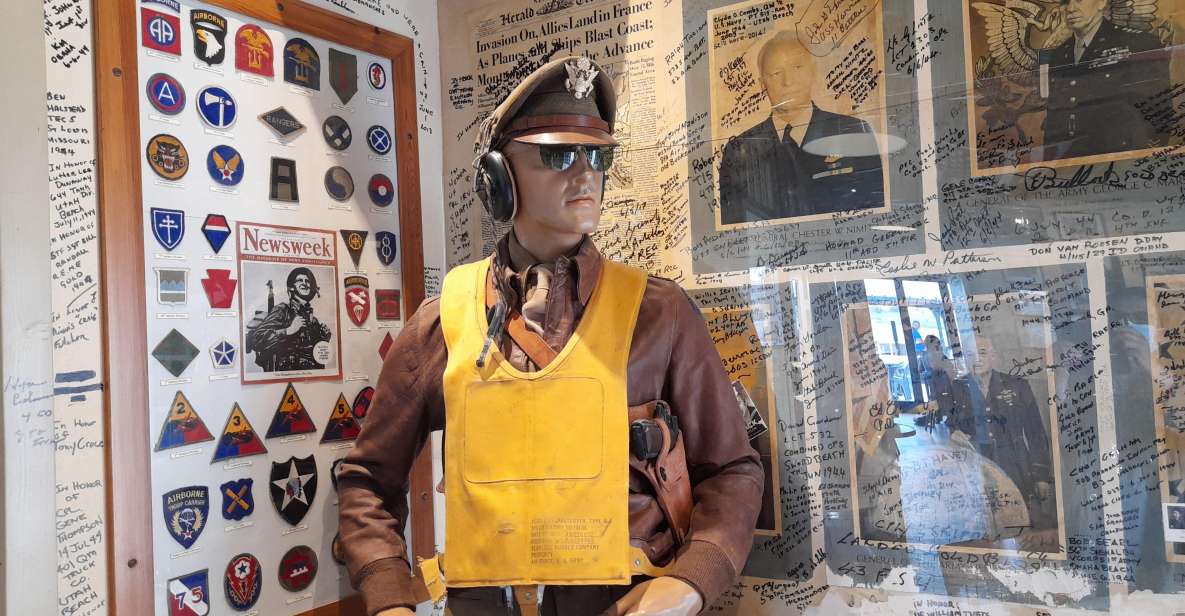
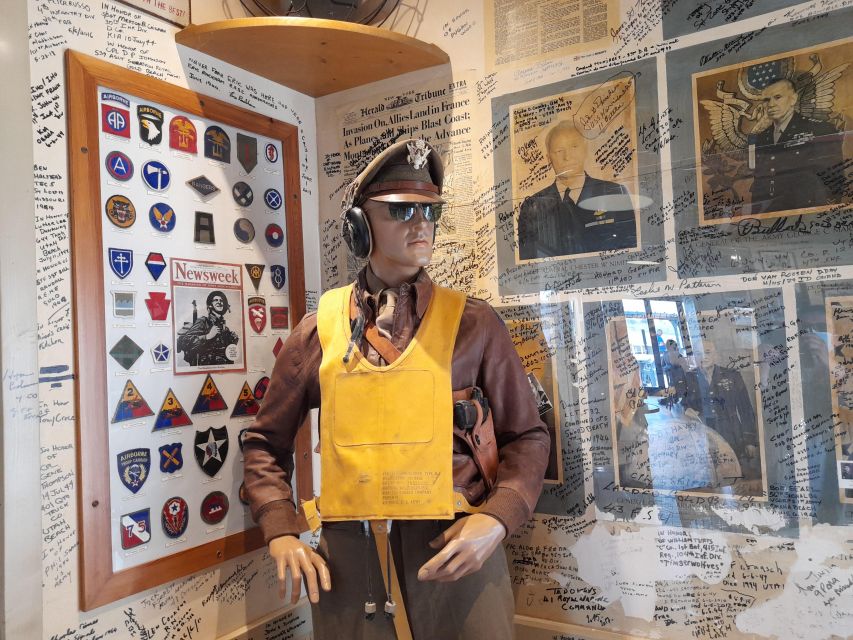
The private bunker is one of the tour’s less routine stops. It is not open to the public, so access gives the day a more personal feel than a standard circuit of major memorials. Inside, you will see original American and German artefacts.
This visit is valuable because it brings the conflict down to a human scale. A large cemetery explains the cost of war. A bunker shows the confined, defensive side of it. The combination helps you picture how troops lived, worked, and fought within the Atlantic Wall system.
Do not expect a polished museum with a long public exhibit. The appeal here is the private setting and the original objects, along with the guide’s explanation of what you are seeing. The tour includes entry fees for the listed sites, so you do not need to budget a separate admission charge for this part of the day.
Utah Beach, the hedgerows, and Norman villages
The route continues from Utah Beach toward Sainte-Mère-Eglise through Normandy’s hedgerows. This shift is important. The beaches tell the story of the first assault, while the narrow lanes and thick field boundaries show the sort of ground Allied forces had to cross after getting inland.
The tour also passes through typical Norman villages. These stops are not presented as major sightseeing attractions, and that is part of their value. You get a sense of the French setting beyond memorials and battle markers, including the communities affected by German occupation and liberation.
Your guide will discuss French life under occupation and the French Resistance. The family connection to the Resistance adds a local voice to a subject that can otherwise feel distant. Ask questions here if you want to understand how military events affected civilians, homes, farms, and village life.
The route covers a lot of ground, so some of the village portions are viewed in passing rather than treated as long walking tours. That is a fair trade if your priority is the US sector and its major D-Day sites. If you want a slow day focused on cafés, village architecture, or local markets, this is not that kind of outing.




Lunch at the Roosevelt Café
Lunch is not included, but the tour takes you to the Roosevelt Café, a meeting place for veterans built on a bunker. You buy your own meal there, giving you a chance to pause during a long day of site visits.
The café’s setting adds meaning to the stop. It is not just a convenient restaurant between monuments. The bunker beneath it links the meal to the military structures you have been studying, while its connection with veterans gives the place a living role in the memory of the invasion.
Because lunch is extra, budget for it separately. The tour includes water and coffee, which helps, but you should not confuse those inclusions with a provided meal. A nine-hour outing needs a proper break, and this is the planned point for one.
Sainte-Mère-Eglise and the airborne story
Sainte-Mère-Eglise is famous for the film The Longest Day and for the paratrooper John Steele of the 505th Parachute Infantry Regiment. You will see the church tower where he landed, an image that has become one of the best-known symbols of the airborne assault.
The stop also includes two stained glass windows made to commemorate the town’s liberation by the 82nd Airborne Division on June 6, 1944. These details broaden the day beyond beach landings. You will have heard about naval support and infantry at Omaha and Utah, then see how airborne forces formed another part of the plan.
This is a good final major stop because it brings together the military and civilian sides of liberation. The church is part of a functioning village setting, not an isolated battlefield. It helps show how the events of D-Day entered local memory and public life.
The tour returns to your starting point in Caen or Bayeux after Sainte-Mère-Eglise. Since the day lasts about nine hours, expect a full schedule rather than a relaxed half-day excursion. The included hotel pickup and drop-off remove the need to arrange a separate way to reach the first site or return after the long drive.
The guide makes or breaks this day
A private D-Day tour depends heavily on the guide. The strongest feedback here centers on Sarah, who was praised for being friendly, well informed, and good at setting the stage during the drive to Utah Beach. That driving time matters because it lets the guide establish the sequence of events before you reach the ground where they happened.
The guide also needs to connect separate places. Omaha Beach, Pointe du Hoc, Utah Beach, and Sainte-Mère-Eglise each tell only part of the story. The value comes from understanding how naval fire, airborne drops, beach assaults, German defenses, Allied deception, and the Resistance fit together.
Sarah was also described as good fun, which is useful on a nine-hour day. A serious subject does not require a stiff presentation. The best guide can respect the dead while keeping the discussion clear, open, and human.
Guide availability may vary, so do not book on the assumption that Sarah will lead your specific departure unless that is confirmed. English and French are offered, and the van has a PA system so you can hear the commentary on the road.
Is $931 good value for up to seven people?
The price is $931 per group of up to seven. For a full private day, that works out to about $133 per person if you fill all seven places, before lunch. For two people, the per-person cost becomes much higher, so the value improves sharply with a family or small group.
You are paying for more than transport. The price includes hotel pickup and drop-off, an air-conditioned van, the guide, site entry fees, water, coffee, and private access to a bunker not open to the public. It also buys flexibility that a large coach tour cannot offer, especially for families and participants who need an adjusted pace.
I would consider it good value for six or seven people who want a focused US sector tour without managing the driving. For a couple on a tight budget, a group tour may cost less. The private format makes the most sense when personal questions, family needs, and control over the day matter.
Lunch remains an extra cost. Also remember that this is a history-heavy outing, not a general sightseeing tour of Normandy. You spend much of the day at military sites, memorials, beaches, bunkers, and villages linked to the invasion.
Who should book this Normandy day?
I would choose this tour for a family group, a reunion of friends, or anyone with a strong interest in the American role in D-Day. The small private group is especially useful when children, an infant, or someone with mobility concerns is part of the party.
It also suits you if you want context rather than a quick list of stops. The guide covers Fortitude, artificial ports, the Atlantic Wall, the Resistance, occupation, and all three military branches involved in the operation. That makes the day useful for first-time visitors who want the main story in one organized route.
You may prefer another option if you want a slower visit at each beach, a long lunch, or more time in Bayeux itself. Nine hours is enough to cover the major sites, but the schedule has to keep moving.
Free cancellation up to 24 hours before the tour and reserve now, pay later terms make planning easier. Pickup is included in Caen and Bayeux, and the tour is offered in English or French.
Should you book it?
Book this private tour if you want the major US sector sites explained in one day, value a local guide, and can share the $931 cost across a group. The private bunker, family Resistance story, and carefully linked route add more than a standard beach transfer.
I would be most likely to recommend it to groups of four to seven. Sarah’s strong recent guiding feedback is encouraging, and the tour’s mix of famous sites, personal stories, German defenses, villages, and airborne history gives you a full day rather than a string of photo stops.
Choose something else if the price is too high for your group or if you prefer to explore at your own pace. But if your goal is to understand the US sector and honor those who fought there, this is a well-planned and practical choice.
FAQ
Where does the Normandy D-Day tour start and finish?
Pickup and drop-off are included at your location in Bayeux or Caen. The tour returns to your starting point at the end of the day.
How long does the tour last?
The tour lasts approximately nine hours.
Which D-Day sites are included?
The route includes Omaha Beach, the American cemetery, Pointe du Hoc, a strongpoint connected with the Atlantic Wall, Utah Beach, a private bunker, and Sainte-Mère-Eglise.
Is lunch included?
No. Lunch is not included in the price. You can buy lunch at the Roosevelt Café, which was built on a bunker and is a meeting place for veterans.
Is the tour private?
Yes. It is a private group tour for up to seven people.
Is the tour available in English and French?
Yes. Live guiding is available in English and French.