REVIEW · CAEN
Private Tour: D-Day Beaches from Caen
Book on Viator →Operated by Normandytour · Bookable on Viator
Few places hit as hard as Normandy. This private trip turns D-Day into stories you can actually picture, and I love the private guide (Igor Rosen) who shares family-tied Normandy WWII accounts. You’ll also get real time at Omaha Beach and the American Cemetery, not just quick photo stops. One catch: it’s a full 10-hour day with several outdoors stops, so plan for walking and cooler weather layers if the forecast is off.
The format is built for comfort and flexibility: hotel pickup within 30 km of Caen, an air-conditioned minivan, and a day you can shape to your interests. You’ll also get a snack, a mobile ticket, and a chance to taste Normandy apple brandy as part of the experience. The vibe is respectful and focused, with the guide and driver using masks or safety shields and added protection in the van.
In This Review
- Key things I’d circle before you book
- From Caen by private air-conditioned minivan
- Omaha Beach and the Normandy American Cemetery: where scale meets memory
- Longues-sur-Mer’s German canon battery: the guns that fired on June 6, 1944
- Mulberry Harbour remains and Utah Beach: logistics you can actually see
- Pointe du Hoc: the cliffs and the 2nd Ranger battalion fight
- Sainte-Mère-Église and the optional Airborne Museum
- Brécourt Manor and the Danie Winters Memorial: the fight stays personal
- Price and value: what you’re really paying for
- Should you book this private D-Day tour from Caen?
- FAQ
- What’s the group size for this private tour?
- Where does pickup happen?
- What time does the tour start?
- How long is the D-Day tour?
- Is the tour offered in English?
- Are tickets included for the main stops?
- Is the Airborne Museum included?
- What’s included in the price?
- Are drinks included?
- Can children or service animals join?
- How does cancellation work?
Key things I’d circle before you book

- Igor Rosen’s human stories: family connections to WWII Normandy plus on-the-ground context that makes the day feel personal.
- Flag-lowering moments, when timing allows: at the Normandy American Cemetery, the guide works to catch the U.S. flag lowering and taps.
- Major sites with entry included: Omaha Beach, the American Cemetery, the German gun battery at Longues-sur-Mer, Mulberry Port remains, Pointe du Hoc, and more.
- Engineering + fighting, side by side: Mulberry Harbour logistics and the landing sectors help you see the full plan, not only the gunfire.
- One-car private schedule: up to six people, no group shuffling, and a flexible itinerary you can steer.
- A real WWII German canon battery: Longues-sur-Mer still has guns that were firing on June 6, 1944.
From Caen by private air-conditioned minivan

You start the day with a 9:00 am pickup from Caen or anywhere within 30 km. This matters more than it sounds. Normandy roads can be slow and parking can be annoying, so starting with door-to-door pickup helps you spend your limited daylight on the sites you actually paid to see.
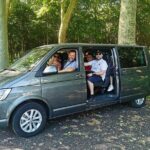
The tour is private for your group (up to six people per booking), run with a dedicated guide and driver in an air-conditioned minivan. That’s a big plus if you’re traveling with kids, want quiet time to process what you’re seeing, or just hate the “race to the next stop” feeling that group tours can create.
I also like that the day is offered in English and may be run with a multi-lingual guide if needed. If your group has different comfort levels with English, you still have a real chance of staying on the same page all day. And yes, there are practical touches like a snack included—so you’re not calculating where to grab food during major memorial time.
You can also read our reviews of more private tours in Caen


Omaha Beach and the Normandy American Cemetery: where scale meets memory

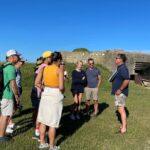
Omaha Beach is the first stop, and it sets the emotional tone right away. You get about two hours there, with admission ticket included. Expect to hear how the landings unfolded here—on the ground scale, the sacrifice, and what it took to keep pushing after the initial waves. Even if you’ve read about D-Day before, the guide’s storytelling approach makes the details easier to hold in your head.
Then you head to the Normandy American Cemetery at Colleville-sur-Mer for another two hours, with admission included. This is where you’ll likely slow down. The visitor center and the cemetery setting do a lot of the work for you, but what makes this stop special is how the timing can be handled.
In particular, your guide can aim to be there for the U.S. flag lowering and taps. That kind of moment isn’t guaranteed by the monuments themselves—it takes scheduling effort. If your visit lines up, it’s the kind of detail that turns a tour into something you remember for years.
What I’d watch for: the cemetery area is moving and quiet, but the day is still long. If your group includes anyone who gets overwhelmed easily, build in a little breathing room as you move between the visitor center and the graves.
Longues-sur-Mer’s German canon battery: the guns that fired on June 6, 1944
After the American sector, you switch perspective with the Batterie Allemande de Longues-Sure-Mer. This stop is about one hour, admission included, and it’s built around a rare kind of connection to history: it’s the only site on this route that hosts a real German WWII canon battery.
The standout fact here is direct and powerful—those guns were still shooting on June 6, 1944. When you see the scale of the emplacement and hear what it meant for the surrounding landings, it stops being abstract. You start understanding how geography, fortification, and timing all collided on the same day.
Possible drawback: this is one of the more technically focused stops on the route. If your group prefers broad human stories only, you’ll still hear plenty of that, but you might want to lean into the guide’s explanations and ask a few questions. The point is to help the sites make sense as part of a bigger system, not just as “a place where something happened.”
Mulberry Harbour remains and Utah Beach: logistics you can actually see

Next up is the port of Mulberry Harbour—specifically the vestiges of the Mulberry Port. You’ll spend about an hour here with admission included. Most people think of D-Day as soldiers and ships, which is true. But the Mulberry Harbour angle is what makes this route feel complete. You’ll hear about the artificial harbor idea—built, deployed, and used to unload the supplies the battle needed.
That “logistics” focus is valuable because it explains how the landings could keep going after the first shock. D-Day wasn’t only a day. It was what happened in the days and weeks after, and supplies were the fuel.
Then the route continues with Utah Beach for about one hour, admission included. Utah is often remembered for success in this sector, and your guide connects that to the broader operation. Even with limited time, the stop helps you see how different landing areas faced different challenges—and how that shaped the day’s results.
What I’d do on this part: if your group has two interests (engineering and battle stories, for example), this section is where you’ll get a good balance without feeling like you’re skipping the fighting entirely.
Pointe du Hoc: the cliffs and the 2nd Ranger battalion fight

Pointe du Hoc takes you back to the battle’s edge. You’ll have about 1 hour 30 minutes, admission included. This is where the story turns dramatic fast: the guide focuses on the 2nd Ranger battalion and the sacrifice required to take a crucial gun battery on the cliffs above Omaha Beach on June 6, 1944.
Standing in this kind of terrain after hearing how the mission unfolded makes the details sharper. It’s not just “a famous cliff.” It becomes a physical problem the Rangers had to solve under fire—timing, approach, and the risk of failure.
Consideration: the route is packed, and this is a stop where your attention matters. If your group tends to get impatient at memorial sites, Pointe du Hoc may feel intense. On the other hand, if you’re the type who likes to understand how missions worked, this is often the highlight.




Sainte-Mère-Église and the optional Airborne Museum

Sainte-Mère-Église is about the airborne side of the invasion. You’ll spend around two hours here with admission included. The guide explains what the 82nd and 101st Airborne forces did on D-Day, and how their sacrifice helped set up the landings hours later.
This is a good change of pace after the beaches. Instead of focusing only on the shoreline, you’re hearing about preparation and disruption—the “before the boats” phase that made the rest possible.
There’s also an optional Airborne Museum if time allows. If you have energy left in the day, it’s a free addition. If you’re tired, you’re not stuck; your guide can adjust the plan so the day doesn’t turn into a marathon where everyone leaves grumpy.
Brécourt Manor and the Danie Winters Memorial: the fight stays personal

The final stretch brings you to Manoir de Brécourt, where the 506PIR, Company Easy took a crucial gun position about four miles south of Utah Beach. This stop is about 30 minutes, with admission included, plus a visit to the Danie Winters Memorial.
This is a shorter segment, but it’s an important one. The route has covered huge movements and massive operations, but this kind of location helps you remember that D-Day was also made up of small, specific fights. You’re not only looking at famous beaches—you’re seeing where individuals and units had direct stakes.
Tip for your group: if you’ve been taking in a lot of names all day, this is a good moment to pause and let the last story settle. Ask your guide to connect it back to what you saw earlier so everything clicks as one coherent day.
Price and value: what you’re really paying for

The price is $1,443.52 per group, up to six people. That sounds high until you break down what’s included and what it saves you.
You’re not just buying seats on a bus. You’re paying for:
- Hotel pickup and drop-off within 30 km of Caen
- A private guide for roughly 10 hours
- Transport by air-conditioned minivan
- A snack
- Admission tickets included for multiple major stops
- A flexible itinerary you can tailor to your interests
- A mobile ticket
If you’re traveling as a couple, it can still be a big spend. But if you add in private timing (not fighting for a slot), included entry, and the guide’s ability to shape the day, the value can make sense quickly—especially for first-time Normandy visitors who want to see the key sites without missing the meaning.
And based on how the day is described, the guide attention to details is a real selling point—like working toward moments such as flag-lowering and taps at the cemetery. Those aren’t just “extras.” They’re the kind of things that make a tour feel thoughtful.
One more practical note: drinks aren’t included. Plan on bringing water or buying it once you’re out and about so the day stays comfortable.
Should you book this private D-Day tour from Caen?
If you want a D-Day day trip that feels respectful, well-timed, and guided by someone like Igor Rosen who brings WWII Normandy to life with personal, family-tied context, I think you should seriously consider booking.
This is also a smart choice if your group has specific priorities—Omaha Beach and the cemetery, the German battery at Longues-sur-Mer, Pointe du Hoc, and the airborne sites—because the route is built around all of them rather than cutting your list down.
You might rethink it if your group hates long days or you’re looking for a quick drive-by. This is a full, scheduled day. If you can handle that, you’ll come away with a much clearer picture of how the landings worked and why these places matter.
FAQ
What’s the group size for this private tour?
It’s priced per car with a maximum of six people per booking, and it’s private, meaning only your group participates.
Where does pickup happen?
Pickup is offered from Caen or anywhere within a 30 km radius of Caen.
What time does the tour start?
The start time is 9:00 am.
How long is the D-Day tour?
The duration is about 10 hours.
Is the tour offered in English?
Yes, it’s offered in English.
Are tickets included for the main stops?
Admission tickets are included for the listed stops such as Omaha Beach, the Normandy American Cemetery, Longues-sur-Mer, Mulberry Port vestiges, Utah Beach, Pointe du Hoc, Sainte-Mère-Église, and Brécourt Manor.
Is the Airborne Museum included?
It’s possible to visit the Airborne Museum if there’s time, and entry is listed as free.
What’s included in the price?
Included items are hotel pickup and drop-off, a snack, a private guide, and transport by air-conditioned minivan.
Are drinks included?
No, drinks are not included.
Can children or service animals join?
Children must be accompanied by an adult, and service animals are allowed.
How does cancellation work?
Free cancellation is available up to 24 hours in advance for a full refund. If you cancel less than 24 hours before the start time, the amount paid is not refunded.