REVIEW · PARIS
Small group visit to the Montmartre district in Italian
Book on Viator →Operated by Visita Parigi Diversamente · Bookable on Viator
Montmartre reveals itself best on foot, one stairway, square, and odd little corner at a time. This Italian-language walk goes beyond the usual Sacré-Coeur stop, bringing in the last windmills, the vineyard, Dalida’s former home, the pink house, Bateau-Lavoir, and the wall covered with I love you in 250 languages.
I like the small maximum of eight people, which should make it easier to hear Maurizio and ask questions. I also like the mix of art, local stories, and broad Paris views, rather than a walk built only around famous photo stops.
The main consideration is the physical effort. Montmartre is hilly, with stairs and narrow streets, and the route finishes uphill at Sacré-Coeur. Also, the supplied details describe the route as beginning near the Moulin Rouge while giving Place des Abbesses as the meeting point, so confirm the exact starting instructions before setting out.
In This Review
- Key points at a glance
- Why this Italian Montmartre walk feels different
- Meeting at Abbesses and getting oriented
- The Moulin Rouge area and the climb into Montmartre
- The I Love You wall in 250 languages
- Sacré-Coeur and Paris from the top
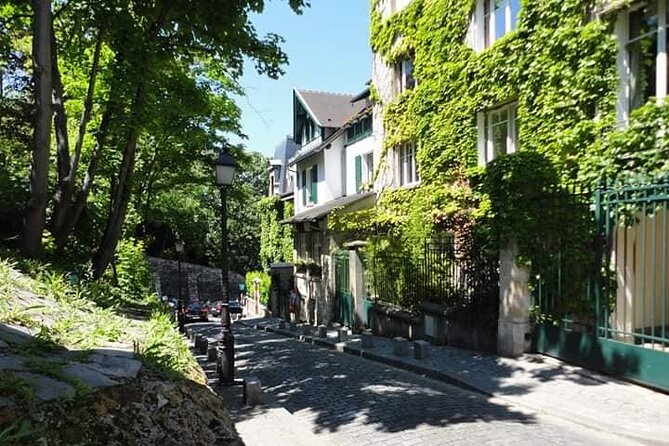
- The pink house and Montmartre’s visual character
- Windmills, vineyard, and Dalida’s house
- Place du Tertre and the artists’ quarter
- Bateau-Lavoir and the art stories behind the streets
- What two hours can and cannot include
- Who will get the most from this tour
- Weather, group size, and cancellation terms
- Is the $37.83 price good value?
- Should you book this Montmartre walk?
- FAQ
- What language is the tour conducted in?
- Who is the guide?
- How long does the tour last?
- Where does the tour meet?
- Where does the tour end?
- Is the Moulin Rouge included?
- What landmarks are included?
- How many people can join the tour?
- Is the tour physically demanding?
- Can I cancel for a full refund?
- What happens if the weather is poor?
- Are service animals allowed?
Key points at a glance
- Italian-language walk with Maurizio: Expect a personal tour shaped by history, art, street scenes, and stories about Montmartre.
- No more than eight people: A small group suits visitors who want a quieter walk and a better chance to speak with the guide.
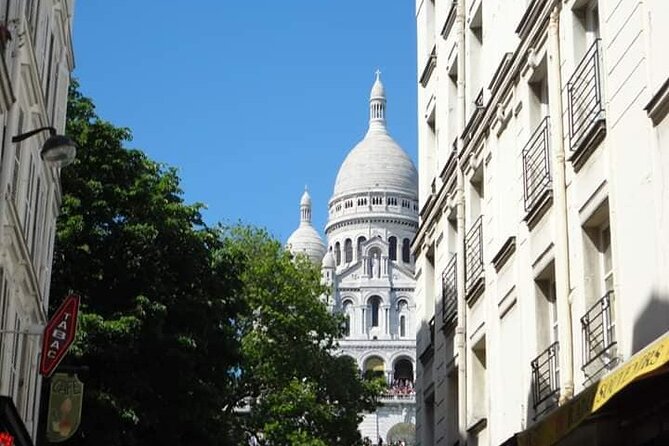
- A route beyond Sacré-Coeur: The walk includes windmills, Montmartre’s vineyard, Dalida’s house, the pink house, and Bateau-Lavoir.
- Two hours from the lower hill to the summit: You finish at Sacré-Coeur with a wide view across Paris.
- Free cancellation up to 24 hours ahead: Poor weather or too few bookings may lead to a new date or a full refund.
- Moderate fitness required: Expect sloping streets, stairs, and an uphill finish.
Why this Italian Montmartre walk feels different
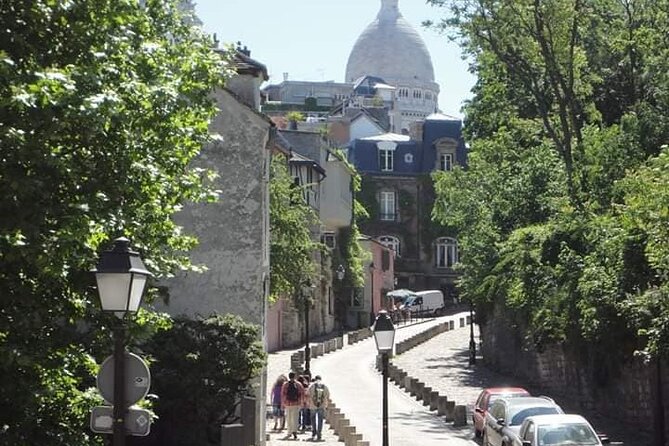
Montmartre is easy to reduce to three images: the Moulin Rouge, artists at Place du Tertre, and the white domes of Sacré-Coeur. This walk gives those sights their place, but it also adds the quieter pieces that make the neighborhood feel like a lived-in district rather than a string of postcard stops.
The route is led in Italian by Maurizio, whose approach combines art, local history, and personal stories. That matters in Montmartre, where a plain-looking street or square can carry more meaning than its appearance suggests. You are not simply moving uphill. You are learning why the neighborhood became linked with painters, writers, performers, cabaret culture, and everyday Paris life.
The group limit of eight is one of the strongest features. Montmartre’s lanes can be tight, and a large group would make it harder to follow a talk or pause without blocking the pavement. With fewer people, you should have a better chance to ask about a detail that catches your eye, such as the street art, the old houses, or one of the district’s many stories.
The price is $37.83 per person. For a two-hour guided walk in one of Paris’s most visited districts, that is a reasonable rate if you value interpretation in Italian. You are paying for a guide who connects the sights, not for admission tickets, since the listed stops are visited from the outside and have no separate entry charge.
You can also read our reviews of more tours and experiences in Paris.



Meeting at Abbesses and getting oriented
The stated meeting point is Place des Abbesses, in the 18th arrondissement. This is a useful place to begin because it puts you inside Montmartre rather than leaving you to find your way through the neighborhood on your own.
There is one detail to check carefully before the day of the walk. The route description refers to starting from the famous Moulin Rouge and then climbing the hill, while the formal meeting information gives Place des Abbesses. Those locations are in the same broad Montmartre area, but they are not the same meeting point. Use the confirmation received at booking to verify where Maurizio will meet you and how the route is arranged that day.
The walk ends at the Basilica of the Sacred Heart of Paris. That point-to-point format is helpful because you do not finish where you started. You can continue with Sacré-Coeur, enjoy the view, or make your own way onward from the upper hill.
Plan for comfortable shoes. The route includes narrow streets, stairways, slopes, and the climb toward the basilica. A moderate level of fitness is required, and the two-hour estimate does not include extra time you may wish to spend taking photos or looking around after the guide finishes.
The Moulin Rouge area and the climb into Montmartre
The Moulin Rouge provides a fitting opening to a Montmartre walk. It brings you into the district through its theatrical and nightlife side before the route turns toward quieter streets and higher ground.
From there, the walk heads uphill through typical Montmartre streets and squares. This change in mood is part of the appeal. You move from a famous Paris landmark into a neighborhood of stairways, small lanes, and viewpoints where the city opens out below you.
The climb is also a practical reminder that Montmartre is not a flat sightseeing zone. You will spend much of the walk on foot, and some parts may feel strenuous if you are carrying heavy bags or dealing with mobility limits. The tradeoff is that the uphill route gives the outing a clear sense of progress, ending at the highest point beside Sacré-Coeur.
The I Love You wall in 250 languages
Le Mur des Je t’aime, or the I Love You wall, is a brief but distinctive stop. The phrase is written in 250 languages, turning an ordinary wall into a small public artwork about a feeling that crosses borders.
Only about five minutes are assigned here, so think of it as a quick introduction rather than a long art visit. It is a good place for a photo and a reminder that Montmartre’s appeal is not limited to grand monuments. Small, modern details sit beside older streets and famous landmarks.
The stop is free, and you do not need to arrange admission. If you enjoy visual details and urban art, this part adds variety early in the walk.
Sacré-Coeur and Paris from the top
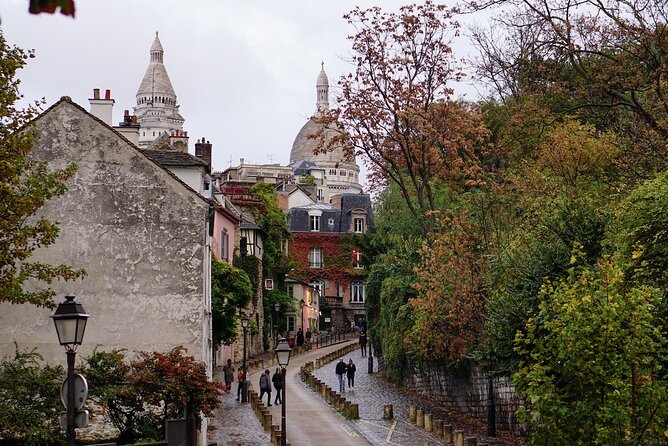
The Basilica of the Sacred Heart is the endpoint and one of the main rewards of the route. Its white exterior dominates the hill, and the open area in front gives you a broad view across Paris.
The planned stop is about ten minutes. That is enough for the guide to explain the setting and point out the city below, but it is not a full interior visit or an extended basilica tour. The experience focuses on the outside setting and the panorama.
The view is one of the clearest reasons to take a guided walk up Montmartre instead of simply arriving at Sacré-Coeur by yourself. The guide helps place the neighborhood in the wider city, while you get a sense of how the hill relates to the rest of Paris.
Because the tour finishes here, you can stay longer on your own. That is useful if you want time for photos, quiet viewing, or a visit to the basilica after the two-hour walk. Admission to the listed stop is free, though the experience does not state that an interior guided visit is included.





The pink house and Montmartre’s visual character
La Petite Maison Rose, the little pink house of Montmartre, is another short stop. The guide addresses why the house is pink and who helped make it famous, giving you more than a quick photo opportunity.
The stop lasts around five minutes. That may feel brief if you are interested in architecture or photography, but the guide’s explanation gives the building a place in Montmartre’s story. The house is also a good example of why this district attracts so many people: color, compact streets, and memorable façades create a setting that feels different from much of central Paris.
You should expect the group to pause outside rather than enter. The value comes from the context and the surrounding streets, not from an interior attraction.
Windmills, vineyard, and Dalida’s house
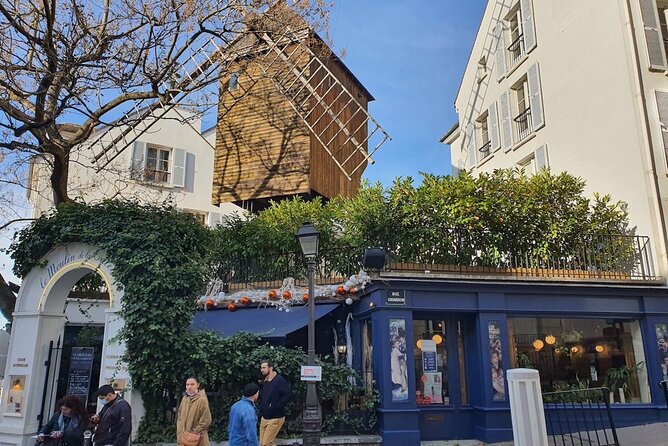
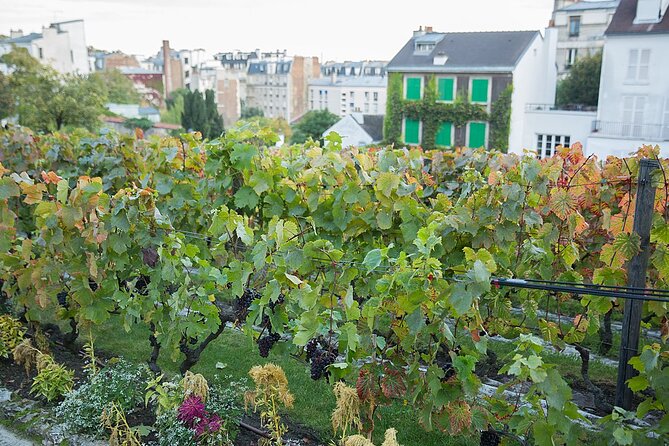
The route also includes some of the district’s less obvious landmarks: the last two windmills of Montmartre, the famous vineyard, and Dalida’s house. These details help explain the neighborhood’s older village character.
The windmills are a reminder that Montmartre was once associated with countryside activities before the hill became fully folded into Paris. The vineyard adds another link to that earlier identity. You may find these stops more interesting than another crowded view of the basilica because they show how the area changed over time.
Dalida’s house brings a different kind of local story. It connects the streets of Montmartre with a well-known performer and gives the walk a personal, residential detail. Seeing a place associated with a public figure can be quick, but it helps turn the neighborhood into a series of human stories.
The exact timing for each of these points is not given, so the guide may combine them with the wider Montmartre walk rather than treating every site as a formal stop. That is normal for a compact neighborhood tour and allows Maurizio to adjust the pace.
Place du Tertre and the artists’ quarter
Place du Tertre is the classic artists’ square, and it is included for good reason. It is one of the most recognizable spots on the hill and helps connect present-day Montmartre with its artistic reputation.
At busy times, the square can feel crowded and commercial. That is the main drawback of including such a famous location. Still, it works better when you arrive with some context about the painters, artists, and creative life linked to the neighborhood.
The route does not treat Place du Tertre as the whole story. Instead, it places the square among smaller streets, views, and less familiar landmarks. I like that balance. You get the famous image, but you are not left believing Montmartre begins and ends with artists posing for portraits.
Bateau-Lavoir and the art stories behind the streets
Le Bateau-Lavoir is visited in a typically Parisian square and receives about ten minutes. It is one of the most historically important art-related points on the route, and it gives the walk a stronger connection to Montmartre’s creative past.
The stop is valuable because it shifts the focus from street decoration to the people and places that shaped the district’s artistic identity. Maurizio’s mix of art and biography should help you see the neighborhood as a place where artists worked and lived, not merely as a pretty backdrop.
This is also where a guide can add the most value. A sign on a building rarely explains why it matters. A short talk can give you enough context to notice the surrounding architecture and squares with a more informed eye.
What two hours can and cannot include
Two hours is a sensible length for a first look at Montmartre. You can cover a strong line from the lower hill toward Sacré-Coeur without giving up an entire morning or afternoon.
The pace will be active. The route includes several named points, plus the streets and squares between them. You should not expect long visits inside attractions, extended free time, or a slow photography session at every stop.
That compact format makes this a good choice early in a Paris stay. You get your bearings, learn which corners deserve a return visit, and finish near one of the city’s major sights. If you already know Montmartre well and want a long art lecture or museum-style tour, this may feel too short.
Who will get the most from this tour
This experience is best suited to Italian-speaking visitors who want a guided introduction with a personal tone. It should work well for couples, families, and small parties that prefer to avoid a large group.
The experience can also suit families with older children. One child aged seven was described as enjoying the walk, including the neighborhood stories and the playful details. Still, the hills and stairs mean you should judge the route by your child’s energy and comfort with walking.
It is less suitable for anyone who needs a flat, step-free route. The supplied information calls for moderate physical fitness, and Montmartre’s terrain is central to the experience.
Service animals are allowed, and the meeting point is near public transportation. The tour is offered with a mobile ticket, and confirmation is provided at booking. These details make the outing fairly simple to add to a Paris day, but you should still leave time to reach the correct starting point.
Weather, group size, and cancellation terms
The experience requires good weather. If poor conditions cancel the walk, you are offered another date or a full refund. The same applies if the minimum number of people is not reached and the provider cancels.
For your own plans, the standard cancellation rule is clear: cancel at least 24 hours before the start time for a full refund. Changes or cancellations made less than 24 hours ahead are not accepted for a refund, with cut-off times based on local time.
The small group maximum is eight people, but the experience also requires a minimum number of bookings. If you are building a tight Paris schedule, keep that possibility in mind and avoid placing a nonrefundable dinner or timed visit immediately after the tour.
Is the $37.83 price good value?
At $37.83 per person, the walk offers a fair exchange for two hours of Italian-language guiding and a route that includes more than the headline sights. There are no added admission costs for the listed stops, but that also means you are paying mainly for Maurizio’s explanations, organization, and local perspective.
The value is strongest if you want to understand what you are seeing. A self-guided walk can take you to Sacré-Coeur, the pink house, and Place du Tertre, but it may not connect the windmills, vineyard, artists’ history, Dalida, and Bateau-Lavoir into one clear story.
The price is less compelling if you only want a quick view from the basilica or if you prefer to explore alone. In that case, a map and public transportation may be enough. For an Italian-speaking visitor seeking a compact introduction with a maximum of eight people, the cost is reasonable.
Should you book this Montmartre walk?
Book it if you want Italian commentary, a small group, and a route that mixes famous sights with details many first-time visitors miss. Maurizio’s style, based on the information available, leans toward history, art, humor, and personal stories rather than a dry list of dates.
It is especially useful near the start of your Paris visit. You finish at Sacré-Coeur, learn the shape of Montmartre, and can return later to the places that caught your interest.
Skip it if you dislike hills, want a step-free outing, or need long unstructured time at each stop. Also confirm the starting point because the route description and meeting information refer to different landmarks. For the right visitor, this is a lively, focused way to make sense of Montmartre in two hours.
FAQ
What language is the tour conducted in?
The tour is conducted in Italian.
Who is the guide?
The guide is Maurizio.
How long does the tour last?
The tour lasts approximately two hours.
Where does the tour meet?
The stated meeting point is Place des Abbesses, Pl. des Abbesses, 75018 Paris, France.
Where does the tour end?
The tour ends at the Basilica of the Sacred Heart of Paris, Sacré-Coeur Basilica, 35 Rue du Chevalier de la Barre, 75018 Paris.
Is the Moulin Rouge included?
The route description says the walk starts from the famous Moulin Rouge before going uphill. The formal meeting point is listed as Place des Abbesses, so confirm the exact start details after booking.
What landmarks are included?
The route includes the I Love You wall, Sacré-Coeur, the pink house, Montmartre’s streets and squares, and Bateau-Lavoir. It also refers to the Moulin Rouge area, two remaining windmills, the vineyard, Dalida’s house, and Place du Tertre.
How many people can join the tour?
The group has a maximum of eight travelers.
Is the tour physically demanding?
A moderate level of physical fitness is required. The route includes hills, narrow streets, stairways, and an uphill finish at Sacré-Coeur.
Can I cancel for a full refund?
Yes. You can cancel at least 24 hours before the experience start time for a full refund. Cancellations or changes made less than 24 hours before the start are not accepted for a refund.
What happens if the weather is poor?
If poor weather causes the tour to be canceled, you are offered a different date or a full refund.
Are service animals allowed?
Yes, service animals are allowed.