REVIEW · PARIS
Napoleon III’s Paris city tour
Book on Viator →Operated by Paris in person · Bookable on Viator
Paris as you see it today is largely the product of one forceful 17-year rebuilding campaign. This private walk explains how Napoleon III and Georges-Eugène Haussmann tore through much of the old city and replaced medieval streets with broad boulevards, grand facades, banks, department stores, and a new center around the Opéra Garnier. The subject is far bigger than architecture. It is about modern city life being born in public.
I like the small private format, which lets your group ask questions rather than follow a speech from the back of a crowd. I also like the unusual route through places such as Société Générale, Galeries Lafayette, Printemps, and the Chapelle Expiatoire. The main drawback is simple: you spend only about two hours outdoors, and the Opéra Garnier is viewed from outside rather than visited inside.
In This Review
- Key points to know before booking
- Why Napoleon III’s rebuilding changed Paris forever
- Place Vendôme: the model before the makeover
- Opéra Garnier: the new center of Paris
- Société Générale: when a bank becomes a public spectacle
- Galeries Lafayette: shopping becomes an experience
- Printemps: a second vision of retail luxury
- Havre and Caumartin: the boulevard as a new kind of street
- Chapelle Expiatoire: the politics beneath the new facades
- Saint-Augustin Church: steel, faith, and a final compromise
- What the private format adds
- Timing, cancellation, and who will enjoy it most
- Should you book Napoleon III’s Paris city tour?
- FAQ
- How long does Napoleon III’s Paris city tour last?
- How many people can join the private tour?
- Where does the tour begin?
- Where does the tour end?
- Does the tour enter the Opéra Garnier?
- What is included in the price?
Key points to know before booking
- A private walk for up to six people: The $347.28 group price works best when shared by several people.
- A clear focus on Haussmann’s Paris: The tour connects streets, buildings, politics, commerce, and industrial change.
- Eight compact stops: You move from Place Vendôme to Saint-Augustin Church, with time at major 19th-century landmarks.
- Art historian guidance: Guides including Amy and Boris bring strong background in architecture, art, and 19th-century Paris.
- No Opéra Garnier interior visit: You study the building from outside, so book a separate opera tour if you want to go in.
- A walking tour with a strong political edge: The Chapelle Expiatoire and Saint-Augustin Church show that rebuilding Paris was not only a style project.
Why Napoleon III’s rebuilding changed Paris forever
The central idea here is startling. In the second half of the 19th century, Paris changed from a medieval town with pieces of Renaissance and classical design into a modern industrial capital. The work took about 17 years, from 1853 to 1870, and the tour presents it as a project that destroyed more than 70 percent of the existing city.
That scale explains why this walk feels different from a standard architectural outing. You are not just identifying pretty facades. You are looking at a forced change in how people moved, shopped, worked, worshipped, and understood their city.
I especially like the way the route links urban planning to consumer culture. The boulevards made movement and display central to city life. Banks became grand public statements. Department stores turned shopping into a carefully designed experience. Churches adopted new building methods while still presenting themselves as spiritual spaces.
The theme also has a hard edge. Rebuilding brought order and spectacle, but it destroyed much of the old urban fabric. If you want only postcard views, this may feel too analytical. If you want to understand why Paris looks so coherent and grand in many central districts, it is an excellent use of two hours.
You can also read our reviews of more city tours in Paris

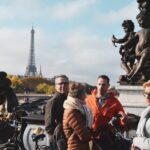
Place Vendôme: the model before the makeover
The walk begins at Place Vendôme, at 2013 Place Vendôme in the 1st arrondissement. The square dates from the very end of the 17th century and is one of Paris’s five royal squares.
This is a smart starting point because the square provides the architectural and visual model for the later rebuilding. Its formal shape and ordered facades help you see what Haussmann’s planners admired and repeated on a much larger scale.
You get about 10 minutes here. That is enough for an introduction, but not enough for a long architectural survey. The value lies in using the square as a reference point before moving into the 19th-century city.
Look closely at the contrast the guide draws between this earlier royal design and the later boulevards. Place Vendôme feels controlled and ceremonial. The later Paris of Napoleon III was designed for a modern capital with heavier traffic, new commerce, and a growing bourgeois public.
Opéra Garnier: the new center of Paris
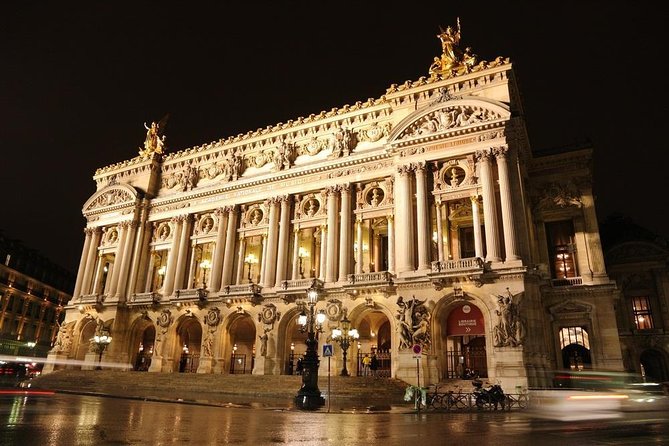
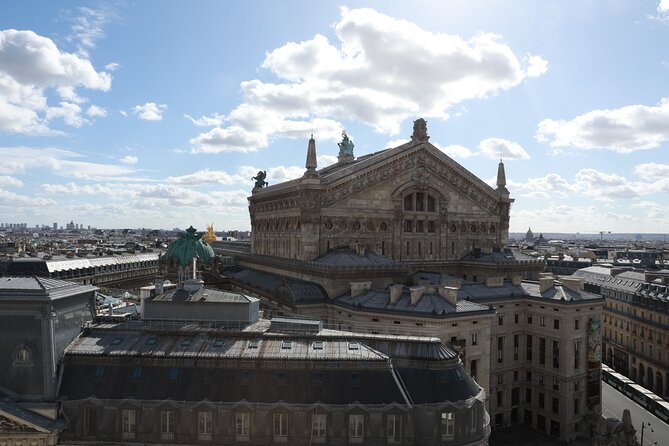
The next stop is Palais Garnier, the famous Paris opera house. You spend about 20 minutes outside, examining the building as the focal point of the rebuilt city.
The tour presents the opera as a deliberate replacement for the old symbolic center, Notre-Dame de Paris. That does not mean the cathedral lost its religious importance. It means the rebuilt capital needed a new civic and social focus, one tied to performance, public display, money, and modern urban life.
This is one of the strongest stops for understanding the tour’s main argument. The opera is not treated as an isolated monument. It is part of a new city plan. Its location, scale, and public presence show how Paris shifted toward grand avenues and institutions that served a modern capital.
You should note the practical limitation before booking: there is no interior admission. The tour addresses the opera from the outside, and entering the building requires a separate visit. That keeps this experience focused, but it may disappoint you if you expected a full opera-house tour.
Société Générale: when a bank becomes a public spectacle
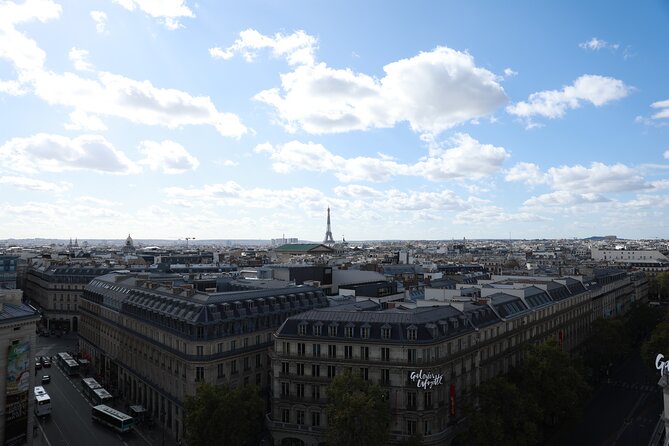
Société Générale receives about 20 minutes, making it one of the longer stops. The guide uses the bank to explain how financial power gained a grand architectural setting in the new Paris.
The striking idea is that a routine act, going to the bank, could be presented almost like a visit to a cathedral. The building represents wealth, trust, ceremony, and public confidence. That is useful context because Haussmann’s Paris was not only about government avenues and handsome apartment blocks. It was also about the institutions that powered industrial and commercial life.
I like this stop because it takes you beyond the usual Paris checklist. Many walking tours point out palaces, churches, and museums. Fewer ask you to look at a bank as a major cultural building.
The language used to describe Société Générale is highly enthusiastic, calling it the most beautiful bank in the world. You can treat that as the guide’s strong point of view rather than an objective ranking. The important part is the question it raises: why did financial institutions need such impressive spaces, and what did that say about the society taking shape around them?
Galeries Lafayette: shopping becomes an experience
Galeries Lafayette Paris Haussmann gets another 20-minute stop. Here, the focus turns from finance to retail and the new culture of consumption.
The department store is presented as a cathedral of opulence, a place where shopping becomes a public ritual. That phrasing may sound grand, but it captures the tour’s larger point. The rebuilt boulevards made room for stores that sold not just goods, but an experience built around display, choice, aspiration, and leisure.
This is a useful stop for anyone interested in the roots of modern consumer culture. The tour connects the building to the wider birth of industrial life and urban living. You are encouraged to see the department store as part of the city’s social machinery, not simply as a convenient place to buy something.
The practical limit is that this is still a short walking tour stop. You should not expect dedicated shopping time or a retail history seminar. The guide’s attention remains on architecture and the role of the store in Haussmann’s Paris.




Printemps: a second vision of retail luxury
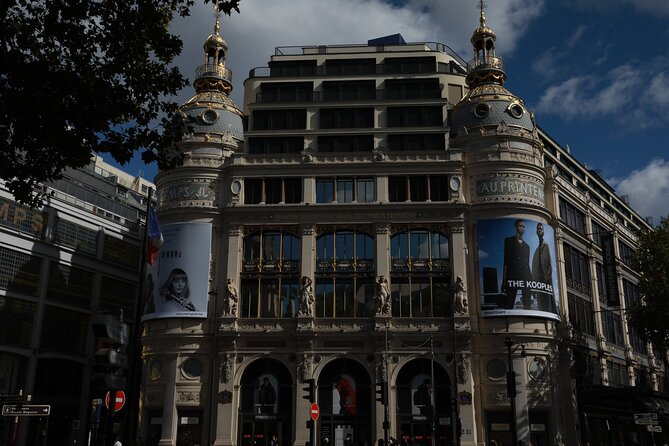
Printemps follows with about 10 minutes. The stop provides a comparison with Galeries Lafayette and is described as one of the few possible competitors for the title of the world’s most beautiful department store.
That comparison is useful. Seeing the two stores in the same tour lets you consider how grand retail spaces competed through design, luxury, and visual drama. The guide treats Printemps as part of the same cultural shift that turned shopping into a major feature of city life.
You will have less time here than at Galeries Lafayette, so expect a focused explanation rather than a long visit. The stop works best if you are interested in the connection between architecture and commerce. If department stores do not appeal to you, this portion may feel less important than the opera or the political stops.
Havre and Caumartin: the boulevard as a new kind of street
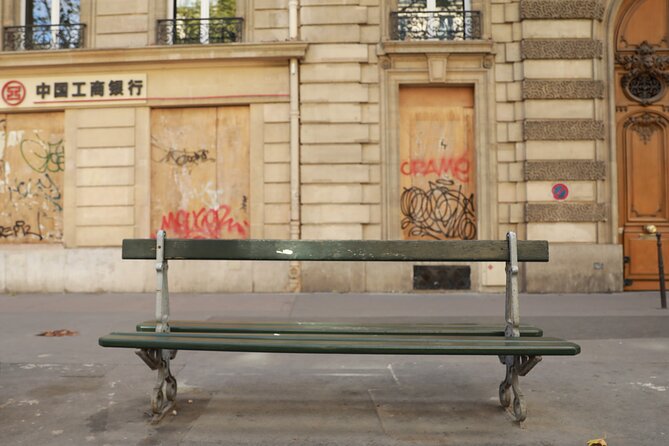
At Havre and Caumartin, the tour spends about 15 minutes discussing Boulevard Haussmann as the prime example of the new boulevard.
This is where the street itself becomes the main object of study. Haussmann’s boulevard was more than a wide road. It represented a different way of organizing the capital, one tied to movement, visibility, commerce, and the needs of an industrializing city.
The stop helps you connect the earlier buildings. The opera, bank, and department stores make more sense when you see the boulevard as the system that joins them. The route is not simply a collection of attractive addresses. It is a lesson in how streets can shape public life.
The subject also invites a balanced view. Broad boulevards can make a city easier to move through and give buildings a consistent public face. But the rebuilding came at a huge cost to the older city. This tension is central to the tour and keeps the architecture from becoming mere decoration.
Chapelle Expiatoire: the politics beneath the new facades
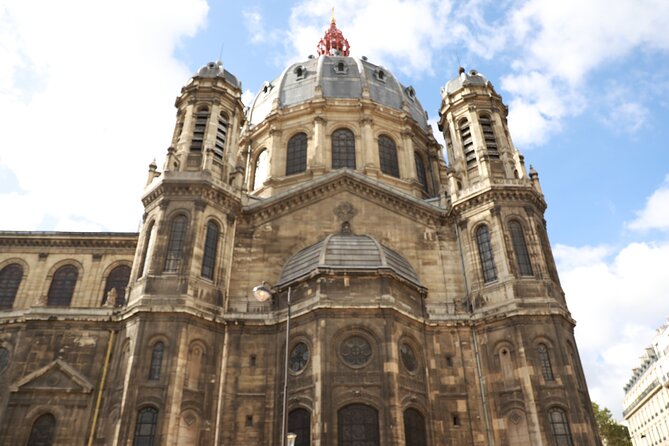
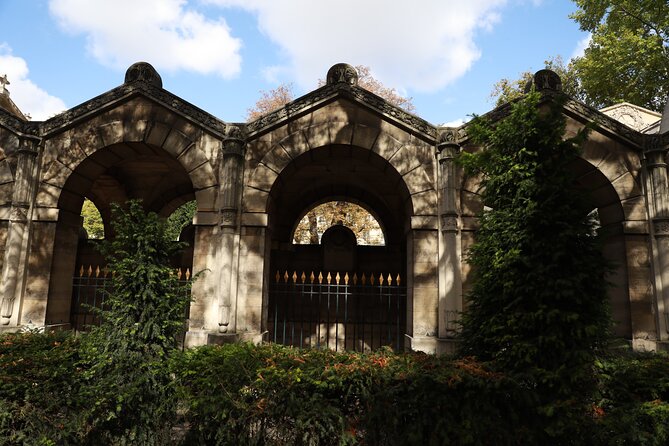
The Chapelle Expiatoire receives about 10 minutes and brings politics to the foreground. The guide explains the division that still troubled France in the second half of the 19th century, especially the conflict between monarchist aristocrats and republican members of the bourgeoisie.
This stop shows that the rebuilding of Paris was also part of a struggle over national identity and political power. The new city had to carry the weight of old loyalties, new social forces, and competing ideas about France’s future.
The chapel is also important because it interrupts the tour’s focus on progress. Grand boulevards and industrial methods may suggest confidence, but the political story was unsettled. The effort to reconcile opposing factions was difficult, and the city’s monuments could carry those arguments in stone.
I would pay close attention here if you want more than a design lesson. The stop is short, but it gives the walk a necessary human and political dimension. It reminds you that urban change affects memory, power, and belonging, not just traffic and building lines.
Saint-Augustin Church: steel, faith, and a final compromise
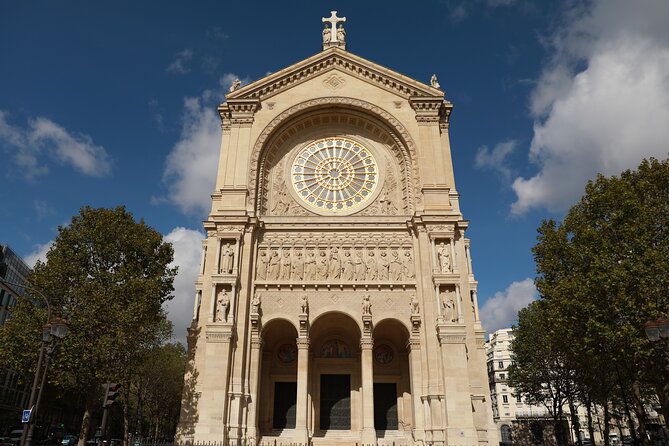
The tour ends at Saint-Augustin Church, at the junction of Boulevard Malesherbes and Boulevard Haussmann. You spend about 10 minutes here.
Saint-Augustin represents a pact between the Church and the industrial forces reshaping Paris. It was the first church in the city to make extensive use of steel, linking modern construction methods with a traditional religious purpose.
That combination makes it a fitting conclusion. The tour begins with an older royal square and ends with a church that shows modern engineering inside a familiar religious form. Between those points, you have seen the rise of the opera, the bank, the department store, the boulevard, and the political memorial.
The ending location is practical. You finish near major boulevards and public transportation, though the experience does not include food or drinks. Since this is a compact walking route, comfortable shoes remain sensible, even though the supplied information does not specify the walking distance.
What the private format adds
The price is $347.28 per group of up to six people. That works out to about $58 per person if six people join, but the per-person cost rises sharply for a couple or solo booking.
For a group of six, I consider the price reasonable for a private two-hour session with a professional art historian. You are paying for a focused subject and direct access to the guide, not for admission tickets or a full-day sightseeing package. The value is strongest when your group has a real interest in architecture, urban planning, politics, or 19th-century Paris.
The private structure matters here because the subject can prompt detailed questions. Amy is noted for her command of 19th-century Paris, architecture, and art, while Boris has led multiple tours on the city and has discussed Haussmann in public conversations. Guide assignment may vary, so you should not assume one particular person will lead your booking.
The experience is also designed for a wide range of participants. Service animals are allowed, the meeting area is near public transportation, and most people can take part. Since no specific mobility details are provided, you should ask the provider if you need information about surfaces, stairs, or the exact walking demands.
Timing, cancellation, and who will enjoy it most
The tour lasts about two hours and is booked, on average, 72 days ahead. That advance demand suggests you should plan early if the walk is important to your Paris schedule, especially if you need a particular date.
You can cancel for a full refund up to 24 hours before the start time. Changes or cancellations made less than 24 hours ahead are not accepted for a refund, and the cut-off follows local Paris time.
I would choose this tour for:
- A first or second visit when you want to understand why central Paris looks the way it does
- Anyone interested in Napoleon III, Haussmann, architecture, or urban planning
- Families or friends who prefer a private guide and can share the group price
- Repeat visitors who have already seen the major monuments and want a fresh subject
- People curious about the rise of department stores, banking, and modern city life
I would skip it if your main goal is to enter the Opéra Garnier, shop for several hours, or see a broad selection of Paris landmarks. This walk stays tightly focused on the 19th-century rebuilding project.
Should you book Napoleon III’s Paris city tour?
Book it if you want Paris explained as a working city, not just admired as a collection of monuments. The route shows how a royal square, opera house, bank, department stores, boulevard, chapel, and church fit into one major transformation.
The best reason to choose it is the range of connections. You move from architecture to money, shopping, politics, religion, and industrial construction without leaving the central city. I also value the chance to ask direct questions in a private group, especially with a guide such as Amy or Boris.
Think twice if the $347.28 group price will be shared by only one or two people, or if you need indoor access to the opera. For the right audience, though, this is a sharp, unusual way to understand modern Paris in two well-used hours.
FAQ
How long does Napoleon III’s Paris city tour last?
The tour lasts approximately two hours.
How many people can join the private tour?
The price covers one private group of up to six people. Only your group participates.
Where does the tour begin?
The meeting point is 2013 Place Vendôme, 75001 Paris, France.
Where does the tour end?
The tour ends at Saint-Augustin Church, near the junction of Boulevard Malesherbes and Boulevard Haussmann.
Does the tour enter the Opéra Garnier?
No. The Opéra Garnier is discussed and viewed from outside. Entry requires a separate tour.
What is included in the price?
The price includes a private tour and a professional art historian guide. Food and drinks are not included.