REVIEW · AVIGNON
Pont du Gard, Uzès & Nîmes: Half-Day Tour with Entry Fees
Book on GetYourGuide →Operated by Provence Panorama · Bookable on GetYourGuide
Pont du Gard in a half day. You’ll combine the UNESCO-listed 2,000-year-old aqueduct at Pont du Gard with medieval streets in Uzès and the still-used Roman Arena in Nîmes. It’s a tight loop of Roman engineering, medieval French town life, and amphitheater history, all in one guided run.
I especially like how the stops feel different but connected: Uzès was tied to the water system that served Nîmes, and then you see the result at Pont du Gard. I also like that you get paid-entry coverage for Pont du Gard and Nîmes’ Arena, so your guide can spend more time explaining and less time sorting tickets. The main drawback to plan around is pacing: with only 5 hours, you’ll have to accept shorter time windows at each place, and some parts may feel more “look around” than “deep walkthrough.”
In This Review
- Key things I’d prioritize on this tour
- Why this Pont du Gard–Uzès–Nîmes route fits 5 hours
- Avignon meeting point to start: what to expect before you even see the aqueduct
- Pont du Gard: how to look smarter at the UNESCO aqueduct
- Uzès medieval town walk: where the Roman-era story shows up in everyday streets
- Nîmes Roman coliseum and Arena: what’s still in use and what to watch for
- Pacing, small group limits, and why “short” still feels satisfying
- Ticket value: why $94 makes sense when entry fees are included
- What if the Arena is closed in summer festivities?
- Who should book this tour, and who should look elsewhere
- Should you book this Pont du Gard–Uzès–Nîmes half-day tour?
- FAQ
- How long is the Pont du Gard, Uzès & Nîmes half-day tour?
- Where do I meet the tour?
- What’s included in the $94 price?
- Is lunch included?
- Is hotel pickup and drop-off included?
- What group size is this tour?
- What happens if the Arena of Nîmes is closed during summer festivities?
- Do I need to bring anything?
- Is free cancellation available?
Key things I’d prioritize on this tour
- Pont du Gard first, then connect the dots: you’ll learn how this aqueduct supplied Nîmes.
- Uzès is more than a pretty town: it’s tied to the Roman era and its water story.
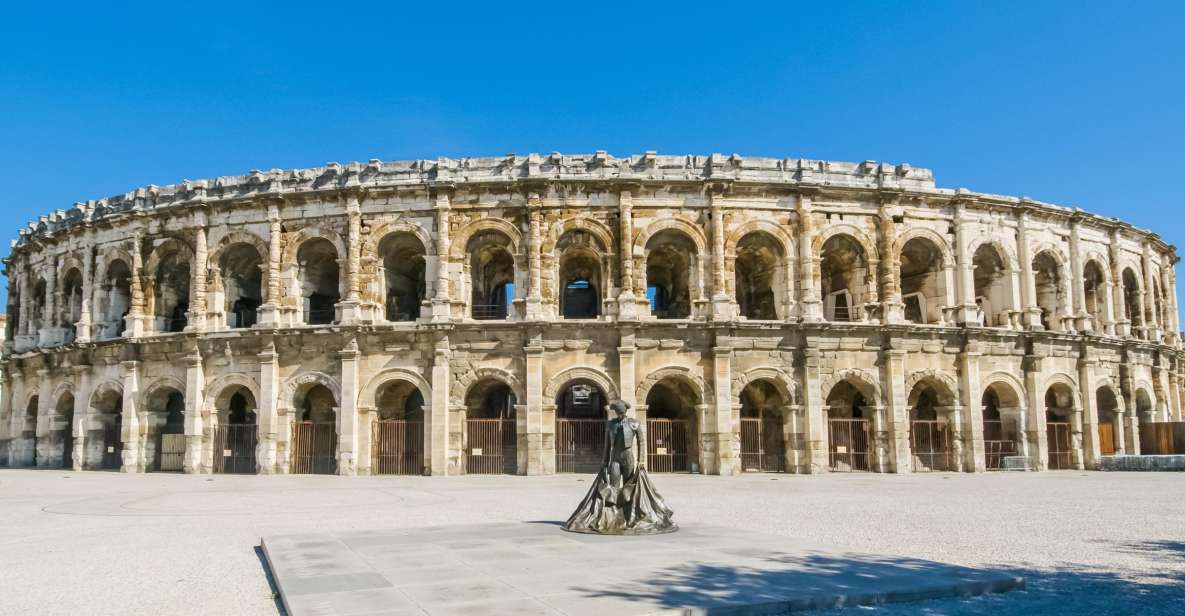
- Nîmes Arena still works today: it’s an active Roman amphitheater with seating for about 10,000.
- Small group size helps the guide keep up: limited to 8 participants.
- Skip-the-line is included for the sites that need it, saving time during short stops.
- There’s a smart Plan B in summer if the Arena closes for festivities.
Why this Pont du Gard–Uzès–Nîmes route fits 5 hours
This tour is built for people who want the big Roman hits without committing a full day. In just 5 hours, you hit three “eras in the same region” moments: Roman engineering (Pont du Gard), Roman-era town traces through Uzès, and Roman civic life in Nîmes via the coliseum/Arena complex.
The value is not only the landmarks. It’s the way the guide ties them together. Pont du Gard wasn’t built as a standalone monument; it’s part of a larger system that brought water to Nîmes. Then you carry that idea into Uzès, where you can see how the region’s history is layered instead of boxed into separate museums.
One more practical reason it works: the group is small. With a maximum of 8 people, you’re less likely to get swallowed by a crowd. In the reviews, guides like Brigitte, Nicco/Nico, Thierry, and Emanuel come up again and again for clear explanations and a calm pace—exactly what you want when the itinerary is compressed.
A few more Avignon tours and experiences worth a look



Avignon meeting point to start: what to expect before you even see the aqueduct
You meet in front of the Avignon Tourist Office. There’s no hotel pickup or drop-off, so plan to get yourself there on time. That matters because the day runs on a tight clock: you’re not spending hours “getting from place to place,” but you are doing enough driving that punctuality helps the guide keep the schedule smooth.
Also check the small rules before you go:
- Bring your passport or ID card.
- Pets aren’t allowed.
- Leave luggage or large bags at home.
These aren’t just admin items. In small-group tours, rules like bag limits can make boarding easier and reduce delays—especially when you’re moving in and out for photos and short guided segments.
English and French live tour guiding are included, and it’s not a “listen to an audio app” setup. Having a person explain what you’re looking at changes how fast your eyes start picking up details you’d miss on your own.
Pont du Gard: how to look smarter at the UNESCO aqueduct
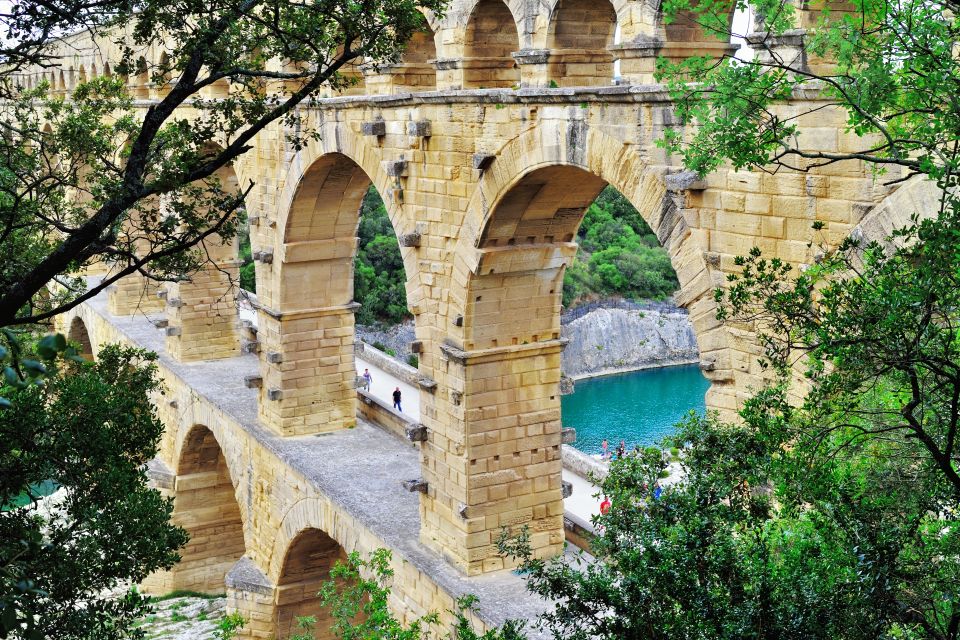
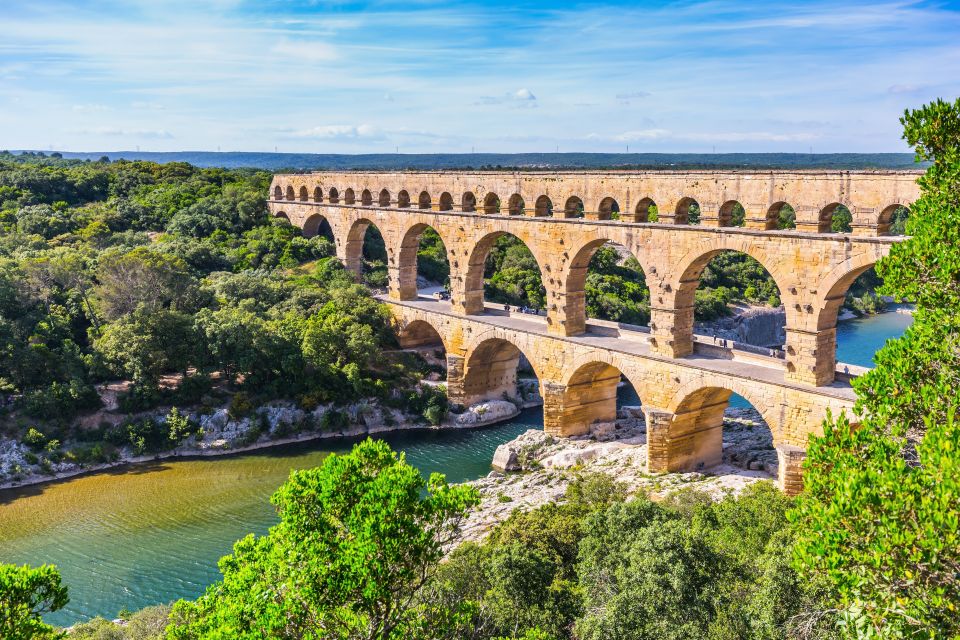
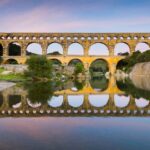
Pont du Gard is the star, and for good reason. This famous stretch of a Roman aqueduct is about 2,000 years old, and UNESCO recognized it as a World Heritage Site back in 1985. Even if you’ve seen photos before, the scale is what hits you first—this is engineering meant to keep working across centuries, not a prop for visitors.
Here’s how to make your time count, since the stop can be brief:
- Start with the full view: don’t rush into close-ups. Get the whole triple-arc bridge shape in your mind first.
- Look for structure and repetition: Roman aqueducts are all about geometry doing real work over distance.
- Think “purpose,” not just “beauty”: the point was water delivery to Nîmes.
The tour includes the admission fee to Pont du Gard, and it also includes skip-the-ticket-line support. That’s an underrated benefit on a half day. When time is limited, skipping the ticket queue means you get your minutes back for actually looking.
A note on expectations: some reviewers felt the itinerary was rushed at certain stops. That’s the reality of a 5-hour program. If you want to linger at Pont du Gard for museum-level time, you might need a longer tour or a return visit on another day. But for a well-guided introduction, this is a strong hit.
Uzès medieval town walk: where the Roman-era story shows up in everyday streets
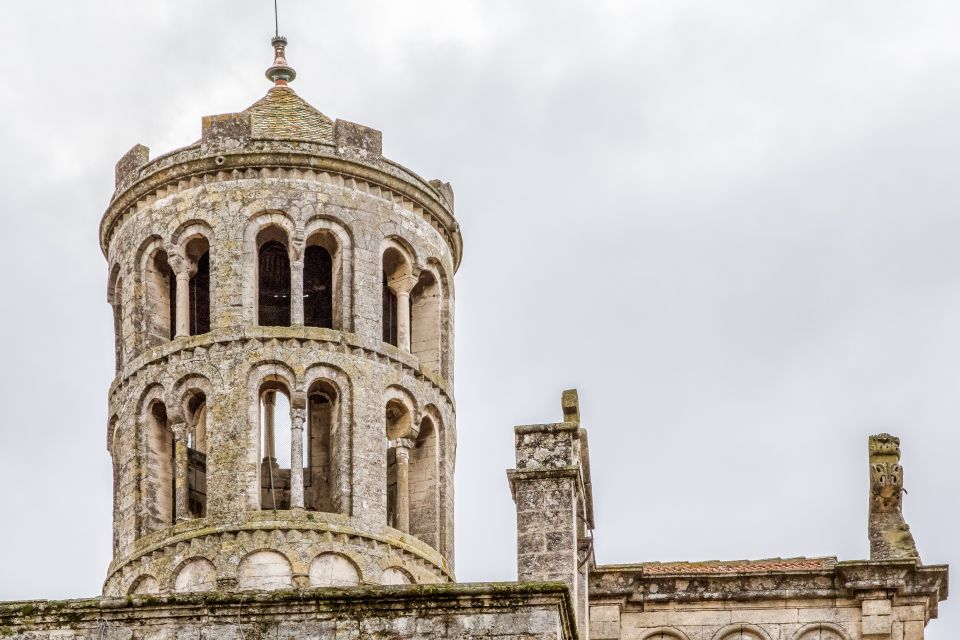
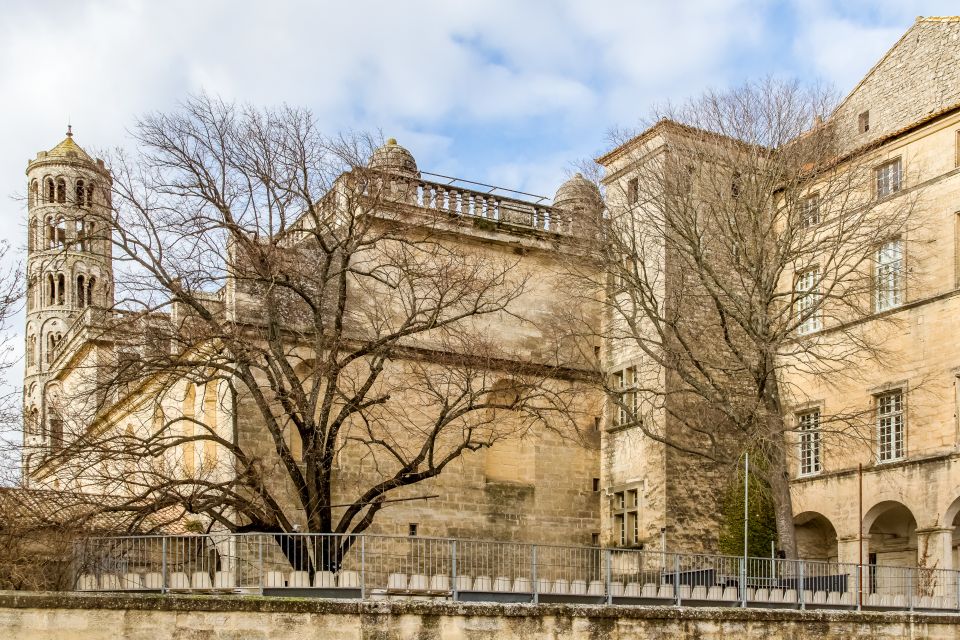
Uzès is charming in the very specific way small French towns can be: tight streets, classic stone buildings, and a lived-in feel rather than a theme-park layout. This tour is positioned to show you Uzès as more than scenery. The town was founded during the Roman era and it also connects to the aqueduct system that supplied Nîmes.
On the ground, that means your walk isn’t only about pointing at pretty corners. It’s about understanding why the town mattered in the first place—especially as water systems shaped where people built, farmed, and grew.
From the reviews, guides often slow down here to describe the town’s character and help you know where the interesting bits are without making it feel like a checklist. That’s a good fit for Uzès, because the best part is wandering in small bursts. You’ll likely get a guided route, then some time to wander on your own.
Potential drawback to remember: time. Some people wished they’d had more minutes in Uzès to soak up the atmosphere. If you’re the type who loves sitting in a café and people-watching, bring that energy mentally and don’t expect the schedule to allow a long “full town day.”
Nîmes Roman coliseum and Arena: what’s still in use and what to watch for
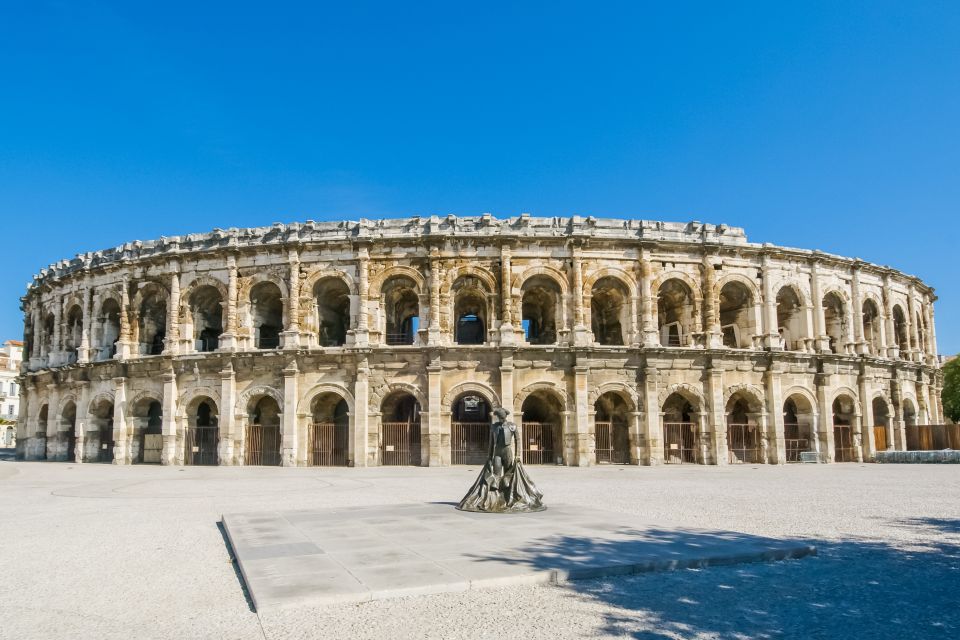
Nîmes is where the Roman story turns practical. The Coliseum is considered second only to the Colosseum in Rome, and the amphitheater (Arena) is still in use today. It holds about 10,000 seats, and that still-used aspect changes the vibe: you’re not only looking at ruins; you’re looking at a working civic monument.
The tour includes the admission fee to the Arena of Nîmes, and that’s another value point. Arena access can cost extra on your own, and for a half-day tour, getting in smoothly helps protect your time.
When the Arena is open, focus on two things:
- How it reads as an amphitheater: the shape and seating arrangement make the architecture feel alive.
- How it functions today: the Arena can show signs of modern event use. One review noted interior scaffolding, a stage setup, and asphalt—impressive from the outside, and a reminder that this isn’t frozen in time.
Also, the guide’s role matters here. In some cases, reviews mention that the guide provided broad context rather than a full, step-by-step walkthrough inside. That’s not necessarily a deal-breaker, because much of the Roman impact is visible at a glance. But if you’re hoping for a very guided inside-the-arena explanation, pay attention to how your guide structures the time on the day.

Pacing, small group limits, and why “short” still feels satisfying
This is a half-day tour that runs about 5 hours. Starting times vary by availability, and the schedule is designed to fit three major stops. In practice, that means:
- You’ll spend more time “in motion” between sites than on a full-day deep dive.
- Each location is likely a mix of guided explanation plus short time to look around.
The small-group limit (up to 8 people) is one of the best features, because it helps the guide manage pacing and keep the tone personal. In reviews, you’ll see a pattern: people praise guides for being personable and organized, and for making the history click rather than turning it into a lecture.
That said, the main consideration isn’t the guide quality—it’s the clock. Some reviews mention not enough time in Nîmes or Uzès, and one person wished they had more time at Pont du Gard specifically. If your dream day is slow and photo-heavy, you might find this one a quick sampler.
If you’re more “I want the essentials with context,” you’ll probably leave satisfied, because this route hits the big landmarks with a human explanation.
Ticket value: why $94 makes sense when entry fees are included
At $94 per person for a 5-hour guided tour, the big question is whether you’re paying for transport and guidance or paying extra for admission.
Here’s what’s included:
- Admission fee to Pont du Gard
- Admission fee to the Arena of Nîmes
- Skip-the-ticket-line support
- Live tour guide in English or French
What’s not included:
- Lunch
- Hotel pickup/drop-off
For value, two things matter most: (1) the admission fees being covered, and (2) the skip-the-line benefit. When ticket lines eat your half day, that’s where costs quietly add up in lost time. Covering those admissions inside the package makes the day feel “already solved,” so you spend your effort on sightseeing instead of logistics.
So if you were going to pay separate entry fees for Pont du Gard and Nîmes anyway, this pricing structure generally makes more sense than buying everything separately and trying to DIY the route with limited time.
What if the Arena is closed in summer festivities?
Good news: there’s a built-in contingency. During summer, the Arena can close for different festivities. When that happens, the tour visits another site, such as the Theatre of Orange or Maison Carrée.
This matters because it protects your experience. Instead of losing an entire stop to closure, you get a replacement Roman highlight. The key practical move for you is to treat it as part of the planning reality: confirm the date and season impact when you book, and don’t assume the exact same interior experience every time of year.
Who should book this tour, and who should look elsewhere
This tour is best for you if:
- You want a guided intro to Pont du Gard, Uzès, and Nîmes without spending a whole day.
- You like history explained clearly while you’re standing in front of the real site.
- You’re okay with shorter time at each place as long as the stories and context are strong.
You might want a different option if:
- You’re the type who needs 2+ hours at one landmark to really feel it.
- You plan to do lots of museum time and long interior exploration at Pont du Gard and inside Nîmes.
- You dislike being on a schedule, even a friendly one.
Also, consider what you already know. If you’ve already visited Pont du Gard, this type of tour may still be worthwhile, but you should ask your guide on the day whether there’s room for adjustments. Some tours have shown flexibility in how time is allocated when guests have already seen a site, though that depends on the operation and timing.
Should you book this Pont du Gard–Uzès–Nîmes half-day tour?
If you want the Roman greatest hits with a guide who helps you connect the dots, I’d book it. The tour’s strongest points are the combination of UNESCO Pont du Gard, the Roman-to-medieval bridge you get through Uzès, and the still-in-use Roman Arena in Nîmes—all wrapped into a small-group format.
The only reason not to book is if you’re planning a slow, lingering day where every stop needs half your time. This is a sampler. For many people, that’s exactly the right move.
If you book, do this before you go: decide what you want most—engineering at Pont du Gard, medieval town atmosphere in Uzès, or the Roman spectacle at Nîmes. Then when your day feels fast (because it will), you’ll still leave with the right memories.
FAQ
How long is the Pont du Gard, Uzès & Nîmes half-day tour?
It lasts 5 hours.
Where do I meet the tour?
The meeting point is in front of the Avignon Tourist Office.
What’s included in the $94 price?
Admission fees to Pont du Gard and the Arena of Nîmes are included, along with a live tour guide and skip-the-ticket-line.
Is lunch included?
No, lunch is not included.
Is hotel pickup and drop-off included?
No, hotel pickup and drop-off are not included.
What group size is this tour?
It’s a small group limited to 8 participants, with live tour guidance in English or French.
What happens if the Arena of Nîmes is closed during summer festivities?
If the Arena is closed, the tour visits another place, such as the Theatre of Orange or Maison Carrée.
Do I need to bring anything?
Bring a passport or ID card. Pets are not allowed, and luggage or large bags aren’t allowed.
Is free cancellation available?
Yes. You can cancel up to 24 hours in advance for a full refund.