REVIEW · MARSEILLE
Marseille: Essential Guided Walking Tour of the City
Book on GetYourGuide →Operated by Marseille Tour · Bookable on GetYourGuide
Marseille has a talent for turning streets into stories. This guided walk from La Major Cathedral through Le Panier and down to the Vieux Port makes the city’s 2,600-year timeline feel concrete, not abstract, and Charles brings it to life with humor and clear bilingual guiding. I especially loved the way you get both the big monuments and the side streets, and the payoff views around Le Pharo. One thing to consider: you cover about 5 kilometers, so comfortable shoes matter.
I also like the small-group feel, capped at 8 people, which keeps questions from getting lost. The route ties together ancient Greek and Roman roots, Marseille’s WWII story, and the working-marine heartbeat of the harbor in one smooth afternoon. If you’re hunting for a strictly museum-heavy day, this is more “walk-and-look with expert context” than a ticket-punch checklist.
In This Review
- Key highlights to watch for
- Starting at La Major Cathedral: the route’s tone-setter
- Le Panier: murals, the Vieille Charité area, and hillside calm
- Church of Accoules: faith and local character in a compact stop
- Rue de la République and city rhythm: from old corners to main avenues
- Vieux Port and the forts: boats, trade, and WWII shadows
- Saint Victor’s Abbey: Roman architecture and a proper breather
- Palais du Pharo and Le Pharo: Napoleon III, Empress Eugénie, and sea views
- Price value: what $41 buys in real time
- Who this tour suits best (and who should skip it)
- What to bring and how to plan your afternoon
- Should you book this Marseille walking tour?
- FAQ
- How long is the Marseille guided walking tour?
- Where do I meet the guide?
- What’s the walking distance?
- Is the tour suitable for wheelchair users?
- How big is the group?
- What languages are offered?
- Where does the tour end?
- Is food or drinks included?
- What should I bring?
- How flexible is cancellation?
Key highlights to watch for
- Charles’s bilingual storytelling: English and French, with a sense of humor that keeps history moving
- Le Panier’s hillside texture: murals, small lanes, and the calm of Windmill Hill
- Vieux Port + the forts: Forts Saint-Jean and Saint-Nicolas frame the harbor story
- Saint Victor’s Abbey break: time to sit, reset, and take in the abbey area
- Palais du Pharo viewpoints: Napoleon III and Empress Eugénie connect to sea views
- 5 km route, 150 minutes: enough ground to feel like Marseille, not so much you’re exhausted
Starting at La Major Cathedral: the route’s tone-setter
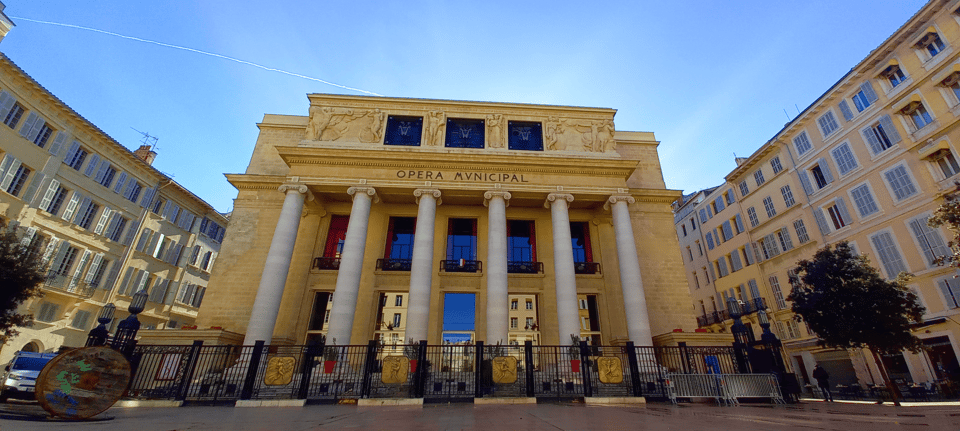
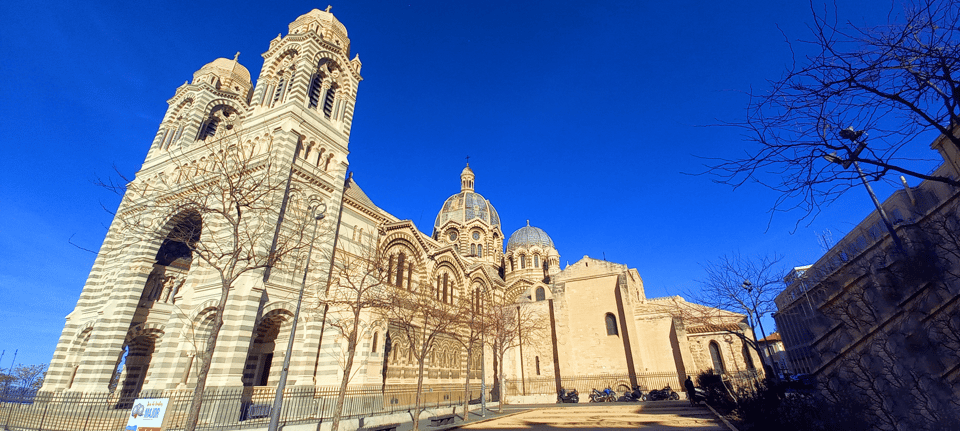
You meet at Cathédrale Basilique Sainte-Marie-Majeure, known as La Major. Look for your guide (Charles) in front of the cathedral, wearing a white cap, and then you’re off—walking while the guide frames what you’re about to see.
La Major is not just a starting point. It’s Marseille’s “big idea” in stone: Neo-Byzantine and Romanesque architecture that helps you understand why this city has always been a crossroads. Even if you’re not a church architecture nerd, the guide’s running explanations make the opening feel purposeful.
If your goal is to get your bearings fast, this is a strong plan. You’ll begin with a landmark that gives the whole walk a spine, and then the route shrinks into smaller, more personal streets.
You can also read our reviews of more walking tours in Marseille

Le Panier: murals, the Vieille Charité area, and hillside calm
The first real neighborhood shift lands you in Le Panier, one of Marseille’s oldest areas. This is where the city changes from grand buildings to human-scale lanes, where art and everyday life share space on the walls.
What I like here is the variety in short distances. You’re walking through hillside streets overlooking the Mediterranean, spotting street art murals, and passing the Vieille Charité hospital area. The guide points out the quieter moments too, like the calm feeling near Windmill Hill, which balances all the busier harbor energy you’ll get later.
Practical note: these are not wide, flat sidewalks. If your legs are sensitive, plan to take your time on the slopes. The upside is that Le Panier rewards slow walking with real texture and viewpoints you can actually stop at.
Church of Accoules: faith and local character in a compact stop
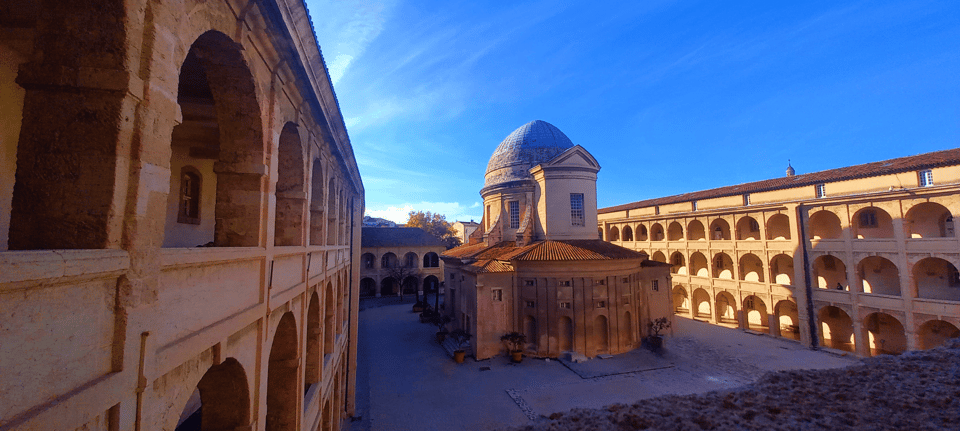
Next comes the Church of Accoules. This is the kind of stop that’s easy to miss if you’re walking on your own, because the beauty isn’t in a grand “arrival moment.” The value is in what the guide adds: context about what the site represents and how it fits into Marseille’s layered story.
Tours like this work because you’re not just ticking off addresses. You’re learning what to look for—materials, placement, and what the building says about the community around it. Even when a church is brief in the schedule, it can anchor the day emotionally, giving the city a grounded feel beyond monuments.
If you’re someone who likes “small stops with big meaning,” this stop will click. If you prefer long interior time, just know this is a walk-focused tour, so your time here is limited.
Rue de la République and city rhythm: from old corners to main avenues
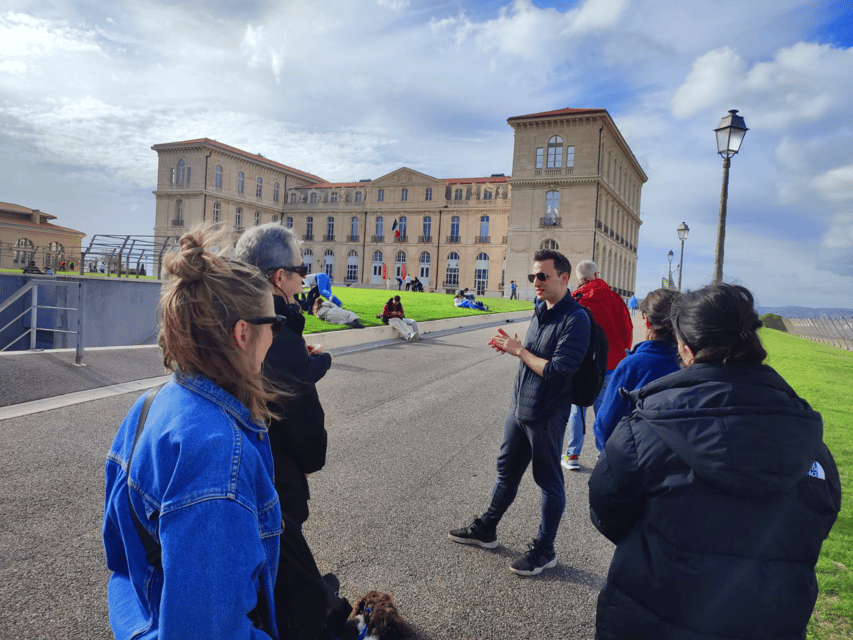
After the old lanes, you shift to Rue de la République, and the atmosphere changes. This is where Marseille shows its more public face: movement, commerce, and the day-to-day flow you feel even when you’re not stopping at shops.
You’ll also pass through areas tied to the city’s livelier walking energy, including Cannebiere street later in the day. The guide’s job here is to connect the dots—how the city’s cultural and historical layers share space with modern life.
I like this transition because it prevents the tour from feeling like a museum parade. You get to see how Marseille works now, not just how it used to work.
Vieux Port and the forts: boats, trade, and WWII shadows
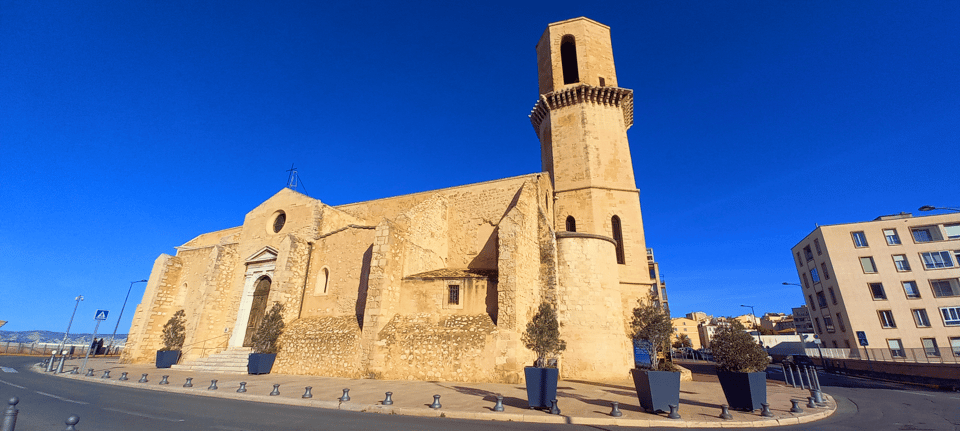
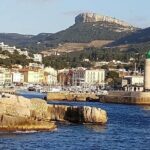
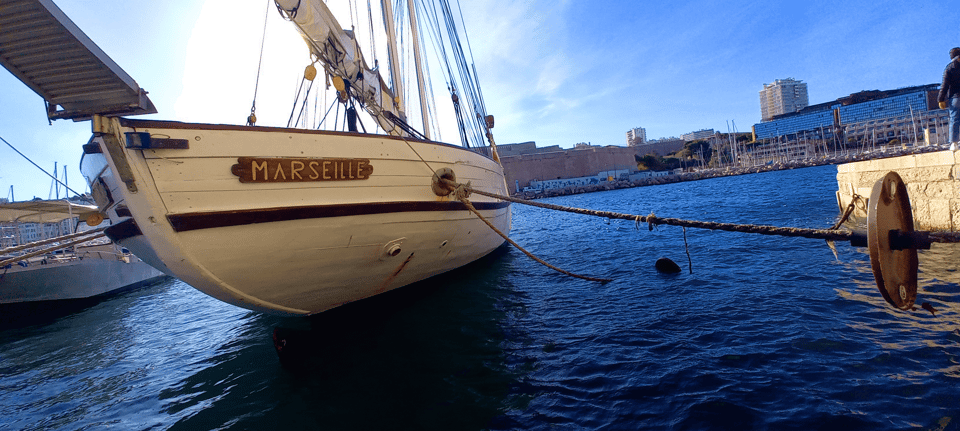
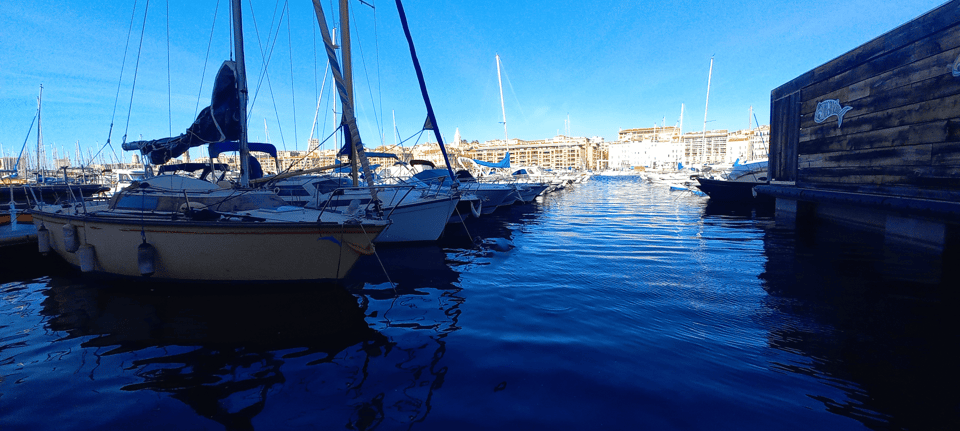
Now you reach the Old Port of Marseille (Vieux Port), the harbor that has been central to the city for ancient times and remains active today. The port is framed by Forts Saint-Jean and Saint-Nicolas, and you get the “why this matters” explanation as you look at yachts and boats bobbing in the water.
What makes this portion strong is the balance of themes. The guide isn’t only talking about seafaring romance. You also hear Marseille’s difficult World War II story during your time near the docks, along with how the city’s Roman influence shaped long-term patterns.
This isn’t a heavy lecture in one spot—it’s woven into the route. So you’re seeing the place while you’re hearing why it mattered. That’s what turns the harbor from a nice photo stop into a real understanding of Marseille.
If you’re sensitive to uneven pavements near waterfront areas, watch your footing, especially if it’s warm and you’re rushing between photo angles.
You can also read our reviews of more guided tours in Marseille



Saint Victor’s Abbey: Roman architecture and a proper breather
Next up: Saint Victor’s Abbey (Abbaye Saint-Victor). You’ll look at the Roman architecture as part of the guided experience, and you get a scenic segment with a break time built into the schedule.
That break matters more than you might think. After walking hills and streets, taking a breather here helps you absorb what you just learned. It also gives you a chance to re-orient your eyes—abbey stone, surrounding viewpoints, and the feeling of being in a place that has lasted through multiple eras.
From a practical standpoint, this is a good moment to drink water, rest your feet, and decide what you want to linger on during the rest of the walk. The guide’s pacing tends to keep the day from turning into one nonstop march, and the abbey break is part of that.
Palais du Pharo and Le Pharo: Napoleon III, Empress Eugénie, and sea views
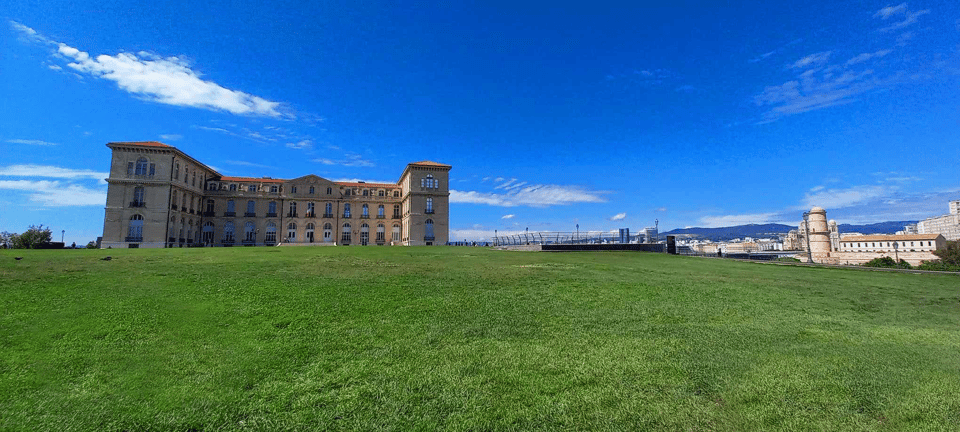
The day’s big visual payoff comes at Palais du Pharo, in the Le Pharo area. Here, the views take over, and the tour makes sure you understand what you’re looking at.
The guide connects the scene to the palace’s origin: built in the mid-19th century by Napoleon III for Empress Eugénie. It’s a nice reminder that Marseille wasn’t only shaped by merchants and empires long before—later leaders also saw the city’s magnetism.
You’ll also see connections back to Abbaye Saint-Victor as part of the broader visual story between stops, so the day starts “talking back” to itself. That makes your photos better, because you’re capturing relationships between places, not just single scenes.
At the end, you’ll be dropped off at Old Port of Marseille or Palais du Pharo, depending on where the group finishes. Plan your next step around one of those areas—this tour ends in a good spot for wandering on your own after.
Price value: what $41 buys in real time
At $41 per person for 150 minutes, you’re paying for three things: a guided route, a local bilingual guide (Charles), and a structure that compresses key parts of Marseille into one afternoon.
Food and drinks aren’t included, so you’ll need to bring water and a snack if you want one. That said, the value isn’t in feeding you—it’s in giving you context fast. With a small group limited to 8 participants, you’re less likely to feel like you’re standing at the back of a crowd.
Where this price really feels fair is in the quality of explanation. Guests highlight Charles’s humor, his clarity in English, and the way he answers questions. Some also mention he uses diagrams, photos, and maps to help you visualize how Marseille changed over time. That kind of added teaching time often costs more when you do it through separate museum guides or private lessons.
Who this tour suits best (and who should skip it)
This experience is ideal if you:
- Are visiting Marseille for the first time and want a guided map of what matters
- Like history tied to real places, not just dates
- Prefer walking with stops for explanation and viewpoints rather than sitting in one place
You might want to skip it if you:
- Struggle with walking 5 kilometers in one go
- Need wheelchair access, since it’s not suitable for wheelchair users
And if you’re the type who loves asking questions—this tour fits you well. The group size makes it easier to get answers, and Charles’s style seems built for conversation.
What to bring and how to plan your afternoon
Bring comfortable shoes first. You’ll walk around 5 kilometers total, with ups and downs between the harbor and hillside neighborhoods. Add water and some basic snacks since food and drinks aren’t included.
Sunglasses and weather-appropriate clothing are smart too. The route includes outdoor viewpoints and walking time that doesn’t shrink just because the sun is out.
For your schedule, think of this as a “foundation tour.” Do it early, if you can, so the rest of your days make more sense.
Should you book this Marseille walking tour?
If you want an efficient, human-scale introduction to Marseille, I think this is an easy yes. Charles’s bilingual, humor-friendly guiding style gets high marks, and the route hits the big anchors—La Major, Le Panier, the Vieux Port area, Saint Victor’s Abbey, and the Pharo viewpoints—without turning the day into a rushed checklist.
Book it if your priority is understanding the city while you’re standing in it. Just be honest about your walking comfort. If 5 kilometers on uneven streets is no problem, you’ll come away with both better photos and a better sense of what Marseille is really made of.
FAQ
How long is the Marseille guided walking tour?
The tour lasts about 150 minutes.
Where do I meet the guide?
Meet your guide in front of La Major Cathedral in Marseille. The guide will be wearing a white cap.
What’s the walking distance?
The tour covers a 5-kilometer route.
Is the tour suitable for wheelchair users?
No, it is not suitable for wheelchair users.
How big is the group?
The group is small, limited to 8 participants.
What languages are offered?
The live tour guide speaks French and English.
Where does the tour end?
There are two drop-off locations: Old Port of Marseille and Palais du Pharo.
Is food or drinks included?
No. Food and drinks are not included.
What should I bring?
Bring comfortable shoes, sunglasses, water, comfortable clothes, and food and drinks if you want them.
How flexible is cancellation?
Free cancellation is available up to 24 hours in advance for a full refund.