REVIEW · MARSEILLE
Marseille: Half-Day City Highlights Guided Walking Tour
Book on GetYourGuide →Operated by Marseille Tour · Bookable on GetYourGuide
Marseille has a way of pulling you in fast. This half-day highlights walk with Charles turns 2,600 years of history into an easy route you can actually feel under your feet. Starting at La Major Cathedral, the tour moves through Marseille’s neighborhoods, old corners on foot, and a few classic waterfront moments that explain why this city looks the way it does today.
What I like most is the mix of big sights and practical local context. Two standouts for me: you get the view from Notre-Dame de la Garde (with time to breathe and reset), and you’re guided through the streets of Le Panier where the city’s layers show up block by block. One thing to plan for: it’s a serious walking outing at about 9 kilometers with hills and steps, and it isn’t a good match if your fitness is low or your legs fatigue quickly.
Key Takeaways (Before You Go)
- Small group of up to 8 means Charles can slow down for questions and keep the pace human.
- You’ll cover about 9 kilometers with a mix of flat streets and hill climbs, so bring the right shoes.
- The route pairs portside landmarks with neighborhood streets you can’t properly reach by car.
- Notre-Dame de la Garde is the main payoff: panoramic sea-and-city views plus a planned rest break.
- You’ll see both well-known icons and lesser-known passages that explain how Marseille works day to day.
- No food is included, so pack your own simple snacks and water.
In This Review
- A Four-Hour Marseille Walk With Charles
- Getting Started at La Major Cathedral (Sainte-Marie-Majeure)
- Le Panier and Hôtel de Ville: Old Streets, City Identity
- Quick Ferry Moment and the Old Port Reality Check
- Parc de la Colline Puget and the Build-Up to the Heights
- Notre-Dame de la Garde: Panoramas Plus a Planned Break
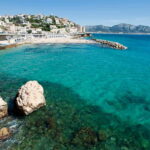
- Le Corniche Kennedy and Plage des Catalans: Sea-Air Reset
- Palais du Pharo and Saint Victor’s Abbey: Power and Presence
- Vallon des Auffes: A Fishing Cove Mood Change
- Final Stretch Back to the Old Port
- Price and Value: What $58 Buys You in Real Time
- Who Should Book This Marseille Walking Highlights Tour
- Practical Tips So You Enjoy Every Step
- Should You Book This Marseille Highlights Tour?
- FAQ
- How long is the Marseille half-day city highlights tour?
- Where do we meet the guide?
- How large is the group?
- What’s included in the price?
- Is food and drink included?
- How much walking is involved?
- Is the tour suitable for children or wheelchair users?
A Four-Hour Marseille Walk With Charles
This is one of those tours that makes Marseille feel readable. Not just pretty, not just historic, but understandable. Charles (wearing a white cap) doesn’t rattle off dates and move on. He connects the city’s changing roles—harbor power, immigrant crossroads, hilltop lookouts—to what you’re walking past right then.
Price-wise, $58 for about four hours feels fair because you’re not only paying for entry. You’re paying for a guide who handles the flow: the transitions between districts, the story thread from old Marseille to the waterfront, and the practical rhythm of a walking morning. The small group size (up to 8) also matters here. It keeps the tour from turning into a commuter march.
The other huge factor is how Marseille’s geography controls your experience. You start at La Major Cathedral, then you’re working your way toward heights, viewpoints, and coastal neighborhoods. That means you’ll earn your views, but it also means you need to show up ready to walk.
Getting Started at La Major Cathedral (Sainte-Marie-Majeure)
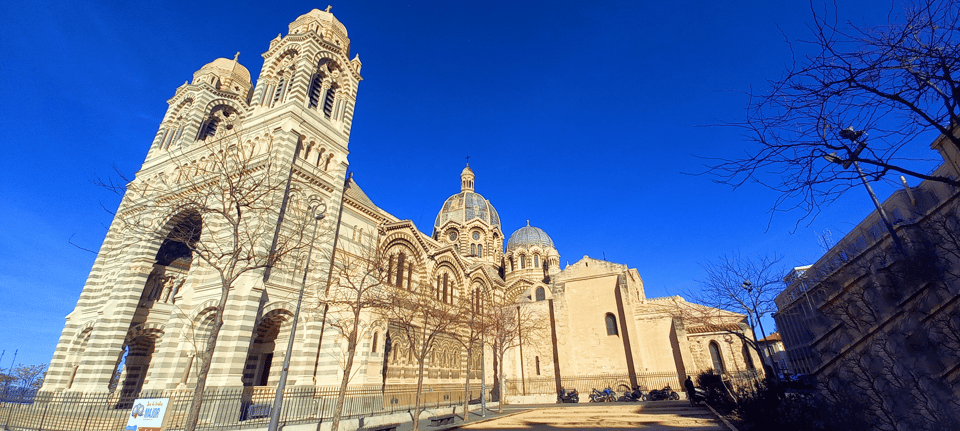
Meet right in front of Cathédrale Basilique Sainte-Marie-Majeure, dit La Major. It’s a clear starting point, and you’ll spot the guide by the white cap. If you’re arriving from a cruise terminal, train station, or your hotel, aim to get there a few minutes early. Marseille streets can be lively, and you’ll want to settle your group and your water bottle before the walking begins.
La Major Cathedral sets the theme immediately: Marseille is a city shaped by sea, trade, and elevation. Even when you’re not yet at the panoramic point, you can feel the city’s “up and down” layout in the route choices.
You’ll spend a short guided stop here, including a walk segment that gets you moving quickly, so don’t expect a long sit-down orientation.
You can also read our reviews of more walking tours in Marseille

Le Panier and Hôtel de Ville: Old Streets, City Identity
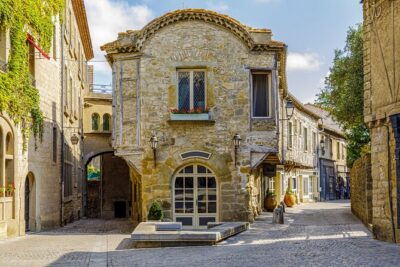
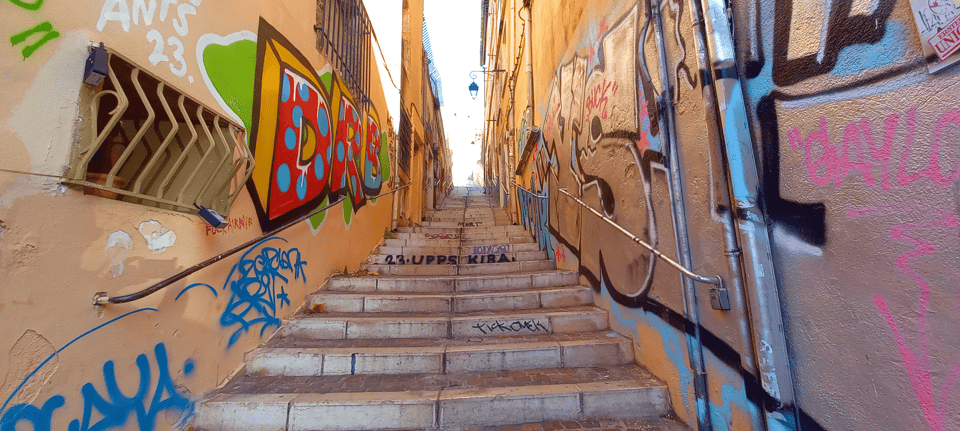
After La Major, the tour heads toward Le Panier, Marseille’s classic “what happens when people build close together” neighborhood. This area is best understood on foot, because the charm is partly in the scale: narrow pedestrian-friendly streets, corners that turn suddenly, and the sense that the past is still physically around you.
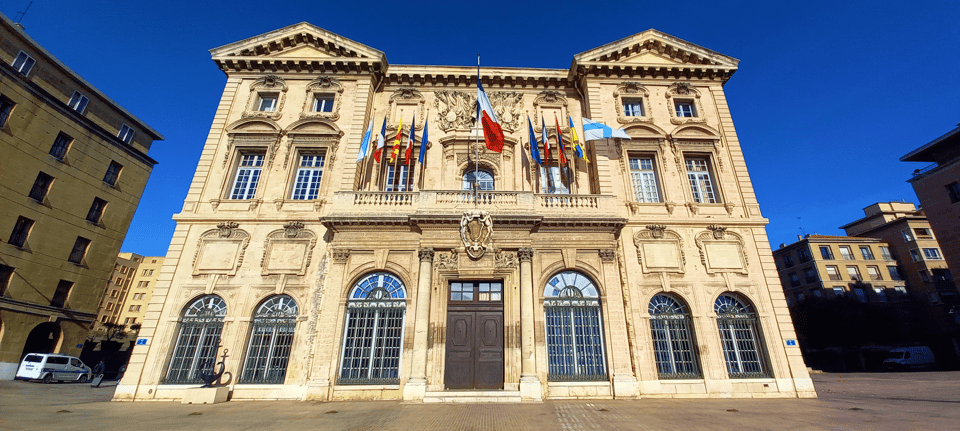
Next is Hôtel de Ville, where you get a guided glance that helps you connect the city’s civic face to its daily street life. It’s not just another photo stop. Charles uses these points to show how Marseille’s power centers and public spaces relate to the neighborhoods below.
Here’s the value for you: you’re not just sightseeing. You’re learning how Marseille organizes itself—where people gather, where the streets compress, and how the city’s role changed over time.
Quick Ferry Moment and the Old Port Reality Check
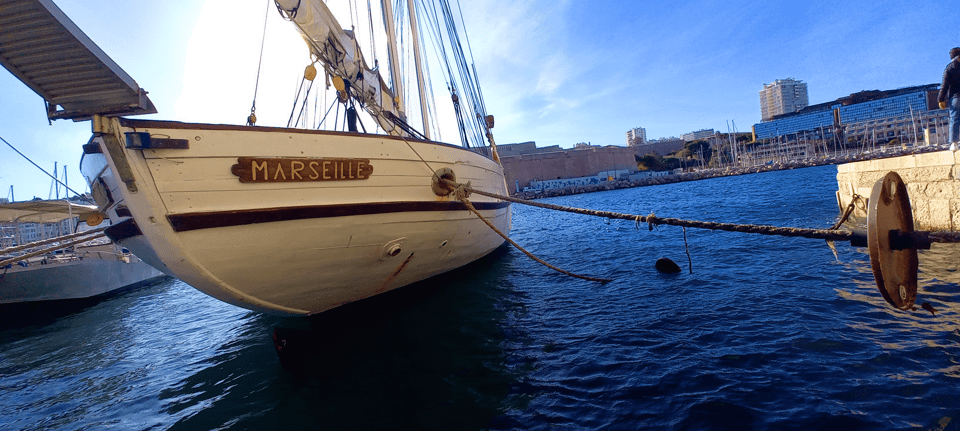
One of the most fun segments is the short ferry boat ride and guided moment that comes along the harbor side. It’s brief, but it adds something walking alone can’t: a sense of the waterway scale and the port’s constant presence.
Then you roll into the Old Port of Marseille area. Even when you’ve seen ports in other Mediterranean cities, Marseille’s port energy has its own personality. You’ll get guided context as you pass through, and you’ll see why this area has remained central through centuries of arrivals and departures.
If you’re deciding whether to prioritize a morning tour, this is a strong reason to choose it. The port and surrounding areas feel more navigable early, and the walking transitions still feel tight rather than rushed.
Parc de la Colline Puget and the Build-Up to the Heights
As the route shifts, you’ll reach Parc de la Colline Puget. This stop is a breather in a tour that stays on its feet. You get guided sightseeing as you move through the park area, and it helps you reset before the biggest viewpoint segment.
This is also where you’ll notice the difference between Marseille seen from sea level and Marseille seen from above. The city doesn’t look flat when you’re climbing or standing near viewpoints. It spreads, layers, and angles itself around hills and coastline.
Bring a sun hat and sunscreen here if the weather is bright. The walking is real, and the afternoon sun can turn a manageable route into a sweaty one fast.
Notre-Dame de la Garde: Panoramas Plus a Planned Break
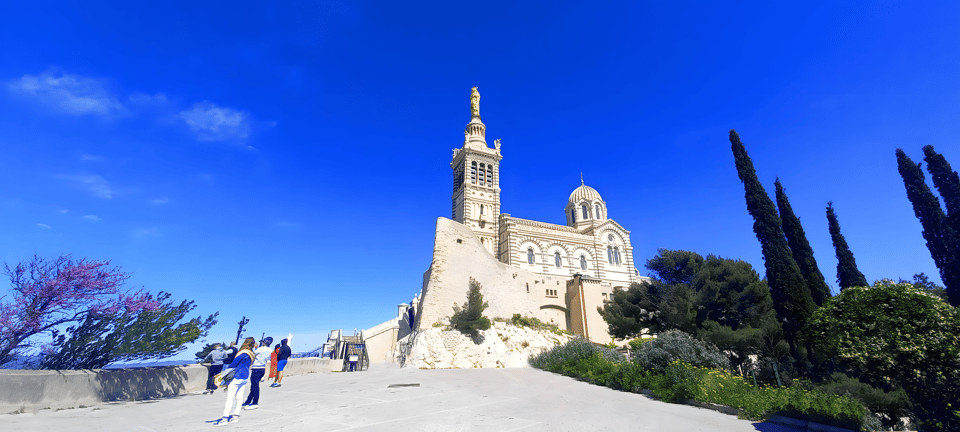
At Notre-Dame de la Garde, you get the classic Marseille reward: views that explain the geography instantly. You’ll visit, see the highlights with guidance, and then have a 25-minute break time. That break is not fluff. It gives you time to sit, rehydrate, and take in the full picture without feeling like you have to keep moving to catch up.
You’re going to feel the “why” here. From this height, Marseille’s mix of sea, hills, and built-up districts makes more sense than it does from street corners. Charles also uses this stop to connect back to earlier parts of the tour, so the story thread lands better.
Practical note: wear your hiking shoes and expect steps. If you’re doing this on a hot day, pace yourself during the ascent and use the break well.
You can also read our reviews of more guided tours in Marseille



Le Corniche Kennedy and Plage des Catalans: Sea-Air Reset
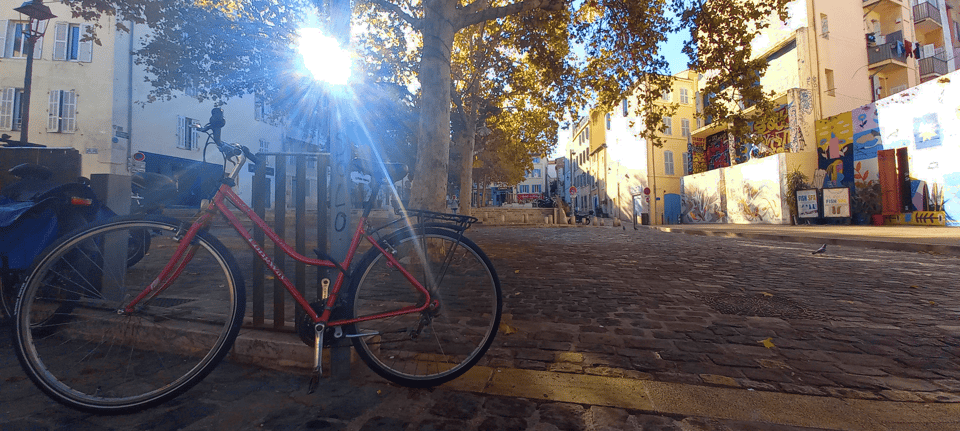
After the heights, the tour keeps you near the coastline with stops that shift your focus from architecture to atmosphere. You’ll visit Corniche John Fitzgerald Kennedy, then continue toward Plage des Catalans.
These segments are great for two reasons. First, they give you a sensory reset from walking streets. Second, they show another side of Marseille: the city’s relationship with the water isn’t only about ports and shipping. It’s also about the shoreline culture you can feel in the way people move through the area.
It’s also a smart pacing move. You can take photos, look out, and let your legs recover a bit before the tour turns toward more monumental stops.
Palais du Pharo and Saint Victor’s Abbey: Power and Presence
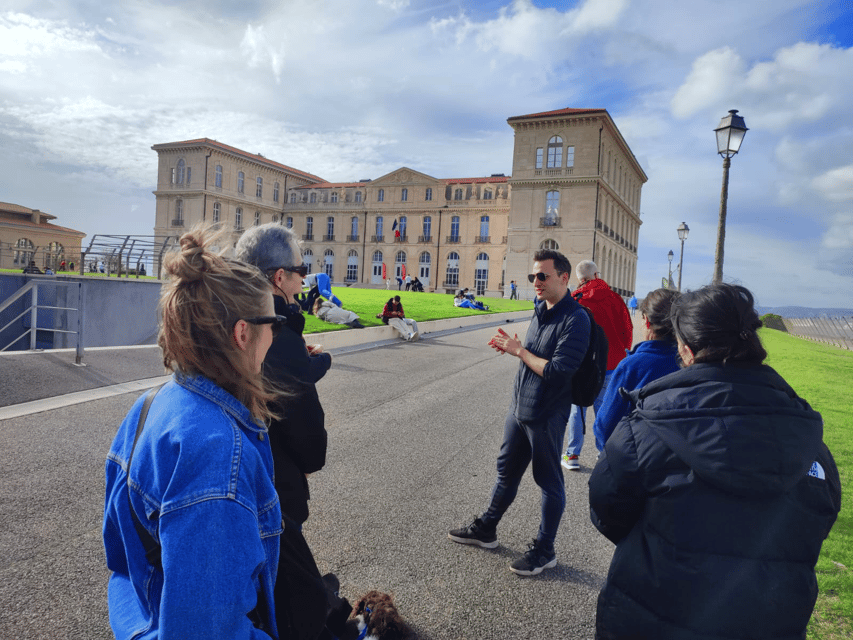
Next up is Palais du Pharo. This stop brings architectural weight into the route, and it helps balance the earlier neighborhoods with something more monumental. It’s the kind of place where the surroundings matter: you understand it better after you’ve already seen the sea angles and coastline viewpoints.
Then the tour includes Saint Victor’s Abbey with guided sightseeing and walking through the area. This is where Marseille’s spiritual and historic layers start to feel especially grounded. An abbey isn’t just a building; it’s a signal of how long communities organize themselves here.
If you like destinations that help you understand the city’s long timeline, these two stops are a strong payoff.
Vallon des Auffes: A Fishing Cove Mood Change
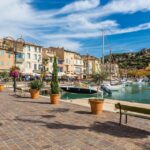
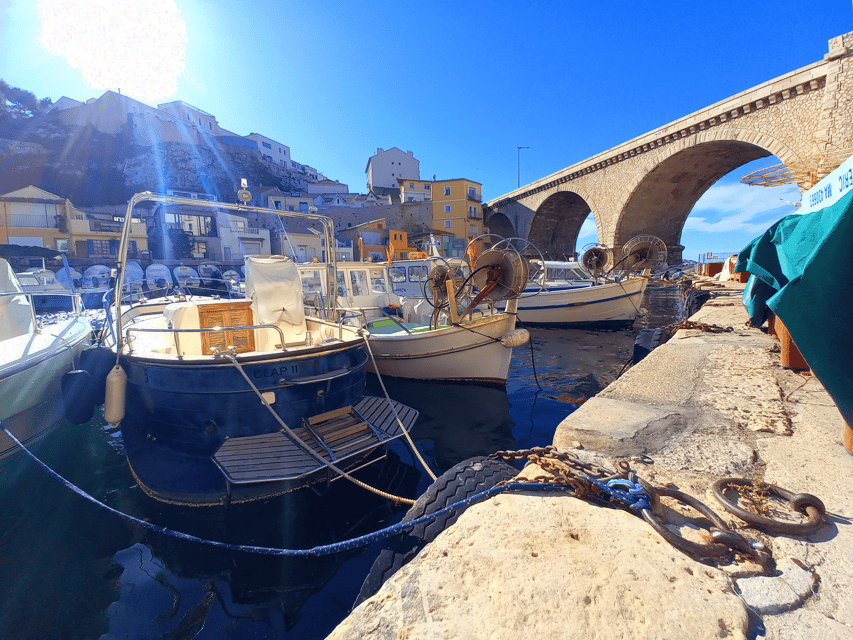
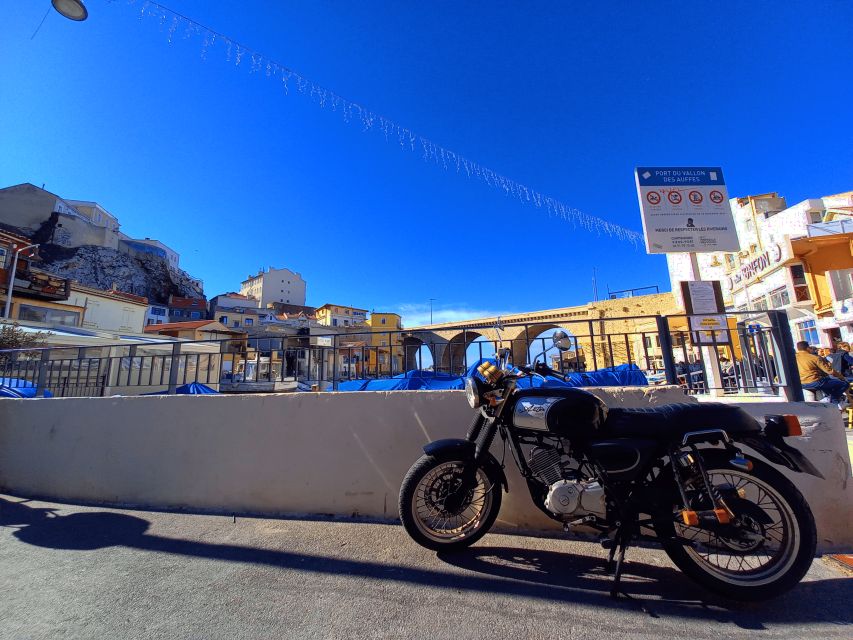
You’ll also spend time at Vallon des Auffes, described as a quaint fishing port tucked into a rocky cove. This is one of those parts of Marseille that feels like a small world inside the larger city.
Expect a guided walk and sightseeing, with short segments that let you take in the character without feeling trapped in one spot. The cove setting naturally slows your pace for a moment, and that helps after earlier climbs and viewpoint time.
This stop also pairs nicely with Plage des Catalans earlier in the day. You get two different kinds of “sea life” in one tour: the shoreline leisure vibe and the cove fishing setting.
Final Stretch Back to the Old Port
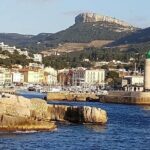
The tour finishes at the Old Port of Marseille, returning to the harbor area where you began the “sea connection” story. Ending here feels right because Marseille is at its most itself around the water.
By the time you reach the finish, you’ve walked through neighborhoods like Le Panier, civic spaces like Hôtel de Ville, viewpoints like Notre-Dame de la Garde, and coastal corners like the Corniche and Vallon des Auffes. That arc makes the city click for many first-time visitors.
Price and Value: What $58 Buys You in Real Time
Let’s be plain about value. For $58, you’re getting:
- a bilingual guide (English and French),
- a 4-hour guided walking experience,
- built-in guided time at Notre-Dame de la Garde and other key stops,
- and the small-group advantage (up to 8 people).
What you’re not getting is food or drinks. That’s common for walking tours, but it changes how you should pack. If you plan to eat afterward, keep your timing. If you want energy during the walk, bring snacks you can handle on the move.
In my view, the best value part is the guide. Charles’ energy and the way the tour stays organized are exactly what you want when the route includes hills, steps, and multiple districts. A less capable guide can turn a great route into a stressful one. This tour’s reputation is built on keeping the pace reasonable and the storytelling clear.
Who Should Book This Marseille Walking Highlights Tour
This is a good fit if you:
- want a first solid orientation to Marseille,
- like learning history through street-level stops, not only museums,
- enjoy walking and can handle about 9 kilometers,
- and appreciate a guide who keeps the group together without making it feel rigid.
It may be a poor fit if:
- you have low fitness or trouble with steps and hills,
- you need wheelchair access (this one isn’t suitable),
- you’re bringing kids under 12.
I’d also steer older travelers who plan to book toward realistic expectations. The tour works when people can follow the pace, and your comfort matters—especially after the climb to Notre-Dame de la Garde.
Practical Tips So You Enjoy Every Step
A few small things make the difference between a fun morning and a slog.
- Pack your own water and snacks since food and drink aren’t included.
- Bring sunglasses, sunscreen, and a sun hat. This is Marseille, and the light can be intense.
- Wear hiking shoes. The day includes steps and uneven walking.
- If you need to pause, you can stop and then rejoin at another location. Just communicate your needs early.
One more thing: arrive ready to walk, not ready to “browse.” This tour is designed as an active route with guided time at key moments.
Should You Book This Marseille Highlights Tour?
If you’re in Marseille for a few days and want one activity that helps everything else make more sense, I’d book it. Charles’ style is friendly, energetic, and focused on explaining what you’re seeing—especially the way neighborhoods connect to the city’s long harbor-and-migration story.
I’d think twice only if you’re worried about long walking days. This isn’t a light stroll. It’s a structured half-day with hills, steps, and enough distance to require planning. If your legs are up for it, you’ll come away with a clear mental map of Marseille and a story you can carry into dinner and sightseeing later.
In short: if you want Marseille by foot, with guidance and strong viewpoints, this is a smart use of time.
FAQ
How long is the Marseille half-day city highlights tour?
It lasts about 4 hours.
Where do we meet the guide?
You meet in front of Cathédrale Basilique Sainte-Marie-Majeure, dit La Major, and the guide wears a white cap.
How large is the group?
The group is limited to 8 participants.
What’s included in the price?
The tour includes the walking tour, the Notre-Dame de la Garde visit, and a bilingual guide (English and French).
Is food and drink included?
No. You’ll need to bring your own eating and drinking supplies.
How much walking is involved?
The tour covers about 9 kilometers.
Is the tour suitable for children or wheelchair users?
It’s not suitable for children under 12 or for wheelchair users, and it’s also not recommended for people with low level of fitness or those over 70.