REVIEW · PARIS
Marais Private Walking Tour
Book on Viator →Operated by My Paris Insider · Bookable on Viator
The Marais packs a remarkable amount of Paris into a walk of about two hours: medieval mansions, grand squares, quiet courtyards, Jewish heritage, and lively streets all sit close together. With a private Parisian guide, you can focus on the parts of the neighborhood that interest you most, rather than follow a set group pace.
I like the personal format, especially for first-time visitors who want the area explained instead of simply photographed. I also like the route’s mix of famous sights such as Place des Vosges and lesser-known courtyards that are easy to miss on your own.
The main drawback is the price: at $291.18 per person, this is a costly short walk unless you are sharing the experience with family or friends. The tour also involves steady walking, and the two-hour schedule leaves little time for long stops.
In This Review
- Key points at a glance
- Why the Marais works so well on foot
- Starting beside Hôtel de Ville
- Medieval Paris at Hôtel de Sens
- The quiet courtyard of Hôtel de Sully
- Place des Vosges and the old fashionable Marais
- Gardens at the National Archives
- Square du Temple and the northern Marais
- The Jewish quarter and a changing neighborhood
- What the two-hour pace feels like
- Is $291.18 per person fair?
- Who should book this Marais walk?
- Should you book it?
- FAQ
- How long does the Marais Private Walking Tour last?
- Where does the tour begin?
- Where does the tour end?
- Is this a private tour?
- Who is the guide?
- What sights are included?
- Are admission tickets included?
- Is the tour suitable for people with limited mobility?
- Can I cancel the tour for a refund?
Key points at a glance
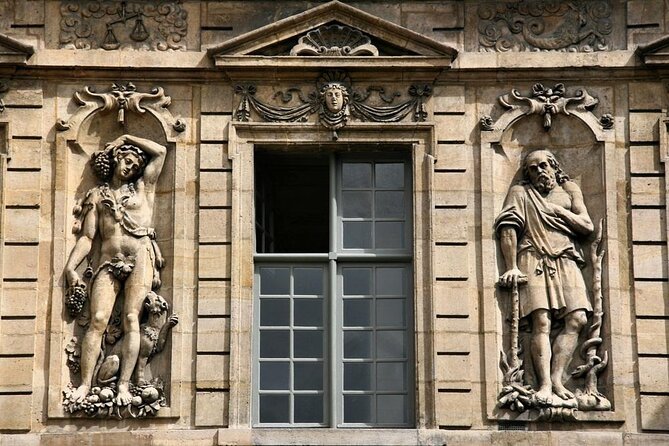
- A private walk with Quentin: The guide named in the supplied information is Quentin, who offers a flexible, personal approach to the neighborhood.
- Place des Vosges is only one part of the route: You also visit Hôtel de Sens, Hôtel de Sully, the National Archives gardens, and Square du Temple.
- The Jewish quarter adds useful context: The route includes one of Paris’s best-known Jewish neighborhoods.
- A good choice for repeat visitors: The focus on private mansions, courtyards, and tucked-away corners gives familiar Paris a fresh angle.
- The route crosses the Marais: You begin at Hôtel de Ville and finish near Temple Metro station in the northern Marais.
- Plan for the cost: Group discounts are available, but snacks are not included and the listed per-person price is high for a two-hour activity.
Why the Marais works so well on foot

The Marais is one of Paris’s easiest neighborhoods to explore by walking. Its streets hold several periods of the city’s past close together, so you can move from a grand civic building to a medieval mansion, then into a quiet garden or a historic Jewish street within minutes.
That variety is the real reason to take a guided walk here. On your own, you can admire the façades, take pictures, and stop for food. A guide gives those places a timeline and explains why the neighborhood looks the way it does.
This private format also gives you room to ask questions. If your group wants more detail about Parisian architecture, Jewish history, aristocratic town houses, or the modern character of the Marais, you can steer the conversation. That is more useful than a large group tour where every stop must follow the same script.
Quentin is the named guide associated with this experience. The available comments describe him as professional, friendly, flexible, and well informed about the neighborhood. One couple arranged a different start time to fit their plans, which suggests that the private setup can be useful if your day does not fit a fixed schedule.
You can also read our reviews of more walking tours in Paris



Starting beside Hôtel de Ville
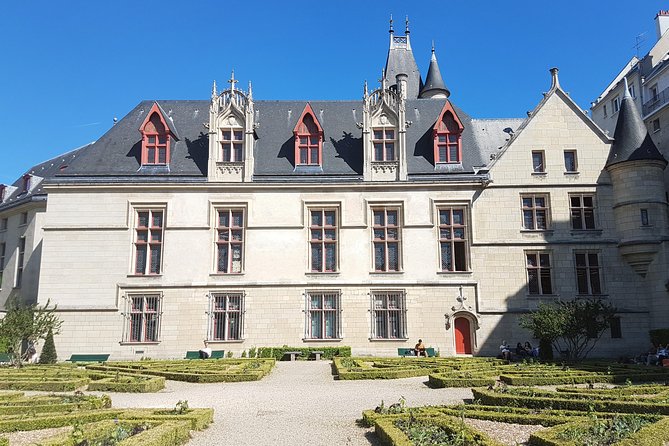
The walk begins at 8 Place de l’Hôtel de Ville, beside Paris’s city hall. Hôtel de Ville is a grand civic monument with a difficult past. The original building dates to the 16th century, but it was burned during the Paris Commune in 1871 and later rebuilt in the original style.
This is a strong meeting point because it places you at the western edge of the Marais, close to the Seine and central Paris. It also gives your guide an easy way to introduce the city’s political and architectural story before you move into the neighborhood’s narrower streets.
The visit here is brief, listed at about five minutes. Do not expect a long interior tour or a formal admission experience. The value is in using the building as a starting marker and understanding its connection to Paris’s turbulent past.
Since the meeting point is outdoors at a well-known address, arrive with the exact location saved on your phone. You make your own way there, and the tour includes a mobile ticket rather than a hotel pickup.
Medieval Paris at Hôtel de Sens
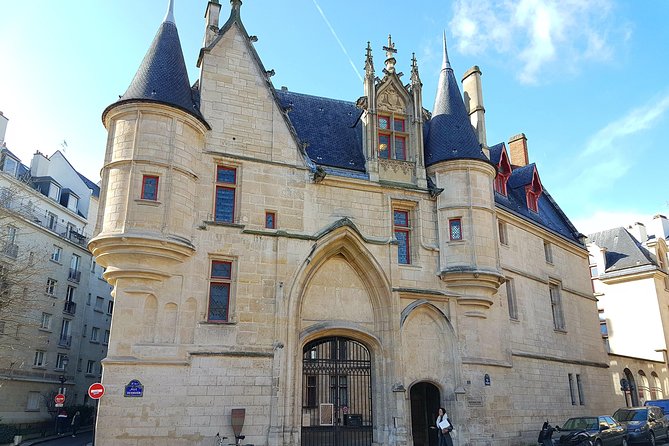
From Hôtel de Ville, the route continues to Hôtel de Sens, a medieval private mansion. This is one of the stops that gives the Marais its special character. Paris is often associated with grand boulevards and monumental churches, but places such as this reveal an older, more enclosed city.
You will spend about ten minutes here. The stop is free, and the attraction comes from the exterior and the explanation around it rather than from a ticketed interior visit.
A private guide matters at a place like Hôtel de Sens because a mansion can look like just another handsome façade if you do not know what you are seeing. Quentin can point out what makes the building different and place it within the neighborhood’s long development.
This part of the walk should appeal to you if you enjoy architecture but do not want a museum-heavy tour. It is also a good moment to ask about the private mansions that appear throughout the Marais.
The quiet courtyard of Hôtel de Sully
The Cour et jardin de l’Hôtel de Sully brings you into one of the Marais’s quieter spaces. This private mansion, or hôtel particulier, has a courtyard and garden in the middle of the neighborhood.
The stop is short, about five minutes, but it adds an important change of mood. The Marais can feel busy on its main streets, yet these courtyards offer a calmer view of how wealthy Parisians once lived behind the street façades.
Do not judge this stop by its length. A brief look at a garden can be enough when the guide explains its purpose and design. The tradeoff is that you will not have much time to linger, sketch, or take a slow series of photographs.
I especially like this kind of stop for people who have already seen the Louvre, Notre-Dame, or the Eiffel Tower. It offers a smaller, more local scale of Paris, with an emphasis on spaces you might pass without noticing.
Place des Vosges and the old fashionable Marais
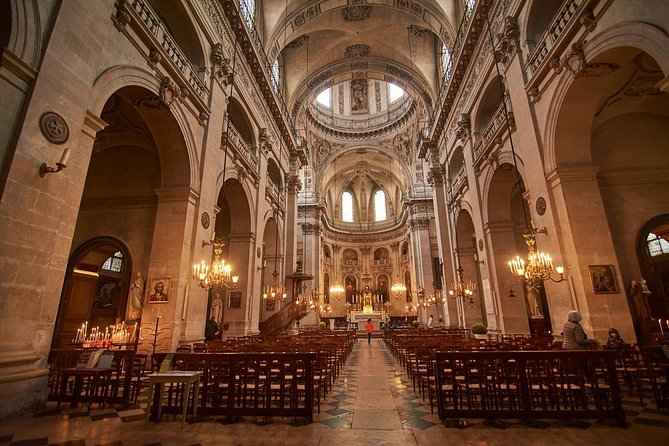
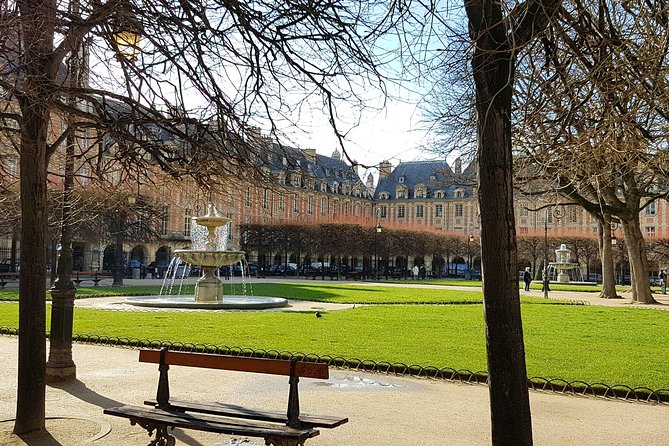
Place des Vosges is the best-known stop on the route and the oldest square in Paris. Its regular layout and surrounding buildings make it one of the city’s most memorable urban spaces.
The square was fashionable in the 17th and 18th centuries. Today, it offers a clear sense of the Marais at its grandest, with a formal design that contrasts with the neighborhood’s twisting streets and small courtyards.
You will have about ten minutes here. That is enough for an introduction and some photographs, but not enough for a slow circuit of every arcade or a long café break. If Place des Vosges is a major reason you booked the tour, you may want to return later on your own.
A guide improves the stop by explaining how the square fits into the larger story of the Marais. Instead of seeing it as an isolated pretty plaza, you begin to understand it as part of the neighborhood’s former fashionable and aristocratic world.
You can also read our reviews of more private tours in Paris






Gardens at the National Archives
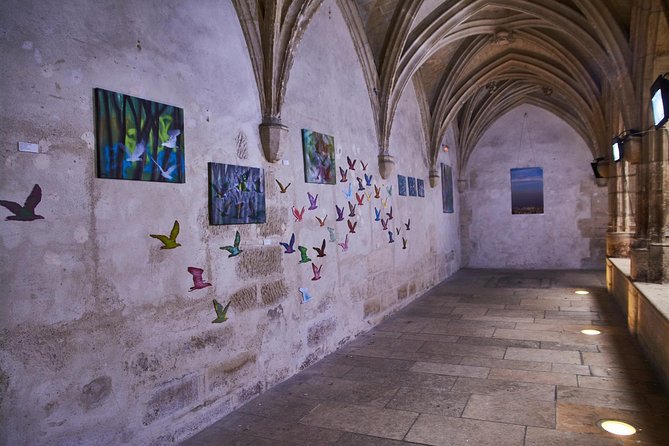
The Jardins des Archives Nationales surround another beautiful private mansion. This stop gives you more of the courtyards and gardens that make the Marais different from many other central Paris districts.
You will spend about ten minutes here, again without an admission charge. The gardens are useful in the middle of a walking tour because they provide a change from streets and façades. They also reinforce the guide’s larger point: the Marais is not only about major landmarks. Much of its appeal lies behind walls and through gateways.
The route does not promise a full visit to the National Archives buildings, so you should think of this as an outdoor stop. That keeps the tour moving, but it also means the experience is best for you if you want an overview rather than a specialist architectural study.
Square du Temple and the northern Marais
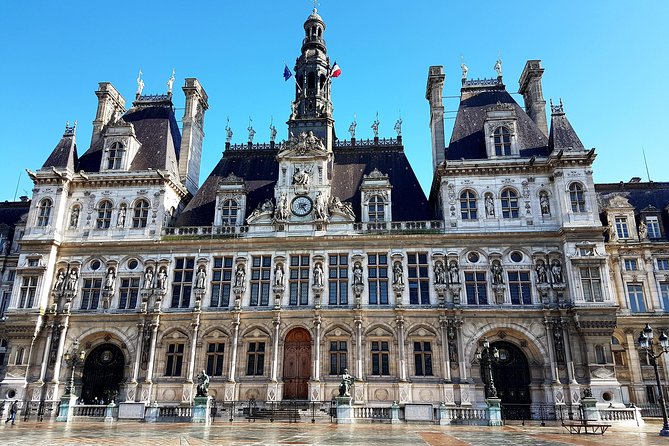
Square du Temple, also called Square du Temple, Elie-Wiesel, brings the walk into the northern Marais. The park is a short five-minute stop, but it helps show how the neighborhood changes as you move north.
This portion of the route is valuable because it prevents the tour from becoming only a circuit of the most polished historic sights. You see another side of the district, with open space and a different pace from Place des Vosges.
The stop is brief, so you should not expect a long park visit. Still, it helps connect the various parts of the Marais before the tour reaches its Jewish quarter and final stop near Temple Metro station.
The Jewish quarter and a changing neighborhood
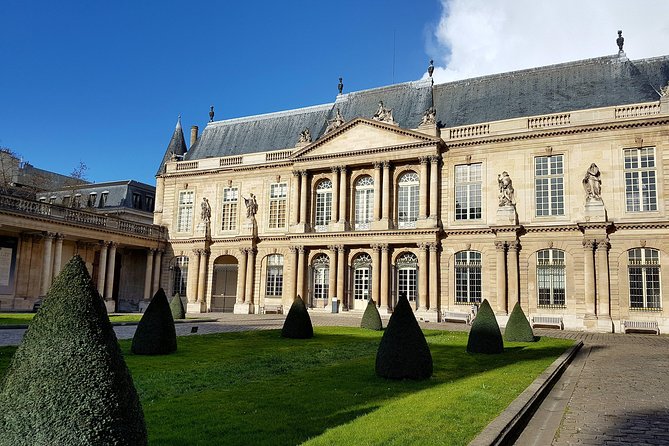
The Jewish quarter is one of the most important parts of the route. You will spend about fifteen minutes learning about one of Paris’s best-known Jewish neighborhoods.
That short visit cannot cover every aspect of Jewish life in Paris, but it adds social and cultural depth to a tour that might otherwise focus heavily on mansions and gardens. The Marais is not just an architectural district. Its identity also comes from the communities that have lived, worked, worshiped, and built businesses here.
This is a good place to ask your guide focused questions. You might want to understand how the Jewish quarter fits into the wider Marais, how the area changed over time, or which streets and landmarks deserve a return visit.
The supplied information does not promise food tastings, synagogue visits, or museum admission. Snacks are not included. If you want to sample the neighborhood’s food after the walk, plan to do that separately rather than expecting it as part of the tour.
What the two-hour pace feels like
The experience is described as approximately two hours, with several short stops and a broad walk through the Marais. One itinerary entry gives the overall Marais visit a two-hour duration, so allow some flexibility in your schedule rather than booking a tight connection immediately afterward.
You should be comfortable walking for the full outing. The activity asks for a moderate level of physical fitness, and the route crosses several parts of the neighborhood rather than staying around one square.
The pace should suit you if you prefer steady sightseeing with regular explanations. It may feel too quick if you want to enter every building, sit in each garden, or spend a long time at Place des Vosges.
Start times are offered at several points during the day. Since the tour is private, the guide may be able to adjust the beginning in some cases. That flexibility proved useful for one couple with specific timing needs, but you should confirm any change before relying on it.
The tour ends at 168 Rue du Temple, near Temple Metro station. This is convenient for continuing north or returning to other parts of Paris by public transport. The route is not a round trip, so remember that your final location differs from the starting point.
Is $291.18 per person fair?
The listed price of $291.18 per person is high for a two-hour walking tour. The value depends greatly on the size of your group and how much you care about private guiding.
For one or two people, the cost is a serious consideration. You are paying for personal attention, a local guide, and the ability to ask questions without sharing the tour with strangers. You are not paying for admissions, snacks, transport, or a full-day experience.
For a family or group of friends, group discounts may improve the calculation. A private tour can also make sense when several people want different things from the walk, since the guide can respond to your interests more easily than a large scheduled group.
I would not choose this tour because it is the cheapest way to see the Marais. I would choose it if the private format matters, if you want context for the neighborhood’s private mansions and Jewish quarter, or if you are celebrating a special occasion.
One couple used the walk as an anniversary surprise and found that the familiar neighborhood felt new when explained by Quentin. That is a useful clue about the tour’s best audience: people who want a personal memory rather than a simple checklist of sights.
Who should book this Marais walk?
This tour fits couples, families, and small groups who want a private introduction to one of central Paris’s most layered districts. It is also well suited to repeat visitors. You may have already walked through the Marais, yet still miss the significance of its courtyards, mansions, and historic communities.
Families can benefit from the guide’s flexibility, especially when children need a change of pace. The available information includes a family who booked during the Christmas period and wanted to make the most of limited time in Paris.
It is less suitable for you if you want a long museum visit, a food tour, or a low-cost group walk. It is also not the best choice if you dislike walking or need a fully step-free activity, since only a moderate fitness level is specified and no detailed accessibility information is provided.
Service animals are allowed, and the meeting and end points are near public transportation. Confirmation arrives at booking, and free cancellation is available if you cancel at least 24 hours before the local start time.
Should you book it?
Book this Marais tour if you want the neighborhood explained by a local guide and value privacy more than a low price. Quentin’s friendly, flexible style appears particularly useful for couples, families, and repeat visitors who want more than the standard landmarks.
Skip it if you are happy to explore independently or if $291.18 per person feels too steep for a short walk. You can still visit Place des Vosges, the Jewish quarter, and the surrounding streets on your own, but you will lose the thread connecting the mansions, gardens, civic buildings, and communities.
For the right group, this is a focused way to get your bearings fast, learn the Marais’s layers, and finish near Temple Metro station with plenty of Paris still ahead.
FAQ
How long does the Marais Private Walking Tour last?
The tour lasts approximately two hours. The route includes several short stops across the Marais.
Where does the tour begin?
The tour begins at 8 Place de l’Hôtel de Ville, 75004 Paris, France.
Where does the tour end?
It ends at 168 Rue du Temple, 75003 Paris, near Temple Metro station.
Is this a private tour?
Yes. Only your group participates in the activity.
Who is the guide?
The guide named in the available information is Quentin, a Parisian local guide.
What sights are included?
The route includes Hôtel de Ville, Hôtel de Sens, Hôtel de Sully’s courtyard and garden, Place des Vosges, the National Archives gardens, Square du Temple, the wider Marais, and the Jewish quarter.
Are admission tickets included?
The listed stops have free admission. The experience includes a private local guide, but it does not include snacks.
Is the tour suitable for people with limited mobility?
The activity specifies that participants should have a moderate level of physical fitness. No more detailed accessibility information is provided.
Can I cancel the tour for a refund?
Yes. You can cancel for a full refund if you cancel at least 24 hours before the experience’s start time. Cancellations or changes made less than 24 hours before the start are not accepted for a refund.