REVIEW · PARIS
Louvre Masterpieces Private Guided Tour with Reserved Access
Book on GetYourGuide →Operated by ExperienceFirst · Bookable on GetYourGuide
The Louvre can feel like a small city with paintings instead of people, so this tour gives you a useful route through its biggest sights. I like the reserved entrance, which protects your limited Paris time, and the lively approach, which uses gossip, murder, cannibalism, and palace intrigue to make famous art easier to remember. Guides such as Mariane, Mélina, Sébastien Cormier, and Lea have earned especially warm praise for clear explanations and for keeping children involved.
The main thing to understand is that this is not a full two-hour guided march through every gallery. After the outdoor introduction and entry, the Louvre portion becomes largely self-guided, with your guide pointing out the key works and giving you a route and tips for continuing alone. At $527 per person, it makes the most sense for visitors who value a private guide and a quick, focused first visit.
In This Review
- Key points to know before booking
- Why a focused Louvre tour can be worth it
- Meeting at the Pyramid and the Louis XIV statue
- Going below ground to the Medieval Foundations
- Meeting the Great Sphinx of Tanis
- Finding the famous works without getting lost
- Ending with the Mona Lisa
- The self-guided portion needs careful planning
- Price, group size, and overall value
- Who should book this Louvre experience?
- Should you book it?
- FAQ
- How long does the Louvre tour last?
- Where is the meeting point?
- What artworks are included?
- Does the tour include reserved entrance?
- Is the guide English-speaking?
- Is this a private tour?
- Can I stay in the Louvre after the tour?
- What should I bring?
- Is the tour suitable for wheelchair users?
Key points to know before booking
- Begin at the Louis XIV statue: Meet at the equestrian statue in front of the Pyramid, at 8 Place du Carrousel.
- Follow a story-led route: The tour links the Pyramid, Medieval Foundations, Great Sphinx of Tanis, major masterpieces, and Mona Lisa.
- See more than paintings: Sculptures, artifacts, palace remains, and famous art all appear along the way.
- Keep your afternoon flexible: The guided portion ends at the Mona Lisa, but you may remain in the Louvre afterward.
- Expect an English tour: The listed language is English, and the experience is offered as a private group or a small semi-private group of up to six.
- Pack light: Bags larger than 55 by 35 by 20 centimeters are not allowed, and you need a passport or ID card.
Why a focused Louvre tour can be worth it
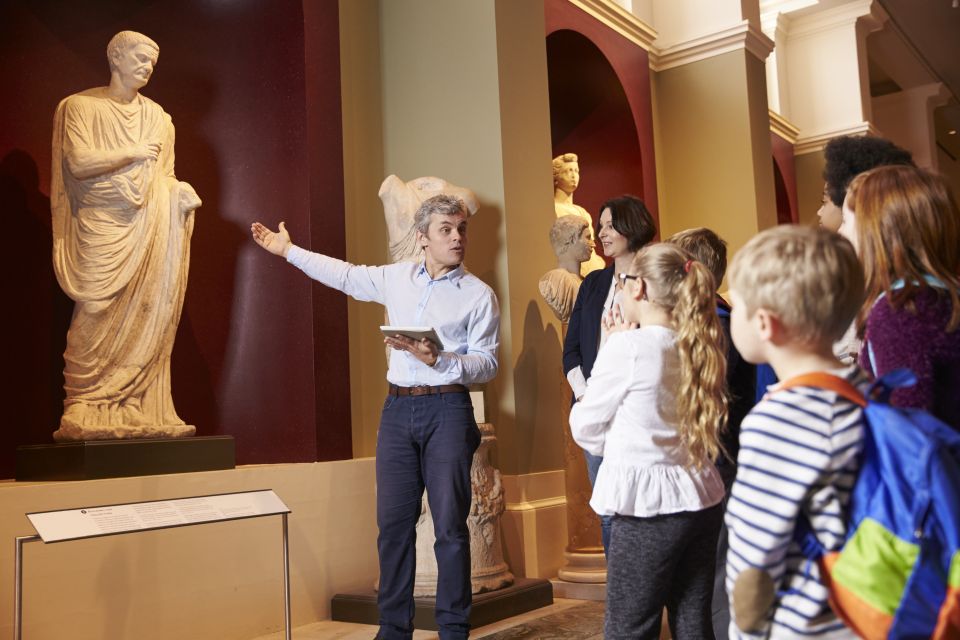
The Louvre is not difficult because the art is obscure. It is difficult because there is too much of it. You can spend half an hour walking in the wrong direction, then discover that the Mona Lisa is still several corridors away.
A two-hour highlights tour solves that problem. You get a human route through the museum rather than trying to decode the floor plan while tired and distracted. The aim is not to see everything. It is to leave with a clear sense of the Louvre’s most famous works and enough energy to choose your next rooms.
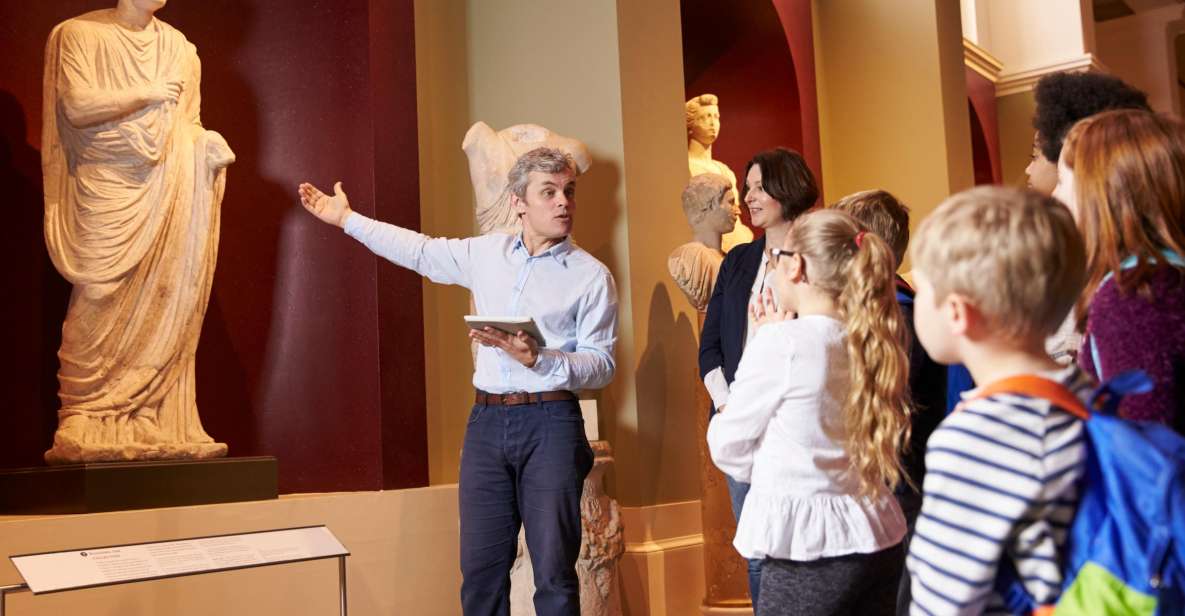
I like the unusual tone here. Instead of treating every artwork like a solemn school lesson, the guide uses scandal and personality. The Louvre becomes a place of ambitious rulers, strange rituals, shocking tales, and public arguments about art. That approach is especially useful if you are visiting with children or with people who might lose interest during a long lecture.
The experience also gives you a choice of scale. You can book a fully private tour, or select a semi-private format for a small group of up to six people. A private booking gives you the best chance to ask questions and adjust the pace, while the smaller shared option may reduce the cost compared with booking a guide just for your party.
You can also read our reviews of more guided tours in Paris



Meeting at the Pyramid and the Louis XIV statue
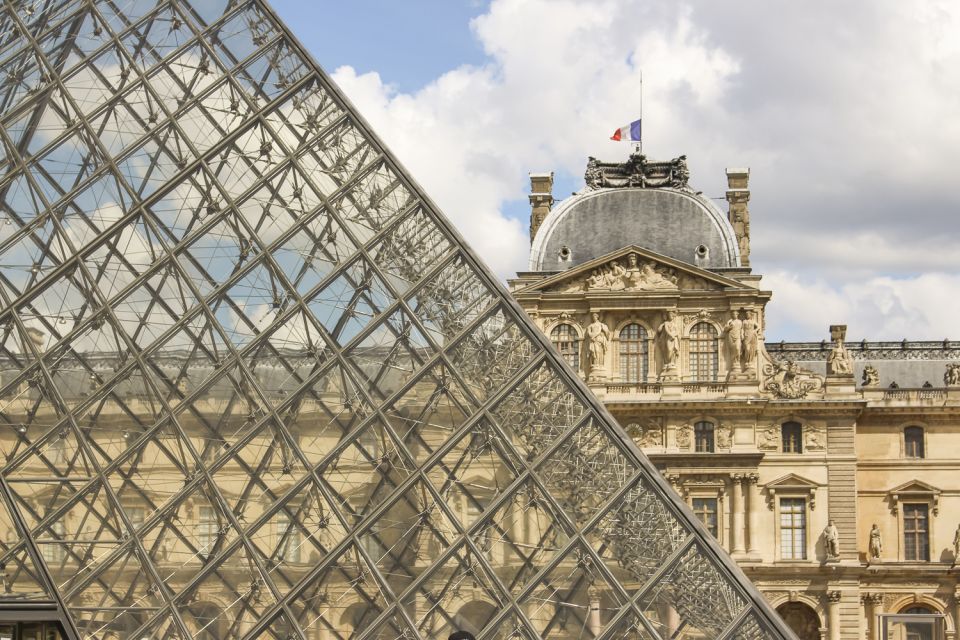
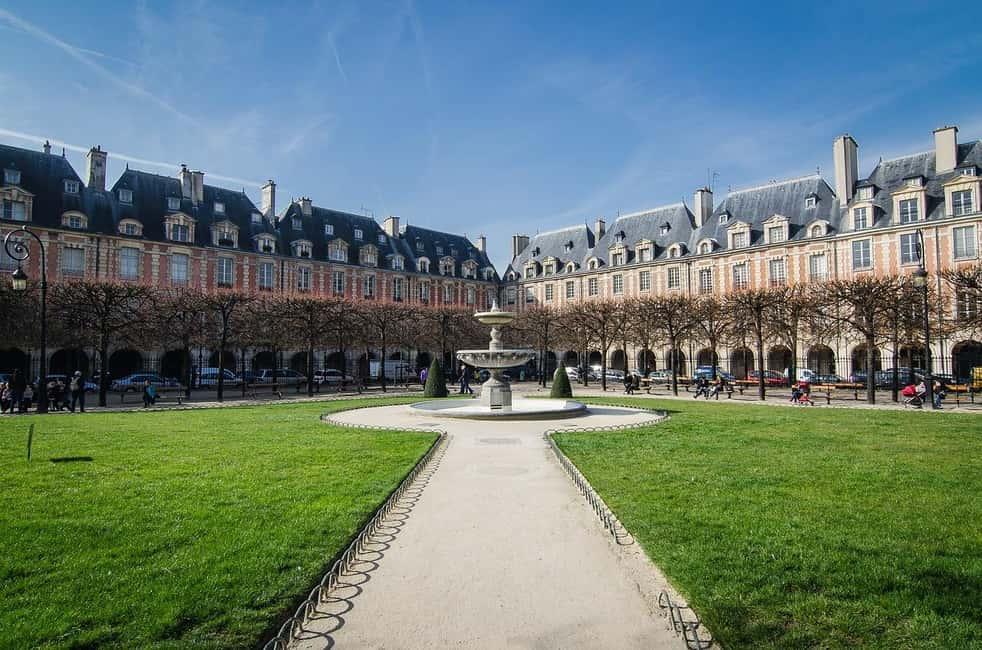
Your meeting point is the statue of Louis XIV on horseback, directly in front of the Louvre’s large glass Pyramid. The address is 8 Place du Carrousel, next to the Tuileries Garden.
This detail matters. The Louvre has several entrances and a large open area around the Pyramid, so simply telling your taxi driver or companions to meet at the Louvre is not precise enough. Look for the man on the horse in front of the main entrance. Arrive with time to locate it before the scheduled start.
The Pyramid is more than a convenient landmark. It was controversial when it was built, and the tour uses that dispute to explain how an old palace came to have such a modern entrance. You will also hear about a small red ghost said to have haunted the area for centuries. It is a playful beginning, and it sets the tone for the rest of the visit.
The opening discussion takes place outside, so dress for the weather. The tour then moves into the museum through a reserved or separate entrance, helping you avoid the main public queue when that access is operating as described.
Going below ground to the Medieval Foundations
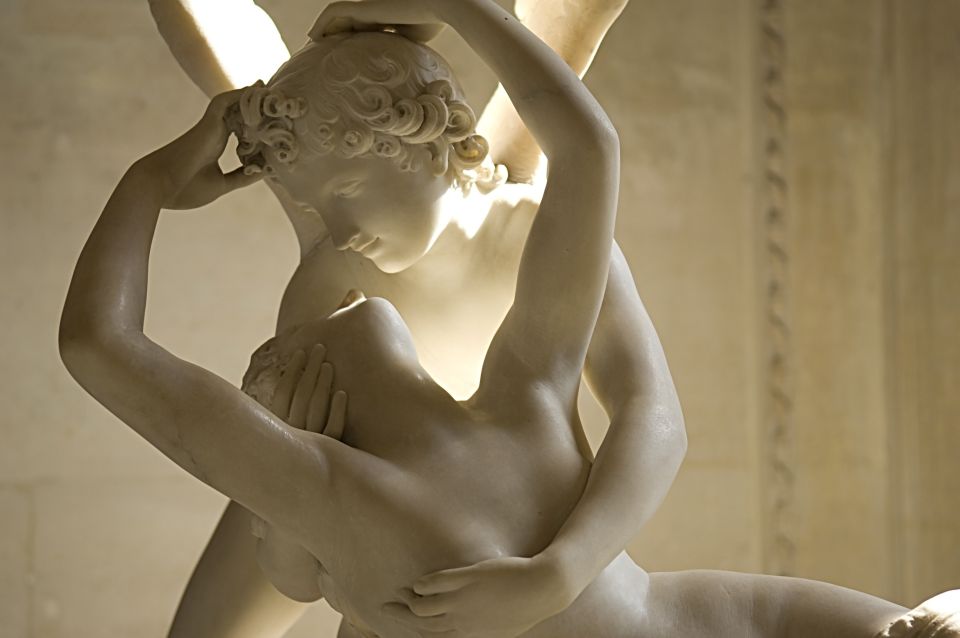
Before the Louvre became one of the world’s great art museums, it was a fortress. The tour takes you to the Medieval Foundations, where the remains of the earlier structure help you picture that older Louvre.
This is one of the most useful stops because it gives the building a physical story. You are not just moving through grand halls filled with art. You are walking through layers of a site that changed from defensive stronghold to royal residence and then to public museum.
The foundations also provide a welcome change of pace. After the bright Pyramid and busy entrance areas, the darker stone spaces can make the museum feel older and more mysterious. You might find this section more interesting if you enjoy buildings and city history as much as paintings.
Keep your expectations sensible. This is a highlights walk, not a detailed architectural study of every stage of the Louvre. The guide gives you enough context to understand what you are seeing, then moves you toward the artworks that most first-time visitors want to find.
Meeting the Great Sphinx of Tanis
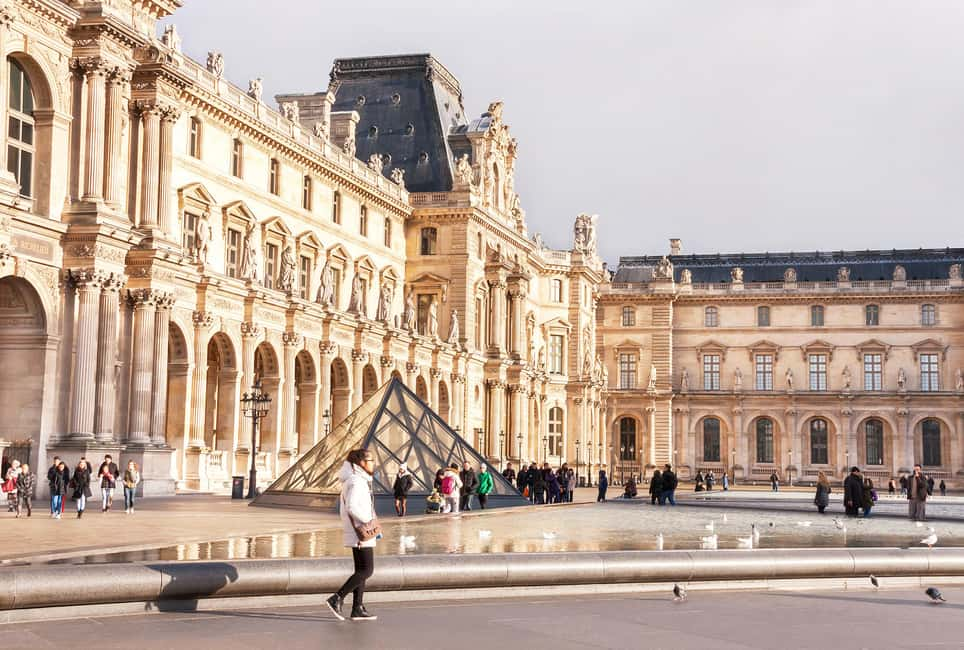
The Great Sphinx of Tanis is an early stop on the route. This massive Egyptian sculpture has survived for thousands of years, and its riddles offer another change from the palace and fortress story.
The Sphinx helps show the Louvre’s range. In a single visit, you move from French royal power to ancient Egypt, then onward to Greek sculpture, Renaissance painting, and other major collections. If you try to plan this route alone, it is easy to underestimate the distances between these sections.
A guide also gives you a way to look at an object that can seem imposing but hard to read. The stories surrounding the sculpture and its age give your eyes somewhere to begin. For families, this sort of question-led stop can be easier to follow than a long explanation of dates and dynasties.
The broader benefit is that the tour does not reduce the Louvre to Mona Lisa and a few French paintings. You see how wide the museum’s collection is, even during a short visit.
Finding the famous works without getting lost
The main route includes more than a dozen well-known paintings, sculptures, and artifacts. Exact stops can vary, especially in a museum that changes room access and crowd flow, but the stated focus includes Venus de Milo, Winged Victory, and other signature works before the final stop at the Mona Lisa.
Venus de Milo gives the guide a chance to discuss one of the world’s best-known sculptures and the way missing arms have become part of its identity. Winged Victory of Samothrace is another powerful sight, often encountered in a dramatic setting at the top of a staircase. The route lets you see these major pieces as part of a larger collection rather than as isolated checkboxes.
The tour’s storytelling is the real tool here. You will hear scandalous tales connected with legendary figures, including stories of murder and cannibalism. This material will appeal to you if you prefer art explained through human behavior and conflict. If you want a quiet, technical study of brushwork, symbolism, and conservation, the tone may feel less suited to your interests.
The guide’s job is also to manage your attention. You will pass thousands of works that are not part of the central route. That can feel like a limitation, but it is also why a short visit works. You get a firm list of priorities instead of trying to absorb an entire museum in one sitting.
Past guides have included Mariane, Mélina, Sébastien Cormier, and Lea. The strongest praise has focused on detailed explanations, engaging interpretation, professionalism, accessibility, and the ability to keep children interested. Those details suggest that the guide can make a noticeable difference, though the exact person leading your tour depends on the date and assignment.
You can also read our reviews of more private tours in Paris





Ending with the Mona Lisa
The tour concludes at Leonardo da Vinci’s Mona Lisa, the Louvre’s most famous resident. This is a practical choice. By placing her at the end, the guide saves the headline attraction for last and gives you a clear finish point.
Expect this stop to be different from the others. The Mona Lisa is famous enough to draw its own crowd, so you may have limited time and space in front of the painting. The guide can help explain the gossip and questions surrounding her expression, reputation, and history, but no short tour can turn the viewing area into a private gallery.
This is also where the tour’s promised structure becomes important. Once the guided portion ends, you are free to stay in the Louvre and continue on your own. A good guide can point you toward other rooms and works worth seeing, which is useful because you will already understand the building’s basic layout.
Do not schedule a tight appointment immediately afterward. The formal tour lasts two hours, but the ability to remain inside is one of its best benefits. You may want time for another collection, a second look at a favorite piece, or simply a slower walk through rooms you passed quickly.
The self-guided portion needs careful planning
The experience is described as a two-hour guided visit, but the practical details state that after the guided outdoor walking tour, the Louvre visit is self-guided. Read that carefully before you pay.
The guide is included for the route and explanations, but you should not book this expecting a private expert to spend the entire museum visit beside you. The experience is best understood as a guided introduction and highlights route, followed by independent museum time.
That format can work very well. You get help at the beginning, learn where the major works are, and then choose how long to stay. It also avoids the fatigue that comes from a nonstop lecture. On the other hand, if you want a guide to discuss each gallery from the entrance through the final room, ask the operator to confirm the exact format before booking.
The same advice applies to customization. The private option suggests more flexibility, but the central route is still built around the Louvre’s famous works. Ask in advance if you have a particular department or artist you want to prioritize.
Price, group size, and overall value
At $527 per person, this is a premium Louvre experience. The price is hard to justify if all you want is entry and a quick look at the Mona Lisa. You can find simpler admission or audio-guide options at a much lower cost.
The value improves if you are short on time, dislike museum logistics, or want a private English-speaking guide to shape your first visit. Reserved access can save energy, while the route prevents you from spending your morning wandering between distant wings. For a small private party, the cost may feel more reasonable when shared among people who want personal attention.
The semi-private option for up to six people gives you another way to balance cost and interaction. It is smaller than a large coach group, so you should have a better chance of hearing the guide and asking a question. Still, confirm the price for the exact option you select, since the advertised per-person cost may differ by group type or date.
The tour is non-refundable, so check your schedule before paying. Starting times vary, and availability must be checked for the day you want. Bring a passport or ID card, and leave luggage at your accommodation because bags over 55 by 35 by 20 centimeters are not permitted.
Pets and smoking are not allowed. The tour is listed as English only, so choose it only if that suits everyone in your group.
There is also conflicting accessibility information. The activity details say wheelchair accessible, while the suitability notice says it is not suitable for wheelchair users. Because the route includes outdoor walking, museum entry, and older foundation areas, contact the operator directly before booking if anyone in your party uses a wheelchair.
Who should book this Louvre experience?
I would choose this tour for a first visit when you have only a few hours and want the museum’s famous sights in a clear order. It also suits families, especially since Sébastien Cormier has been praised for making the experience accessible to children.
It is a good fit for anyone who likes stories more than formal art analysis. The scandal-focused approach gives you memorable hooks, and it can help you remember why a particular painting or sculpture mattered long after the room itself fades from memory.
You may prefer another option if you want to explore at your own pace from the start, spend hours in one department, or rely on an audio guide. You should also compare prices if reserved entry is your only priority. A ticket with an audio guide or a standard highlights group could cost less.
Should you book it?
Book this experience if you want a private or very small introduction to the Louvre, need a sensible route, and enjoy lively stories about famous art. The best features are the reserved access, the carefully chosen stops, the option to remain inside afterward, and the personal touch of a private English-speaking guide.
Skip it if the $527 price feels steep, if you want continuous guiding for the full museum visit, or if you prefer quiet independent viewing. Before booking, confirm the guide format, the exact group option, and wheelchair access. For the right visitor, this is a practical way to turn an intimidating first Louvre visit into a manageable two-hour orientation.
FAQ
How long does the Louvre tour last?
The listed duration is two hours. After the guided portion, you may remain in the Louvre and continue exploring on your own.
Where is the meeting point?
Meet at the statue of Louis XIV on horseback, in front of the large Pyramid at the Louvre’s main entrance. The address is 8 Place du Carrousel.
What artworks are included?
The route focuses on more than a dozen famous works, including the Mona Lisa, Venus de Milo, Winged Victory, and the Great Sphinx of Tanis.
Does the tour include reserved entrance?
Yes. A skip-the-line entrance ticket is included, with access through a separate entrance.
Is the guide English-speaking?
Yes. The listed tour language is English.
Is this a private tour?
Yes. The experience is offered as a private group, with an option for a semi-private group of up to six people.
Can I stay in the Louvre after the tour?
Yes. After the tour ends at the Mona Lisa, you are free to remain in the museum and explore independently.
What should I bring?
Bring a passport or ID card. Pack light, since items larger than 55 by 35 by 20 centimeters are not permitted.
Is the tour suitable for wheelchair users?
The information is conflicting. It is listed as wheelchair accessible in one section but also marked as not suitable for wheelchair users. Contact the operator before booking to confirm the current route and access arrangements.