REVIEW · PARIS
Louvre Essential Private tour
Book on Viator →Operated by AWESOME GUIDE · Bookable on Viator
The most useful feature of this Louvre tour is its private format. For three hours, you and your own party move through one of the world’s largest museums with a licensed guide who can explain the art, answer questions, and adjust the pace. You begin at the Arc de Triomphe du Carrousel at 2 p.m. and finish back there.
I like two things in particular: entry tickets are included, and the route covers far more than the Mona Lisa. You’ll see the medieval foundations, Egyptian and Mesopotamian works, Greek sculpture, Italian paintings, French masterpieces, and Dutch art. The main drawback is the price, $357.42 per person, which makes this a serious splurge for couples or small groups.
In This Review
- Key points to know before booking
- Why a private Louvre tour can make sense
- Starting with a fortress beneath the palace
- Egyptian art and the Great Sphinx of Tanis
- Greek sculpture in the Venus de Milo galleries
- Mythology in the Caryatides room
- The long Italian gallery and Leonardo’s Mona Lisa
- French monumental paintings and Napoleon
- Mesopotamia and the quieter Dutch rooms
- What the guides add to the visit
- Price, group size, and the real value
- Timing, meeting point, and practical limits
- Who should book this Louvre experience
- Should you book the Louvre Essential Private Tour?
- FAQ
- How long does the Louvre Essential Private Tour last?
- What time does the tour begin?
- Where does the tour meet?
- Where does the tour end?
- Are Louvre admission tickets included?
- Is this a private activity?
- Which languages are available?
- Can visitors under 18 receive free admission?
- Can I cancel for a full refund?
Key points to know before booking
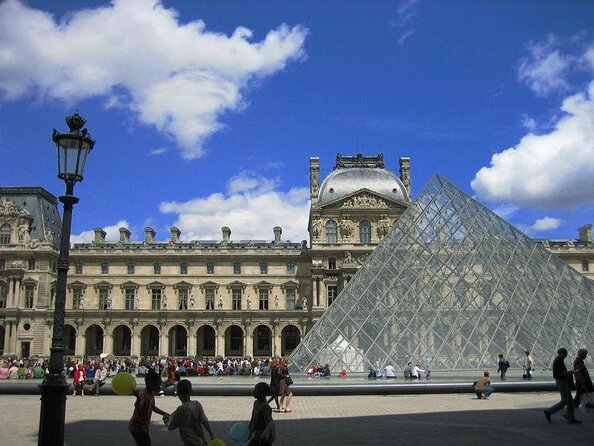
- See the Louvre’s medieval foundations: Begin with the oldest room, almost 800 years old, and learn how the palace began as a fortress.
- Cover the famous works and lesser-seen rooms: The route includes the Great Sphinx of Tanis, Venus de Milo, Victory of Samothrace, Mona Lisa, Rubens, Vermeer, Rembrandt, and more.
- Ask for a tour shaped around your interests: Private guiding lets you focus more on painting, sculpture, ancient civilizations, mythology, or the museum itself.
- Meet at a clear central location: The tour starts and ends at the Arc de Triomphe du Carrousel in the Louvre courtyard area.
- Expect a guide-led introduction, not a casual stroll: Guides including Olga, Vincent, Auriel, and Miguel have been praised for clear explanations, historical context, patience, and personal attention.
- Plan for a substantial price: At $357.42 per person, the value depends on how much you want structure, context, and private access to an expert.
Why a private Louvre tour can make sense
The Louvre is not simply a big museum. It is a huge former palace with collections spread across several wings and floors. On your own, it is easy to spend an hour finding the Mona Lisa, take a few photographs, and leave without understanding how the pieces fit together.
A private guide changes the basic experience. You can ask why a sculpture matters, how a painting was made, or what the Louvre was before it housed art. You are not tied to a fixed group of strangers, and your guide can spend more time on the subjects that interest you.
That personal approach matters most if this is your first visit. It also helps families, mixed-interest groups, and people who want to see the major works without wandering through every corridor.
The three-hour length is sensible. It is long enough to form a clear picture of the museum and its major collections, but short enough to avoid turning the afternoon into an endurance test. Still, the Louvre is demanding. You will cover a lot of ground, and the visit may feel fast if you want extended time in every gallery.
You can also read our reviews of more private tours in Paris


Starting with a fortress beneath the palace
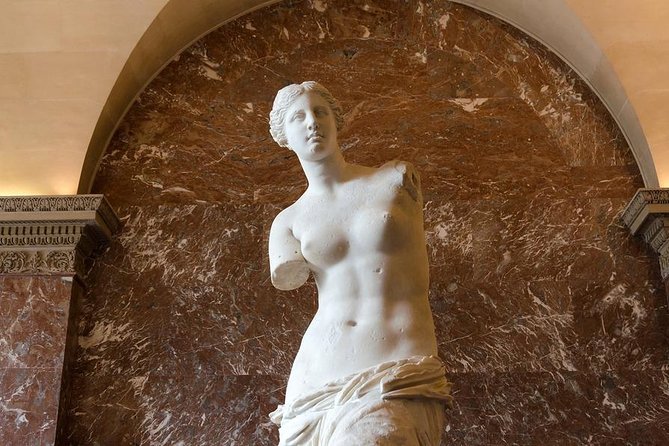
You meet at the Arc de Triomphe du Carrousel at 2 p.m. This is a useful meeting point because it places you right by the Louvre rather than asking you to search through a distant neighborhood.
The first stop is the oldest part of the building, almost 800 years old. Before it became a museum, the Louvre was a fortress. Seeing those medieval remains gives the visit a strong beginning because you are not starting with an isolated painting. You are starting with the building’s original purpose.
I like this part of the route because it gives the museum a physical timeline. The Louvre can otherwise feel like a collection of grand rooms with no clear order. Here, you begin with stone, defensive architecture, and the medieval past before moving toward royal rooms and works of art.
Ask questions at this point. A private tour is most useful when you treat it as a conversation rather than a lecture. If you are curious about how the building changed from fortress to palace to museum, this is the natural moment to bring it up.
Egyptian art and the Great Sphinx of Tanis
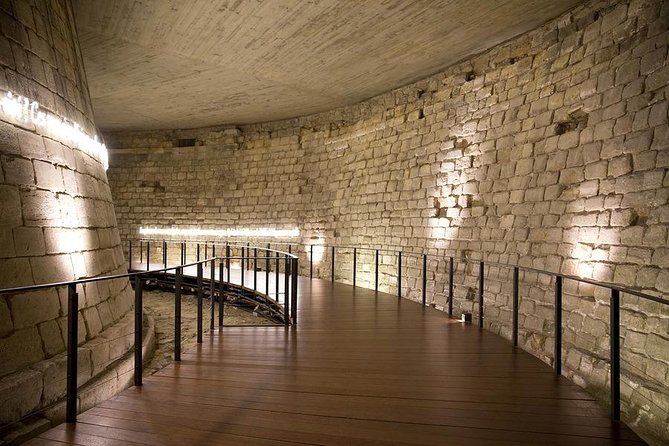
The route then moves to ancient Egypt and the Great Sphinx of Tanis. This is one of the tour’s more distinctive stops because it connects the museum’s ancient collections with the relationship between Egypt and Paris.
The sphinx gives your guide a chance to explain symbolism, royal power, and the way ancient objects were collected and displayed in a modern European capital. You also get a break from the predictable sequence of famous European paintings.
Do not treat this room as a quick path to the Mona Lisa. The ancient collections provide scale. They show that the Louvre is not only a palace of French and Italian art but also a museum of civilizations stretching across thousands of years.
The tour includes Mesopotamian sculpture later in the visit, including the Khorsabad Bulls and the Code of Hammurabi. Together, these stops give you a useful ancient-world section rather than one token Egyptian object.
Greek sculpture in the Venus de Milo galleries
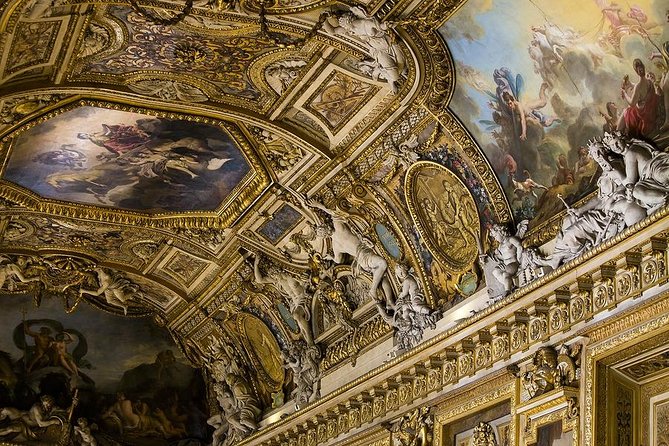
The Greek antiquities department is one of the museum’s major collections, and the route includes its two best-known sculptures: the Venus de Milo and the Winged Victory of Samothrace.
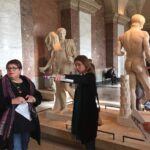
The Venus de Milo is famous, but a guide can help you look beyond the missing arms and familiar silhouette. You might find yourself paying closer attention to the posture, the balance of the body, and the way the sculpture has been displayed as an ideal of classical beauty.
The Victory of Samothrace offers a different kind of power. Positioned at the top of a grand staircase, it is meant to be seen from a distance as well as up close. The sweep of the wings and clothing creates a sense of movement that makes it memorable even in a museum filled with celebrated objects.
These works can attract crowds, so your guide’s value is partly practical. The guide can help you approach the major pieces efficiently, then give you context instead of leaving you to read a small wall label while people move around you.
Mythology in the Caryatides room
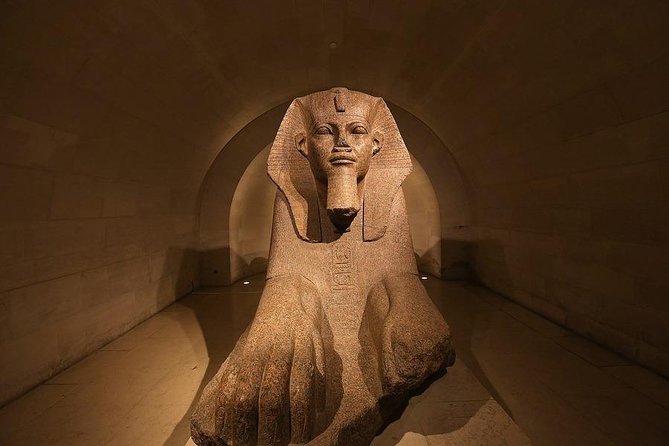
The Caryatides room was once a ballroom in the castle. Its architecture gives the mythology discussion a fitting setting, since the room itself feels ceremonial and theatrical.
This is a good place for a guide to tell stories rather than simply name dates and artists. Greek mythology can seem like a confusing list of gods and heroes when you meet it in fragments. A clear explanation helps you understand the symbols that appear in sculpture and painting throughout the Louvre.
The room also reminds you that the museum’s interiors are part of the experience. You are walking through former palace spaces, not a neutral white-box gallery. The setting can explain why certain works were commissioned, displayed, or valued.
Because the tour is private, you can ask for more mythology if that is your interest. If you prefer architecture or royal life, you can also ask your guide to keep the stories brief and move on.





The long Italian gallery and Leonardo’s Mona Lisa
The Italian gallery is about 800 meters long and includes works by Mantegna, Raphael, Caravaggio, and Veronese. This is the artistic heart of the route for many people, but it is also where the museum can feel most overwhelming.
A guide helps you see relationships between the paintings. Instead of treating each masterpiece as a separate stop, you can learn how Italian artists handled light, religious subjects, portraiture, drama, and composition.
Caravaggio’s strong contrasts, Raphael’s controlled balance, and Veronese’s grand scenes reward even a short explanation. You do not need a degree in art to notice the differences, but you do need help slowing down long enough to see them.
The Mona Lisa is included, of course. It is the most famous stop, and the area may be crowded. Keep your expectations realistic. The painting is smaller than many first-time visitors imagine, and viewing time can be limited by the flow of people.
The advantage of seeing it with a guide is not that you receive a private viewing. You do not. The advantage is that the guide can place Leonardo’s work in context and help you avoid allowing one painting to swallow the entire visit.
French monumental paintings and Napoleon

The French department brings a different scale. The Coronation of Napoleon and The Death of Sardanapalus are enormous works, larger than many Paris apartments.
These paintings are worth seeing partly because of their size. Stand back and let your eye take in the full scene before examining individual figures. Their scale reflects the ambition of the subjects, the power of the patrons, and the role of painting as public spectacle.
A guide can help you read the politics in the details. Napoleon’s coronation is not just a grand ceremony on canvas. It is also a carefully arranged statement about authority and image. The Death of Sardanapalus offers a more dramatic, chaotic scene, with a very different emotional charge.
This section is especially useful if you prefer history, politics, or large-scale visual storytelling to quiet portraits. It also breaks up the Italian galleries with a more distinctly French view of power and drama.
Mesopotamia and the quieter Dutch rooms
The Mesopotamian sculptures, including the Khorsabad Bulls and the Code of Hammurabi, give the visit another change of pace. These objects are powerful because of their age, scale, and connection to early systems of government and law.
The Code of Hammurabi is particularly valuable as an object that links art, writing, and civic life. You are not only looking at a carved stone. You are looking at an early attempt to set rules down in a form that could be seen and remembered.
The Dutch department is described as less crowded than some of the Louvre’s most famous areas. It includes Rubens, Vermeer, and Rembrandt, three artists with very different approaches to light, people, and everyday life.
I would pay close attention here if you enjoy intimate scenes and careful observation. The Dutch paintings can feel more personal after the enormous French canvases and ceremonial sculpture. A private guide can also prevent this section from being cut simply because the Mona Lisa and Venus de Milo are more familiar names.
What the guides add to the visit
The human guide is the main reason to choose this experience over a self-guided visit. The praised guides include Auriel, Olga, Vincent, and Miguel, and their strengths are described in practical terms: clear historical context, strong art explanations, patience, kindness, and attention to the pace of the group.
One particularly useful detail is the ability to share your interests in advance or at the beginning. Vincent is described as moving through the museum in an orderly way while focusing on the areas the group wanted to see. That is exactly what a private tour should do.
Olga is associated with a detailed approach and a calm, gracious manner. Auriel is noted for being attentive to the needs of the group. Miguel is described as helpful when explaining the museum and its display methods.
You should not assume you will receive a particular guide unless the booking specifically confirms it. The named guides show the standard to hope for, but assignments can vary.
The tour is offered in English, German, Italian, Spanish, and French. English is the listed option in the basic tour details, so confirm your language choice when booking if you need one of the other languages.
Price, group size, and the real value
The listed cost is $357.42 per person. That is expensive for three hours, especially for one or two people. The private format becomes easier to justify when the cost is spread across a larger party, and group discounts are listed as a feature, though the exact discount is not provided.
You are paying for more than admission. Louvre entry tickets are included, and you are also paying for a guide who can organize the route, provide context, and respond to your questions. That can save time and reduce the frustration of navigating a giant museum.
Still, admission alone does not make the tour a bargain. If you enjoy wandering, reading labels, and choosing your own galleries, a self-guided visit may suit you better. The price makes the most sense for a first Louvre visit, a short stay in Paris, or a group that wants a clear introduction without spending a full day inside.
The tour is booked an average of 82 days ahead. That is a useful planning signal. If your Paris dates are fixed, I would not wait until the last week, especially if you want a particular afternoon or language.
Timing, meeting point, and practical limits
The start time is 2 p.m., and the activity ends back at the meeting point after about three hours. That leaves you with an afternoon visit rather than a morning start, which may fit well with a leisurely lunch or another central Paris activity.
You should arrive with enough time to locate the Arc de Triomphe du Carrousel. The meeting point is at Place du Carrousel, 75001 Paris, and the area is near public transportation.
Most people can participate, but the tour covers a large museum and includes substantial walking and standing. The supplied details do not give a specific route for mobility needs, so contact the provider before booking if you require accommodations.
Confirmation is provided at booking, mobile tickets are available, and cancellation is free up to 24 hours before the start time. Cancellations made less than 24 hours ahead are not refunded, and late changes are not accepted. If the minimum number required for the tour is not met, the provider offers another date or experience, or a full refund.
Who should book this Louvre experience
I would choose this tour if you want the Louvre’s major works explained in a logical order rather than discovered by trial and error. It is a strong match for first-time visitors, families, couples celebrating a special trip, and anyone who wants to ask questions along the way.
It also suits groups with different interests. One person can ask about Greek mythology, another about Renaissance painting, and another about French political art. A private guide can shift the balance instead of forcing everyone through a fixed script.
Art specialists may find the three-hour route too broad. You will see many departments, but you will not have time for a slow study of every artist. The tour is an introduction to the Louvre’s essential works, not a research visit.
The main caution is the cost. If the price would make you anxious or if you prefer complete freedom, buy your own admission and explore independently. If you value efficient routing, strong explanations, and a visit shaped around your party, the expense is easier to defend.
Should you book the Louvre Essential Private Tour?
Book it if you want to understand the Louvre rather than simply collect photographs of famous pieces. The combination of medieval foundations, Egyptian and Mesopotamian art, Greek sculpture, Italian painting, French canvases, and Dutch masters gives you a broad first look in three hours.
I would be especially inclined to book for a small group that can share the cost and has limited time in Paris. I would skip it if you want a quiet, unhurried study of one department or if $357.42 per person is beyond your comfort zone.
The private format, included entry, multiple language choices, and flexible discussion are the strongest reasons to go. The price and fast pace are the tradeoffs. For the right group, it is a practical way to make sense of a famously confusing museum.
FAQ
How long does the Louvre Essential Private Tour last?
The tour lasts approximately three hours.
What time does the tour begin?
The tour begins at 2 p.m.
Where does the tour meet?
The meeting point is the Arc de Triomphe du Carrousel, Place du Carrousel, 75001 Paris, France.
Where does the tour end?
The activity ends back at the meeting point.
Are Louvre admission tickets included?
Yes. Louvre entry tickets are included in the tour price.
Is this a private activity?
Yes. Only your own party participates in the private tour.
Which languages are available?
Tours are available in English, German, Italian, Spanish, and French.
Can visitors under 18 receive free admission?
Yes. Visitors under 18 can receive free admission with valid identification. EEA residents under 26 can also receive free admission when they show valid identification and proof of residency.
Can I cancel for a full refund?
Yes. You can cancel at least 24 hours before the local start time for a full refund. Cancellations or changes made less than 24 hours before the start time are not refunded or accepted.