REVIEW · PARIS
Private cruise with Paris water way
Book on Viator →Operated by Paris Water Way · Bookable on Viator
Paris Water Way gives you a calm, close-up look at Paris from the Seine, with the city’s grandest sights passing by in a tidy 90-minute circuit. You’ll see the medieval islands, glide beneath Pont Neuf and Pont des Arts, and finish with the Eiffel Tower in view.
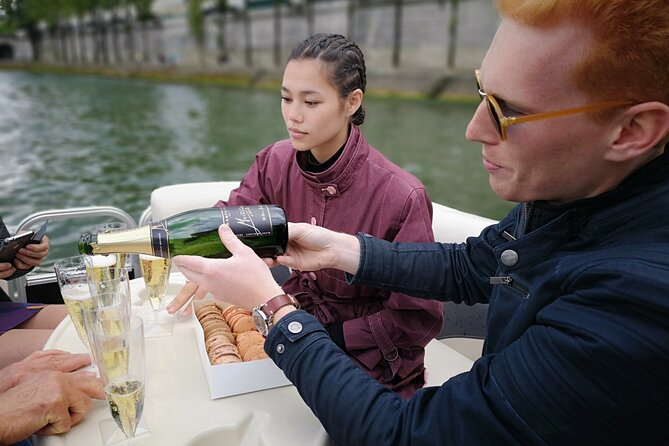
I like the private setting, since your group gets the boat to itself rather than sharing the ride with a large crowd. I also like the route’s range: royal palaces, museums, bridges, and old Paris all appear within one short trip. The main consideration is weather, since the cruise can be canceled in poor conditions and the price is higher than a standard shared sightseeing boat.
In This Review
- Key points to know before booking
- Why the Seine is such a good way to see Paris
- Starting at 14 Quai François Mitterrand
- Île Saint-Louis and Île de la Cité
- The Conciergerie and the old seat of power
- Under Pont Neuf, Paris’s oldest surviving bridge
- Pont des Arts and the changing riverfront
- The Louvre from the Seine
- Musée d’Orsay and the art of the former railway station
- The National Assembly and Alexandre III Bridge
- Finishing with the Eiffel Tower
- The guide, pace, and family appeal
- Is $94.63 per person good value?
- Timing, weather, and cancellation
- Should you book Paris Water Way?
- FAQ
- Where does the private Paris cruise start?
- Where does the cruise end?
- How long does the cruise last?
- Is the cruise private?
- Is the experience offered in English?
- Which Paris sights are included in the route?
- Does the cruise include entry to the Louvre or Eiffel Tower?
- Are mobile tickets accepted?
- Can I cancel for a full refund?
Key points to know before booking
- A 90-minute private Seine cruise: Your group participates alone, making this a good choice for families or small parties wanting a quieter ride.
- A concentrated central Paris route: The boat passes both historic islands, the Louvre, Musée d’Orsay, National Assembly, Alexandre III Bridge, and Eiffel Tower.
- An English-language option: The activity is offered in English, and guide Diego has provided clear explanations during the cruise.
- A relaxed family outing: The commentary has been suitable for children, while the pace leaves room to simply watch Paris pass.
- A boat ride rather than museum entry: You view the major landmarks from the water, but entrance to the Louvre, Musée d’Orsay, or Eiffel Tower is not part of the experience.
- Weather matters: Free cancellation is available up to 24 hours before departure, but last-minute changes are not accepted.
Why the Seine is such a good way to see Paris
Paris can feel like a city of grand facades viewed from street level. From the Seine, the arrangement makes more sense. You see how the islands sit at the center of the city, how the bridges link the left and right banks, and how major monuments line up along the river.
I find a private boat especially useful early in a Paris visit. The route gives you a visual map of the center without asking you to walk several miles or manage a series of museum entrances. You can note which sights deserve a closer visit later, or simply enjoy the city without another packed sightseeing schedule.
The boat trip lasts about an hour and a half. That is long enough to cover a substantial stretch of central Paris, but short enough to fit around lunch, an afternoon museum visit, or an evening plan. Since the boat returns to the starting point at 14 Quai François Mitterrand, you do not need to arrange a separate ride back.
You can also read our reviews of more boat tours in Paris

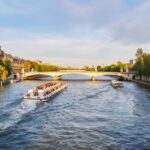
Starting at 14 Quai François Mitterrand
The meeting point is on the right bank beside the Louvre area. Your booking confirmation is issued at the time of reservation, so keep it available on your mobile device. The experience accepts mobile tickets and operates in English.
This location is practical for a day in central Paris. You are close to the Louvre and the Seine quays, so the cruise can fit naturally before or after time in the 1st arrondissement. The activity is near public transportation, though the information provided does not specify which station or line is best for your particular departure.
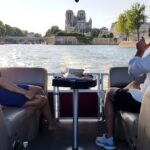
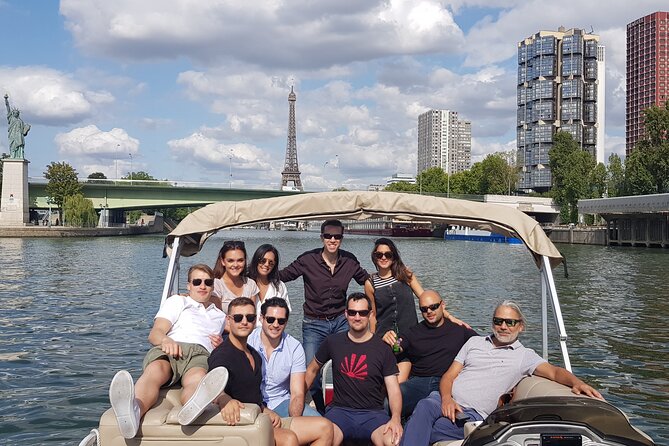
Because this is a private activity, the group size is determined by your booking rather than by a large public sightseeing crowd. That matters most if you are traveling with children, older family members, or friends who prefer a quieter pace. You can focus on the view and the guide’s explanation without trying to hear over a full boat.
Île Saint-Louis and Île de la Cité
The first major views are the two natural islands in the Seine that form the old center of Paris. Île Saint-Louis is the smaller island, covering about 11 hectares, and takes its present name from Louis IX, the medieval king later known as Saint Louis.
From the water, you get a different sense of the island’s compact scale. Its position immediately upstream from Île de la Cité helps explain why this part of the river became so important to Paris. A notable sight is the Hôtel Lambert, one of the island’s grand private mansions. It was later purchased by a member of Qatar’s princely family and suffered a major fire in 2013.
Île de la Cité is the older civic heart of the city. It belongs to the 1st and 4th arrondissements and is widely treated as the ancient center of Paris, once known as Lutèce. The boat passes in front of the island rather than providing a walking visit, so you should think of this section as an orientation view, not a substitute for exploring its buildings on foot.
The distinction matters. On a street visit, you can study details at close range. From the river, you see the island as a whole and understand its place in the city’s layout. For a first look, that wider view is useful.
The Conciergerie and the old seat of power
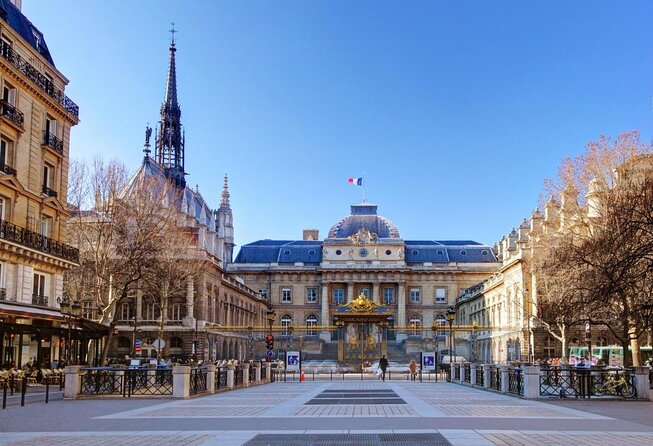
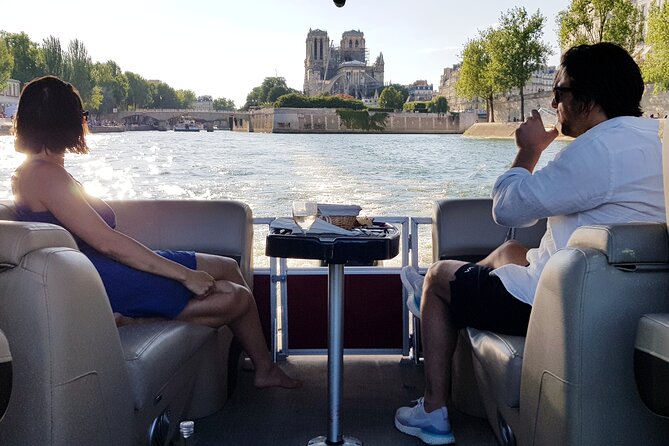
The cruise then passes in front of the Conciergerie at the Palais de Justice. This complex grew from the Palais de la Cité, the royal residence and center of power for French kings from the 10th through the 14th centuries.
The site once connected royal government, courts, archives, and other sovereign institutions. Important remnants remain, including the Conciergerie, Sainte-Chapelle, several towers, and parts of the former palace buildings. Seeing it from the river gives you a sense of how tightly power was concentrated on the island.
I like this part of the route because it adds context to the better-known museum views later on. The Seine is not just a scenic corridor. It runs past the places where medieval Paris was governed, judged, and administered.
The limitation is that a boat cannot provide the same detail as a visit inside the Conciergerie or Sainte-Chapelle. If those interiors are priorities, plan a separate visit. The cruise works best as a visual introduction.
Under Pont Neuf, Paris’s oldest surviving bridge
Pont Neuf sounds like a new bridge, but it is the oldest existing bridge in Paris. Construction began at the end of the 16th century and finished in the early 17th century.
Its original design was a major change for the city. Unlike earlier bridges, Pont Neuf had no houses built along it, and its sidewalks kept pedestrians away from mud and horse traffic. It was also the first stone bridge in Paris to cross the Seine completely.
Passing beneath the bridge gives you a brief but memorable change of scale. You move from broad river views into the structure of the city itself. Pont Neuf crosses the western tip of Île de la Cité, so this moment also helps you understand the island’s position in the river.
The bridge and the quays of the Seine have UNESCO World Heritage status. That designation is less important during the ride than the simple fact that the boat lets you see the bridge as part of the historic riverfront, rather than as an isolated monument on a map.
You can also read our reviews of more private tours in Paris


Pont des Arts and the changing riverfront
Pont des Arts is best known for its former love-padlock tradition. From 2008 onward, couples attached padlocks to the bridge’s wire parapets. The custom spread to other Paris footbridges, but the city removed the fences in 2015 after concerns about weight, appearance, and damage to the heritage structure.
You will not see the old padlocks in their original form. The bridge’s fencing was replaced first with a temporary street-art display and later with glass panels. That change makes the crossing a small lesson in how Paris manages popular customs against the needs of historic structures.
From the water, Pont des Arts also creates a clear view toward the Louvre and the river quays. It is one of the places where the cruise’s main strengths come together: bridge design, city history, and a broad view of central Paris in a single scene.
The Louvre from the Seine
The Louvre is one of the strongest visual moments of the cruise. From the river, you see the former royal palace as a long architectural presence rather than as a series of galleries that require hours indoors.
The museum began as a royal fortress and later became a palace. The idea of using the Louvre to display the Crown’s art collection appeared in the 18th century, and the museum opened to the public in 1793 as the Muséum central des arts de la République.
Today it is the world’s largest museum of art and antiquities, with collections covering Western art from the Middle Ages to 1848, along with ancient civilizations and Islamic art. More than 36,000 works were on display at the end of 2019, drawn from a collection of more than 500,000 objects.
The boat does not include admission, and you should not expect to identify individual paintings from the river. That is not a flaw. The cruise gives you a strong exterior view and helps you decide if the Louvre deserves a separate block of time. If you want the Mona Lisa, Egyptian antiquities, or major French paintings, buy a museum ticket separately and allow much longer than 90 minutes.
Musée d’Orsay and the art of the former railway station
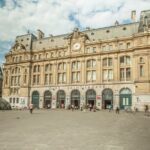
Across the river, the boat passes the Musée d’Orsay. Its building was originally the Gare d’Orsay, constructed between 1898 and 1900 for the Universal Exhibition. It became a museum in 1986.
The building’s former railway function is part of its appeal. From the Seine, you can appreciate the long station facade and its prominent position on the left bank. Inside, the museum presents Western art from 1848 to 1914, including painting, sculpture, decorative arts, graphic art, photography, and architecture.
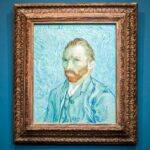
The Orsay is especially important for its Impressionist and Post-Impressionist holdings. It has nearly 1,100 Impressionist and Post-Impressionist paintings, making it one of the best places in Europe to see that period in depth.
Again, the boat provides a useful preview rather than entry. I would pair the cruise with the museum if you enjoy Monet, Renoir, Degas, Van Gogh, or the transition from academic painting to modern art. If your group includes children, the outdoor view can be an easier way to introduce the building before deciding if everyone has the patience for the galleries.
The National Assembly and Alexandre III Bridge
The river then brings you past the National Assembly, France’s lower house of Parliament. Its current role is tied to the long, uneven development of national representation since 1789. The institution’s name and powers changed over time, with parliamentary life expanding and contracting alongside public freedoms.
You do not visit the chamber on this cruise, but the river view places the building among the monuments of the left bank. It is a good reminder that Paris is not only museums and royal remains. It is also the working center of French government.
The cruise continues beneath Alexandre III Bridge, one of Paris’s most ornate crossings. It was built for the 1900 Universal Exhibition and was intended to symbolize the alliance between France and Russia formed in 1891.
Tsar Nicholas II, Empress Alexandra Feodorovna, and French President Félix Faure laid the first stone in 1896. The bridge connects the Esplanade des Invalides with the Grand Palais and Petit Palais, both also built for the exhibition.
This is one of the best bridge passages on the route. Its decoration is easier to appreciate from the water because you see the full span, the sculptural details, and its alignment with the exhibition buildings. If you enjoy architecture, this section may be more rewarding than the brief pass by a single museum facade.
Finishing with the Eiffel Tower
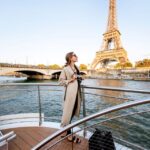
The Eiffel Tower provides the grand finish. Built by Gustave Eiffel and his team for the 1889 Universal Exhibition, the 324-meter iron tower marked the centenary of the French Revolution. It was first called the 300-meter tower and later became the symbol most closely tied to Paris.
Seeing it from the Seine gives you space around the structure. On foot, nearby buildings can interrupt the view. From the boat, the tower rises above the river and the surrounding city, making its unusual proportions easier to grasp.
The cruise does not include access to the tower, elevators, or summit. That keeps the outing simple, but it also means you should arrange a separate visit if you want to go up. The river view is valuable on its own, especially if you are looking for a relaxed way to include the tower without spending time in an entry line.
The guide, pace, and family appeal
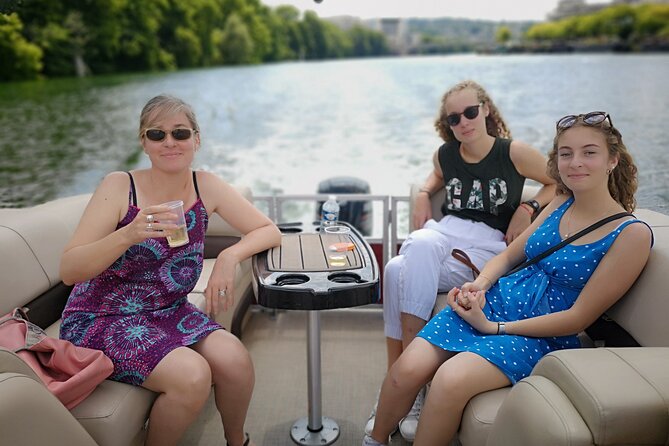
The experience is offered in English, and a guide named Diego has led the cruise with clear descriptions of the sights. The available feedback specifically highlights his ability to explain the route in a way that held the interest of three children while keeping the 90-minute ride relaxing for the whole family.
That combination is important. A private cruise can easily become either a silent transfer or an overloaded lecture. Here, the best version of the experience gives you enough explanation to understand what you are seeing, with enough quiet time to enjoy the river.
I would choose this for families, couples, and small groups who want a personal introduction to central Paris. It also suits anyone who has limited walking time or wants a break between more demanding visits. It is less suitable if your main goal is detailed interior sightseeing, since every major museum and monument is viewed from outside.
Service animals are allowed, and most people can participate. The available information does not provide specific boat dimensions, seating arrangements, or details about step-free boarding, so contact Paris Water Way directly if you need those details.
Is $94.63 per person good value?
At $94.63 per person, this is not the cheapest way to see the Seine. Standard public cruises can cost less, but they do not offer a private boat for your group. The price makes more sense when you value personal space, a quieter ride, and the ability to share the experience with only your own party.
For a family of several people, compare the total cost with the convenience you want. You are paying for the private format and guided route, not for admission to the Louvre, Orsay, Eiffel Tower, or Conciergerie. If you planned to visit those places anyway, treat the cruise as a scenic overview rather than a replacement for tickets.
I consider the value strongest for a small group celebrating something, a family with children, or anyone who finds large sightseeing boats tiring. If you are alone or traveling as a pair on a tight budget, a public Seine cruise may give you many of the same views for less.
Timing, weather, and cancellation
The trip lasts approximately 90 minutes and ends back at the meeting point. That makes scheduling simple, but you should leave some space around it because the duration is approximate.
Good weather is required. If poor weather causes the operator to cancel, you are offered another date or a full refund. You can cancel for a full refund up to 24 hours before the start time, while cancellations or changes made less than 24 hours in advance are not accepted.
I would avoid placing this cruise immediately before a timed museum ticket or train departure. The river is the point of the outing, so allow yourself enough time to enjoy it without watching the clock.
Should you book Paris Water Way?
Book it if you want Paris in a calm, private setting and value a broad view of the city more than museum interiors. The route is unusually well concentrated, moving from the medieval islands to Pont Neuf, the Louvre, Musée d’Orsay, National Assembly, Alexandre III Bridge, and Eiffel Tower in one continuous ride.
The strongest case is for families and small groups. An English-speaking guide such as Diego can make the monuments easier for children to follow, while the private format keeps the outing comfortable for adults. The main reasons to pass are the price, the weather dependence, and the fact that every major sight is viewed from outside.
For a first afternoon in Paris, this is a smart orientation ride. For a repeat visit, it offers a slower, more personal way to see the city’s riverfront without adding another crowded attraction to your schedule.
FAQ
Where does the private Paris cruise start?
The cruise starts at 14 Quai François Mitterrand, 75001 Paris, France.
Where does the cruise end?
The activity ends back at the meeting point.
How long does the cruise last?
The cruise lasts approximately 1 hour and 30 minutes.
Is the cruise private?
Yes. Only your group participates in the private tour or activity.
Is the experience offered in English?
Yes. English service is offered.
Which Paris sights are included in the route?
The route passes Île Saint-Louis, Île de la Cité, the Conciergerie at the courthouse, Pont Neuf, Pont des Arts, the Louvre, Musée d’Orsay, the National Assembly, Alexandre III Bridge, and the Eiffel Tower.
Does the cruise include entry to the Louvre or Eiffel Tower?
No entry is listed for the Louvre, Musée d’Orsay, Eiffel Tower, Conciergerie, or other attractions. The sights are viewed from the boat.
Are mobile tickets accepted?
Yes. The activity provides a mobile ticket.
Can I cancel for a full refund?
Yes, if you cancel at least 24 hours before the experience start time. Cancellations or changes made less than 24 hours before the start time are not accepted. If poor weather causes the cruise to be canceled, you are offered another date or a full refund.