REVIEW · TOULOUSE
Toulouse Must-see Attractions Walking Tour With A Guide
Book on Viator →Operated by Guydeez · Bookable on Viator
Good walking shoes beat guesswork. This 2-hour guided walk strings together Toulouse’s key sights in a tight, easy-to-follow route, mixing grand civic architecture with UNESCO Romanesque and Gothic details, plus a calm riverside pause. You’re not just looking at postcards; you’re getting the why behind what you see—without spending hours searching for the next stop.
I especially like the way this tour centers on big-name landmarks that are quick to process on foot: the Le Capitole square, the UNESCO Basilique Saint-Sernin, and the Convent of the Jacobins with its famous palm tree column. I also like that you’re in English with a live guide, and guides such as Shima, Marco/Marcos, Mael, and Jean come through in the feedback as friendly and tuned in to real questions.
One possible drawback: it’s a city walk, not an inside-the-monuments tour, so if you’re hoping for long museum time or deep interior exploration, you may need to plan additional visits on your own.
In This Review
- Key things to know before you go
- Starting at Woodrow Wilson Plaza: How the Walk Gets You Oriented
- Le Capitole: Toulouse’s Civic Heart in Neoclassical Form
- Basilique Saint-Sernin: UNESCO Romanesque on the Way of St. James
- Couvent des Jacobins: Gothic Drama and the Palm Tree Column
- Strolling the Garonne River Banks: A Softer Side of Toulouse
- Hôtel d’Assézat Area and Fondation Bemberg: Pastel Color That Feels Like Toulouse
- English Guide Quality: Why Names Like Shima, Mael, and Jean Matter
- Price and Value: Is $40 Reasonable for This 2-Hour Loop?
- What You’ll Actually Experience at Each Stop (and What You Won’t)
- Who This Walking Tour Suits Best
- Quick Tips to Get More From the 2 Hours
- Should You Book This Toulouse Highlights Tour?
- FAQ
- How long is the Toulouse highlights walking tour?
- What does the tour cost?
- Where does the tour start and end?
- Is the tour in English?
- Is it a tour inside the monuments?
- Are monument or museum entries included?
- Can I cancel for a full refund?
Key things to know before you go

- A tight 2-hour route that keeps moving across central Toulouse, ending back near where you started
- UNESCO Saint-Sernin + Jacobins in one walk, including the palm tree column moment
- Outside-view style, since it’s a city tour rather than an entry-heavy sightseeing program
- English speaking guides, with customization and help coordinating tickets if you want to go further
- Good value for first-time orientation, especially if you want context without building a self-guided route
Starting at Woodrow Wilson Plaza: How the Walk Gets You Oriented

The meeting point is Woodrow Wilson, Pl. du Président Thomas Wilson (31000 Toulouse). That’s a practical choice: you’re near public transport, and the tour ends back at the same meeting area, so you don’t have to figure out your exit plan mid-walk.
The route is designed like a clean loop through central Toulouse. With an approximate 2-hour total duration and about five stops, you’ll spend just enough time at each landmark to see the key features, take photos, and still keep your energy. This makes it a solid pick when you only have a morning or afternoon to get a handle on the city.
You’ll use a mobile ticket, and a guide will be there in person. The tour is also described as private for your group, with a small-group option that requires a minimum of two participants. Translation: you’re not stuck in a massive crowd, and customization is on the table.
You can also read our reviews of more walking tours in Toulouse



Le Capitole: Toulouse’s Civic Heart in Neoclassical Form

Your first stop is Le Capitole, Toulouse’s iconic civic building—neoclassical in style, and wrapped in the life of the square. Even if you’ve never heard Toulouse’s political story, the building explains a lot just by looking at it: it signals power, organization, and the city’s confidence.
What I like about starting here is the perspective it gives you. From Le Capitole you can visually grasp how Toulouse grew and how its identity isn’t only about churches and old streets. It’s also about civic pride—literally built into the façade and the public space in front of it.
Because this is a walk-focused tour (not a ticket-chasing museum day), you’ll mostly experience the structure and the square from the outside. The admission is listed as free for this stop, and that fits the overall pace: quick impact, then you move on.
Basilique Saint-Sernin: UNESCO Romanesque on the Way of St. James

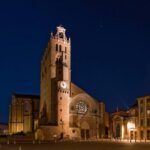
Next comes Basilique Saint-Sernin de Toulouse, a UNESCO World Heritage site and an important stop on the Way of Saint James pilgrimage route. This is where you slow down just a bit—because the Romanesque architecture is built to be noticed.
Look at the forms and the massing: Romanesque churches often feel solid and grounded, and Saint-Sernin carries that feeling. The point of the stop isn’t to turn it into a long church visit; it’s to help you identify what makes it special—its UNESCO status, its place in pilgrimage history, and the kind of religious art and design that travelers saw centuries ago.
The tour notes that this visit is also free, and it matches the “city tour” format. If you want to go inside for a longer look, you’d be layering on extra time yourself later. But even from outside, you’ll leave with clearer context: this isn’t just an old building, it’s part of a major historical travel route.
Couvent des Jacobins: Gothic Drama and the Palm Tree Column

Then you’ll reach Couvent des Jacobins, known for Gothic architecture and for a standout feature: the palm tree column. This stop is a great example of why guided walking tours beat random wandering.
A “palm tree” column is exactly the kind of detail that can turn a quick photo stop into a memorable moment—once you know what you’re looking for. A guide can point you to the design idea so it clicks, instead of you simply noticing an odd column shape and moving on.
As with the other stops, the tour is paced for walking and orientation. Admission for this segment is listed as free, which lines up with the outside-view style. If you love architecture and want a guided interpretation without committing to full interior time, this is a sweet spot.
Strolling the Garonne River Banks: A Softer Side of Toulouse

After the architecture stops, you get a breather: the banks of the Garonne River. This is one of the best parts of the tour because it balances the stone-and-spire focus with something calmer and more human.
The Garonne isn’t just scenery. It matters to Toulouse’s story—historically and practically—so when your guide explains how the city connects to this waterway, the walk feels less like a sightseeing checklist and more like a sense-making stroll.
Even if you only have short time, this part helps you understand how people live with the river nearby. You’ll likely slow your pace here, take in the views, and reset before the final stop.
You can also read our reviews of more guided tours in Toulouse




Hôtel d’Assézat Area and Fondation Bemberg: Pastel Color That Feels Like Toulouse

To wrap up, you’ll visit the area connected to Fondation Bemberg, tied to Hôtel d’Assézat—noted for its pastel-colored architecture. This is one of those Toulouse details that can be easy to miss if you’re not paying attention to color and design style.
The tour frames this stop around significance during Toulouse’s golden age and the city’s cultural heritage. The takeaway is that Toulouse isn’t one-note. Yes, you have Romanesque and Gothic. But you also have refinement in civil architecture—soft tones, elegant curves, and a sense of style that belongs to a specific era.
This end point works well because you finish with something visual and distinctive. You can then continue your afternoon with ideas for nearby cafés or a self-guided wander, since you’ll already know what you’re looking at.
English Guide Quality: Why Names Like Shima, Mael, and Jean Matter

With walking tours, the guide can make or break the whole experience. In the feedback that’s available for this tour, several guide names come up as standouts: Shima, Mael, and Jean, plus Marco/Marcos. The common thread in the praised experiences is simple: they bring the city to life with clear explanations and a friendly tone, and they point out things you might otherwise walk right past.
There’s also an important cautionary note from a less satisfying experience tied to a guide named Eva: when a guide doesn’t engage or can’t answer basic questions, the walking route can start to feel like a demo of landmarks rather than a guided understanding. I can’t control which guide you get, but you can control how you show up.
Practical move: come with two or three questions ready. Ask what Toulouse is known for beyond the obvious, or what to eat and where to go next. If your guide is the helpful type (the better-known names tend to be), you’ll get more than facts—you’ll get next steps.
Price and Value: Is $40 Reasonable for This 2-Hour Loop?

At $40 per person for about 2 hours, the value comes from three things:
First, the route is concentrated. Five major stops in two hours is efficient, and it’s the kind of pacing that helps first-timers avoid wasting time. You’re buying orientation and context, not just movement.
Second, the tour is built around free admission for the listed stops and the idea that it’s mainly an exterior, city-walk experience. That reduces surprise costs during the walk.
Third, the tour includes help with booking tickets for the visits you want, and it’s available in English (plus Spanish, French, and Italian speaking guides). That matters because timed entries and opening hours can be a hassle on your own.
The main trade-off is that entry to monuments and museums isn’t included. Even though the listed stops are free, if you choose to go inside more places, you’ll pay separately. For many people, that’s fine; for museum-lovers hoping for a heavy inside program, it may not be the best fit.
What You’ll Actually Experience at Each Stop (and What You Won’t)
This is described as a city tour and specifically not a tour inside the monuments. So expect a guided walk with time to look, ask questions, and understand the key features of each place from the outside.
Here’s what that means in practice:
- You get quick, meaningful stops at major landmarks rather than long interior visits
- You’re likely to spend most of your time on the street and in squares, not inside galleries
- You’ll finish with enough context to continue your trip without feeling lost
If you’re the type who likes to read every plaque and linger for an hour in one building, you may find the pacing a bit fast. But if you want to get the “big picture” of Toulouse without planning a route from scratch, this format is designed for you.
Who This Walking Tour Suits Best
I’d point you toward this tour if you fit one of these profiles:
- You’re visiting Toulouse for the first time and want fast orientation
- You want an English-speaking guide who can explain what you’re seeing and what matters
- You prefer a short, focused walk rather than an all-day plan
- You’re happy to see the key sights and then decide later what you want to enter
It may be less ideal if you:
- Want a program heavy on interiors and timed ticket entry
- Plan to spend most of your day inside churches, museums, and long exhibits
- Are hoping for a deep, textbook-style explanation at each stop without moving on
Quick Tips to Get More From the 2 Hours
- Wear comfortable shoes. Five stops in two hours means you’ll walk more than you think.
- Bring your phone and make sure your mobile ticket is ready before you meet.
- Ask your guide for lunch and shopping ideas as you go. Some guides, especially locals like Jean in the better experiences, tend to give useful direction right when you need it.
- Keep your expectations matched to the format: this is best for getting your bearings and learning the story behind what’s visible.
Should You Book This Toulouse Highlights Tour?
Yes, if you want a smart, time-saving way to see Toulouse’s most important landmarks in one compact walk, this is a good bet. The value is strong for the price: a short route, English guidance, and free admission for the listed stops, plus the chance to get practical advice from your guide.
Hold off or supplement it if you’re craving long interior visits or a full-on museum day. In that case, use the tour for orientation, then plan separate entries for the places that truly pull you in.
If you book, show up with a curious mindset and a few questions. With the better guides attached to this experience (the ones named Shima, Mael, Jean, and Marco/Marcos), you’ll likely leave with Toulouse feeling clearer and easier to explore on your own.
FAQ
How long is the Toulouse highlights walking tour?
It runs for about 2 hours (approx.).
What does the tour cost?
The price is $40.00 per person.
Where does the tour start and end?
It starts at Woodrow Wilson, 6 Pl. du Président Thomas Wilson, 31000 Toulouse, France, and ends back at the same meeting point.
Is the tour in English?
Yes, it’s offered in English (and the guide can also speak Spanish, French, or Italian).
Is it a tour inside the monuments?
No. It’s a city tour and not a tour inside the monuments.
Are monument or museum entries included?
Entry to monuments and museums is listed as not included.
Can I cancel for a full refund?
Yes. You can cancel up to 24 hours in advance for a full refund.