REVIEW · PARIS
Le Marais Guided Tour and Discover Paris’s Trendiest Areas
Book on Viator →Operated by Visit in Pakistan Treks, Tours and Expeditions · Bookable on Viator
Le Marais is one of the few parts of Paris where a medieval lane, a Baroque church, a Jewish quarter, fashionable shops, and a space-age museum can all fit into one short walk. This two-hour guided route moves from Hôtel de Ville to Centre Pompidou, giving you a quick but useful introduction to one of Paris’s most layered districts.
I like the mix of old and new, especially Rue François Miron’s half-timbered houses and the final look at Centre Pompidou. I also like the small group limit of 15 people, which should make it easier to hear the guide and ask questions. The main consideration is pace: two hours covers several stops, so you should expect steady walking rather than a slow, leisurely wander.
In This Review
- Key points to know before you book
- Why this short walk works in Le Marais
- Starting at Hôtel de Ville
- A Seine-side pause at 66 Quai de l’Hôtel de Ville
- Rue François Miron and the look of medieval Paris
- Saint-Paul-Saint-Louis and the Baroque side of Le Marais
- Rue des Rosiers and the Jewish quarter
- Centre Pompidou and a bold finish
- What the guide adds to the experience
- Timing, price, and what you actually receive
- Who should book this Le Marais walk?
- Should you book it?
- FAQ
- How long does the Le Marais guided tour last?
- What is the tour price?
- Where does the tour start?
- Where does the tour end?
- Is Centre Pompidou admission included?
- Are meals included?
- How large is the tour group?
- Can I cancel for a full refund?
Key points to know before you book
- Medieval Paris in the middle of the city: Rue François Miron offers narrow cobblestones and preserved half-timbered façades linked to Paris’s merchant past.
- A useful food stop: The route pauses at 66 Quai de l’Hôtel de Ville, where the guide introduces a local restaurant and may share a local treat.
- Jewish Paris and modern Le Marais: Rue des Rosiers brings together Jewish heritage, bakeries, kosher food, falafel, boutiques, and newer eateries.
- A Baroque church visit from the outside and in: Saint-Paul-Saint-Louis has a grand façade, dome, artwork, and a quiet interior.
- A strong architectural finale: Centre Pompidou supplies a sharp contrast with its exposed pipes, colorful escalators, and industrial design.
- Good value for a short orientation: At $17, the tour costs less than many longer guided walks, though meals and gratuity are extra.
Why this short walk works in Le Marais
Le Marais can be confusing on a first visit. It is not one single attraction with a clear entrance and exit. It is a patchwork of old streets, churches, food shops, private mansions, galleries, restaurants, and public squares spread across central Paris.
That makes a guide useful. In two hours, you get a route through several parts of the district without spending half the morning checking a map. You also get historical context at places that can look like ordinary buildings if you pass them on your own.
The route begins near Hôtel de Ville and ends at Centre Pompidou. That direction makes sense. You start beside the Seine and move inland through older streets before reaching one of Paris’s most recognizable modern buildings. The changing architecture gives the walk a simple storyline: medieval Paris, royal and religious Paris, community life, then modern art and design.
The price is another strong point. At $17, this is an inexpensive way to get a first look at Le Marais with a live guide. You are not paying for museum admission, food, or transportation, but the tour does not include those things. Think of it as a guided introduction, not a full-day sightseeing package.
You can also read our reviews of more guided tours in Paris



Starting at Hôtel de Ville
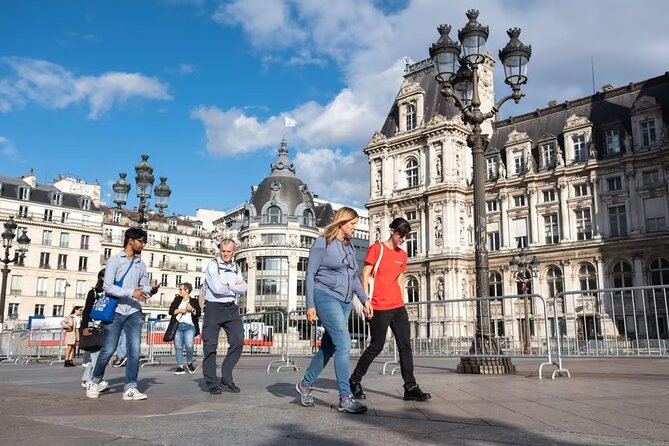
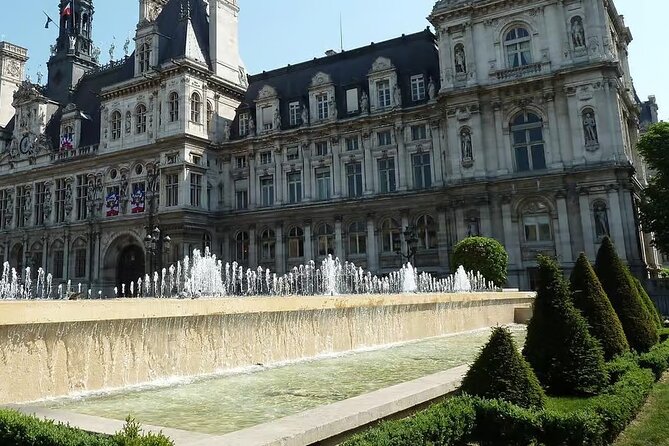
The meeting point is 25 Boulevard de Sébastopol, while the first major stop is Hôtel de Ville, Paris’s city hall. Confirm the exact meeting instructions before setting off, since the listed starting address and first sightseeing stop are different locations.
Hôtel de Ville gives the tour a suitably grand opening. The building is associated with Paris’s government, public ceremonies, exhibitions, and major moments in French history. Its current neo-Renaissance appearance comes after the original building was destroyed by fire in 1871 and rebuilt.
You will spend about 10 minutes here. That is enough time to admire the façade and hear why the building matters, but not enough for a long architectural study. The guide also places it in the story of the French Revolution and explains its continuing role in city life.
I like this as a starting point because it quickly tells you that Le Marais is more than pretty streets and good food. Parisian politics, public memory, and everyday city business all meet here. The nearby setting is also lively, so you begin in a part of Paris that feels active rather than tucked away.
The drawback is that 10 minutes passes quickly. If you want to inspect every detail of the façade or learn a full account of the building’s political history, you will need to return on your own.
A Seine-side pause at 66 Quai de l’Hôtel de Ville
The next stop takes about 10 minutes and shifts attention from public architecture to eating and local life. At 66 Quai de l’Hôtel de Ville, the guide introduces a well-known local restaurant and talks about French food in the setting of Le Marais.
The exact restaurant and any local treat are not specified in the tour details, so you should not book this expecting a meal or a formal tasting. Meals are not included. Instead, treat this as a chance to learn where the neighborhood’s food culture fits into the walk and to note a place you may want to try later.
The location beside the Seine adds to the appeal. You get a brief change of scene before moving into the older streets. If you are planning lunch or dinner nearby, the guide’s suggestions may help you choose what to investigate after the tour.
This stop is also a reminder that Paris sightseeing is not only about monuments. A local restaurant, a bakery, or a small food shop can tell you plenty about a district. Still, because the stop is short and the food element is not included, the value here comes mainly from orientation and recommendations.
Rue François Miron and the look of medieval Paris
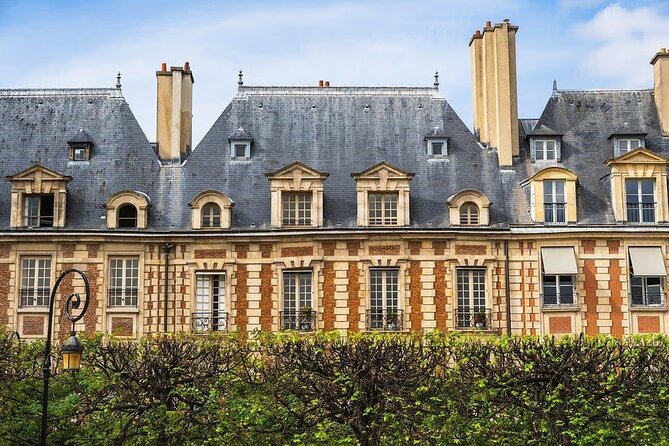
Rue François Miron is the most visually distinctive historical stop on the route. You will spend roughly 25 minutes here, looking at narrow cobblestones and half-timbered houses associated with the 16th century.
These façades once belonged to homes used by Parisian merchants. Their wooden details and uneven old-world appearance offer a sharp contrast with the broad boulevards and grand civic buildings elsewhere in the city.
This is the point where a guide can add real value. Without context, an old-looking house is simply an old-looking house. With an explanation of who lived and worked here, how the street developed, and why the buildings survived, you get a clearer picture of daily life in earlier Paris.
The street also shows how Le Marais has changed without losing its older identity. Historic buildings now share space with boutiques and modern businesses. That combination is one of the district’s main attractions, though shoppers may wish for more free time than the schedule allows.
Bring comfortable shoes. The route is not described as difficult, but the guide has been praised for making sure people get their steps in. The cobblestones and steady pace are manageable for most participants, yet this is not the right outing if you want to avoid walking.
Saint-Paul-Saint-Louis and the Baroque side of Le Marais
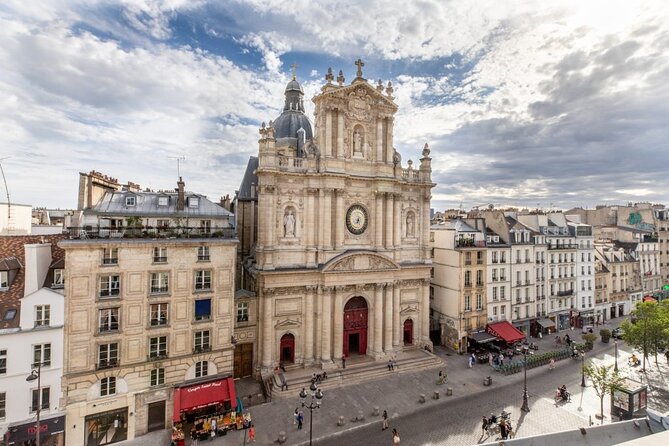
After the medieval street, the tour reaches Paroisse Saint-Paul-Saint-Louis, a church built between 1627 and 1641 at the request of Louis XIII. The stop lasts about 10 minutes.
The exterior has an ornate Baroque design, while the dome gives the church a strong presence among the surrounding streets. Inside, you can expect a calmer setting with notable artwork and a striking high altar.
The church connects Le Marais to the religious and royal life of 17th-century France. Its history includes royal ceremonies and important moments in the neighborhood’s spiritual development. That makes it more than a quick photo stop.
Ten minutes is enough to take in the main features and hear the basic story. It is not enough for a detailed art-history lesson, so if church interiors are a major interest, note the name and return later with more time.
I like the placement of this stop. After the older houses on Rue François Miron, the church introduces a more formal style. You can see how Paris changed from merchant streets to grand religious architecture without leaving the same neighborhood.






Rue des Rosiers and the Jewish quarter
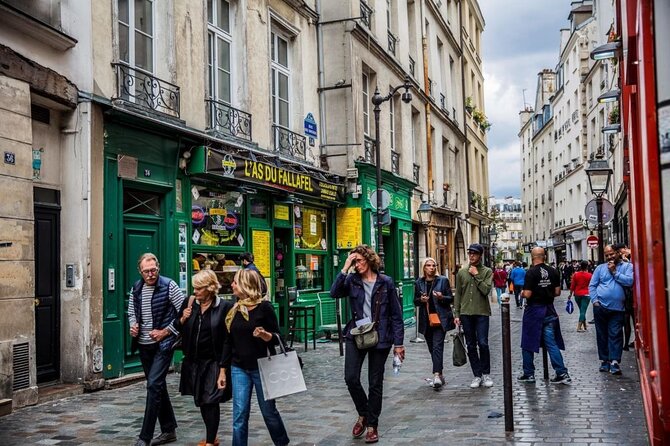
The longest stop is Rue des Rosiers, with about 30 minutes set aside for the walk. This is the heart of the Jewish quarter in Le Marais and one of the best places on the route to connect food, community, memory, and present-day Paris.
The street is known for Jewish bakeries, kosher delis, falafel shops, boutiques, and newer restaurants. You may see traditional businesses beside fashionable ones, which gives the area a lively mix of old and new. The tour specifically highlights falafel and challah as foods associated with the street.
Food is an easy way into the story, but the guide also covers the Jewish community’s heritage, hardship, resilience, and renewal. That context matters. Rue des Rosiers is not only a place to grab lunch or take a picture of a shopfront. It is part of the social history of Paris.
Thirty minutes gives you more breathing room here than at the other stops. You can look around, note places for a later meal, and get a feel for the street. You should not assume the tour includes tastings, though. Meals are listed as an extra expense.
The area can be popular, and the street’s food shops may tempt you to stop for a snack. If you want to eat during the walk, ask the guide whether the schedule allows it. Otherwise, save your appetite for afterward and return to explore at your own pace.
Centre Pompidou and a bold finish
The final stop is Centre Pompidou at Place Georges-Pompidou. The tour ends here and does not include entry to the museum.
Even from outside, the building is difficult to miss. Designed by Renzo Piano and Richard Rogers, it uses exposed pipes, bright colors, exterior escalators, and an industrial structure that challenged traditional ideas about what a Paris museum should look like.
Completed in 1977, Centre Pompidou made modern architecture part of the daily experience of the city. It is a fitting contrast to the half-timbered houses on Rue François Miron and the Baroque church earlier in the walk.
You will not have time to visit the museum during this tour. That is both a limit and an advantage. The guide can close the walk with the building’s design and cultural role, while you can decide later if the collection deserves a separate visit.
The ending point is practical. Place Georges-Pompidou has several options for food and drinks nearby, so you can continue with lunch, brunch, or an evening stop after the walk. Since the tour begins near Hôtel de Ville and ends at Centre Pompidou, you also finish in a useful location for exploring more of central Paris.
What the guide adds to the experience
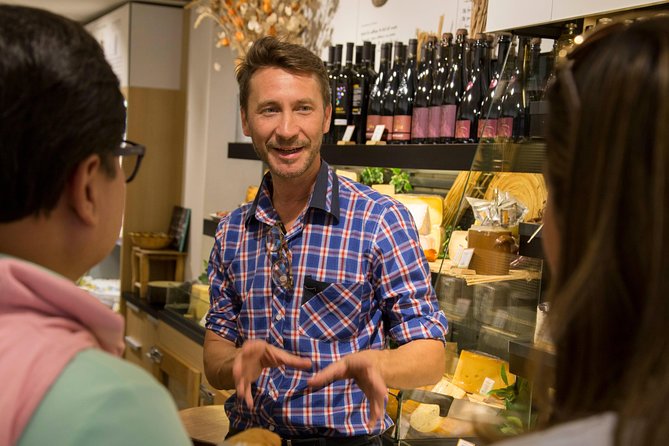
The tour includes an expert live guide, and the small maximum group size of 15 should help keep the walk personal. You are not simply following a route between landmarks. The guide explains how the streets, buildings, food traditions, and communities fit together.
One guide named Mahi has been singled out for a thoughtful, detailed approach and a walking pace that keeps the group moving. You cannot assume Mahi will lead every departure, but the guide’s role is clearly important to the quality of this experience.
If you like asking detailed questions about buildings and local history, this walk should suit you. If you prefer to move quickly from one famous sight to the next, you may find the explanations slow the pace. The route is designed for people who want the story behind the street, not just a checklist of addresses.
Most people can participate, and service animals are allowed. The tour is near public transportation, which makes reaching the start and continuing from the end fairly simple. No special admission ticket is needed for the listed stops, but you should wear shoes suited to two hours on foot.
Timing, price, and what you actually receive
The tour lasts about two hours and costs $17. That is good value if you want a short introduction to Le Marais and prefer some historical explanation rather than walking alone with a map.
The price does not cover meals or gratuity. It also does not include entry to Centre Pompidou, though the route only visits the exterior there. You are paying for the guide’s time, the planned route, and the interpretation of places that may be easy to overlook.
The schedule is fairly tight:
- Hôtel de Ville: 10 minutes
- 66 Quai de l’Hôtel de Ville: 10 minutes
- Rue François Miron: 25 minutes
- Saint-Paul-Saint-Louis: 10 minutes
- Rue des Rosiers: 30 minutes
- Centre Pompidou: final stop
The listed stop times add up to 85 minutes, leaving the rest for walking between locations and explanations along the way. That is why the tour can cover so much ground in two hours. It also explains why you should not expect long visits inside buildings or extended food stops.
Free cancellation is available if you cancel at least 24 hours before the local start time. Cancellations made within 24 hours are not refunded, and changes during that period are not accepted.
Who should book this Le Marais walk?
I would choose this tour for a first visit to Paris, especially if Le Marais is on your list but you are unsure how to organize the area. It gives you a clear route and introduces several themes in a short morning or afternoon.
It is also a good fit for anyone who enjoys architecture and neighborhood history. You get medieval houses, a civic building, a Baroque church, Jewish cultural history, food traditions, and modern design in one compact outing.
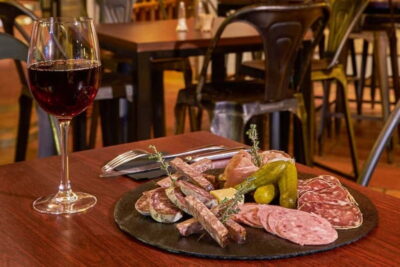
Food-focused visitors will find useful pointers on Rue des Rosiers and near Centre Pompidou, but this is not a tasting tour. You will need to pay for anything you eat, and the route does not promise samples.
Families and mixed-interest groups may appreciate the variety. Children who are not excited by a long museum visit may respond better to changing streets, unusual architecture, and food shops. Still, the steady walking pace may not suit anyone who needs frequent breaks.
Should you book it?
Book this tour if you want a low-cost, guided introduction to Le Marais that connects its old streets with its current food, shopping, and cultural life. The mix of Rue François Miron, Rue des Rosiers, Saint-Paul-Saint-Louis, and Centre Pompidou gives you a stronger sense of the district than a single monument visit would.
Skip it if you want museum admission, a full meal, or plenty of time at each stop. You should also choose another activity if two hours of steady walking sounds tiring.
For $17, the tour makes the most sense near the beginning of your Paris stay. Use it to learn the shape of Le Marais, mark down places you want to revisit, and finish at Centre Pompidou with time for your own meal or further exploring.
FAQ
How long does the Le Marais guided tour last?
The tour lasts approximately two hours.
What is the tour price?
The tour costs $17.
Where does the tour start?
The listed meeting point is 25 Boulevard de Sébastopol, 75001 Paris, France. The first sightseeing stop is Hôtel de Ville.
Where does the tour end?
The tour ends at Centre Pompidou, Place Georges-Pompidou, 75004 Paris.
Is Centre Pompidou admission included?
No. The tour visits the exterior of Centre Pompidou and does not include entry to the museum.
Are meals included?
No. Meals are not included. You can find food and drink options near the final stop.
How large is the tour group?
The activity has a maximum of 15 travelers.
Can I cancel for a full refund?
Yes. You can cancel for a full refund at least 24 hours before the experience start time. Cancellations within 24 hours are not refunded.