REVIEW · PARIS
Invalides War Museum the World Wars Guided Tour
Book on GetYourGuide →Operated by Babylon Tours LLC · Bookable on GetYourGuide
The most useful thing about this Invalides tour is its clear story line. You do not simply walk past old rifles and uniforms. You follow the chain from 19th-century tensions and the Franco-Prussian War to Franz Ferdinand’s assassination, the trenches of World War I, Hitler’s rise, and the Occupation of Paris. I like the small groups of no more than eight and the way the tour connects military events with what French people lived through. I also like the vivid objects, especially the taxi linked to the Battle of the Marne and the train car tied to the 1918 armistice.
The main drawback is the pace. Two hours is enough for a strong guided introduction, not a slow examination of every gallery. You will also do a moderate amount of walking, and the semi-private option is not suitable for wheelchair users or people with walking disabilities.
In This Review
- Key points at a glance
- Why the Invalides War Museum works best with a guide
- From Bismarck to the road to World War I
- Weapons, uniforms, and equipment from World War I
- Film, wartime atrocities, and the Treaty of Versailles
- Hitler, the Maginot Line, and France’s collapse
- Normandy and the Liberation of Paris
- What two hours can and cannot cover
- Is the $128 price worthwhile?
- Languages, meeting point, and practical planning
- Who should book this Invalides tour?
- Should you book it?
- FAQ
- How long does the Invalides War Museum World Wars Guided Tour last?
- What does the tour cover?
- What can I see during the tour?
- Is skip-the-line entry included?
- How many people are in the group?
- Which languages are offered?
- Can I bring luggage or a large bag?
- Is the tour suitable for wheelchair users?
Key points at a glance

- A war story with a French point of view: Follow France from the Franco-Prussian War through the Liberation of Paris.
- Battlefield objects, not just dates: See uniforms, weapons, equipment, film, and other artifacts from both world wars.
- The Battle of the Marne gets a memorable prop: An iconic taxi helps explain how troops reached the front.
- The armistice has a physical setting: See the train car connected with the signing that ended World War I.
- Small groups keep questions possible: The maximum is eight people per guide, with private tours also available.
- Good planning matters: Bring identification and cash, leave large bags behind, and confirm the meeting point for your selected option.
Why the Invalides War Museum works best with a guide

The Invalides War Museum covers a lot of ground, and its collections can feel scattered if you are trying to make sense of them alone. This tour gives you a framework. Instead of treating World War I and World War II as separate blocks of dates, your guide shows how one conflict helped create the political and social conditions for the next.
That approach matters in Paris. France was not just a backdrop to these wars. Its borders, government, army, cities, and civilians were repeatedly tested. You will hear how France entered World War I after decades of tension with Germany, how the war changed the country, and how the Second World War brought defeat, occupation, collaboration, resistance, and liberation.
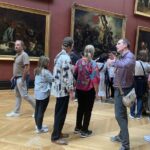
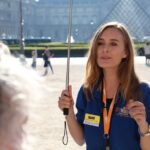
I especially like this format for visitors who know the broad outline but want the missing links. Your guide can stop at an object and explain why it matters, then answer questions in plain language. One guide associated with the experience, Anatole, is described as especially personable, humorous, and willing to explain the wars from a different point of view. If he is assigned to your tour, expect a conversational visit rather than a speech delivered at you.
The maximum of eight people per guide is important. In a large museum, a big group can spend much of its time trying to hear. A small group gives you a better chance to ask about a weapon, a political figure, or a battle that catches your attention.
You can also read our reviews of more guided tours in Paris


From Bismarck to the road to World War I

The tour begins before 1914. That is a smart choice, since the First World War did not appear out of nowhere. Your guide introduces the 19th-century roots of the conflict, including the Franco-Prussian War and the role of Otto von Bismarck.
This opening section gives you the political background needed to understand France’s unease about Germany. You will hear how rivalry, alliances, national ambitions, and military planning built pressure across Europe. The point is not to memorize every diplomatic move. It is to see why an assassination in Sarajevo could trigger a much larger crisis.
The assassination of Archduke Franz Ferdinand then becomes part of a chain rather than an isolated fact. Your guide pieces together the events that followed and explains how a regional shock became a war involving major powers.
This part can be less visually dramatic than the weapons galleries, but do not rush it. If you understand the political setup, the later sections make more sense. You can also ask questions early, while the group is still forming its basic map of the period.
Weapons, uniforms, and equipment from World War I

The World War I collection brings the story down to human scale. You will see weapons, uniforms, equipment, and other objects used in the war’s battles. These items help turn an enormous conflict into something more concrete.
A good guide will not leave these pieces as decoration. The value comes from knowing how the equipment fit into battle, how soldiers lived with it, and what it reveals about the nature of industrial war. You may find that a simple uniform or field object raises more questions than a grand political display.
The tour also covers the Battle of the Marne, one of the key moments in the early war. The iconic taxi associated with the battle gives the discussion a memorable anchor. It helps explain the urgency of the fighting and the unusual effort made to move troops toward the front.
That object is one reason this tour is more useful than a basic museum walk. You are not only told that a battle mattered. You are given a physical item that helps you picture how the event unfolded.
Film, wartime atrocities, and the Treaty of Versailles
Original footage adds a difficult but important layer. You will watch film showing the atrocities of the period, so this is not a light sightseeing stop. The material is meant to show the human cost behind military decisions and official speeches.
Your guide then brings the First World War toward its political ending with the Treaty of Versailles. The tour does not stop at the armistice as if peace solved everything. It follows the conflict into the settlement that formally ended the war and shaped the tense years that followed.
You will also see the train car connected with the signing of the armistice. That gives the conclusion of World War I a strong physical reference point. A treaty can feel abstract on a timeline. A train car, tied to the act that ended the fighting, is easier to remember.
Because some museum rooms require quiet or restrict speaking, your guide may not be able to talk continuously in every space. Collections can also change during the year. Expect the overall story to remain, but do not assume every object will be displayed in exactly the same way on every visit.
Hitler, the Maginot Line, and France’s collapse
The second half explains how Adolf Hitler’s threat became a reality and led to World War II. Again, the tour aims to connect political developments with the French experience rather than simply listing campaigns.
You will discuss the Ligne Maginot, France’s defensive system, and consider its place in the country’s military planning. The subject is useful because it reveals the gap that can open between preparation and reality. A defense plan may look impressive on paper, yet war rarely follows the script.
The tour then moves through Dunkerque and the Occupation of Paris. These events carry particular weight because they involve defeat, retreat, and the loss of control over the capital. As you move among artifacts gathered from battlefields, the guide can connect objects to the wider crisis facing France.
This section is likely to appeal to you if you want more than a military account. The story includes the choices made by French leaders and the effect of the war on the country itself. You will hear about Philippe Pétain and Charles de Gaulle, two figures who represented sharply different paths through the conflict.
The guide’s role is especially helpful here. Names such as Pétain and de Gaulle can quickly become a blur when presented in a textbook. In a small group, you can ask for clarification about who held power, who opposed the occupation, and how France’s political story changed during the war.
You can also read our reviews of more museum experiences in Paris



Normandy and the Liberation of Paris

The final portion turns toward the Allied campaign, the battles of Normandy, and the Liberation of Paris. These events offer a change in tone, but the tour keeps the focus on what they meant for France.
You will hear how the liberation unfolded and why Paris was ultimately preserved. That last point gives the tour a direct connection to the city outside the museum. When you walk through Paris afterward, you can think about the fact that the streets and buildings you are enjoying survived a period when their future was far from certain.
Do not expect a full military course on Normandy in two hours. The guide has to balance several decades of history, and the tour is designed around the most significant stories. If Normandy is your main interest, treat this as an informed introduction and plan additional time elsewhere for that subject.
The final section works well as a bridge between museum history and present-day Paris. The city is not simply a collection of beautiful streets. Its survival and appearance were shaped by war, politics, and decisions made under extreme pressure.
What two hours can and cannot cover

Two hours is a useful length for this museum. It is long enough to build a connected account without turning into an all-day march through cases. The guide selects important stories, objects, and leaders, so you spend less time wondering where to focus.
Still, you should set realistic expectations. You will not examine every collection or stop at every display. The museum holds more material than any short tour can cover, and occasional changes to the collections may affect the exact route.
I would choose this experience early in your Paris visit if war history is important to you. The broad timeline will help you understand later visits to memorials, battlefields, or other museums. If you already have a strong command of both world wars, the private option may offer better value because you can steer the conversation toward the people, campaigns, or political questions that interest you most.
The walking is moderate. The semi-private tour is not available for wheelchair users or people with walking disabilities, and the activity is not suitable for wheelchair users. Wheelchair tours may be available only by request, so you should confirm this before booking rather than assume the standard route will work.
Is the $128 price worthwhile?

At $128 per person, this is not a budget museum visit. You are paying for the guide, museum admission, skip-the-line access, and a structured two-hour explanation. The price makes more sense if you value context and want to avoid spending your limited Paris time working out the collection on your own.
The skip-the-line entry also has practical value. You are not paying only for facts. You are buying a smoother start and a planned route through a major museum. The exact value depends on the day and queue, but avoiding a ticket line can matter when your Paris schedule is tight.
The small group helps justify the cost. With no more than eight people per guide, you should have a better chance to hear clearly and ask questions. A private tour costs more in principle, but it may suit families or friends who want the guide to adjust the pace and focus.
The price is harder to defend if you prefer slow, independent museum visits. You will still need time to explore beyond the guided route, and temporary exhibits are not included. Food, drinks, and hotel transfers are also outside the price.
Languages, meeting point, and practical planning

Live guiding is available in English, French, Spanish, German, Italian, and Russian. The meeting point can vary according to the option you book, so check the exact instructions rather than heading automatically to one entrance.
Bring a passport or other identification, along with cash. Large bags, luggage, and suitcases are not allowed, which is an easy detail to overlook if you are arriving from a hotel or train station.
The tour ends back at the meeting point. There is no hotel pick-up or drop-off, so allow time to reach the start point and plan your next stop from there.
Museum management can occasionally close areas without advance warning. If opening is delayed by more than an hour, an appropriate alternative is offered, but the operator states that refunds or discounts are not provided in those cases. That is another reason to avoid placing an important timed reservation immediately afterward.
Cancellation is flexible up to 24 hours before the tour for a full refund, and you can reserve now and pay later. The semi-private option needs at least two participants to operate. If that minimum is not met, an alternative date or full refund is offered.
Who should book this Invalides tour?
I would recommend it to you if you want a guided introduction to both world wars, especially from France’s point of view. It suits first-time visitors who want a clear narrative, families with older children who need help connecting the dates, and history fans who prefer objects and stories to a dry lecture.
It is also a good pick if you want to ask questions. The small group and private options create more room for conversation than a large public tour.
I would think twice if you want to explore at your own speed, spend hours with every display, or focus only on one campaign. The two-hour format favors selection and explanation over exhaustive coverage. Mobility limits also require careful planning, since the standard semi-private tour involves moderate walking and is not designed for wheelchair users.
Should you book it?
Book this tour if the connection between the two world wars matters more to you than seeing every museum room. The strongest parts are the clear timeline, the French context, and memorable objects such as the Marne taxi and the armistice train car.
Skip it if you mainly want independent browsing or already know the period well. At $128, the value comes from the guide and the time saved, not simply from entering the museum. For most visitors with a serious interest in France’s wartime story, the small group makes this a focused and worthwhile way to begin.
FAQ
How long does the Invalides War Museum World Wars Guided Tour last?
The tour lasts two hours. Starting times vary, so check availability when selecting your date.
What does the tour cover?
It covers the 19th-century roots of World War I, the Franco-Prussian War, Bismarck, the assassination of Franz Ferdinand, World War I, the Treaty of Versailles, Hitler’s rise, the Ligne Maginot, Dunkerque, the Occupation of Paris, Normandy, and the Liberation of Paris.
What can I see during the tour?
You can see World War I weapons, uniforms, equipment, battlefield artifacts, original footage, an iconic taxi connected with the Battle of the Marne, and the train car where the armistice was signed.
Is skip-the-line entry included?
Yes. Museum entrance fees and skip-the-line access are included.
How many people are in the group?
The tour allows a maximum of eight guests per guide. Private and small-group options are available.
Which languages are offered?
Live guiding is available in English, French, Spanish, German, Italian, and Russian.
Can I bring luggage or a large bag?
No. Luggage, suitcases, and large bags are not allowed.
Is the tour suitable for wheelchair users?
The semi-private tour is not suitable for wheelchair users or people with walking disabilities. Wheelchair tours are available only on request, so confirm arrangements before booking.