REVIEW · PARIS
Guided tour of Paris in Citroën Traction Avant or DS 21
Book on Viator →Operated by Vintage Traction · Bookable on Viator
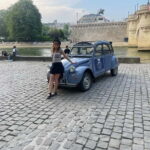
Paris from a vintage Citroën feels unreal. You get a private driver in a classic French icon, plus quick stops for photos at big-name sights like the Arc de Triomphe and the Eiffel Tower without spending your day walking. I especially like that the car itself turns every halt into a moment—people notice, and you’re positioned for good shots fast.
Second, I love the convenience: pickup is offered, you start near Concorde (Concorde75008), and the tour is built for fitting a lot into a short window. For families or anyone with limited stamina, it’s a smart way to see the highlights while staying comfortable.
One possible drawback: the guidance can vary by driver. Some focus on steering and photo spots more than cultural storytelling, and English can be easier or harder depending on who you get.
In This Review
- Key highlights to look for
- Why this vintage-car tour works in a time-crunched Paris
- Price and value: $171.18 per group up to 4
- Where you start near Concorde and how the timing feels
- First look at central Paris: places, avenues, bridges, and the Opera area
- Arc de Triomphe: how to get the best from a short stop
- Eiffel Tower: quick photos and what to plan next
- Opera, the museum area, and that glass pyramid moment
- Notre-Dame and the Pantheon: seeing the Left Bank from street level
- Moulin Rouge to Sacré-Cœur: Montmartre in a classic car
- Your driver can make or break the experience
- Comfort, car quirks, and a few real-world concerns
- Who should book this vintage Citroën Paris tour
- Should you book this Citroën Traction Avant or DS 21 tour of Paris?
- FAQ
- How long is the Paris tour in a vintage Citroën?
- What is the price and group size?
- Are pickup and a mobile ticket included?
- What language is the tour offered in?
- Which attractions stop included, and are admission tickets included?
- What’s included in the tour?
- Is food or drinks included?
- Where does the tour start and end?
- Can I get a refund if I cancel?
Key highlights to look for
- Vintage car choice between Citroën Traction Avant or DS 21 for different vibes
- Quick photo windows at major landmarks so you maximize time in Paris
- Private group experience so you’re not sharing the car or the stops
- Photo-friendly stops where the driver helps you frame the city quickly
- Mostly exterior viewing since admission tickets aren’t included at key stops
- Best value with up to 4 people because the price is per group
Why this vintage-car tour works in a time-crunched Paris
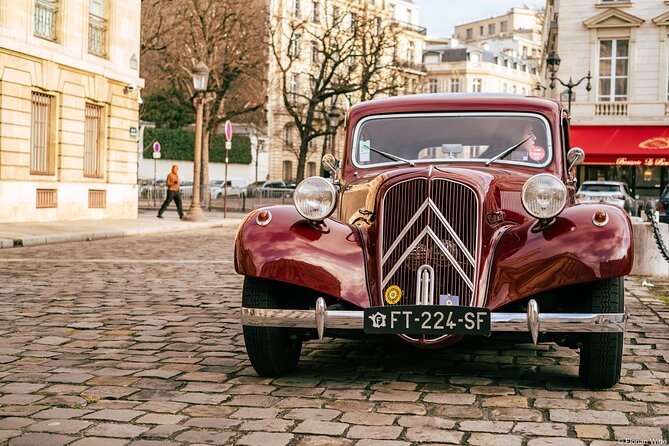
This is not the slow, stop-everywhere walking style. It’s a ride that gets you moving through Paris while still giving you real face-time with the famous stuff. That matters because the city’s charm is everywhere, but your time usually isn’t.
The vintage Citroën approach also changes the rhythm. Instead of bracing for crowds or hauling yourself across long blocks, you’re dropped into the scene for a short moment, then swept onward. And yes—the car draws attention. That can be a little chaotic (in a fun way), but it also makes your photos feel more like an event than a checklist.
You’re also benefiting from the simple fact that a skilled driver can handle tight streets and awkward turning spots that would wear you out. In a city where traffic can make you grumpy fast, that’s not a small thing.
You can also read our reviews of more guided tours in Paris


Price and value: $171.18 per group up to 4
The price is $171.18 per group for up to 4 people, which puts the math in your favor if you travel with others. Split across four, it lands around $42.80 per person at the maximum group size. If you’re traveling solo or as a couple, it’s still a memorable experience, but it’s less of a deal.
What you’re really paying for is time and access to a very specific style of Paris sightseeing: the classic-car ride plus a private driver who positions you for photo stops. You’re not paying for museum entry or guided deep-dive talks inside attractions, because admission tickets aren’t included at the landmark stops.
So think of it as value-through-efficiency. If your goal is to get an overview, get great angles, and avoid long walking stretches, this tends to make sense. If your goal is a long, detail-heavy lecture at each monument, you’ll want to manage expectations.
Where you start near Concorde and how the timing feels
Your tour starts at Concorde75008 Paris, France and ends back at the meeting point. Pickup is offered, which is helpful if you’re staying outside the tight center or you’d rather not coordinate public transport with a short schedule.
Timing is flexible in the sense that it can run about 1 to 3 hours, depending on what you book. Most of the landmark stops are brief—around five minutes at the headline attractions—so the experience is about quick stops and photo-ready placement, not standing around for an hour explaining every sculpture.
A practical tip: decide in advance which photos you care about most. If Arc de Triomphe is your must-have, you’ll want to plan how you’ll pose and where you’ll stand before you arrive, so the short stop actually delivers.
First look at central Paris: places, avenues, bridges, and the Opera area
Before the big named landmarks, you’ll get guided explanations while you move through central streets. The route includes stops described as a place and an avenue, plus views that relate to bridges, major monuments, and a palace-like area. You’ll also get an Opera-area stop with an explanation.
This part is underrated. It’s where you get your bearings fast. You’re seeing the city from inside a car, which can make Paris feel less like separate sights and more like one connected layout. That’s especially helpful if it’s your first time or if you only have a day or two.
Also, car-based viewpoints work well for spotting skyline lines and street relationships you miss on foot. Even when the narration is brief, you’ll often remember the visual map later when you’re walking on your own.
Arc de Triomphe: how to get the best from a short stop
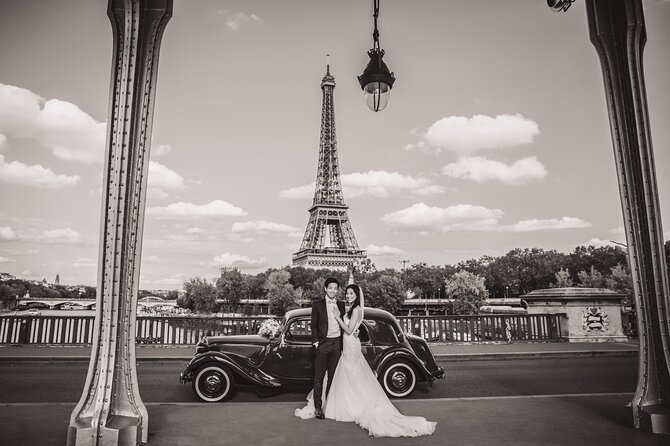
Arc de Triomphe gets about five minutes, and admission is not included. That tells you what the plan is: you’re mostly going for the exterior impact, the viewpoint setup, and quick photos rather than a full visit inside the monument.
What to do with those five minutes:
- Bring your best camera angles in mind first. Wide shots matter here.
- If it’s crowded, let the driver position you where you can shoot quickly without stepping into a messy flow of people.
- Take one classic shot and one creative one. The difference is often just your footing and where the city lines frame behind you.
Arc de Triomphe is also a great anchor point for your Paris day. After this, everything else feels more connected—like the city is unfolding along an invisible line.





Eiffel Tower: quick photos and what to plan next
The Eiffel Tower stop is also about five minutes, and admission is not included. So treat it like a photo-and-structure moment. You’re there to enjoy the silhouette, the scale, and the street-level angles—not to tour staircases.
If you want to go inside later, plan for that separately. This tour is built to help you see the iconic image from the street and move on, keeping you from burning your whole day in one queue.
One practical bonus: arriving by car often gives you a different framing than walking routes. You can get angles that feel more like a local’s route than a tourist’s first try.
Opera, the museum area, and that glass pyramid moment
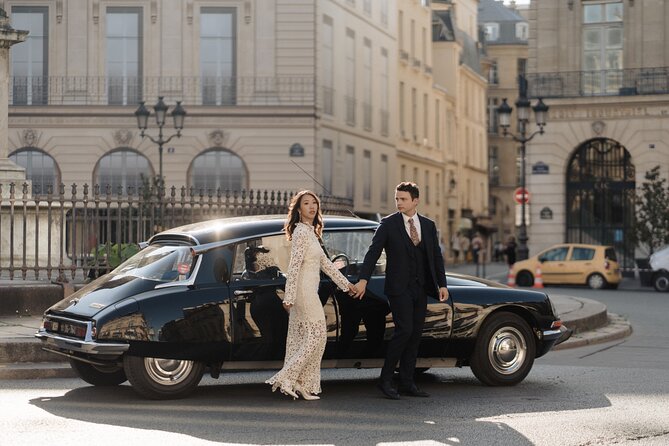
The route includes an Opera explanation, plus stops tied to a museum and a pyramid. Even when time is short, these are key landmarks because they help you understand the “grand Paris” feel—buildings that announce themselves before you even reach them.
For the museum-and-pyramid stop, don’t expect a full museum visit. Admission isn’t listed as included, and the structure of the tour is short stops. Instead, focus on:
- getting one clean photo with the pyramid shape in the frame,
- and using the time to spot the best direction for later self-guided walking.
If you’ve got another half-day in your schedule, these visuals help you decide where to return. Think of this as your preview trailer.
Notre-Dame and the Pantheon: seeing the Left Bank from street level
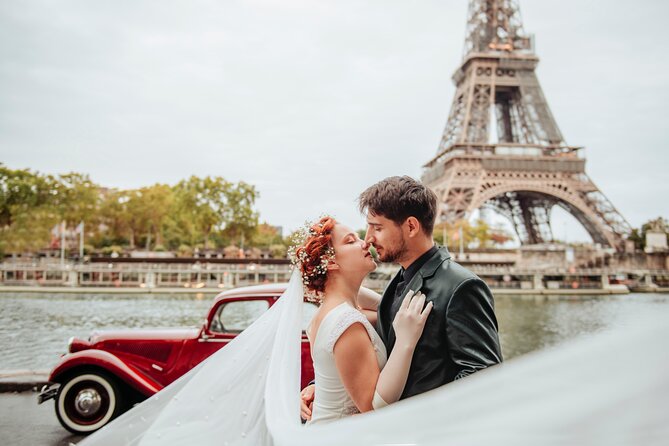
The tour includes stops with explanations for Notre-Dame and the Pantheon. Here’s the value: both buildings are major “you recognize it instantly” sites, and seeing them from the road gives you a sense of scale and neighborhood character without exhausting you.
Because the tour timing is tight, you’ll usually get a quick moment for photos rather than a long guided walkthrough. Still, these stops work well for two reasons:
- They help you understand Paris beyond the Eiffel-and-Arc axis.
- They give you visual anchors for your next day of wandering.
If you’re planning a future walk, note where the buildings sit in relation to nearby streets. That small mental map can save time when you’re trying to navigate on your own.
Moulin Rouge to Sacré-Cœur: Montmartre in a classic car
Montmartre arrives in two steps. You get Moulin Rouge (about five minutes, admission not included), then Basilique du Sacré-Cœur at the end of the major sightseeing stretch (also about five minutes, admission not included). There are also quick mentions tied to a museum-like segment and a pyramid-like segment earlier, but this is where the ride turns distinctly hillside.
Moulin Rouge is for the vibe as much as the landmark. Even with a short stop, the area around it gives you a sense of Paris’ theatrical side—an old-world show atmosphere that’s hard to reproduce from a distance.
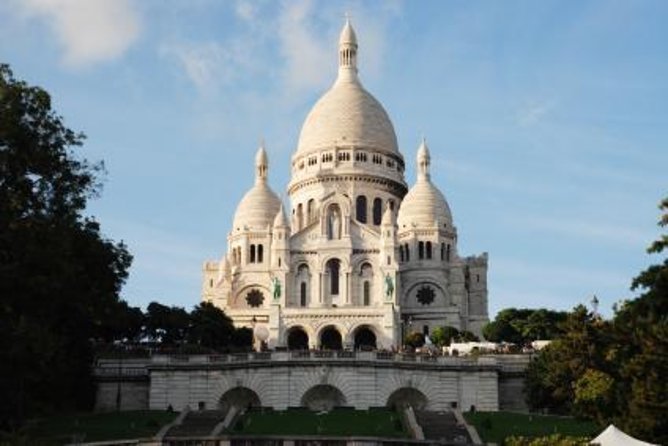
Sacré-Cœur is different. You’re there for the dramatic look and the photo moment. The car helps you reach the area without dragging yourself up hill after hill. It’s a smart move if you’re traveling with grandparents, kids, or anyone who tires easily.
Your driver can make or break the experience
This tour is private, so your driver sets the tone. The vintage car is the star, sure. But the narration level matters too.
From the experience style I saw reflected in the feedback:
- Many drivers do a strong job with photo placement and spotting good viewpoints.
- Some provide helpful historical context and dates.
- Others focus more on naming landmarks than telling stories, especially when English is limited.
- A small handful can be distracting with phone content, which can take attention away from the city.
So here’s my practical approach: start by telling your driver what you want. If you want history, say so at the beginning. If you want the best photo angles, say that too. And if your English level is limited, pointing at a brochure or asking for one or two specific facts can still work well.
Comfort, car quirks, and a few real-world concerns
Riding in a vintage car is comfortable when the driver drives smoothly. Several experiences describe the ride as smooth, with drivers handling traffic skillfully and helping with photo moments.
But the Traction Avant/DS 21 aren’t modern vehicles. They may require extra care in tight turns, and one note mentioned the need for backing up in narrower streets. That’s not a deal-breaker, but it’s part of the charm and the physics.
One other consideration: car conditions can affect comfort for some people. There’s at least one report mentioning gas fumes causing a headache when windows were down. If you’re sensitive, you’ll want to communicate early and ask about window positioning.
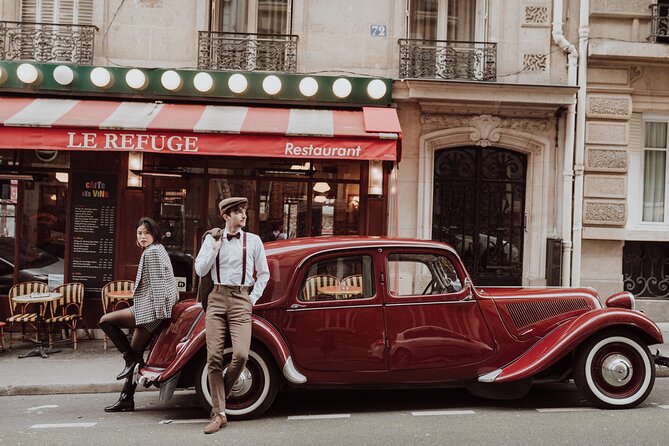
And if you’re planning to dress fancy for photos: great idea. Just remember your car is the attraction, too. Classic cars look best when you treat them like a photo backdrop, not like a quick bus ride.
Who should book this vintage Citroën Paris tour
You should book if:
- You want a first-time overview of Paris with fewer walking hours.
- You’re traveling with someone who benefits from less walking, like older adults or people with mobility limits.
- You care about iconic photos at Arc de Triomphe, Eiffel Tower, Moulin Rouge, and Sacré-Cœur.
- Your group is up to 4, so the per-person value stays strong.
You may want to skip it if:
- You need deep, uninterrupted cultural commentary at every stop.
- You’re very sensitive to vehicle smells or exhaust exposure.
- You’re hoping for long time inside major landmarks, since admissions aren’t included and stops are brief.
Should you book this Citroën Traction Avant or DS 21 tour of Paris?
I’d book it if your goal is to see the big Paris images fast and get great photos without a full day of walking. The vintage car adds a “Paris by character” feeling that you won’t get on a standard bus tour, and the private setup keeps it flexible for your group.
Book it with eyes open if you want a lecture more than a ride. Because the commentary quality can shift with the driver, your best bet is to ask for what you want right at the start—history, photo angles, neighborhoods, or all three.
If you’re the type who likes a quick, efficient plan plus a cool story to remember later, this one is worth it.
FAQ
How long is the Paris tour in a vintage Citroën?
It runs for about 1 to 3 hours, depending on the option you book.
What is the price and group size?
The price is $171.18 per group, up to 4 people.
Are pickup and a mobile ticket included?
Pickup is offered, and you’ll use a mobile ticket.
What language is the tour offered in?
The tour is offered in English.
Which attractions stop included, and are admission tickets included?
You’ll have short stops at major landmarks such as Arc de Triomphe, the Eiffel Tower, Moulin Rouge, and Sacré-Cœur. Admission tickets are not included.
What’s included in the tour?
The tour includes private transportation.
Is food or drinks included?
Food and drinks are not included.
Where does the tour start and end?
It starts at Concorde75008 Paris, France and ends back at the meeting point.
Can I get a refund if I cancel?
Free cancellation is available up to 24 hours before the experience’s start time for a full refund. Within 24 hours, the amount paid is not refunded.