REVIEW · PARIS
Classic, Romantic Paris: 3-Hour Vintage 2CV Tour
Book on GetYourGuide →Operated by Paris Authentic 2CV Tours · Bookable on GetYourGuide
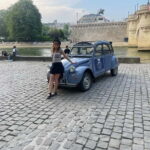
A 2CV makes Paris feel close up. In just 3 hours, you glide through Montmartre romance and classic landmarks, with a private driver in a vintage Citroën 2CV that’s made for looking up. I especially like the way the convertible roof turns sightseeing into a photo-friendly, wind-in-your-hair experience.
Two things I really value: the route mixes headline sights with neighborhoods like le Marais, and your driver/guide tells you what you’re seeing as you go (not just where it is). One consideration: this is a short, drive-forward tour, so don’t expect long stop-and-stroll time at every monument, and photo stops may be more quick than planned.
In This Review
- Key highlights you’ll feel right away
- Why a vintage Citroën 2CV turns sightseeing into a different game
- Montmartre romance: Sacré-Cœur and the Moulin Rouge angle you can’t fake
- Classic Paris in motion: Champs-Élysées, Arc de Triomphe, and the Trocadéro-to-Eiffel sweep
- Opera, Louvre Pyramid, and the river-banks feeling of central Paris
- Île de la Cité and Notre-Dame area: why seeing it from the car helps
- Le Marais, Place des Vosges, and the Port de l’Arsenal side of Paris
- Your guide makes the difference: Thomas, Vivien, Antoine, and Celine’s style
- Price and time: is $158 for a private 2CV tour worth it?
- Champagne, cheese, and 2CV miniatures: fun extras, not the core
- Rain plan and practical tips for a 3-hour ride
- Should you book this Classic, Romantic Paris 2CV tour?
- FAQ
- How long is the Classic, Romantic Paris 3-Hour Vintage 2CV Tour?
- Is this tour private or shared?
- Where do I get picked up, and where do I get dropped off?
- What vehicle do we ride in?
- Does the tour include a guide, and what languages are offered?
- What classic and romantic landmarks are included?
- What neighborhoods are considered unexpected or lesser-known?
- What’s included in the price?
- Are drinks or food included?
- What’s the cancellation policy?
Key highlights you’ll feel right away
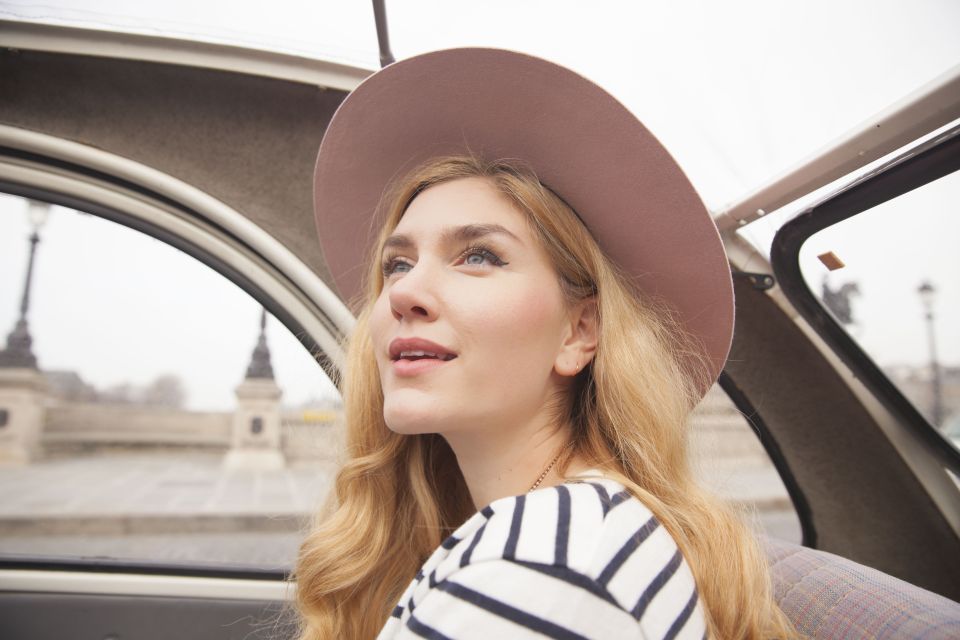
- Convertible roof views: best possible sightlines, even when the car is covered in rain
- Montmartre romance: Sacré-Cœur, Moulin Rouge, Pigalle areas from an old-school Paris angle
- Classic Paris loop: Champs-Élysées to Arc de Triomphe, then toward Eiffel views
- Unexpected Paris add-ons: Place des Vosges, Passage Sully, Village Saint Paul, Port de l’Arsenal
- A private driver/guide: English/French/German/Italian/Spanish options, plus storytelling on the move
Why a vintage Citroën 2CV turns sightseeing into a different game
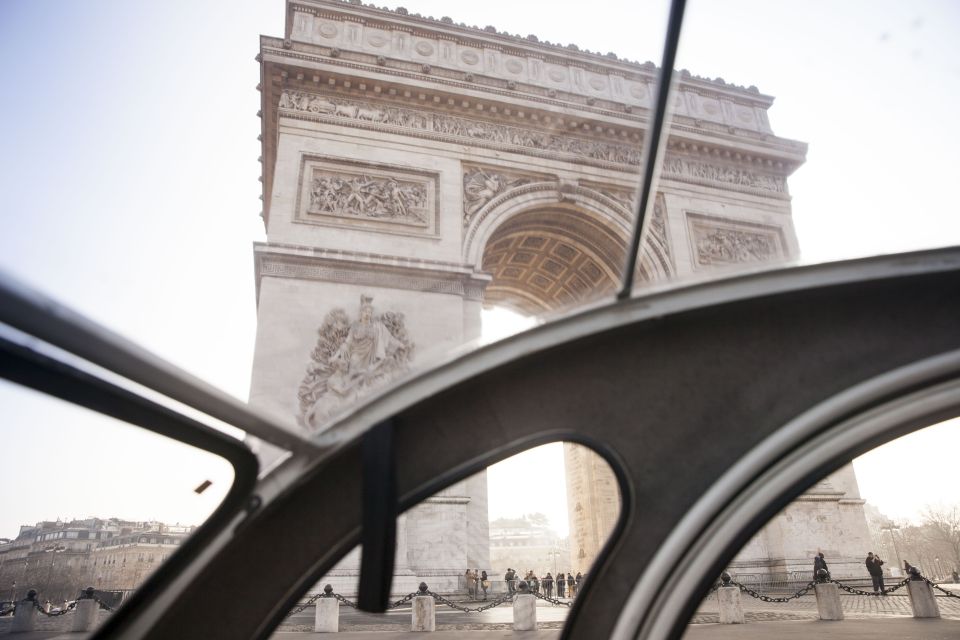
Paris from a bus is efficient. Paris from a vintage 2CV is personal. You’re seated low, moving slowly enough to really notice details, and high enough to catch views over the streets and across major landmarks. The look and sound of the car also change your pacing—you’re not sprinting between stops, you’re soaking it in.
This matters most for a city that can feel overwhelming. In a few hours, you get to hit the Eiffel-era icons and Notre-Dame Île de la Cité areas, then flip to the softer mood of Montmartre and the arty streets around the Marais. It’s a “see the city’s faces” kind of tour.
And since the car has a convertible roof with a transparent roof in case of rain, you won’t lose the feeling of being outside if the weather turns. That’s a big deal in Paris, where plans often depend on the next cloud.
A few more Paris tours and experiences worth a look


Montmartre romance: Sacré-Cœur and the Moulin Rouge angle you can’t fake
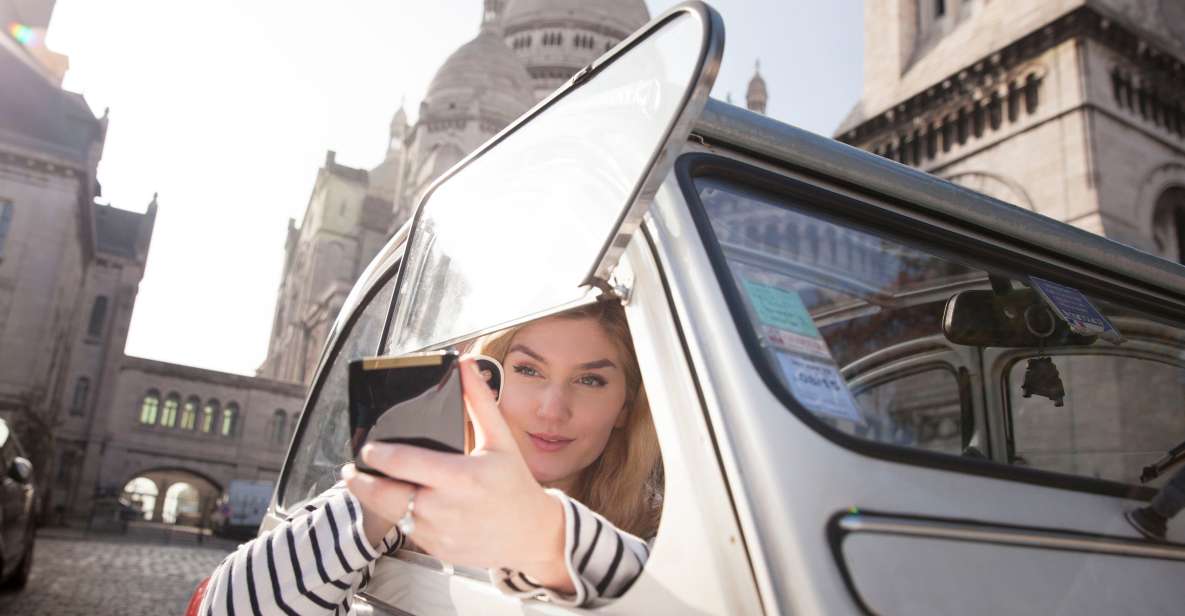
Montmartre is where Paris gets theatrical. Even when you’re not walking far, the hills, streets, and famous neighborhoods create instant mood. On this tour, you get that vibe through areas like Sacré-Cœur plus the stretch around Moulin Rouge and Pigalle.
Here’s why this part works in a short, private format: Montmartre can take time if you’re self-navigating, and crowds can make timing messy. From a 2CV route, you’re not trying to “win” against traffic and lines. You’re getting views and context as you travel, so you understand why the neighborhood looks the way it does.
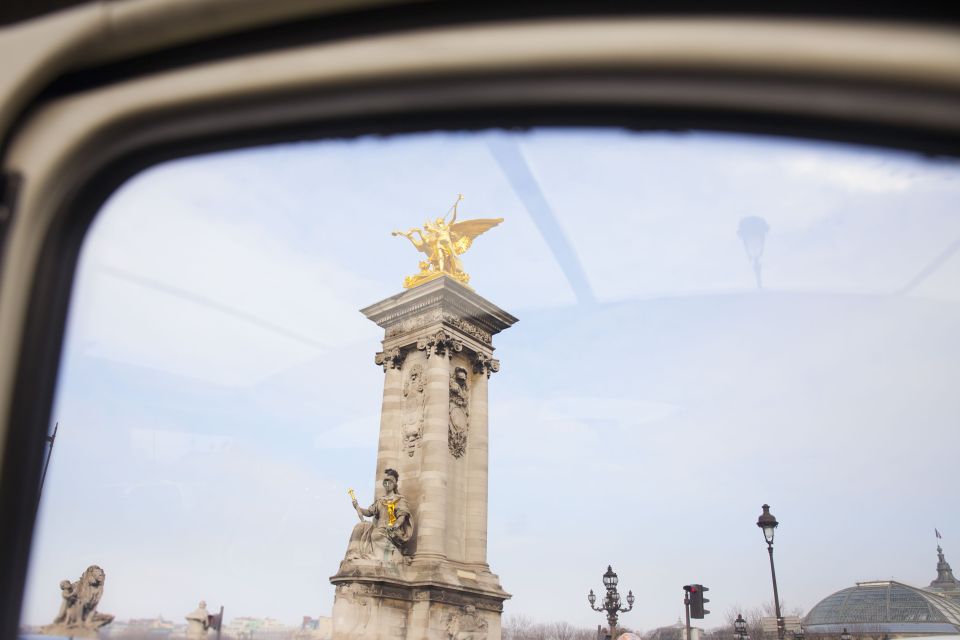
If you care about photos, this is also one of the best sections for the car style. The convertible roof helps you frame the skyline and church angles without the usual obstruction you get from fixed roofs or standing behind people.
One practical consideration: because this is a 3-hour experience, Montmartre moments may be brief. Think “I got the vibe and the key views,” not “I fully explored every street.”
Classic Paris in motion: Champs-Élysées, Arc de Triomphe, and the Trocadéro-to-Eiffel sweep
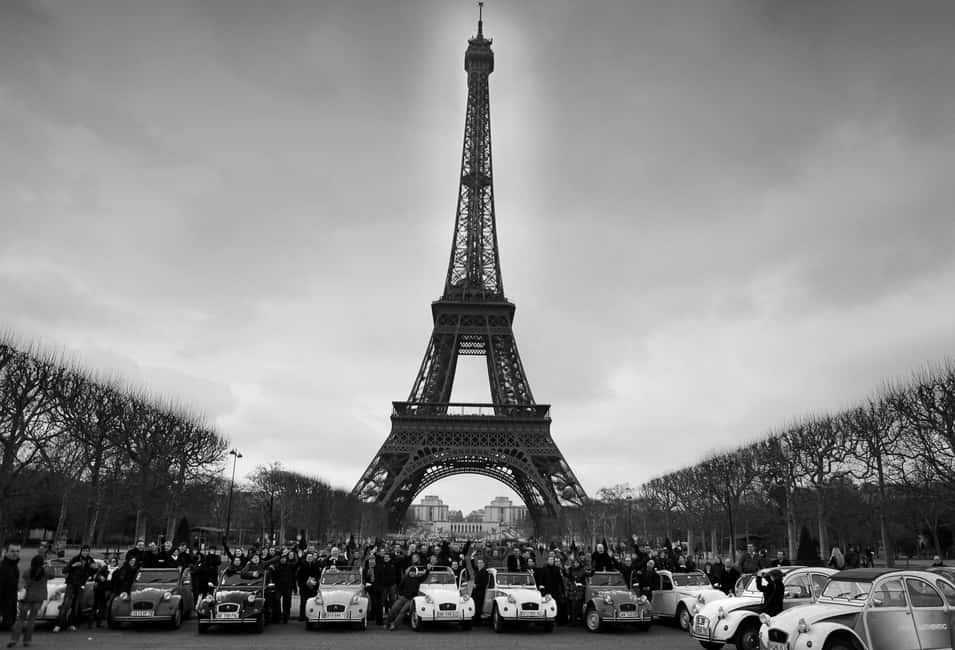
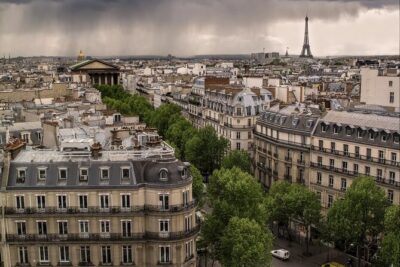
After Montmartre, the tour shifts into classic Paris mode—wide boulevards, iconic monuments, and big-picture angles. You’ll pass through or see Champs-Élysées and Arc de Triomphe, then head toward the Trocadéro area for those classic Eiffel Tower views.
That Trocadéro-to-Eiffel flow is smart because it helps you understand the city’s geography fast. Eiffel Tower pictures are easy; understanding why that view exists is the harder part. With a guide in the car, you’re not just collecting photos—you’re getting the “how Paris is laid out” context.
Then you continue through the area around Champs de Mars, École Militaire, and Invalides. These stops aren’t only about looking at famous buildings. They help you connect the Eiffel Tower to the broader ceremonial spine of Paris, from monumental architecture to major bridges and plazas.
As you move on, you’ll also see Pont Alexandre 3 and pass Petit Palais and Grand Palais, before reaching Place de la Concorde. Even when you’re not getting off to walk a lot, you can still clock the design language—Paris is consistent about scale and symmetry, and the car lets you observe it in motion.
Opera, Louvre Pyramid, and the river-banks feeling of central Paris
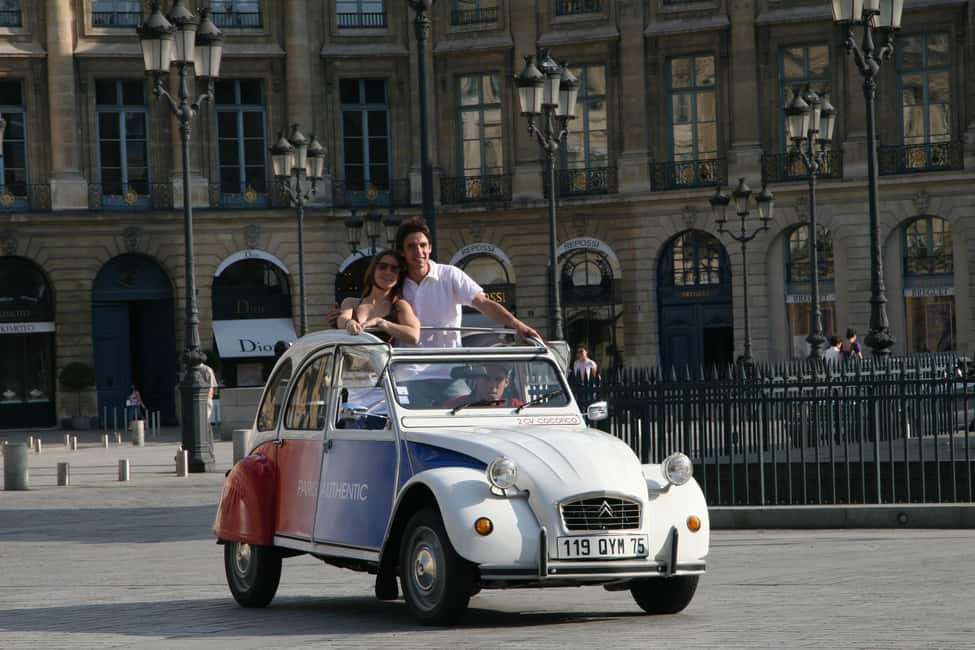
One of the tour’s strengths is that it doesn’t keep everything locked to a single “Eiffel day” theme. You’ll also see parts of central Paris tied to arts and big institutions—like Opéra Garnier and Pyramide du Louvre.
From the 2CV, these look different than they do from tourist spots on foot. You tend to notice proportions first: the dramatic facades, the spacing of the streets, and how these landmarks anchor the surrounding blocks.
You’ll also spend time along the river and cultural zones near Île de la Cité, including the area of Notre Dame. You’ll see Quai des Grands Augustins and the approach into that historic heart from across the water, which helps you understand how the river threads through the city.
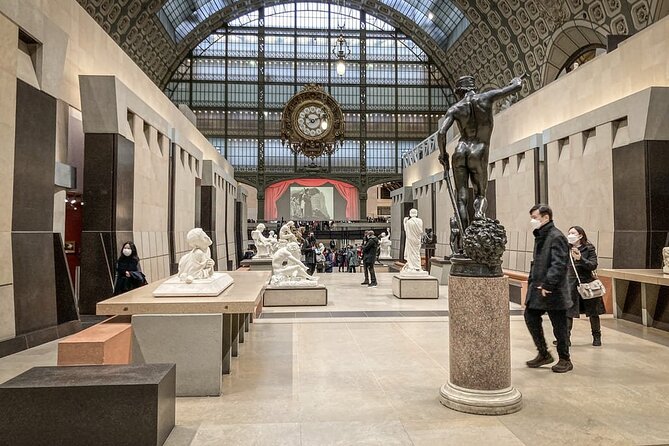
Then you’ll reach Musée d’Orsay area views. Even if you aren’t stepping into museums, Orsay’s setting is part of the experience—Paris doesn’t separate art from its street life. It’s in the sightlines.
If you’re coming to Paris for the first time, this section is a good “get your bearings fast” package. If you’ve been here before, it’s still useful because you’ll likely see how the city’s major pieces connect.
Île de la Cité and Notre-Dame area: why seeing it from the car helps

Île de la Cité is where Paris feels old in a very immediate way. But it’s also busy, and it’s easy to end up stuck at the wrong angle or behind barriers.
From this tour, you get a practical solution: you see the Notre Dame area along with Île de la Cité and surrounding river viewpoints, while keeping your time tight. You don’t have to fight for prime positioning or try to coordinate multiple walking loops in a limited window.
The car also gives you an alternative perspective. Instead of only seeing monuments “front-on,” you notice how streets funnel toward the river and how the river reshapes the city’s scale.
Just remember the trade-off: you’ll probably be viewing from vantage points rather than doing a long, up-close exploration. If your goal is detailed cathedral interior time, you’ll want to pair this with separate planning.





Le Marais, Place des Vosges, and the Port de l’Arsenal side of Paris
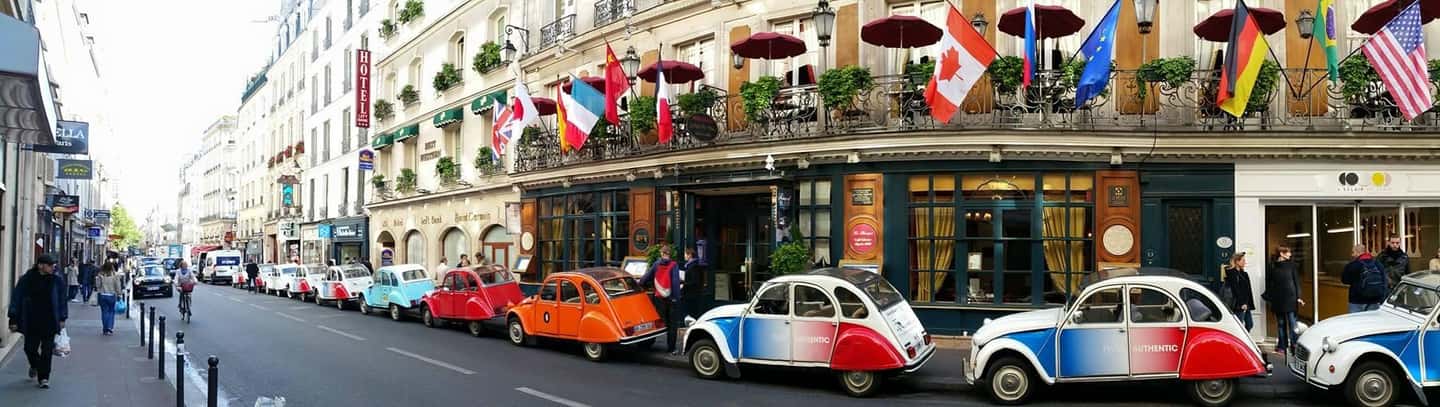
This is the “unexpected Paris” portion, and it’s a big reason the tour feels more than a greatest-hits loop. You’ll go through Place des Vosges, then areas like Passage Sully and Village Saint Paul, plus the streets of Le Marais.
This is where Paris shifts from monuments to texture. The Marais is about mood: old stone, narrow passages, craft and design energy, and the sense that the city has layers. Even if you don’t walk for long stretches, these places give you that clue that Paris isn’t only about one famous skyline.
The tour continues toward Port de l’Arsenal and Bastille area. That’s a smart contrast because it shows you Paris beyond the postcard center. Bastille’s side feels more modern and local, and the port area adds a practical, watery dimension to the city that many first-timers miss.
For me, this “two-tone” mix is the value: you leave with both the ceremonial Paris (Eiffel, Concorde, major bridges) and the human Paris (passages, courtyards, older street patterns).
Your guide makes the difference: Thomas, Vivien, Antoine, and Celine’s style
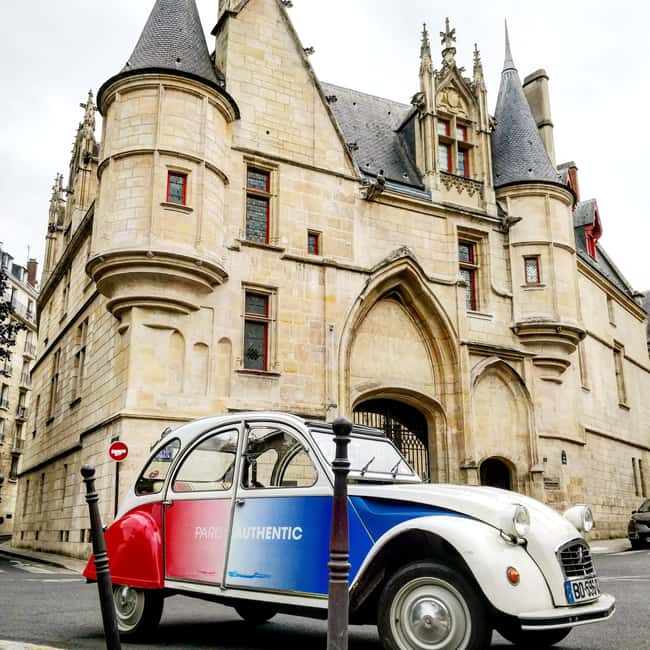
A private driver/guide changes how you experience the same streets. When someone knows what to point out, you start noticing details you’d otherwise walk past.
In recent departures, guides with names like Thomas, Vivien, Antoine, and Céline have stood out for being communicative and for tailoring the ride. One guide was noted for being informative and for taking great pictures during the tour, and another for a fun, high-energy approach that kept the experience feeling light. There’s also been praise for guides who speak confidently in multiple languages—like a smoothly handled German-speaking morning with Antoine.
If you’re the type who likes practical context—why Trocadéro sets up that Eiffel view, how the city’s ceremonial axis works, where the Marais vibe comes from—this tour is built for you. The car isn’t just transport. It’s the classroom.
One more thing that signals quality: the ride can include little touches like charming take-home ideas, which makes the tour feel less disposable. Not every Paris tour manages that kind of “we did something for you” feeling.
Price and time: is $158 for a private 2CV tour worth it?
Let’s talk money like adults. At $158 per person for 3 hours, you’re paying for two things: the private vintage vehicle experience plus a private driver/guide with pickup/drop-off in central Paris.
If you were thinking of piecing together taxis, timed-entry tickets, and a DIY route that depends on traffic, this is the simpler option. You also avoid the most common first-time frustration in Paris: spending your limited energy just figuring out how to get from one “must-see” to the next.
But there’s also a reality check. This isn’t a full-day plan built around extended walking, long museum time, or deep dives into one neighborhood. If you want that style, you’ll need to combine this with extra time in the places that hook you most—Montmartre for the romantic mood, or the Marais for the street-level Paris.
The way this tour fits best is when you want:
- a high-impact first overview,
- a romantic take on Paris without committing to hours of planning,
- and a classic plus unexpected balance.
Champagne, cheese, and 2CV miniatures: fun extras, not the core
The base experience includes the 2CV convertible ride and the private driver/guide. Champagne is available for an additional fee, and so are cheese and wine for two, plus 2CV miniatures.
If you’re celebrating something, these add-ons can be a nice way to turn the “views” into an event. One nice detail: people have described moments where the ride kept the mood so good that the timing of champagne didn’t feel like a chore—it felt like part of the flow.
But keep your decision simple. If you want the best value, start with the core tour. Add champagne only if it helps you enjoy the moment, not because it’s expected.
Rain plan and practical tips for a 3-hour ride
Paris weather can change fast. The good news here is that the car includes a transparent roof in case of rain, so you’re not stuck cancelling or hiding indoors.
Because the tour is 3 hours and private, your best prep is mindset, not logistics. Wear comfortable shoes anyway, because even short photo moments can turn into a few extra minutes standing outside. Bring a light layer for wind around viewpoints, especially in open areas near the Seine and around the big monuments.
Also, keep expectations aligned: this tour is built around driving, seeing, and snapping pictures when moments appear. If you’re the type who needs long stops at every major landmark, you’ll likely want to plan a separate walking session for the one or two places you care about most.
Should you book this Classic, Romantic Paris 2CV tour?
I’d book it if you want a private, romantic-feeling Paris overview that mixes big icons with a more local route through neighborhoods like Le Marais. It’s a strong choice for first-timers who want to get oriented fast, and for couples who value atmosphere as much as architecture.
Skip it only if your top priority is deep, long-form exploration of a single area—this is a tight 3-hour format. Also think carefully if you need guaranteed long photo stops at every monument; this tour leans more toward the drive-and-view rhythm.
If your schedule is flexible, you can take advantage of free cancellation up to 24 hours in advance. That lowers the pressure, so you can book with confidence and adjust if weather or timing changes.
FAQ
How long is the Classic, Romantic Paris 3-Hour Vintage 2CV Tour?
The tour lasts 3 hours.
Is this tour private or shared?
It’s a private group tour.
Where do I get picked up, and where do I get dropped off?
Pickup and drop-off are included at your hotel or another agreed location in central Paris.
What vehicle do we ride in?
You ride in a private vintage Citroën 2CV with a convertible roof. In rain, there’s a transparent roof option.
Does the tour include a guide, and what languages are offered?
Yes, you have a live private driver/guide. Languages listed are English, French, German, Italian, and Spanish.
What classic and romantic landmarks are included?
The route includes major sites such as the Champs-Élysées, Arc de Triomphe, Trocadéro, Tour Eiffel, Notre Dame/Île de la Cité, and also romantic areas like Montmartre, Sacré-Cœur, Moulin Rouge, Pigalle, and Opéra Garnier.
What neighborhoods are considered unexpected or lesser-known?
You’ll see areas like Place des Vosges, Passage Sully, Village Saint Paul, Le Marais, Port de l’Arsenal, and Bastille.
What’s included in the price?
Included: transport by vintage 2CV (convertible with rain roof) and a private driver/guide.
Are drinks or food included?
Not in the base price. Champagne and cheese and wine for two are listed as additional options for extra fees.
What’s the cancellation policy?
There is free cancellation up to 24 hours in advance for a full refund.