REVIEW · LYON
Audio-guided tour of Old Lyon
Book on Viator →Operated by REWIND · Bookable on Viator
Vieux Lyon is best understood on foot, one narrow lane at a time. This smartphone audio tour connects 11 stops, from Saint-Jean Cathedral to the Palais de Justice, while explaining the district’s Renaissance buildings, silk trade, local food, cinema, and famous puppet Guignol.
I like the freedom to stop for photos or a pastry without holding up a group, and I like the mix of major sights with small details such as the origin of the word traboule and the role of the Chamarier. The main drawback is practical: one published experience report describes no one being present to receive the party and unclear organization, so you should check your phone, meeting point, and activation instructions before setting out.
In This Review
- Key points to know before booking
- What this Old Lyon walk actually gives you
- Starting at Saint-Jean Cathedral
- Maison du Chamarier and the people behind the streets
- Cinema Museum and Miniature Museum
- La Longue Traboule, the route’s signature passage
- Gadagne and the world of Guignol
- Food Traboule and Lyon’s culinary side
- Maison du Crible and the Tour Rose
- Place du Change and Lyon’s trading past
- Galerie Philibert de L’Orme
- Place du Gouvernement and civic power
- Finishing at the Palais de Justice
- Is $11.56 good value?
- Timing, access, and practical preparation
- Who should choose this audio tour?
- Should you book it?
- FAQ
- Where does the audio tour begin?
- Where does the experience finish?
- How long does the tour take?
- How many stops are included?
- Is this a live guided tour?
- Is the activity private?
- Is transportation included?
- Is admission to the Palais de Justice included?
- Can I cancel for a full refund?
Key points to know before booking
- Eleven stops in about one to one hour 50 minutes: The route covers the core of Old Lyon without requiring a full-day commitment.
- Automatic smartphone audio: The guide is designed to trigger at each location, with a map to help you follow the route.
- Renaissance courtyards and traboules: You visit famous covered passageways once linked to silk transport and neighborhood movement.
- Guignol and Lyon culture: The route adds local character through the city’s best-known puppet, its jargon, food traditions, and cinema.
- A private experience for your own group: You do not share the activity with other participants, though the audio format means there is no live guide beside you.
- A low price with limits: At $11.56 per person, the tour costs little, but transport, personal spending, and admission to the Palais de Justice are not included.
What this Old Lyon walk actually gives you
This is a self-guided audio walk through Vieux Lyon, the city’s UNESCO World Heritage district. You begin at Fontaine Saint-Jean on Place Saint-Jean and finish on Quai Romain-Rolland in front of the historic Palais de Justice.
The advertised duration is about one hour to one hour 50 minutes. Each of the 11 stops is allocated roughly 10 minutes, but the actual pace is yours. You can pause the audio, take photographs, enter an attraction where permitted, or move along quickly if a particular subject does not hold your attention.
The route aims to do more than point out old buildings. It links architecture to the people who used these streets. Silk workers moved through covered passageways called traboules. Money changed hands at Place du Change during Lyon’s major fairs. A former tax collector lived in the Maison du Crible, and the city’s puppet tradition gives the walk a lighter local voice.
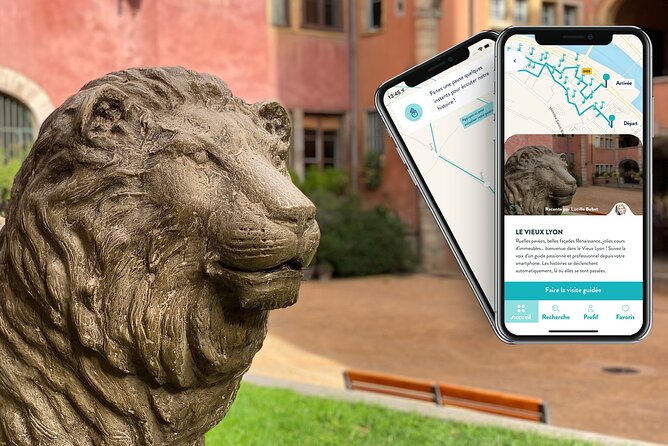
You use your own smartphone, a map, and audio that is intended to activate automatically at each stop. That can be a very convenient way to explore, since you do not need to keep checking a printed route. It also means you should arrive with a charged phone and make sure you understand the starting instructions. The one negative account supplied for this experience describes a missed welcome and unclear organization. That makes preparation especially important.
You can also read our reviews of more guided tours in Lyon


Starting at Saint-Jean Cathedral
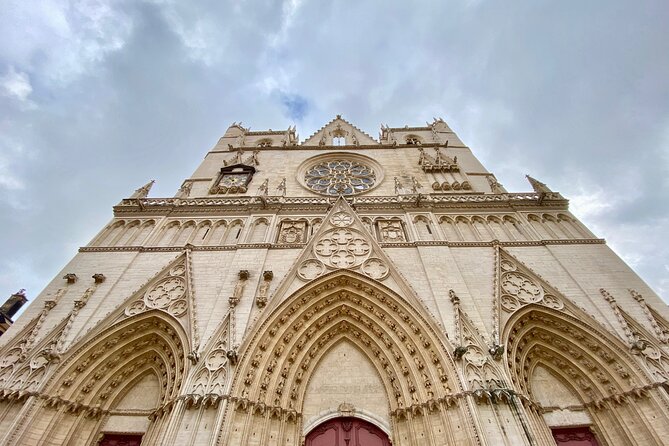
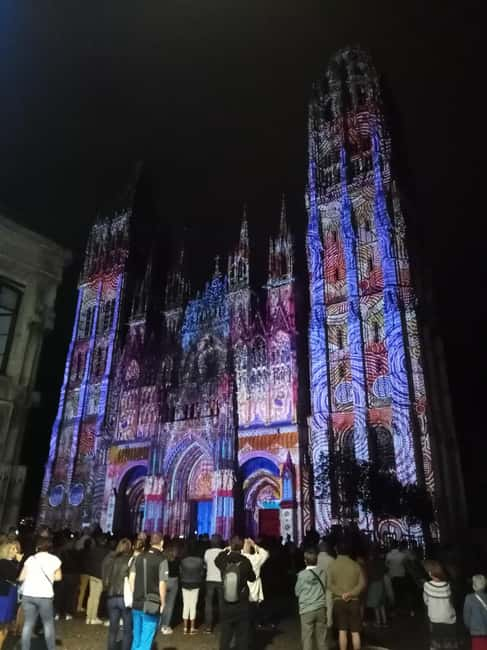
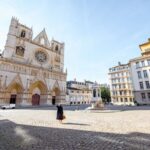
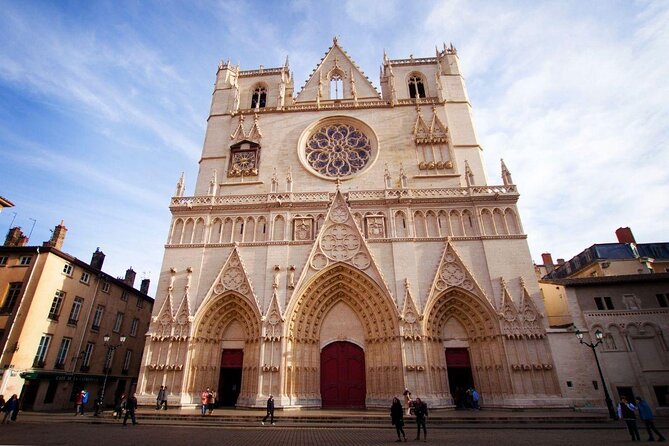
The first stop is Cathédrale Saint-Jean-Baptiste de Lyon, one of the district’s most recognizable buildings. The description presents it as once the first church in France, a claim that the audio should explain in its own historical context.
The cathedral is a sensible starting point. Place Saint-Jean gives you a clear landmark and places you immediately among the old district’s stone façades and narrow streets. The stop is listed as free, so you can take in the exterior without an admission charge.
Allow around 10 minutes for the audio and your first look around. Since this is the opening stop, use it to test your phone volume, map, and automatic activation before entering the tighter streets of Old Lyon.
Maison du Chamarier and the people behind the streets
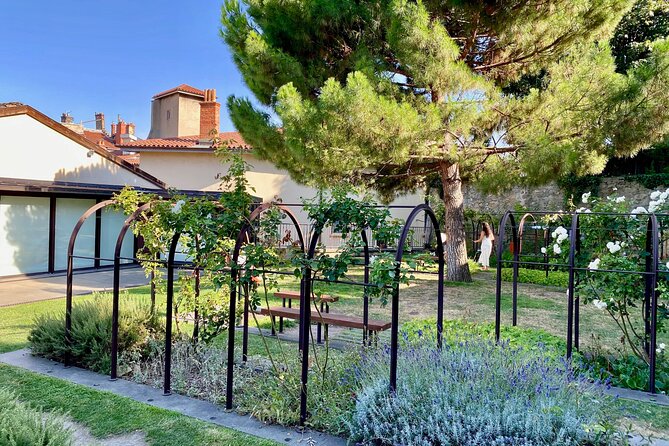
The Maison du Chamarier offers a useful change of focus. Instead of hearing only about grand religious or aristocratic buildings, you learn about the Chamarier, the official responsible for roads, traffic routes, and neighborhood security.
That detail gives the old streets a human scale. Lyon’s lanes did not simply appear as picturesque scenery. They had to be managed, protected, and kept usable, especially in a busy commercial quarter.
The stop is free and designed for about 10 minutes. Look for the building’s historic character and listen for the explanation of the Chamarier’s duties. This is one of the tour’s better features: it uses a specific local office to explain how the neighborhood functioned.
Cinema Museum and Miniature Museum
The Musée du Cinéma et de la Miniature brings modern popular culture into a district usually associated with Renaissance architecture. The featured attraction is the real Alien Queen from Alien vs Predator, along with cinematic scenery and miniature work.
That unusual subject makes the stop memorable. You are not simply moving from one old façade to another. The route shows how Lyon can connect old streets with film, special effects, and detailed model-making.
The audio stop itself is included in the walk, but the information provided does not state that museum admission is included. The itinerary marks this stop as free, so check the exact access conditions if you plan to enter rather than simply hear the commentary outside. Budget extra time only if you want to explore beyond the roughly 10-minute audio segment.
La Longue Traboule, the route’s signature passage

La Longue Traboule is described as the longest traboule in Lyon, making it one of the central sights on the route. A traboule is a covered passage through buildings and courtyards. In Lyon, these routes were linked to everyday movement and the silk trade.
This is where the tour’s subject becomes physical. Instead of only hearing about silk transport, you walk through the kind of passage that made movement through the dense old quarter possible. The changing views from street to courtyard help explain why these passages are so closely tied to Lyon’s identity.
The route allows about 10 minutes here. Keep in mind that a passageway is not the same as a conventional museum room. You may need to share the space with ordinary activity, and access to historic passages can depend on local opening arrangements. The audio guide can explain the significance, but it cannot guarantee every doorway will be open at every moment.
A few more Lyon tours and experiences worth a look


Gadagne and the world of Guignol
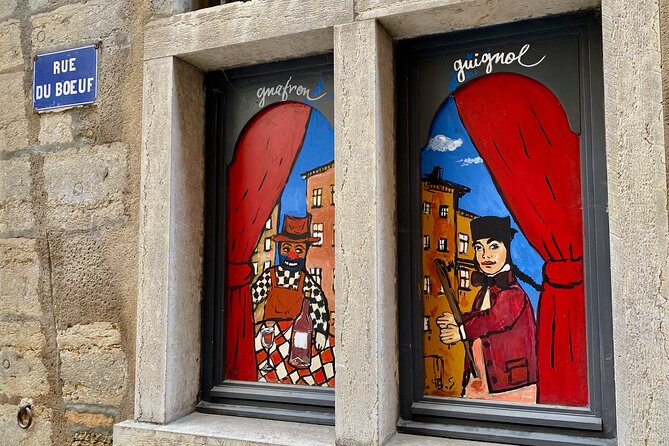
At the Musée des Arts de la Marionnette, housed within Gadagne, you learn about Guignol, Lyon’s emblematic puppet. Guignol is more than a children’s character in the context of this tour. He is part of the city’s local speech, humor, and public identity.
This stop gives the walk a welcome change of mood. After cathedral stone, Renaissance residences, and working passageways, Guignol adds wit and a distinctly Lyonnais voice.
The listed stop lasts about 10 minutes and is marked as free in the supplied details. If you want a full museum visit, confirm entry arrangements separately, since the activity price is for the audio-guided tour and does not list museum admission as a separate inclusion.
Food Traboule and Lyon’s culinary side
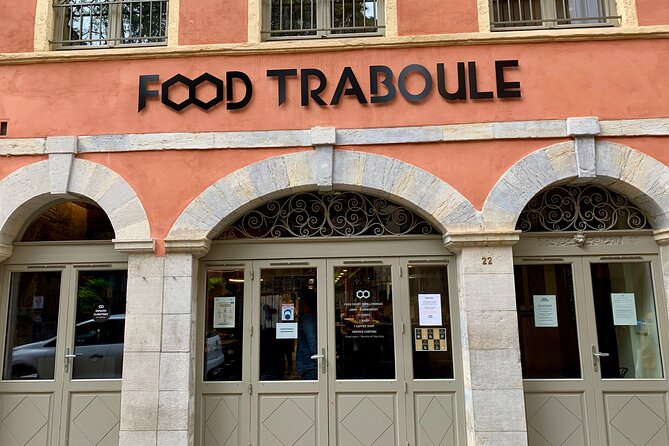
Food Traboule occupies a restored old passage that has been converted into a food court. The concept was developed by Lyon restaurant owners, giving the stop a direct link to the city’s dining culture.
This is a practical place to pause. You can use the audio commentary to understand how an old passage has found a new purpose, then decide if you want to eat or continue. Personal expenses are not included, so food and drinks cost extra.
The stop is allocated about 10 minutes. That is enough to look around and hear the explanation, but not necessarily enough for a relaxed meal. If you plan to order food, treat the advertised duration as a guide rather than a strict schedule.
Maison du Crible and the Tour Rose
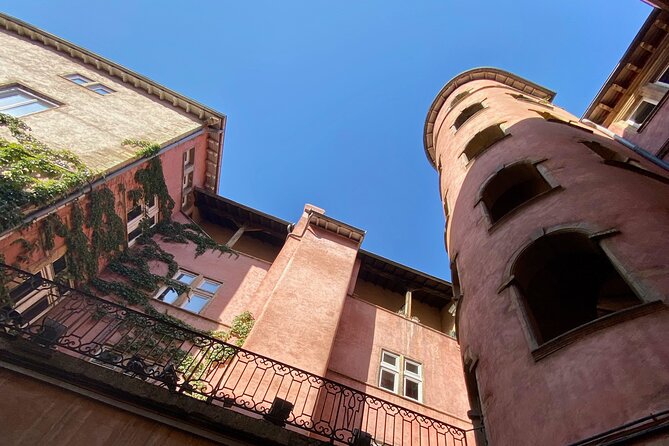
The traboule known as Maison du Crible, with the Tour Rose, introduces one of the route’s more intriguing stories. The residence was linked to the king’s tax collector, a figure who collected revenue in Lyon.
The building’s name and tower offer a useful reminder that these handsome courtyards were connected to power and money, not just private homes. The audio commentary can help you notice how the architecture reflects the position of the people who occupied it.
Again, plan on around 10 minutes. This part of the walk is especially useful if you enjoy small stories attached to individual buildings. It is less about a single major monument and more about reading the clues in Old Lyon’s residences.
Place du Change and Lyon’s trading past
Place du Change was the setting for financial transactions during Lyon’s major fairs. That fact places the district within a wider commercial world. Lyon was not only a religious center or a collection of elegant homes. It was also a place where merchants met and money moved.
The stop helps connect the city’s silk activity with its financial life. Trade requires more than workshops and warehouses. It requires markets, credit, exchange, and people who can conduct business.
The audio segment is planned for about 10 minutes and does not require an admission ticket. If you want to make the most of the explanation, pause in the square rather than listening while rushing through it. This is one of the places where a little stillness helps the story make sense.
Galerie Philibert de L’Orme
The Galerie Philibert de L’Orme focuses on the work of Philibert Delorme, an important Lyon architect of the Renaissance. The spelling varies between the stop title and the description, but the subject is the same: a major architect connected with Lyon’s Renaissance design.
This stop rewards close attention to structure and detail. You may find that the audio points out features easy to miss when you are simply walking from one address to the next. The value of the stop is not just the name of an architect. It gives you a way to look at the buildings around you.
It is another free, roughly 10-minute stop. Since the experience is audio-led, you will need to look up from the phone and inspect the architecture yourself. The guide supplies the context, but your eyes do the rest.
Place du Gouvernement and civic power
Place du Gouvernement takes the route into civic history. Here you learn about the former governor of Lyon, Beaujolais, and Forez.
The stop shows how authority was organized across the city and surrounding areas. It also breaks up the sequence of religious buildings, merchant spaces, and passageways with a look at government.
Plan for around 10 minutes. The audio format works well here because a short explanation can give a building political meaning that is not obvious from its exterior. The stop is listed without an admission charge.
Finishing at the Palais de Justice
The final stop is Le Palais de Justice on Quai Romain-Rolland. The court is associated with the trial of Klaus Barbie, known as the butcher of Lyon. This brings the walk into the 20th century and gives the ending a serious tone.
The route begins with a cathedral and Renaissance streets, then finishes with a major modern legal chapter. That contrast is valuable. It reminds you that Old Lyon is not frozen in the past. Its buildings have continued to play a role in public life.
The information says admission to the Palais de Justice is not included. The route ends in front of the building, so you should not assume that the audio ticket provides interior access.
Is $11.56 good value?
At $11.56 per person, this is a modest way to get structure and context in one of Lyon’s most important districts. You receive commentary at 11 locations, a map, and the freedom to set your own pace. For a solo visitor or a private group, the cost can be lower than a traditional guided walk.
The price is most attractive if you want an overview rather than a full museum program. You can cover architecture, silk, food, cinema, Guignol, commerce, government, and the law in one compact route.
There are limits. Transport is not included, personal purchases are extra, and the Palais de Justice admission is excluded. Also, a live guide cannot answer questions or adjust the explanation to your interests. If you want conversation and spontaneous local advice, this format may feel spare.
The private format means only your group participates, but it should not be confused with a private live guide. Your phone provides the narration. That distinction matters when comparing this with a higher-priced walking tour.
Timing, access, and practical preparation
The stated operating hours are Monday through Sunday from 7:00 AM to 6:00 PM, for the listed period ending June 17, 2026. The experience begins at Fontaine Saint Jean, Place Saint-Jean, 69005 Lyon, and finishes at Quai Romain-Rolland, 69005 Lyon.
The area is near public transportation, and most people can participate. Service animals are allowed. Transport to the starting point is not included, so plan your own way to Place Saint-Jean.
I would not begin without checking the confirmation received at booking and reviewing the meeting instructions. The one negative account describes an arrival with no one there to receive the party and unclear organization. An audio tour should remove much of the need for a host, but only if the smartphone activation process is clear.
The tour offers free cancellation up to 24 hours before the local start time. Inside that 24-hour window, you receive no refund, and changes are not accepted. That policy favors early planning and leaves little room for a last-minute change.
Who should choose this audio tour?
I would recommend it to you if you like walking independently, want a short introduction to Vieux Lyon, and prefer spending $11.56 rather than paying for a longer live tour. It also suits a private group that wants to stop for food, photographs, or shopping without keeping pace with strangers.
The tour is a good match for first-time visitors who want a route through the district’s main themes. It is also useful for repeat visitors who know the big sights but want stories about local offices, tax collectors, silk passages, Guignol, and Lyon’s film connection.
I would think twice if you need a live person at the meeting point, want detailed answers to questions, or expect admission to every museum and historic building. The experience is strongest as a flexible orientation walk. It is not a substitute for a full museum visit or a guided historical seminar.
Should you book it?
Book this tour if you want an inexpensive, self-paced introduction to Old Lyon with a clear beginning, 11 defined stops, and a finish at the Palais de Justice. The combination of traboules, Guignol, food, cinema, and Renaissance architecture gives it more variety than a simple monument walk.
Before paying, confirm the smartphone instructions and starting point. If you are comfortable managing the audio yourself, $11.56 is fair value. If reliable personal assistance and open-door access matter most, choose a live walking tour instead.
FAQ
Where does the audio tour begin?
It begins at Fontaine Saint Jean, Place Saint-Jean, 69005 Lyon, France.
Where does the experience finish?
The tour ends on Quai Romain-Rolland, in front of Lyon’s historic Palais de Justice.
How long does the tour take?
The expected duration is about one hour to one hour 50 minutes.
How many stops are included?
The route includes 11 stops in Old Lyon.
Is this a live guided tour?
No. It is an audio-guided experience that connects to your smartphone and is designed to activate automatically at each location.
Is the activity private?
Yes. Only your group participates in the private activity.
Is transportation included?
No. Transport is not included.
Is admission to the Palais de Justice included?
No. Admission to Le Palais de Justice is listed as not included. The route finishes in front of the building.
Can I cancel for a full refund?
Yes, if you cancel at least 24 hours before the experience start time. Cancellations or changes made within 24 hours are not refunded or accepted.