REVIEW · STRASBOURG
Strasbourg Original Private Tour
Book on Viator →Operated by Happy Strasbourg · Bookable on Viator
Want a fast Strasbourg primer? In 2 hours, this private walk strings together the Cathedral and five key squares, so you get a real sense of the city fast. I love the way you can get your bearings quickly, and I also love the guide style—people like William, Remy, and Gabrielle are described as funny, patient, and happy to answer questions in plain language.
The one thing to keep in mind is the format: it’s 2-hour walking with short stops, so if you want long time inside the Cathedral (or endless detours), you’ll probably want extra free time after.
In This Review
- Key reasons this private Strasbourg walk works
- Getting oriented around Place de la Cathédrale
- Cathedrale Notre Dame de Strasbourg: your history anchor in 15 minutes
- Place Saint-Étienne: the half-timbered square that sets the tone
- Place Broglie: learning to read the small stuff in 10 minutes
- Place Kléber: the largest square and the center of gravity
- République Square: the France-Germany story made symbolic
- What makes the guide experience feel worth it
- How much you should expect to spend (and when it’s a bargain)
- Who this Strasbourg private tour fits best
- Should you book this Strasbourg Original Private Tour?
- FAQ
- How long is the Strasbourg Original Private Tour?
- Where does the tour start and end?
- Is the tour offered in English?
- What group size is included?
- Do we need to pay for entry at the stops?
- How much does the tour cost?
Key reasons this private Strasbourg walk works
- Private group up to 10: easier pace, more questions, and less “missed the guide” stress
- Five major stops in one loop: Cathedrale to Place Saint-Étienne to République, without the map headache
- Free admission for the stops: you’re not paying to access each viewpoint and square
- English-speaking guide: clear explanations, and you can ask for clarification as you go
- Flexibility in how you spend the time: guides tend to adjust if you want more detail or slower pacing
- Mobile ticket and easy start point: you meet at Place de la Cathédrale and finish back there
Getting oriented around Place de la Cathédrale
Strasbourg can feel like it has two personalities at once: big, serious monuments and then these cozy squares with old-timer charm. The smartest way I’ve found to start is to let a local guide connect the dots for you. You’ll meet at Place de la Cathédrale (at 13-10 Pl. de la Cathédrale), then spend about 2 hours walking through the old-town center.
This is a private experience, so only your group participates (up to 10 people). That matters more than it sounds. When it’s just your group, you can steer the pace. If someone in your party wants more explanation or needs to move a bit slower, the guide can usually work with it. I also like that it’s offered in English, so you’re not stuck piecing together history from scraps of signage.
Another practical win: it ends back at the meeting point. After a first walk, you often just want your bearings and a short list of where to go next—this format sets you up for that.
You can also read our reviews of more private tours in Strasbourg

Cathedrale Notre Dame de Strasbourg: your history anchor in 15 minutes
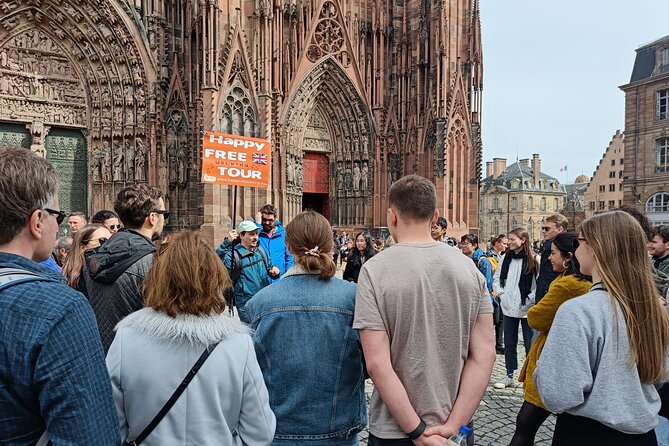
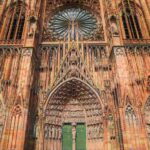
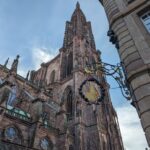
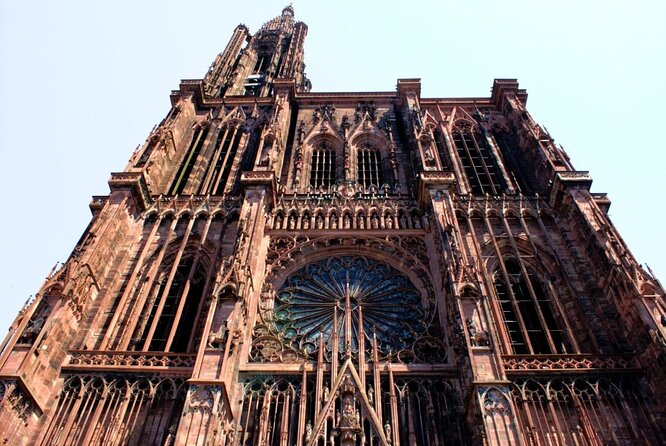
Your walk starts with the star of the city: Cathedrale Notre Dame de Strasbourg. You’ll spend about 15 minutes here, and the guide’s job is twofold: point out what to notice, and give you the background so the building makes sense instead of just looking pretty.
I like this kind of start because it changes how you see everything later. When you understand a monument’s role and why it matters, you stop treating the rest of the old town like random photo stops. You start connecting architecture, civic pride, and the long back-and-forth of regional identity.
You’ll also get Q&A time. That’s a big deal in a short tour. If you want to know why certain details exist, or how the region’s story shaped the city’s look, this is where you can ask and get a clean answer without feeling rushed.
One more note: the entry is listed as free for this stop, so you’re really paying for the guide’s time and the way they turn the cathedral into a clear, human story.
Place Saint-Étienne: the half-timbered square that sets the tone
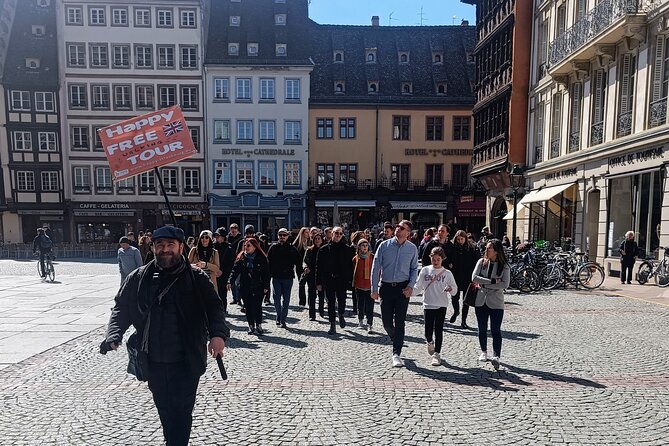
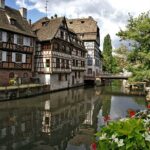
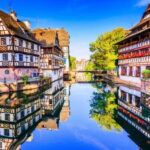
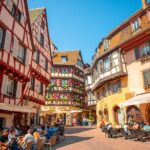
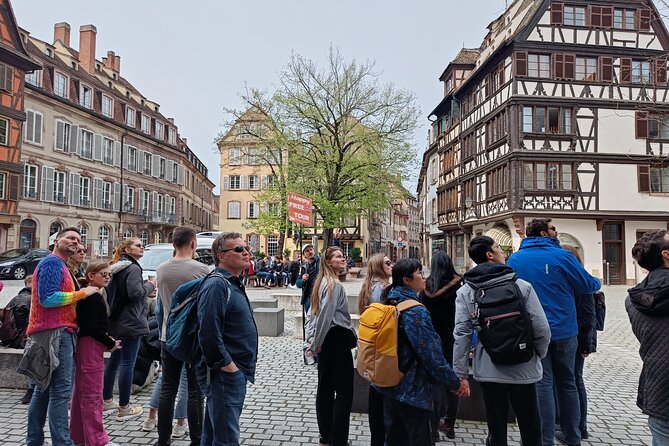
Next you head to Place Saint-Étienne, around 10 minutes. This is one of those small squares that feels like it belongs in a postcard—except the best part is the way the half-timbered houses and local traditions show up right there, in your line of sight.
What I love about starting here is the contrast. After a major monument, a square like this teaches you how Strasbourg “breathes” at street level. You’re not just looking up at the big shapes; you’re seeing the everyday historical style that makes the old town feel lived-in, not staged.
Since the stop is short, go in with a simple strategy: pick one or two house facades to watch as the guide explains the regional vibe. Then take a couple minutes to look again on your own. It’s the easiest way to turn a quick explanation into something you actually remember.
The admission note is free, which keeps the tour focused on walking, looking, and learning rather than extra ticket friction.
Place Broglie: learning to read the small stuff in 10 minutes
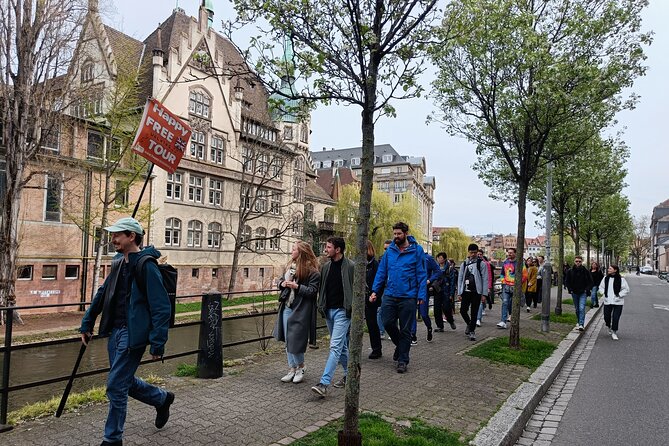
Place Broglie is next, again about 10 minutes, and this one is all about details. The guide focuses on the specifics that catch their eye, which is great because it keeps the tour from sounding like a script.
This stop is where you can practice the skill that makes Strasbourg click: slow down your attention. Don’t try to photograph everything. Instead, let your guide point to a feature—something about the square’s layout, its visual cues, or the way the area developed. Then you’ll notice it immediately when you revisit later.
If you’re the type who likes “how did this place become this place?” rather than just “what building is this?”, you’ll likely enjoy Broglie. It’s a compact lesson in reading a city as design, not just scenery.
As with the other squares, admission is listed as free.
Place Kléber: the largest square and the center of gravity
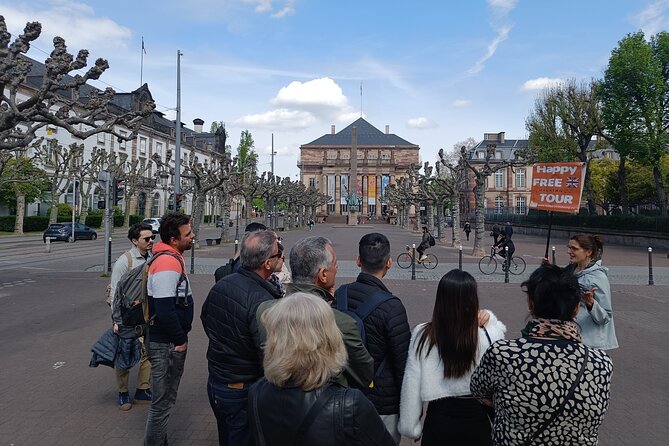
Then comes Place Kléber, about 10 minutes. This is described as the largest square in Strasbourg’s city center, and that alone tells you why it’s important. A large square acts like a hub. It’s where people naturally cross paths, where the city feels organized, and where you can use it as a navigation landmark for the rest of your day.
I also like that the tour doesn’t treat Kléber as a final “big stop” and rush you out. Instead, it uses the square as a reset point—an easy place to regroup, take in the open space, and absorb what you’ve learned so far about the old town’s structure.
Because the guide’s explanations can land differently depending on what you’ve already seen, this stop works well mid-walk. By the time you reach Kléber, you’ve already gotten the Cathedral’s context and the old-town feel. Now the city’s bigger civic side makes more sense.
Admission is listed as free, so again, you’re not juggling ticket rules while you’re trying to learn.


République Square: the France-Germany story made symbolic
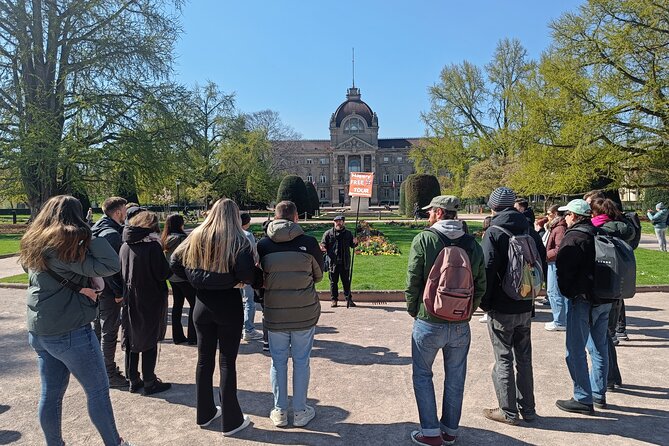
The last major stop is Place de la République, about 15 minutes. This is framed as a symbolic square, and the guide connects it to Strasbourg and Alsace’s history between France and Germany.
Even without getting lost in dates, you’ll leave with a clearer idea of why symbols matter here. Strasbourg isn’t just a pretty city. It sits in a region whose identity has been shaped by changing borders and cultural mix. République Square becomes a place you can look at and understand in a bigger way—politics, memory, and everyday life all sharing the same street space.
I find this ending smart. The tour finishes after you’ve seen the monument and the old-town texture, so the history that’s about identity and shifting ties lands with more weight. It’s also a good moment to ask any lingering questions before the walk ends back at the start point.
Admission is listed as free, and you’re given time for explanation rather than a quick photo-and-go.
What makes the guide experience feel worth it
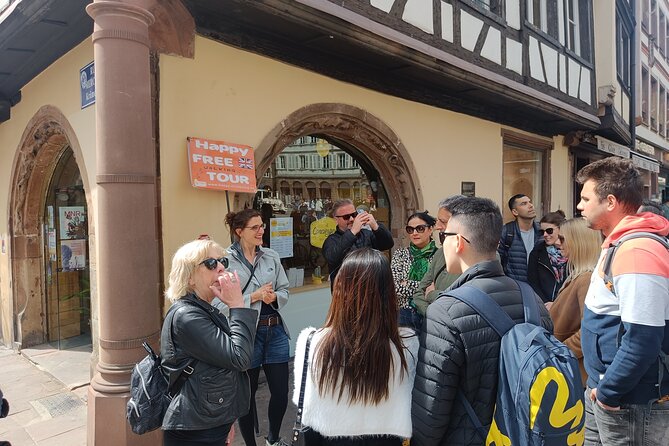
You’re paying for the guide, not for a long list of paid entrances. And the guides associated with this tour style are repeatedly described as:
- affable and patient with questions
- willing to adapt pace and route to your group
- strong at turning local history into something you can actually follow
That guide style is what makes a short tour feel generous. A 10-minute stop can turn into a “wait, I get it now” moment if the guide makes the connections clear.
I also like that many people mention humor and engagement. If you’re traveling with kids, teens, or adults who don’t usually love walking tours, that matters. It keeps the energy up without turning the history into a joke.
And since this is a private setup, you can often use your guide time as a planning tool. In particular, some guides have provided specific recommendations for local spots and even lunch ideas—useful when you’re trying to maximize one day or a tight trip window.
How much you should expect to spend (and when it’s a bargain)
The price is $193.57 per group (up to 10 people). That pricing model is the whole story behind value here.
If you book as a small group of 2, the cost per person is higher. If you book with a fuller group—family, friends, or a mixed-age group that can share the cost—this becomes much more reasonable fast. Since it’s private, you’re not paying for separate individual tours; you’re paying for one guide’s time and attention.
So the best value looks like:
- couples who want a more tailored intro (pay more per person, save on guesswork)
- families who’d rather keep kids with one guide than split up
- friend groups who share costs and want a calmer pace than group tours
Also, the tour gets booked fairly ahead of time on average. That’s often a sign that this is a dependable “first-day” activity. If your dates are busy, booking earlier can protect your preferred time.
Who this Strasbourg private tour fits best
You’ll likely love this if:
- it’s your first visit to Strasbourg and you want a clean sense of the city
- you like walking but don’t want to plan every step
- you want history explained in a way you can ask questions about
- you’re traveling with a group that appreciates flexible pacing
It may be less ideal if you’re the kind of traveler who needs a deep, slow dive into one site (like spending a long stretch inside the Cathedral or lingering in museums). This tour is designed as an intro loop—short, focused, and meant to help you roam with confidence afterward.
Should you book this Strasbourg Original Private Tour?
Yes, if you want a smart first-orientation walk that hits the big monument and then grounds you in Strasbourg’s square-by-square feel. The private group setup, the English guide, and the way the tour uses short stops to build real context make it feel like more than the sum of five points on a map.
I’d book it early in your time in Strasbourg—same day you arrive, or the next morning—so you can use what you learn to plan your afternoon and evening. And if you’re traveling as a group of friends or family, you’re especially likely to feel the pricing value.
If you tell me your travel dates and group size, I can help you think through whether this timing (and this price-per-group model) makes the most sense for you.
FAQ
How long is the Strasbourg Original Private Tour?
It runs for about 2 hours.
Where does the tour start and end?
You meet at Place de la Cathédrale in Strasbourg, and the tour ends back at the meeting point.
Is the tour offered in English?
Yes, it’s offered in English.
What group size is included?
It’s a private tour for your group only, with up to 10 people.
Do we need to pay for entry at the stops?
The stops listed include free admission ticket notes.
How much does the tour cost?
It costs $193.57 per group (up to 10 people).