REVIEW · PARIS
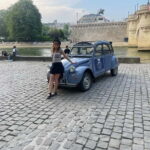
Secrets of Paris Tour in a Vintage Open-Top French Car Citroen DS
Book on Viator →Operated by Classic 60's Paris Tours · Bookable on Viator
A Citroën DS makes Paris feel cinematic. This 2-hour private tour in a vintage open-top French car mixes easy sightseeing with real stories, guided by Benjamin in English. You’re not stuck staring at a map—you’re rolling past the big scenes while he explains what you’re seeing.
I especially like the comfortable drive: the car has heating, plenty of legroom, and an open roof when the weather is right. I also like that Benjamin’s commentary is practical and gets you orientated fast, especially when Paris traffic can feel like chaos.
The one drawback to keep in mind: you’re covering a lot of famous stops in a short time, so expect brief photo-and-view moments rather than long hangs at each site.
In This Review
- Key highlights to notice before you go
- Why a vintage Citroën DS is the best way to see Paris fast
- Pacing the highlights: Eiffel Tower to Arc de Triomphe
- From Grand Palais to Opéra Garnier: architecture you can actually spot
- Seine and royal avenues: Pont Alexandre III and Place de la Concorde
- Montmartre without the stress: Sacré-Cœur, Pigalle, and artist streets
- Value at $360 per group: what’s included and what you should plan for
- Pickup rules in Paris (and why they matter to your day)
- Who this private tour suits best
- Should you book Secrets of Paris in the vintage Citroën DS?
- FAQ
- How long is the Secrets of Paris Tour in the vintage Citroën DS?
- How many people are in a group?
- Is pickup and drop-off available?
- Is the tour in English?
- Do I need admission tickets for the stops?
- What’s the car like and is it comfortable?
- What happens if the weather is bad or I need to cancel?
Key highlights to notice before you go

- Vintage open-top Citroën DS with heating and comfort built for a Paris sightseeing loop
- Benjamin as your guide (English) with stories tied to the landmarks you’ll see
- Private group up to 4 with the same driver and guide for your whole experience
- Smart pacing: quick get-out moments for photos and viewpoints, not a slow crawl
- Easy pickup and drop-off options across much of central Paris (with a few arrondissement limits)
Why a vintage Citroën DS is the best way to see Paris fast

Paris is gorgeous, but it’s also packed. This tour solves that with a simple formula: hop into a vintage Citroën DS, let a professional driver do the hard part, and use your time for the sights. With heating and comfortable seats, you’re not just looking good in photos—you’re actually comfy enough to enjoy the whole route.
The open-top style is a big deal. When the weather cooperates, you get that classic Paris feel: breeze, street noise, and quick views you’d never get from a bus window. One practical touch you’ll appreciate in cooler months is the heating, so you’re not constantly wishing you’d booked a closed car.
And yes, you’ll draw attention as you roll by major landmarks. That’s not the goal, but it happens—people see the car and react. It turns routine “photo stops” into something that feels like a small event, even when you’re just pausing near a monument.
You can also read our reviews of more tours and experiences in Paris.



Pacing the highlights: Eiffel Tower to Arc de Triomphe

Your route starts with one of the easiest Paris wins: the area around the Eiffel Tower. You’ll be on Rue de l’Université, a pretty street with elegant buildings and cafés right near the tower, so it feels less like you’re dropped into a tourist bottleneck. The tour lists the Eiffel Tower stop as admission free, so you’re mostly there for the best exterior views and photos.
From there, you shift to the Arc de Triomphe. It’s one of those monuments that’s hard to understand until you see it in context—wide avenues, ceremonial scale, and statues that signal national pride. The stop is also listed as admission free, which helps keep the tour focused on the guide experience rather than extra ticket logistics.
One reason this pacing works: you get “big wow” landmarks early, when your energy is highest. It also sets you up for the rest of the city, because once you understand the geography around these two sites, the later drives make more sense.
From Grand Palais to Opéra Garnier: architecture you can actually spot
After the early icons, you move into Paris’s showy, design-forward center. The itinerary brings you past the Grand Palais, with its glass-domed splendor, and the Petit Palais, described as a quieter architectural and art stop with a peaceful garden setting. Even when you’re not going inside (the data here doesn’t list paid entry for these), the views from the street help you understand why these buildings became targets for photographers for decades.
Then come the grand avenues and power centers. You’ll spend time around the Champs-Élysées, and the Élysée Palace is included in the story of what you’re seeing. This is the kind of stop that can be dull if you only look at storefronts. With a guide narration, you start noticing the layout and symbolism—why certain streets feel ceremonial, why that area looks different from quieter neighborhoods.
Later, the tour heads to Opéra Garnier, with its ornate architecture and artistic heritage called out in the itinerary notes. This stop is worth it because it’s one of those places where your eyes naturally want to wander upward. A good driver-guide combo keeps you positioned so you can take a few minutes to really look, without wasting time searching for the best angle.
Seine and royal avenues: Pont Alexandre III and Place de la Concorde

Paris looks better near water—and this tour builds in that “slow” feeling. The itinerary includes drifting along the Seine and/or strolling across its bridges for romantic views. You’re not signing up for a long walking tour, but you still get that shift in atmosphere from streets and plazas to river light.
A key scenic moment is the Pont Alexandre III. It’s described as Paris’s most opulent bridge, with golden sculptures and sweeping views. If you only ever see this bridge from a distance, you miss how much it frames the city. Here, you get the sense of scale, plus a clear photo moment built into the route.
Then the tour moves to Place de la Concorde, where the itinerary includes the Luxor Obelisk. This is the kind of detail most self-guided walks skip. You see the obelisk as a world-history connection—ancient Egypt present right in the center of Paris—between fountains and statues.
These stops are also efficient because they work as “visual anchors.” After you’ve seen them, you can recognize the center of the city without needing constant GPS.
Montmartre without the stress: Sacré-Cœur, Pigalle, and artist streets

If Eiffel Tower day is about orientation, Montmartre day (which this tour includes at the end) is about mood. You’ll head toward Sacré-Cœur with time for panoramic views. The itinerary lists Sacré-Cœur as admission free, which is helpful because you’re mainly going for the exterior views and the wide overlook.
This is also where the open-top car becomes extra fun. You’ll be surrounded by streets that feel less like a grid and more like a patchwork of hills, art corners, and classic scenes. It’s the kind of neighborhood where being dropped off and navigating yourself can be stressful with crowds and hills—having a driver handle positioning saves energy.
The Montmartre segment includes a long list of memorable stops and street names: Moulin Rouge, Pigalle, Rue Lepic, Rue de l’Abreuvoir, Van Gogh’s House, and Moulin de la Galette, plus Place du Tertre and Clos Montmartre. You also get Parc Monceau and Courcelles as part of the wider sightseeing loop, which helps balance the “touristy” Montmartre feel with greener pauses.
Here’s the practical takeaway: the route is packed, but the tour timing is designed so you don’t miss everything. In practice, you’ll get those short moments to step out, grab photos, and take in the streets before moving on—exactly the kind of pacing that works when you only have two hours.
Van Gogh’s area (including Van Gogh’s House) is a good example of why a guide matters. Even if you know the name, it’s easy to pass by without context. With narration, you start noticing why these streets became linked to artists and how the neighborhood developed its identity.





Value at $360 per group: what’s included and what you should plan for

At $360.03 per group (up to 4), this tour isn’t priced like a cheap bus ride. But it also isn’t priced like a private chauffeured day. The value comes from the combo: a vintage open-top car, professional licensed driver, and a private guide (Benjamin) who’s there with you in English.
For a group of four, it can feel surprisingly efficient. You’re basically paying for a tailored highlights circuit, not just transportation. And that matters because the guide does the work of turning “I saw that” into “I understood why it matters.”
What’s included is clear and helpful:
- Bottled water
- Car comfort: heating and plenty of legroom
- Private transportation with pickup and drop-off
- Private local guide: Benjamin
- Professional driver with passenger insurance
- Mobile ticket for smoother check-in
What’s not included: alcoholic beverages. So if you’re thinking about champagne-on-the-streets vibes, plan on skipping that or buying elsewhere on your own.
Also, it’s listed as a tour that requires good weather. Since it’s open-top style, that’s not a small detail. If your travel dates sit in a rainy period, consider building in some flexibility so you’re not disappointed by weather-related changes.
Pickup rules in Paris (and why they matter to your day)

Pickup and drop-off are offered inside Paris with limits. The tour says pickup/drop-off is available to any location of your choice inside the city except in the 3rd, 4th, 10th, 11th, 12th, 19th, and 20th arrondissements. It also says it doesn’t pick up or drop off at Le Marais, Bastille, République, and Gare du Nord.
If your hotel isn’t centrally located, you can choose a meeting point. Two options are given:
- In front of Hôtel Crillon, 10 Place de la Concorde, 75008 Paris
- In front of the Panthéon, Place du Panthéon, 75005 Paris
There’s also advice built in: the best schedules are between 10AM and 4PM to avoid traffic jams. That’s not just a convenience line. In Paris, traffic affects timing and the quality of the viewpoints you’ll actually get.
Who this private tour suits best

This works best for you if you want a fast, guided overview of Paris without feeling rushed by your own navigation. It’s also a good fit for couples and small families who want the novelty of a vintage car but still need comfortable seating and heating.
One key family note: children under 10 aren’t allowed because there’s no seat belt on the back seats. If you’re traveling with younger kids, this one may not be the right match.
It’s also a smart choice if you enjoy street-level sightseeing—seeing the big monuments from the outside, then using the guide’s narration to connect the dots. If you’re looking for deep museum time or long ticketed entries, you’ll likely want a different kind of tour with more time per site.
Should you book Secrets of Paris in the vintage Citroën DS?
Book this if you’re aiming to get your bearings fast, see the biggest highlights, and enjoy Paris from the street in a way that doesn’t drain your energy. I like that the tour is private and capped at a small group, so your experience feels tailored rather than rushed.
Skip or consider alternatives if you want long stays at individual attractions or you’re traveling with children under 10. And if your trip has a high chance of rain or cold weather, it’s worth thinking ahead since this experience needs good conditions.
If you want a stylish, story-driven highlights circuit—and you’ll value comfort and a real guide—this one is an easy yes.
FAQ
How long is the Secrets of Paris Tour in the vintage Citroën DS?
It’s listed as about 2 hours.
How many people are in a group?
The price is per group (up to 4), and it’s described as a private tour for your group.
Is pickup and drop-off available?
Yes, pickup and drop-off are offered to any location inside Paris of your choice, with exclusions in several arrondissements and specific areas (Le Marais, Bastille, République, Gare du Nord). If your hotel isn’t listed or isn’t centrally located, you can choose a meeting point such as Hôtel Crillon (Place de la Concorde) or the Panthéon (Place du Panthéon).
Is the tour in English?
Yes, it’s offered in English.
Do I need admission tickets for the stops?
Some stops are listed as admission ticket free, including the Eiffel Tower, Arc de Triomphe, and Sacré-Cœur. The provided info does not say every stop is free, so you’ll want to plan around that.
What’s the car like and is it comfortable?
It’s a vintage open-top Citroën DS with heating and comfortable seats with plenty of legroom.
What happens if the weather is bad or I need to cancel?
The tour requires good weather. If it’s canceled due to poor weather, you’ll be offered a different date or a full refund. There’s also free cancellation up to 24 hours in advance for a full refund.