REVIEW · LYON
The Full Story of Lyon and Its Must-See With a Local
Book on Viator →Operated by Quentin Dubourg · Bookable on Viator
Lyon’s story is written into its passageways. On this downhill walk, local guide Quentin Dubourg leads you from the silk-workers’ quarter through Roman remains, old squares, dramatic wartime stories, and the city’s famous traboules. It is a smart way to connect parts of Lyon that can feel scattered on a map.
I like the route’s mix of major sights and small architectural details, especially the Traboule et Cour des Voraces and Hôtel Bullioud. I also like the practical finish in the old town, where Quentin can point you toward a bouchon, street food, Asian food, or another meal that fits your mood.
The main consideration is the walk itself. Croix-Rousse is a hill, and although the route mostly goes downhill, you will still manage stairs and nearly two hours on foot. The group can reach 20 people, so this is not a private stroll.
In This Review
- Key points to know before you book
- From Croix-Rousse downhill into Lyon
- Cour des Voraces and the world of silk
- Place Chardonnet and the Croix-Rousse slope
- Roman Lugdunum at the Amphitheater of the Three Gauls
- Montée de la Grande-Côte, cafés, and vintage shops
- Bartholdi Fountain and Place des Terreaux
- Lyon City Hall and the city’s public face
- Fresque des Lyonnais and local identity
- Hôtel Bullioud and Lyon’s architectural surprises
- Place du Change and the old town
- Place du Gouvernement and planning your lunch
- What the $5.93 price really gets you
- Who will get the most from this walk
- Should you book Quentin’s Lyon walk?
- FAQ
- How long does the Lyon walking tour last?
- Where does the tour begin?
- Where does the tour end?
- What time does the tour start?
- Is the walk uphill or downhill?
- How many people can join the tour?
- Can I cancel for a full refund?
Key points to know before you book
- A downhill route from Croix-Rousse to the old town: You begin at 9 Montée de la Grande-Côte and finish at Place du Gouvernement.
- Traboules are central to the story: See passageways once used by silk workers and other striking examples of Lyon’s unusual architecture.
- The tour connects several eras: Roman Lugdunum, the silk trade, workers’ revolts, World War II, food culture, and famous Lyonnais figures all appear along the way.
- Quentin Dubourg leads the walk: He brings local cultural and historical context, with insider suggestions for eating after the tour.
- The tour lasts about 1 hour 45 minutes: Each major stop receives roughly 5 to 10 minutes, keeping the pace brisk.
- The price is unusually low: At $5.93 per person, the walk offers strong value if you want orientation and local context rather than museum entry or a long formal lecture.
From Croix-Rousse downhill into Lyon
The starting point at 9 Montée de la Grande-Côte puts you in Croix-Rousse, the hill district tied closely to Lyon’s silk industry. This is a useful place to begin because the route lets you understand the city physically. You start above the center, then follow the slope toward Terreaux and the old town.
That downhill direction matters. Lyon has plenty of steep streets, and Quentin notes that this walk is designed to make the climb easier by moving down rather than up. You still need to handle stairs, so comfortable shoes are a good idea. If stairs or hills worry you, the tour provider specifically invites you to contact Quentin before booking.
The route takes about 1 hour 45 minutes, with the stops generally lasting 5 or 10 minutes. I like that format for a first look at Lyon. You receive enough explanation to understand the place, but you are not held in one square for half an hour while the rest of the city waits.
You can also read our reviews of more tours and experiences in Lyon.



Cour des Voraces and the world of silk
The first stop, Traboule et Cour des Voraces, introduces one of Lyon’s most distinctive features: the traboule. These are passageways through buildings and courtyards, allowing people to move between streets by cutting through the interior of a block.
This particular passage is linked to silk workers who used such routes to move fabric toward the city center. That detail gives the architecture a practical purpose. You are not simply looking at a pretty old doorway. You are seeing how Lyon’s trades shaped the layout of the neighborhood.
The Cour des Voraces also carries the memory of workers’ revolts. That makes it one of the stronger stops for visitors who want more than postcard views. Lyon’s silk industry brought wealth, but it also produced hard working conditions and social tension. Quentin uses the setting to explain those conflicts in a direct, place-based way.
A short stop cannot cover every part of the silk trade, of course. Still, this is the kind of opening that helps the rest of the route make sense. The passageways, slopes, and old buildings are connected to work, money, protest, and movement.
Place Chardonnet and the Croix-Rousse slope
At Place Chardonnet, Quentin continues down through Croix-Rousse. The square helps frame the district before the route moves toward the city center.
This portion is less about ticking off a single grand monument and more about seeing how the hill changes as you descend. The walk gives you views down toward Lyon, along with the feeling of moving from a former workers’ quarter into the formal center.
You will want to keep your eyes open between stops. The route’s appeal comes partly from the spaces in between: stairways, narrow passages, storefronts, cafés, and changing views. Because each stop is fairly brief, Quentin can keep the walk moving instead of turning the morning into a series of long pauses.
Roman Lugdunum at the Amphitheater of the Three Gauls
The Amphitheater of the Three Gauls shifts the story back to Roman Lyon. The city was known as Lugdunum, and this site is one of Lyon’s two amphitheaters.
The stop is a useful reminder that Lyon was important long before silk merchants and modern restaurants. Quentin covers the rise and fall of Lugdunum, giving you a basic Roman framework without requiring a full archaeological tour.
Do not expect a large intact arena experience. The value here lies in the location and the connection to Lyon’s earliest major chapter. If Roman ruins are your main reason for visiting the city, you will likely want more time elsewhere. If you want a compact introduction as part of a wider city walk, 10 minutes gives the site a sensible place in the story.
Montée de la Grande-Côte, cafés, and vintage shops
The Montée de la Grande-Côte is described as the fastest route from Croix-Rousse to the city center. It is also one of the more atmospheric sections of the walk, lined with cafés and vintage shops.
This is where the route feels most like a neighborhood stroll rather than a formal monument circuit. You can see how Lyon’s everyday life sits beside its history. The street also reinforces the practical value of beginning uphill and walking down. The route uses the slope as part of the experience instead of treating it as an obstacle.
The word downhill should not make you think effortless. Stairs are still part of the route, and the total walk lasts close to two hours. Anyone with limited mobility should ask Quentin about the exact stair sections before committing.

Bartholdi Fountain and Place des Terreaux
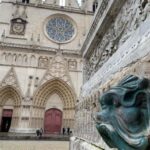
The Fontaine Bartholdi provides one of the tour’s more memorable visual stops. Quentin explains that the fountain was originally intended to face the city hall, and he adds an amusing comparison involving another work by Bartholdi.
The fountain then leads naturally to Place des Terreaux, one of Lyon’s two main squares. Here you see the Fine Arts Museum and the city hall, with the square providing a grander civic setting than the intimate passageways earlier in the route.
This contrast is one of the walk’s strengths. In a short time, you move from workers’ courtyards to Roman remains, then to a broad city square framed by important public buildings. You get a sense of how Lyon’s identity is layered rather than confined to one historic district.
The Fine Arts Museum is not an included museum visit. You see the setting from the route, but this experience does not provide an indoor collection tour or admission. If art is a priority, note the museum for a separate visit.
Lyon City Hall and the city’s public face
The Hôtel de Ville de Lyon receives a shorter stop of about five minutes. That is enough to admire the building and place it within the civic center, though not enough for a detailed architectural tour.
The city hall works well in the sequence because Place des Terreaux shows Lyon in its official, public role. Earlier, the story centered on workers and trade. Here, the focus shifts to government, city identity, and grand urban design.
I appreciate the pace at this point. After several stops of roughly 10 minutes, a shorter look keeps the walk from slowing down. You can take in the building, hear the key context, and continue toward the old town.
Fresque des Lyonnais and local identity
The Fresque des Lyonnais is a mural showing famous figures from Lyon. It is a quick and accessible way to meet the people connected to the city’s culture and public memory.
A mural cannot replace a full biography of each person, but it gives Quentin a natural opening to explain who matters in Lyon and why. This stop should appeal to you if you prefer local identity and storytelling over a long list of dates.
It is also a good visual pause. After old buildings, ruins, and squares, the painted wall offers something bold and easy to photograph. The stop lasts around 10 minutes, enough for explanation without demanding a major detour.
Hôtel Bullioud and Lyon’s architectural surprises
At Hôtel Bullioud, the focus returns to traboules and building design. The passage has interesting architecture, and it shows that Lyon’s hidden routes are not all alike.
The first traboule connects strongly to silk workers and revolt. Hôtel Bullioud adds a different angle, showing how courtyards and passageways can also be valued for their form and layout. Seeing more than one traboule helps you compare them instead of treating the first one as a one-off curiosity.
Access to these passageways can depend on the site being open, but the experience description identifies them as stops on the route. Quentin’s local knowledge is especially useful here because the appeal may not be obvious from the street. A plain entrance can lead to an interior route with a very different feel.
Place du Change and the old town
Place du Change brings you into an emblematic part of Lyon’s old town. As the name suggests, the square is associated with exchange, commerce, and the movement of people and goods.
By this point, the tour has moved from the hill through the city center and into the older quarter. That geographic flow is important. You are not just collecting unrelated facts. You are watching Lyon’s commercial life shift from silk production on the hill toward the center and the river-side old town.
The stop takes about 10 minutes. It is a good place to ask Quentin for suggestions about what to do next, especially if you are still finding your bearings in Lyon.
Place du Gouvernement and planning your lunch
The tour ends at Place du Gouvernement, in the center of the old town. This is a practical ending point because you can continue into one of Lyon’s best areas for food and sightseeing.
Quentin offers help choosing a place to eat, including a traditional bouchon lyonnais, street food, the Asian district, or a French fusion restaurant. That is more useful than a generic restaurant list because your choice can match the rest of your day and your budget.
The meal itself is not included. Still, ending with food advice adds real value to a short morning walk. Lyon is known as France’s gastronomic capital, and a local recommendation can help you avoid spending your lunch break wandering without a plan.
What the $5.93 price really gets you
At $5.93 per person, this is priced more like a low-cost orientation walk than a premium private tour. You are paying for Quentin’s route, explanations, and local suggestions, not for museum admissions, transport, food, or a private group.
That price makes the experience particularly useful on a first day in Lyon. You can learn the shape of the city, hear which districts connect to silk and trade, and finish near places to eat. The walk also helps you decide where to return for a longer visit.
The tradeoff is group size. Up to 20 people may join, so the experience can feel less personal than a private tour. The short stops also mean the commentary must stay focused. If you want extended time inside museums or detailed architectural analysis, this is not the right format.
The mobile ticket keeps arrival simple, and confirmation comes at booking. The activity begins at 10:00 a.m., giving you a clear morning plan.
Who will get the most from this walk
I would choose this for a first visit to Lyon, especially if you want the city explained through its streets rather than from a vehicle. Families and mixed-age groups may also like the variety: murals, passageways, Roman ruins, city squares, and food stories keep the route changing.
It suits you if you enjoy:
- A brisk walking route with a clear downhill direction
- Local stories about silk, workers’ revolts, and World War II
- Historic passageways and unusual urban architecture
- A short introduction before exploring Lyon independently
- Practical meal suggestions at the end
I would think twice if stairs are difficult for you, if you want a slow pace, or if your main goal is a full museum visit. Service animals are allowed, and most people can take part, but the hill and stairs remain the key physical consideration.
The experience has a five-star rating from 31 reviews and a 100 percent recommendation rate. Those numbers fit the tour’s strongest qualities: a well-sized route, a useful duration, and a guide who keeps the walk informative and fun.
Should you book Quentin’s Lyon walk?
Book it if you want a low-cost, well-paced introduction to Lyon that ties together Croix-Rousse, the city center, and the old town. The best parts are the silk-workers’ traboules, the changing views as you walk downhill, the Roman stop, and the final food advice.
Skip it if you need a private guide, step-free access, or long visits at individual sights. For everyone else, $5.93 is a small price for nearly two hours of orientation with Quentin Dubourg, especially at the start of a Lyon stay.
Free cancellation is available if you cancel at least 24 hours before the 10:00 a.m. start time. Changes or cancellations made later are not refunded.
FAQ
How long does the Lyon walking tour last?
The tour lasts approximately 1 hour and 45 minutes.
Where does the tour begin?
It begins at 9 Montée de la Grande-Côte, 69001 Lyon, France.
Where does the tour end?
The tour ends at Place du Gouvernement in Lyon’s old town, at Pl. du Gouvernement, 69005 Lyon, France.
What time does the tour start?
The scheduled start time is 10:00 a.m.
Is the walk uphill or downhill?
The route begins in Croix-Rousse and mainly goes downhill toward the city center and old town. You will still walk down some stairs.
How many people can join the tour?
The activity can have a maximum of 20 participants.
Can I cancel for a full refund?
Yes. You can cancel for a full refund up to 24 hours before the experience starts. Changes or cancellations made less than 24 hours before the start time are not accepted or refunded.