REVIEW · PARIS
Sainte Chapelle & Conciergerie Private Guided Tour
Book on GetYourGuide →Operated by Paris in person private tours · Bookable on GetYourGuide
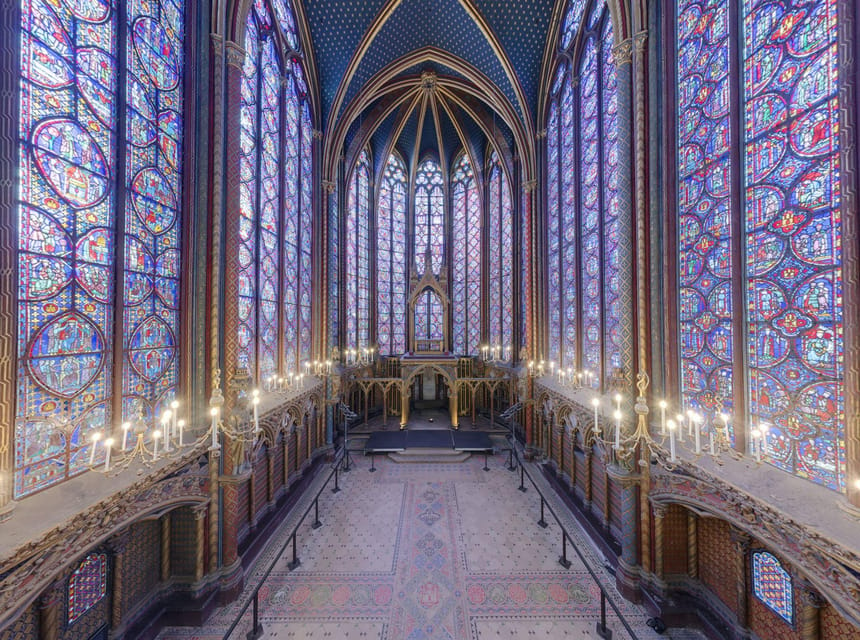
Sainte Chapelle is one of Paris’s great visual shocks: a small Gothic chapel that seems to dissolve into light and stained glass. This private tour helps you read the building rather than simply admire it, explaining medieval color, relics, sacred space, and the clever engineering packed into every corner.
I like the private format, which gives you room to ask about details that a large group might skip. I also like the pairing with the Conciergerie, where royal ceremony gives way to the French Revolution. The main consideration is the price: at $265 per person for 90 minutes, this makes the most sense for visitors who want close guidance, not a quick walk-by visit.
In This Review
- Key points
- Why Sainte Chapelle deserves more than a quick look
- Reading the stained glass and Gothic structure
- Relics, royal purpose, and the meaning of a sacred room
- Crossing from royal chapel to Conciergerie prison
- The Sorbonne, Picasso, and Paris beyond the monuments
- What the private guide adds in 90 minutes
- Meeting at the Conciergerie entrance
- Is $265 per person a fair price?
- Who should book this experience?
- Practical details before you reserve
- Should you book the Sainte Chapelle and Conciergerie tour?
- FAQ
- Where does the tour meet?
- How will I identify the guide?
- How long does the tour last?
- Is this a private tour?
- Which languages are available?
- What sites does the tour focus on?
- Does the tour include food and drinks?
- Is an express security check available?
- Can I cancel for a refund?
- What ticket is included?
Key points
- Sainte Chapelle in concentrated form: A compact Gothic chapel with unusually little wasted space and a major display of medieval stained glass.
- Two very different monuments: Move from a royal chapel to the Conciergerie, a former palace later linked to revolutionary imprisonment.
- A guide-led history lesson: Expect attention to architecture, symbolism, social context, relics, and the changing meaning of sacred space.
- Private attention: The tour is designed for a private group, with English, French, and Serbo-Croatian available.
- Central Île de la Cité meeting point: Meet outside the Conciergerie’s main entrance, where your guide carries a red canvas tote.
- One detail to confirm: The booking information mentions a skip-the-line Orsay Museum ticket, which does not match this Sainte Chapelle and Conciergerie itinerary.
Why Sainte Chapelle deserves more than a quick look
Many visitors enter Sainte Chapelle, glance upward, take a few photos, and move on. That is understandable. The chapel is so visually forceful that it can feel complete at first sight.
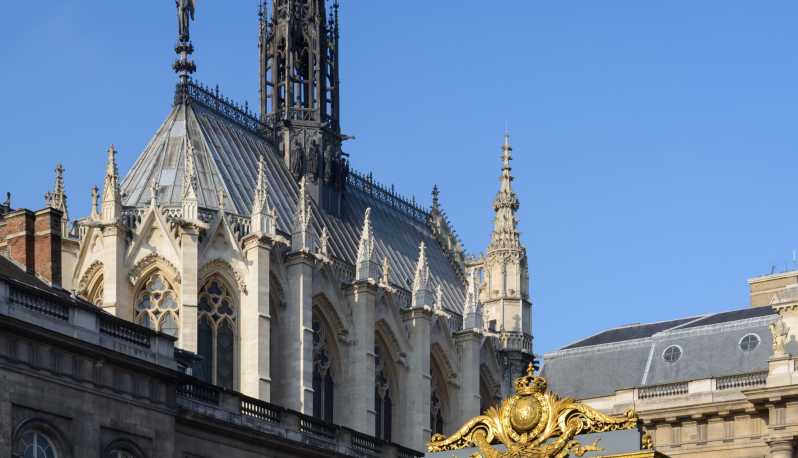
But the building rewards explanation. It was designed around light, height, color, and sacred meaning. The guide helps you see why Gothic builders used narrow supports and tall windows, how medieval viewers read color, and how the room’s proportions created a sense of mystery.
I especially like the idea of studying Sainte Chapelle as a compressed version of the grand Gothic ambition seen at Notre Dame. Notre Dame is immense and public. Sainte Chapelle is smaller, more focused, and almost jewel-like in its precision. The experience is not about size. It is about how much meaning the architects fitted into a tight space.
You will also hear about the difference between a chapel, a church, and a cathedral. That may sound like a small distinction, but it clarifies the building’s purpose and status. The guide also addresses the difference between holy and sacred space, and between ordinary use and consecrated space.
That sort of context is where a private tour earns its keep. You are not simply told that the chapel is beautiful. You are given a way to understand what its builders were trying to achieve.
You can also read our reviews of more guided tours in Paris



Reading the stained glass and Gothic structure
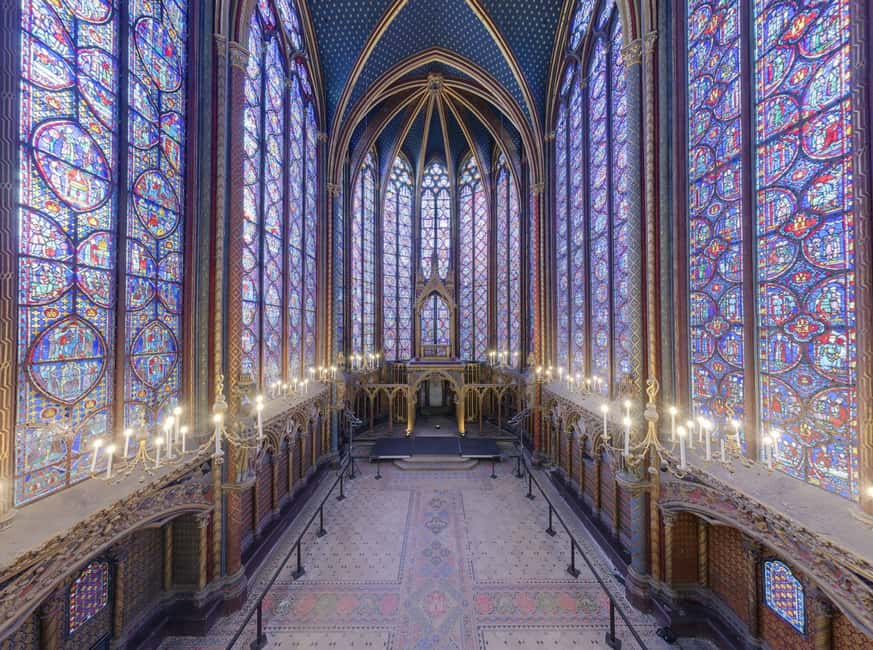
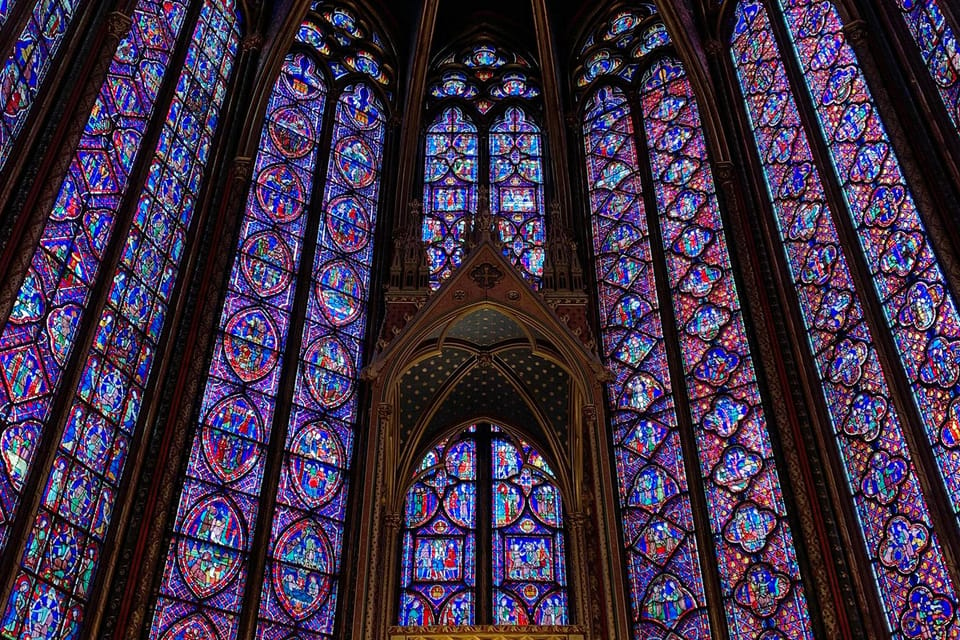
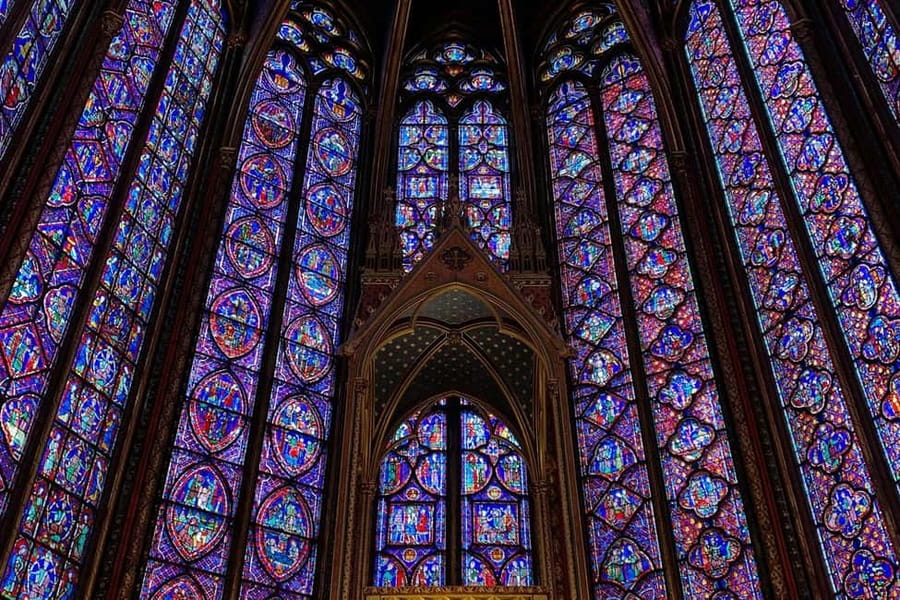
The stained glass is the main event, but the tour does not treat it as decoration alone. The guide explains the role of color in the medieval period and how light itself could carry spiritual meaning.
Look up slowly. The windows are easy to take in as one blaze of color, but the guide encourages you to notice how the glass works with the architecture. The building’s structure seems to recede, while the windows take over your attention. This creates the impression that the walls have become light.
The tour also covers the engineering behind the chapel. Gothic design was not only an artistic style. It depended on structural solutions that allowed builders to reach higher and open larger sections of wall for glass.
You may hear about the use of contracted and expanded space, the way the room guides your eye upward, and how scale changes your sense of the building. These ideas matter because Sainte Chapelle is not large. Its impact comes from design choices that make the space feel more expansive and more mysterious than its footprint suggests.
A guide can point out these effects in real time. Without that help, you may notice that the chapel feels unusually light and tall, but miss the practical choices that produce the effect.
Relics, royal purpose, and the meaning of a sacred room
Sainte Chapelle was not built as a neutral art gallery. The tour explains the importance of relics in medieval society and how they shaped the chapel’s purpose.
Relics could give a place enormous religious and political weight. They connected a sacred building to major events and figures, while also reinforcing the status of the ruler who protected them. The guide puts this relationship into context without reducing the chapel to a simple royal trophy.
The discussion of what makes a house of God is another useful part of the experience. You will consider how architecture separates the sacred from the profane, and how a consecrated space differs from an ordinary room.
I would pay close attention here if you enjoy history that connects ideas to buildings. The chapel becomes easier to understand when you see how religion, kingship, art, and engineering worked together.
The experience is also described as a moving spiritual visit. That does not mean you need to be religious to appreciate it. The point is that the room was designed to shape an emotional response. Its light, height, imagery, and objects were meant to do more than decorate a royal site.
Crossing from royal chapel to Conciergerie prison
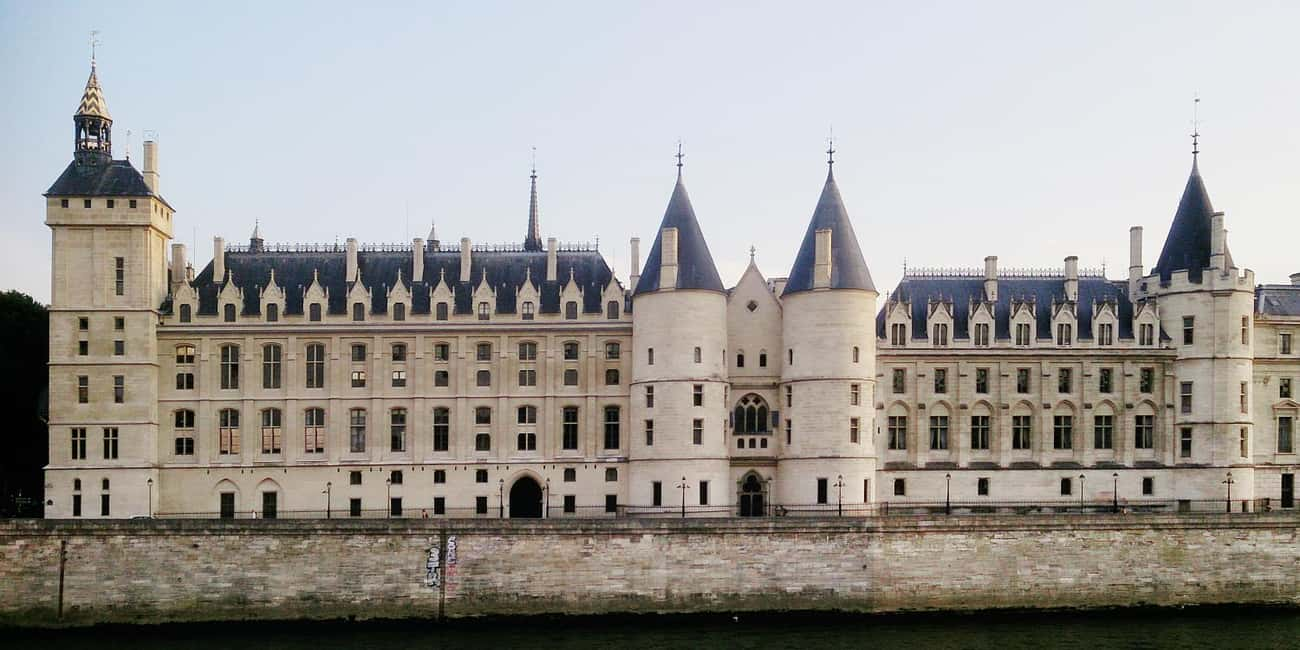
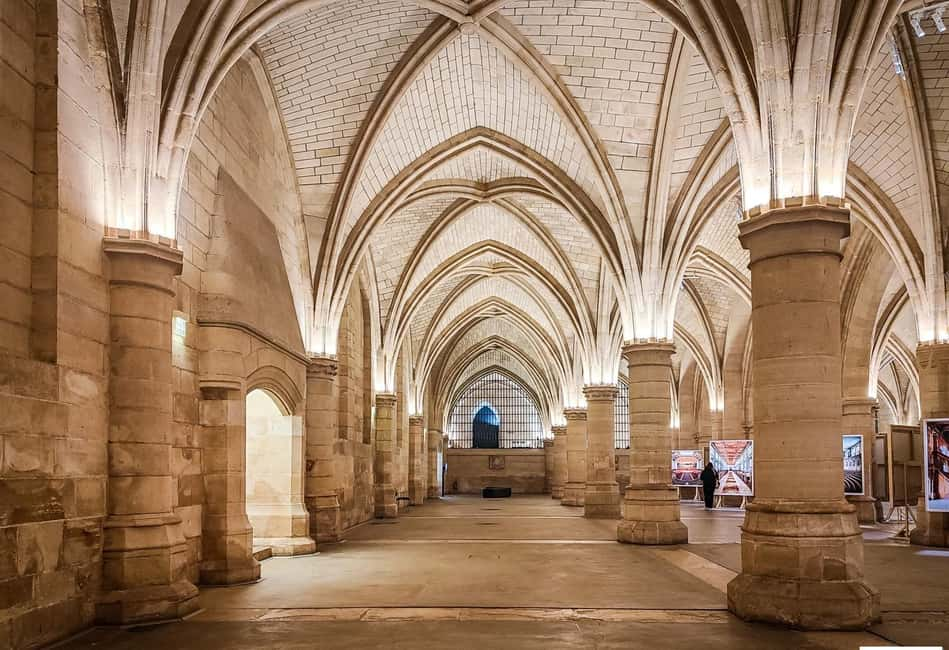
The Conciergerie gives the tour a sharp change of mood. Sainte Chapelle presents royal power through sacred beauty. The Conciergerie shows how a former royal palace became linked to imprisonment and revolution.
That contrast is the heart of the pairing. You begin with a building designed to express order, devotion, and royal authority. You then move to a place associated with upheaval, punishment, and the collapse of the old political order.
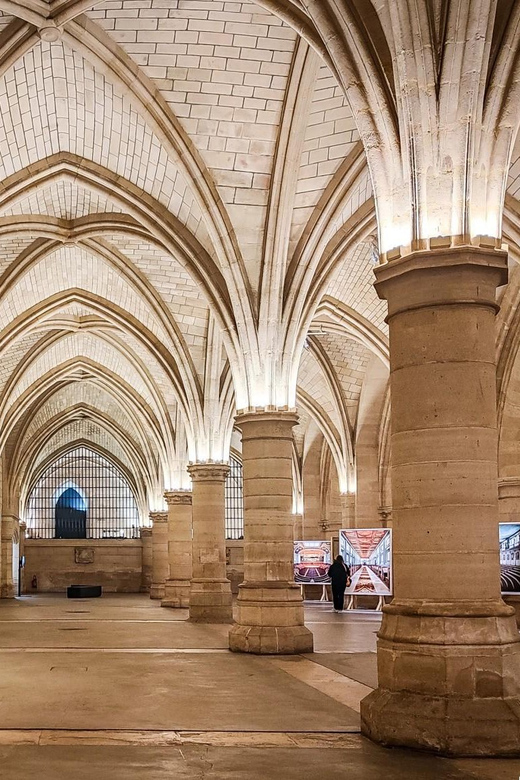
The guide traces the Conciergerie from its Gothic period into the revolutionary era. You will learn how the building changed roles and which famous historical figures were held there.
This section is especially useful if you know the French Revolution mainly as a list of dates and names. The building gives those events a physical setting. Its earlier royal identity and later prison role sit in the same place, making the political transformation easier to grasp.
The tour presents the Conciergerie as a meeting point between the sacred and the profane. That idea echoes the Sainte Chapelle discussion, but here it has a darker edge. A royal complex could contain ceremony, administration, confinement, and violence within the same wider setting.
The Conciergerie is not just an add-on after the chapel. It gives the tour a historical arc, moving from the height of medieval monarchy to one of the bloodiest and most important periods in French history.
The Sorbonne, Picasso, and Paris beyond the monuments
The listed highlights also include the Sorbonne and the drinking places favored by Picasso and other artists. These references suggest that the guide places the Île de la Cité experience within a larger story about Parisian culture.
The Sorbonne offers a chance to connect the city’s medieval and intellectual traditions. It is one of Europe’s oldest universities, and its name brings in the world of scholarship, debate, and student life.
The Picasso reference points in another direction. Instead of focusing only on kings, churches, and revolutionaries, the tour also gestures toward the cafés and social circles that shaped modern Parisian culture.
You should keep your expectations measured here. The confirmed duration is 90 minutes, and the main stated visits are Sainte Chapelle and the Conciergerie. The information does not specify a separate interior visit to the Sorbonne or named drinking dens, so ask your guide how these subjects fit into the route before booking if they are a major reason for your interest.
That clarification is simple but important. A short private tour can offer broad context, but it cannot spend equal time on every period and personality.
You can also read our reviews of more private tours in Paris





What the private guide adds in 90 minutes
Ninety minutes is enough for a focused introduction, not a leisurely day of sightseeing. The timing suits visitors who want a strong explanation of two major sites and still have most of the day free.
The guide’s role is central. The experience is designed around history, architecture, and social context, not just entry and escort. Expect explanations of how Gothic art developed, how medieval people understood color and relics, and how political change altered the Conciergerie.
The guide also brings the periods together. You are not receiving two disconnected monument talks. Sainte Chapelle and the Conciergerie are linked by the history of the royal complex and by the changing relationship between sacred authority and political power.
A private group is helpful if you have specific interests. You can ask about Gothic engineering, the French Revolution, royal ceremonies, or the symbolic use of light. The available languages are English, French, and Serbo-Croatian.
No guide names are provided, so you cannot request a particular person in advance based on the information available. Still, the strongest feature of the guiding style is clear: expect detailed attention to architecture, history, and the social world around both sites.
Meeting at the Conciergerie entrance
You meet in front of the Conciergerie’s main entrance. Your guide carries a red canvas tote bag, which gives you a useful visual marker in a busy central Paris setting.
Arrive with enough time to locate the entrance and identify the bag. The meeting point is specific, but no additional directions or transportation instructions are supplied. Since the tour begins at the Conciergerie rather than at Sainte Chapelle, confirm the exact entry procedure when you book.
The tour includes an express security check for the listed sites. Security still takes time, so avoid arriving at the last second. The time saved is most useful when it protects your limited 90-minute visit from unnecessary waiting.
The central location makes this easy to combine with other Île de la Cité sights. You can plan Sainte Chapelle and the Conciergerie as the historical core of a day in the area, then continue on foot to nearby parts of central Paris.
Is $265 per person a fair price?
At $265 per person, this is a high-priced short tour. The value depends almost entirely on your group size and how much you want guided interpretation.
For a private group, the price can be reasonable when split among several people who would otherwise hire a guide separately. You are paying for private attention, a live guide, and help making sense of two complicated monuments in a short period.
The price is harder to justify for a solo visitor or a couple who mainly want admission and a quick orientation. Sainte Chapelle can be visited without this level of private service, and the tour lasts only 90 minutes.
I would choose it if you care about understanding what you see. The guide discusses the chapel’s architecture, medieval symbolism, relics, sacred purpose, and the Conciergerie’s political transformation. That is far more useful than a short list of dates.
One practical issue needs checking before payment. The included items mention a skip-the-line ticket to the Orsay Museum, while the experience itself concerns Sainte Chapelle and the Conciergerie. This appears inconsistent. Ask the provider exactly which admission tickets are included and where they apply.
Who should book this experience?
This tour suits first-time Paris visitors who want a strong explanation of Gothic art without committing to a full-day history tour. It also fits repeat visitors who have seen Sainte Chapelle before but felt they missed its meaning.
I would recommend it to architecture fans, students of medieval Europe, and anyone curious about how religion and monarchy shaped French art. The Conciergerie adds value for people interested in the French Revolution and the physical sites tied to it.
Families may also appreciate the private setup because the guide can adjust the pace and answer direct questions. The short duration is easier for younger attention spans than a long museum tour, though the subject matter is serious.
You may want to skip it if you prefer independent sightseeing, have a tight budget, or want a broader walking tour of Paris. The advertised Picasso and Sorbonne themes are appealing, but the core of the experience is clearly the two monuments on Île de la Cité.
Practical details before you reserve
The tour costs $265 per person and lasts 90 minutes. It is offered for private groups, with live guiding in English, French, or Serbo-Croatian.
Food and drinks are not included. Plan those separately, especially if you want to continue exploring central Paris after the tour.
You can cancel up to 24 hours before the activity for a full refund. A reserve-now, pay-later option is also available, which may help if your schedule is still changing.
Starting times vary, so check availability for your preferred date. Since the meeting point is outside the Conciergerie, confirm the precise entrance and the ticket details before finalizing your plans.
Should you book the Sainte Chapelle and Conciergerie tour?
Book it if you want expert interpretation in a private setting and can accept the premium price. Sainte Chapelle is easy to admire but harder to read, and the guide gives you the tools to understand its light, color, structure, and religious purpose.
The Conciergerie makes the visit more than a single chapel stop. It adds a political and revolutionary chapter, showing how one royal complex could move from sacred ceremony to prison and upheaval.
Skip it if your priority is low-cost entry, a longer Paris walk, or a dedicated Picasso and Sorbonne tour. Before paying, clarify the puzzling Orsay Museum ticket reference. With that point settled, this is a focused and intellectually rewarding introduction to two of the most important historic buildings in central Paris.
FAQ
Where does the tour meet?
You meet your guide in front of the Conciergerie’s main entrance.
How will I identify the guide?
The guide will be carrying a red canvas tote bag.
How long does the tour last?
The tour lasts 90 minutes.
Is this a private tour?
Yes. The experience is arranged for a private group.
Which languages are available?
Live guiding is available in English, French, and Serbo-Croatian.
What sites does the tour focus on?
The experience focuses on Sainte Chapelle and the Conciergerie.
Does the tour include food and drinks?
No. Food and drinks are not included.
Is an express security check available?
Yes. The activity includes skip-the-line access through an express security check.
Can I cancel for a refund?
Yes. You can cancel up to 24 hours in advance for a full refund.
What ticket is included?
The included information mentions a skip-the-line ticket to the Orsay Museum, although the tour description focuses on Sainte Chapelle and the Conciergerie. Confirm the admission details with the provider before booking.