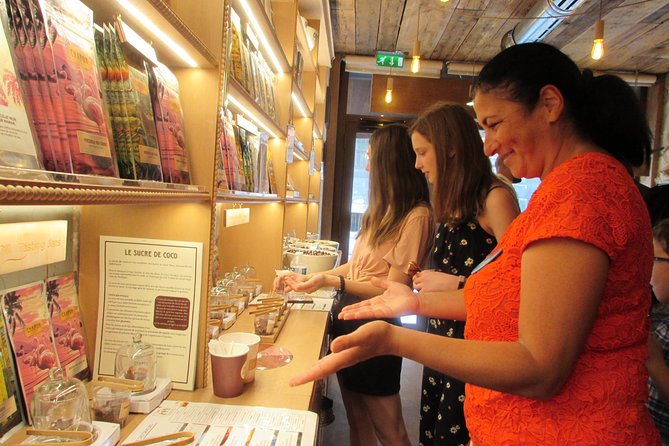
The most appealing part of this experience is the setting: you cook in Catherine’s Paris apartment, not in a formal school kitchen. With the market option, you first shop for seasonal ingredients, learn about French products and appellations, pick up fresh bread, then return home to prepare and eat a three-course meal.
I like the personal scale, with a maximum of four people, and I like that Catherine is a cookbook author who sends you home with recipes. The main consideration is that hands-on can mean helping with selected tasks rather than cooking every dish from start to finish, and the small kitchen may limit workspace.
In This Review
- Key points to know before booking
- Cooking French food in Catherine’s Paris home
- The optional market visit near the Arc de Triomphe
- What you prepare during the three hours
- The three-course lunch and French table time
- How hands-on is the class?
- The home setting: personal, but not polished
- Is $224 a fair price?
- Who will enjoy this experience most?
- Dietary needs, drinks, and basic planning
- Should you book Catherine’s cooking class?
- FAQ
- Where does the cooking class take place?
- How long does the experience last?
- Is the market visit included?
- What happens during the market visit?
- How many people can join?
- Is lunch included?
- Is wine included?
- Can children attend?
- Can I request special dietary arrangements?
- What is the cancellation policy?
Key points to know before booking
- A real home kitchen near the Arc de Triomphe: This feels more like being invited to lunch than attending a large culinary demonstration.
- Optional market visit: Meet Catherine at her preferred shops, learn about origins and seasons, and choose ingredients before cooking.
- Seasonal three-course menu: The exact dishes change, so the class reflects what is available rather than following one fixed menu.
- Maximum of four people: The small group suits couples, families, and anyone who prefers direct conversation.
- Catherine teaches practical skills: Expect guidance on timing, presentation, multitasking, vegetables, meats, and dishes such as soufflé.
- A few limits to weigh: The kitchen is small, and the amount of chopping or preparation you do may vary from one class to another.
Cooking French food in Catherine’s Paris home
This is a cooking class built around hospitality. You meet Catherine in Paris, close to the Arc de Triomphe, and spend about three hours moving from shopping, if selected, to preparation and lunch.
The home setting is the key difference. You are not simply watching a chef work behind a counter. Catherine explains her menu, talks through the order of tasks, and invites you to help with slicing and preparing vegetables and meats. Then you sit down together to eat what you made.
That format will suit you if you want a friendly introduction to French cooking rather than a technical culinary course. It also gives you a chance to ask the small questions that often matter most at home: How do you organize several dishes at once? When should you start the sauce? How do you keep presentation simple but attractive?
Catherine speaks English well and explains her methods clearly. Her background as a cookbook author adds useful structure, and the recipes are chosen so you can prepare them again for family and friends.
You can also read our reviews of more private tours in Paris



The optional market visit near the Arc de Triomphe
If you select the market option, your morning begins with Catherine at a local market. She takes you to shops she likes and helps you select ingredients for the meal.
This is not just a quick stop for supplies. Catherine discusses the products, their origins, and their appellations. She also explains the best season for using certain ingredients. That matters in French cooking, where the quality and timing of the produce often shape the dish more than a long list of spices or complicated methods.
You may also stop at a bakery for fresh bread before heading to the apartment. It is a small detail, but it helps connect the class to ordinary Paris shopping. You see how a meal comes together through several trusted food shops instead of one large supermarket.
The market portion can be especially useful if you are curious about French food culture. You get context for what you later cook, and you can ask about seafood, produce, meats, and other ingredients as you go.
There is one practical tradeoff. The market visit can take a sizable part of the morning, leaving less time for actual preparation. One class experience included more time looking at the market than cooking, so you should choose this option for the shopping lesson, not only for extra time at the stove.
The exact route also deserves attention. The activity is described as taking place near the Arc de Triomphe, but one experience involved a bus ride to Catherine’s home just outside central Paris after meeting at the market. Check the precise meeting instructions when you book, and leave room for local transport if the market and apartment are in different areas.
What you prepare during the three hours
Catherine chooses a three-course menu based on the season. You are not promised one fixed set of dishes, which can be a strength or a drawback.
The benefit is freshness. Your meal reflects the ingredients available at that time of year, and Catherine can adjust her recipes to suit the people in front of her. The drawback is that you cannot book with certainty around one particular main course or dessert.
The class begins with an explanation of the menu and the steps ahead. Catherine talks through the order of work, then invites you to participate in tasks such as slicing and preparing vegetables and meats.
Several people especially valued her advice on organizing time and handling multiple jobs at once. That is one of the more useful lessons you can take home. French home cooking is not always about a difficult recipe. It is often about knowing what can be prepared early, what must be watched closely, and how to bring several components to the table together.
Presentation also receives attention. Catherine encourages you to think about how food looks on the plate, not only how it tastes. Her lesson on soufflé has been singled out as approachable, with clear instructions showing that the dish is not as difficult as many home cooks expect.
The amount of work you personally do can vary. Some people have found the class very hands-on, while others were asked mainly to chop a few ingredients. If you want a class where you prepare every element yourself, ask for a clear explanation of the participation level before booking.
The three-course lunch and French table time
After the cooking, you sit down with Catherine to eat the meal. Lunch, beverages, and bottled water are included, and wine is described as an accompaniment to the meal.
This shared lunch is more than a final tasting. It gives you time to talk about the food, ask follow-up questions, and enjoy the social side of French dining. The meal is prepared in a private home, so the pace should feel more personal than a scheduled restaurant meal.
The menu may include an appetizer, main course, and dessert, with the exact dishes changing by season. Simple starters and desserts have worked particularly well in the past, while the main course may be the least predictable part of the experience. A recipe that suits one person may not suit another, so tell Catherine about dietary needs when you book.
The meal also lets you judge the value of the class in a practical way. You are paying for instruction, food, drinks, a private setting, and time with a cookbook author, not merely for a restaurant lunch. If you mainly want a meal, $224 can feel high. If you want a small cooking lesson plus a personal Paris encounter, the price makes more sense.
How hands-on is the class?
This is the most important question to settle before you reserve.
Catherine does invite you to help. You may slice, prepare vegetables and meats, follow her instructions, and take part in the kitchen workflow. Some people have described the experience as very hands-on, with useful discussion about seasonal food and kitchen timing.
Still, this is not guaranteed to be a full practical course for every participant. One person found that only a few ingredients were chopped, with Catherine doing much of the actual cooking. The size of the kitchen can affect this too. A small home kitchen may require two people to rotate through the work rather than everyone cooking at once.
I would describe it as a guided home-cooking session with participation, not a professional cooking school where each person has a workstation. That distinction helps set the right expectation.
If you are cooking with a child, the experience can work well as a family activity. Children must be accompanied by an adult, and one parent and a 12-year-old enjoyed the class together. The small group size also makes it easier for Catherine to adjust her explanations to different ages and abilities.
You can also read our reviews of more cooking classes in Paris


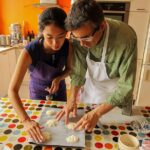
The home setting: personal, but not polished
Cooking in Catherine’s apartment is the heart of the experience, and it comes with the normal tradeoffs of entering someone’s home.
At its best, the apartment feels welcoming and gives you an honest look at how French food is prepared in a personal kitchen. You get conversation, home-style organization, and a shared table. Some people have also purchased Catherine’s cookbooks after the class, although her books may not be available in English.
Do not expect a staged cooking studio. One class took place while Catherine was preparing to move, with packing boxes in the living room. That situation may have been temporary, but it shows why this experience is better suited to people who value warmth and access over a polished setting.
The kitchen may also be tight. A couple once had to take turns with preparation because there was not enough room for both people to work at once. For a private class of two to four, that may be manageable, but it is worth knowing if your main goal is constant physical participation.
Is $224 a fair price?
The listed price is $224 for about three hours. Since the class is private and limited to four people, the per-person value changes depending on how many people book together.
For one person, it is a costly lunch and cooking session. For two people, the price buys a private experience with a cookbook author, a three-course meal, drinks, recipes, and personal instruction. For a small family or group of four, the cost becomes easier to justify if everyone wants to cook and talk rather than simply eat.
The market option adds another layer of value because Catherine explains French shopping customs, product origins, and seasonal use. It also adds time spent walking through shops and possibly getting from the market to the apartment, so it should be chosen for the food lesson, not as a faster route to the meal.
I would compare this with a standard group cooking class. A larger class may give you more counter space and more guaranteed cooking time. This experience gives you a more personal host, a home meal, and conversation that can continue beyond the recipe. Decide which matters more to you.
Who will enjoy this experience most?
I would recommend it to you if you:
- Prefer small, personal activities to large group tours
- Want to see how French ingredients are selected and used
- Enjoy eating with your host after a class
- Like learning kitchen organization and timing
- Are happy with a seasonal menu that may change
- Want recipes you can try at home
- Are booking for a couple, family, or group of up to four
It may not suit you if you need a large professional kitchen, want to prepare every course yourself, or have your heart set on one specific dish.
It is also a good choice for a parent and older child, provided the child stays with an adult. The class offers food, conversation, and a practical activity in one morning, which can make a welcome change from sightseeing.
Dietary needs, drinks, and basic planning
Tell the operator about dietary requirements when you book. The menu is seasonal and may change, so early notice gives Catherine a better chance to plan appropriately.
Beverages, bottled water, lunch, and the three-course meal are included. The meal is accompanied by wine, and the minimum drinking age is 18. If you are under 18 or do not drink alcohol, confirm what beverage arrangement will apply to you.
Transportation to and from attractions is not included. You make your own way to the meeting point, and the activity ends back there. Because the public meeting information is broad, check the exact address and any market-to-home directions before the day.
Confirmation is provided when you book. Free cancellation is available if you cancel at least 24 hours before the local start time. Inside that window, the payment is not refunded, and changes are not accepted.
Should you book Catherine’s cooking class?
Book it if you want a personal Paris food experience built around a host, a home kitchen, seasonal ingredients, and a shared lunch. The strongest reasons are the small group size, Catherine’s clear English explanations, her practical advice on timing and presentation, and the optional market visit.
Go in knowing what you are buying. This is not a guaranteed full-participation culinary course, and the kitchen may be small. The menu changes, the market can take more time than expected, and the $224 price asks you to value the personal setting as much as the food.
For a couple or small family that wants recipes and conversation along with lunch, I think it is a worthwhile choice. If you want maximum time chopping, sautéing, and plating your own dishes, ask about the exact plan first or choose a larger teaching kitchen instead.
FAQ
Where does the cooking class take place?
The class takes place in Catherine’s apartment near the Arc de Triomphe in Paris. The activity starts and ends at the meeting point.
How long does the experience last?
The cooking class lasts approximately three hours.
Is the market visit included?
The market visit is an option selected when booking. If chosen, you meet Catherine at the market before shopping for ingredients and heading to her apartment.
What happens during the market visit?
Catherine shows you her preferred market shops, helps select ingredients, and explains products, appellations, origins, and seasonal use. You also stop at a bakery for fresh bread.
How many people can join?
The activity has a maximum of four participants.
Is lunch included?
Yes. A three-course lunch, beverages, and bottled water are included.
Is wine included?
Wine is provided to accompany the meal. The minimum drinking age is 18.
Can children attend?
Yes, but children must be accompanied by an adult.
Can I request special dietary arrangements?
Yes. You should advise the operator of any dietary requirements at the time of booking.
What is the cancellation policy?
You can cancel for a full refund up to 24 hours before the experience start time. Cancellations or changes made less than 24 hours before the start are not accepted and are not refunded.