REVIEW · PARIS
Paris: Theatre Package, The Lesson & The Bald Soprano
Book on GetYourGuide →Operated by Theatre in Paris · Bookable on GetYourGuide
Paris has a wonderfully odd theatrical tradition: at Théâtre de la Huchette, Eugène Ionesco’s The Lesson and The Bald Soprano have been performed together since 1957. In one compact evening, you get two famous works of absurd theater in a tiny historic venue near Saint-Michel, with English surtitles on Wednesdays.
I like the double feature for two reasons: you get a genuine local night out, not a stage show built only for tourists, and the surtitles remove much of the language problem. The main consideration is timing. Each play lasts about an hour, so this is closer to a two-hour theater commitment than a quick one-act stop, and the room can feel very full.
In This Review
- Key points to know before booking
- Two absurd classics at Théâtre de la Huchette
- The Bald Soprano turns polite conversation upside down
- The Lesson becomes a battle of changing roles
- Why the Wednesday surtitles matter
- Getting to the theater from Saint-Michel
- Is $68 a fair price?
- What the audience and performance feel like
- The Romanian connection
- Who should book this theater package?
- Booking tips for a smoother evening
- FAQ
- Are the performances in English or French?
- Which plays are included?
- How long does the theater experience last?
- When should I arrive?
- Where do I present my voucher?
- How do I reach Théâtre de la Huchette?
- Is the theater wheelchair accessible?
- Can I bring luggage or a large bag?
- Can I cancel or pay later?
- Should you book The Lesson and The Bald Soprano?
Key points to know before booking

- Two Ionesco plays in one ticket: See The Lesson and The Bald Soprano during the same evening, with a short break between them.
- English surtitles on Wednesdays: Translations appear above the stage in real time. They are also offered exceptionally every day from July 30 through August 17, so check the performance date carefully.
- A Paris theater institution: The double feature has run continuously since 1957 at Théâtre de la Huchette.
- A central Left Bank location: Reach the theater from Saint-Michel, Cluny-La Sorbonne, or Saint-Michel-Notre-Dame station.
- About $68 per person: The price includes both plays and seats positioned for reading the surtitles.
- Small-bag rule: Large bags and luggage are not allowed, so leave your suitcase elsewhere.
Two absurd classics at Théâtre de la Huchette
The experience begins at Théâtre de la Huchette, a Paris venue tucked into the Saint-Michel area. You are not heading to a giant modern hall with a wide lobby and rows of balconies. This is a much more compact theater setting, which helps the strange, close-up world of Ionesco feel immediate.
The package includes both The Bald Soprano, or La cantatrice chauve, and The Lesson, or La leçon. Each work runs for about one hour, with a brief intermission between them. The exact order should be confirmed at the theater, but you should plan on spending roughly two hours inside.
That length works well in a Paris itinerary. You can have an early meal nearby, see the performance, and still remain in one of the city’s most central evening districts. It is not a full-night production with elaborate scenery or a long dinner interval. The focus is on the actors, language, timing, and the increasingly strange logic of ordinary conversation.
The venue’s long run matters here. These plays are not being presented as a one-off novelty. They have been part of the theater’s regular program since 1957, making the double feature a piece of Parisian theater life in its own right.
A few more Paris tours and experiences worth a look



The Bald Soprano turns polite conversation upside down
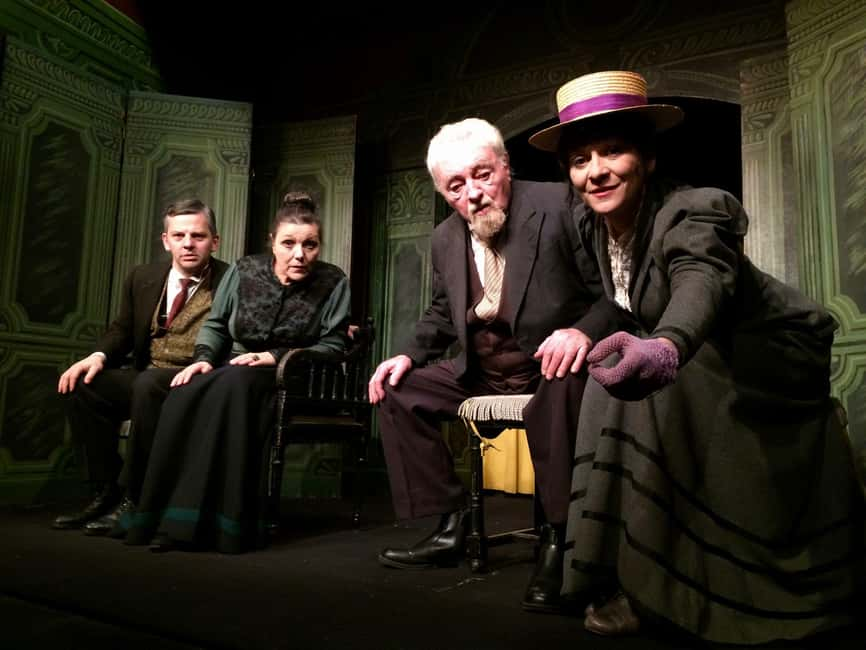
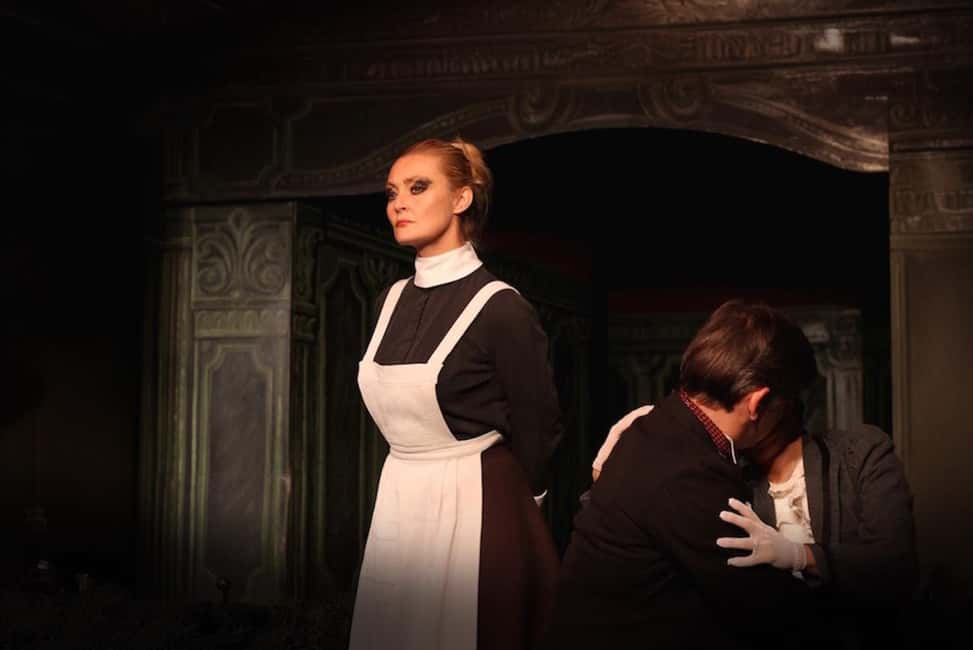
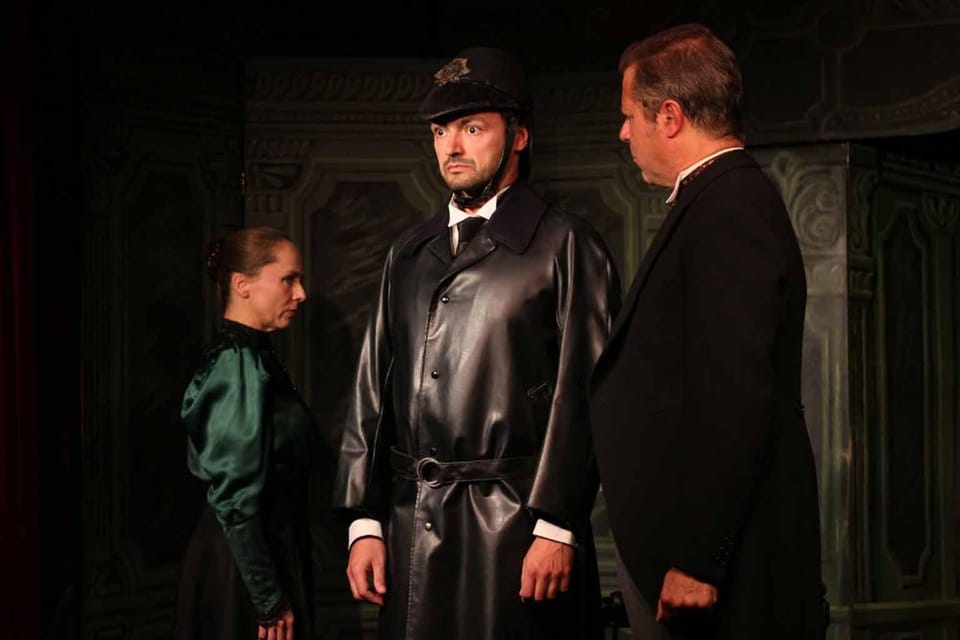
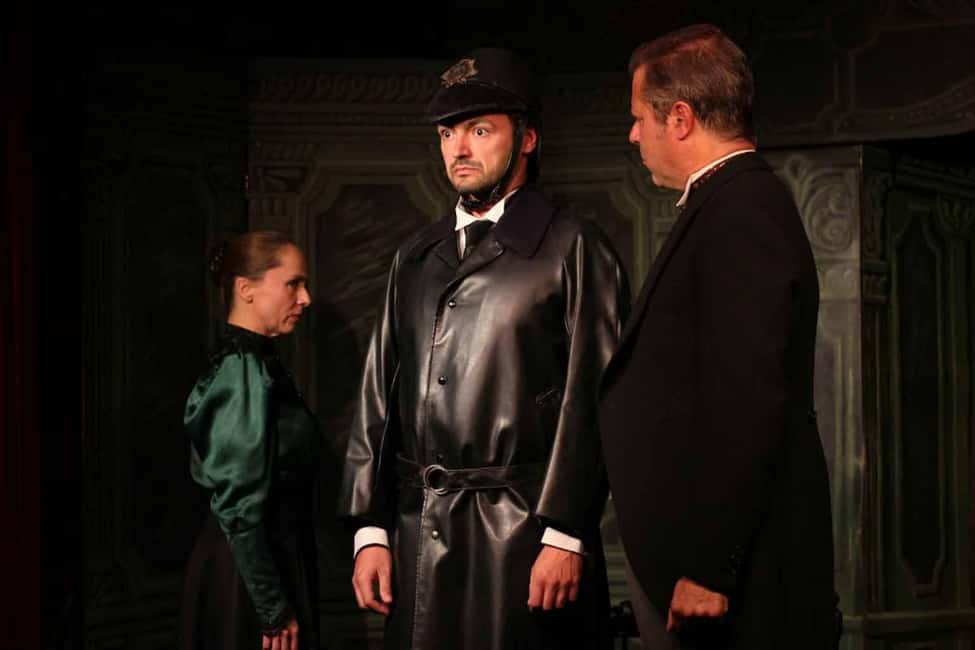
The first work, The Bald Soprano, examines 1950s society through the ridiculous exchanges of two couples. Mr. and Mrs. Smith begin with what sounds like a quiet evening at home, but the talk quickly becomes anything but normal.
A detective-maid announces the arrival of the Martins, a young couple who may or may not know one another. More knocks come at the door, and the question of who is outside becomes part of the play’s strange rhythm.
Ionesco takes the small rituals of polite society and pulls them apart. Conversations lose their sense. Familiar phrases become strange. People speak, but communication keeps slipping away. If you expect a tidy plot with clear explanations, this piece may test your patience. If you enjoy theater that pokes at social habits and makes you question what language is doing, it offers plenty to think about.
The English surtitles are especially useful here. The humor and odd turns depend on exact wording, and following the plot from gestures alone would leave you guessing. You will still need to look between the actors and the text above the stage, but the supplied seats are intended to make that reading comfortable.
The Lesson becomes a battle of changing roles
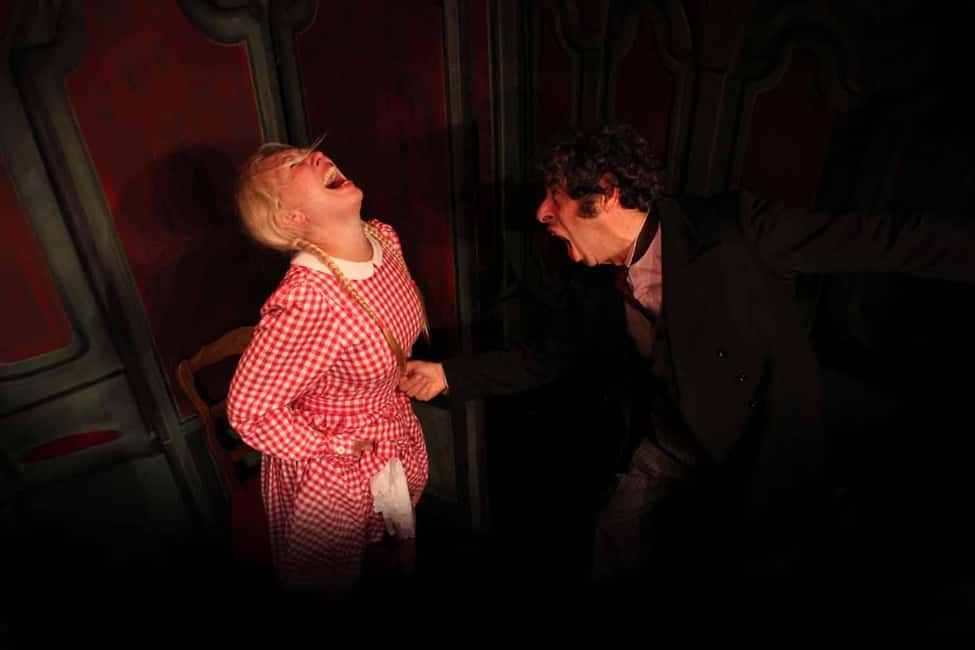
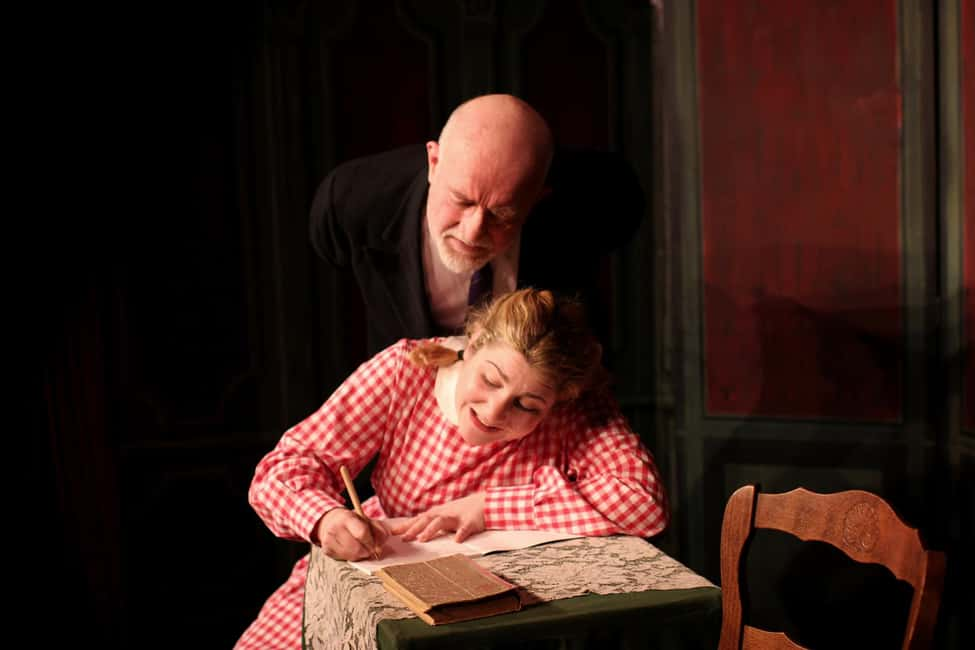
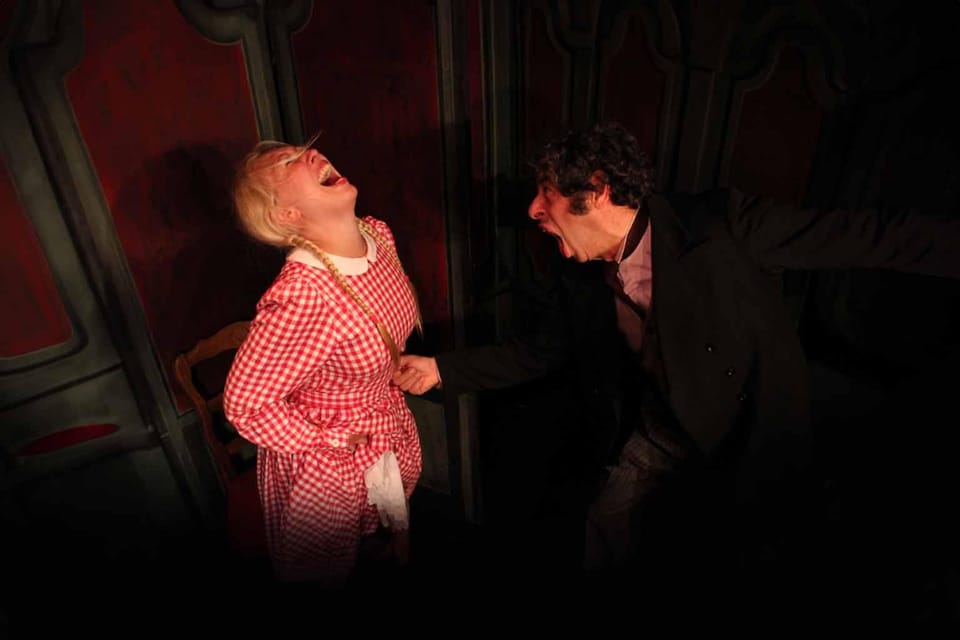
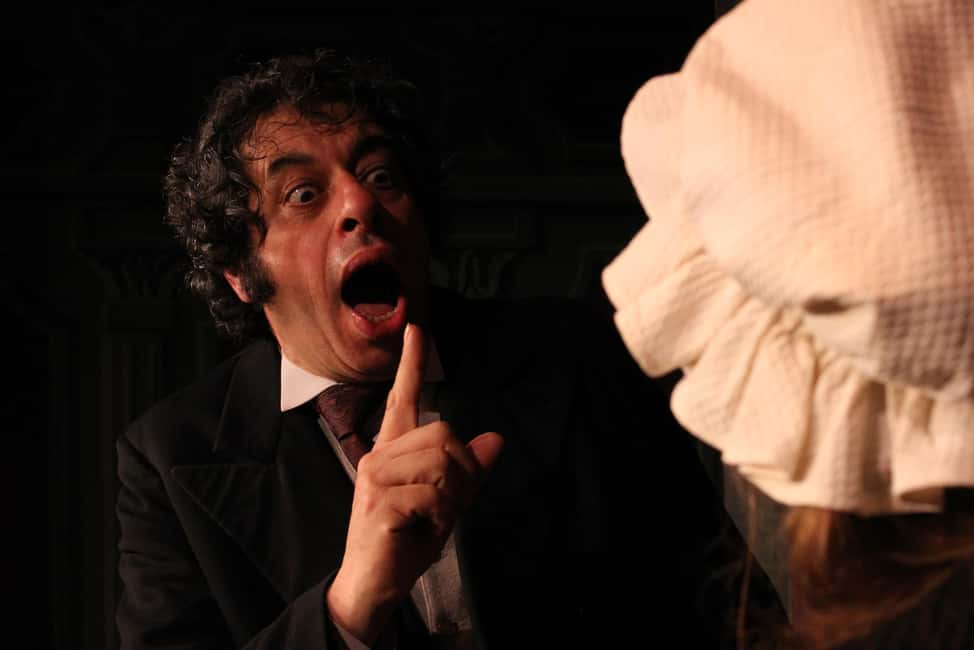
The Lesson starts with an apparently simple exchange between a shy older teacher and an outspoken student. The student arrives ready to learn, perhaps even ready to challenge the teacher. As the lesson grows harder, the balance between them changes.
The student begins to lose confidence while the teacher gains force and energy. What first seems like a harmless academic meeting becomes a tense face-off. The play asks who really controls a conversation, and how quickly a respectable setting can turn threatening.
This piece may feel sharper and more concentrated than The Bald Soprano. The setup is easier to follow, but the mood becomes increasingly uncomfortable as the lesson moves away from normal logic. You should not expect a conventional classroom comedy. Ionesco uses the teacher and student to explore authority, obedience, and the danger of letting language become a weapon.
Together, the two plays make a good pairing. The Bald Soprano attacks social chatter and the routines of domestic life. The Lesson focuses more tightly on power between two people. Both are absurd, but they reach that effect in different ways.
Why the Wednesday surtitles matter
The performance is in French, which is central to its identity. You hear the works in the language for which they were written and in the city where they have been performed for decades. But you do not need to speak French fluently if you book a showing with English surtitles.
On Wednesdays, English translations are projected above the stage in real time. The translations are prepared by bilingual theater specialists, and the package includes seats chosen for comfortable surtitles reading. The text gives you the basic meaning while the actors supply tone, movement, and timing.
This is a better arrangement than watching a French-language play with only a printed summary. Ionesco’s work depends on the exact flow of speech, so a full translation helps you catch the rising confusion and repeated ideas. You will still have to divide your attention between the stage and the text, especially during fast exchanges, but you will not be left to decode the entire show from body language.
English surtitles are also offered exceptionally every day from July 30 through August 17. Since that special schedule can change by date or season, check the available performance carefully before paying. If English access is important to you, Wednesday is the safest choice based on the information provided.
Getting to the theater from Saint-Michel
Théâtre de la Huchette is easy to reach from several public transport stops. Metro line 4 takes you to Saint-Michel, while line 10 serves Cluny-La Sorbonne. The RER B and RER C stop at Saint-Michel-Notre-Dame.
Several buses also serve Saint-Michel, including lines 21, 27, 38, 85, and 96. The meeting point is the theater itself, not a separate tour office or outdoor gathering place.
Arrive 15 minutes before the first performance. At the front desk, present your voucher, and the theater staff will direct you to your seats. That short arrival window is enough if you know where you are going, but do not cut it too close. A small venue and fixed theater seating leave less room for late arrivals than an open-air attraction.
The neighborhood is another reason this makes a pleasant evening plan. Saint-Michel places you in a central part of Paris, with plenty of nearby streets and cafés for a meal before or after the show. The experience itself does not include food, a walking tour, or a guide, so plan those separately.
Large bags and luggage are not allowed. If you are moving between hotels or arriving straight from a train, this is important. Carry only what you need for the performance.





Is $68 a fair price?
At about $68 per person, the package is not a bargain theater ticket in the narrowest sense. But the price covers two full plays, a short intermission, and seats selected with the English surtitles in mind. You are also paying for a long-running production in a specialist Paris venue, not just one short performance.
The value improves if you want an evening activity that feels distinctly French but cannot comfortably follow a play without help. A single English-language theater show may be easier to understand, but it would not give you the same connection to Paris’s French-language stage tradition.
The price is harder to justify if you mainly want a quick cultural stop between major sights. The two plays together can occupy one to two hours, and the experience asks you to pay attention. It is not background entertainment.
The lack of extras keeps the comparison simple. There is no meal, private guide, transport, or backstage visit included. The core purchase is the theater ticket, the double bill, and English access on eligible dates. For someone who values live performance and wants to see both Ionesco works in their established Paris home, that is a sensible use of an evening budget.
What the audience and performance feel like
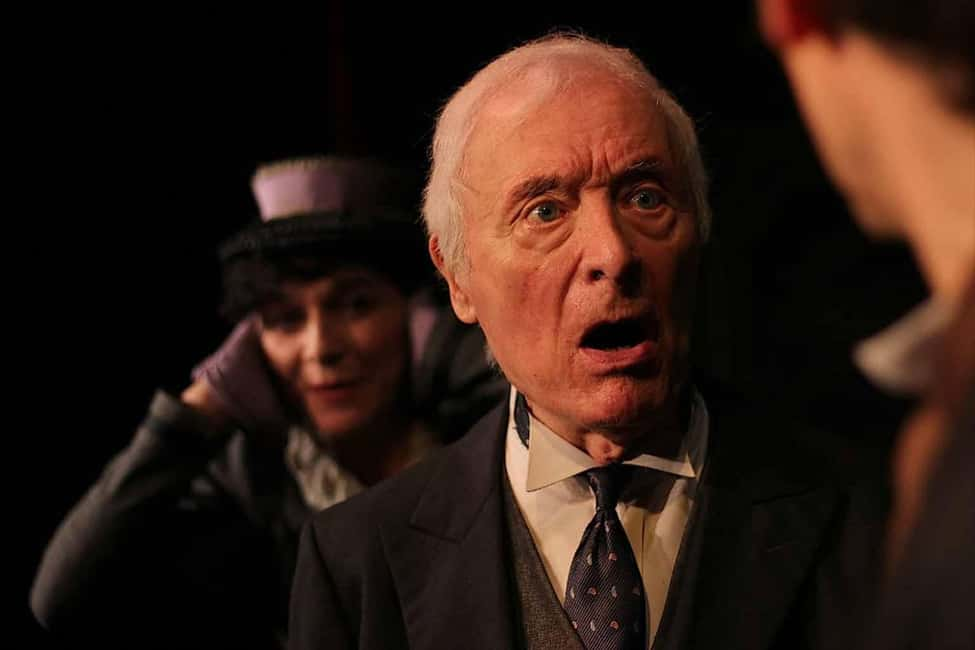
The audience can include both French speakers and international visitors. The surtitles make the performance more open to English speakers, while the French acting and dialogue preserve the original character of the plays.
The room may be very full. A packed performance can add energy, but it also means less personal space and a greater need to arrive on time. The theater’s compact scale puts you close to the action, though the same feature may feel tight if you prefer wide aisles or a spacious auditorium.
The acting is the central attraction. There are no sightseeing stops to distract you and no guide explaining each scene. You watch the actors build the unusual rhythm of Ionesco’s dialogue, then use the translation above the stage to keep track of the meaning.
The audience may also skew younger than you expect, with many teenagers present at some performances. That detail gives the evening a useful reminder: these plays are not only museum pieces for specialists. They continue to attract students and younger theatergoers, even though the works began as avant-garde pieces in the mid-20th century.
The Romanian connection
Eugène Ionesco was Romanian-born, and that fact can add another layer for Romanian visitors. The theater’s continuous presentation of works by a major Romanian-French playwright gives the performance special cultural meaning.
You do not need that personal connection to appreciate the plays. Still, if I were planning a Paris visit for someone from Romania, I would put this experience high on the list of possible evening events. It offers a direct link between Romanian literary identity, French theater, and the international reach of Ionesco’s work.
The show’s long run also gives you a rare sense of continuity. Paris has plenty of temporary productions, but this double feature has been part of the city’s theatrical routine for more than six decades. You are seeing a living performance tradition, not simply reading about one in a museum caption.
Who should book this theater package?
I would recommend it most strongly to you if you fit one or more of these descriptions:
- You want a French-language cultural experience with English help.
- You enjoy unusual, thought-provoking theater more than straightforward plots.
- You are staying near the Latin Quarter or Saint-Michel and want an evening activity without a long journey.
- You like the idea of seeing a production that has run continuously since 1957.
- You are visiting Paris with a teenager or student who may respond to short, strange, discussion-worthy plays.
- You are a fan of Ionesco or want an introduction to absurd theater.
I would be more cautious if you dislike surreal plots, need a fully relaxed evening, or want a performance with extensive English dialogue rather than surtitles. The translations help a great deal, but they do not turn the production into an English-language show.
The wheelchair accessibility is a useful practical point, though the supplied information does not give further details about seating or access arrangements. If you require a particular wheelchair space, contact the theater before booking so the staff can confirm the setup.
Booking tips for a smoother evening
Choose Wednesday if you want the clearest English access. If your dates fall between July 30 and August 17, English surtitles are exceptionally offered every day during that period, but you should still confirm the exact date and time when checking availability.
Arrive 15 minutes early with your voucher ready. The staff handles seating at the front desk, so you do not need to search for a guide or meeting group.
Keep your bag small. Large bags and luggage are not permitted, and the theater is not presented as a luggage-storage facility.
The activity offers free cancellation up to 24 hours before the performance for a full refund. You can also reserve now and pay later, which is useful if your Paris schedule is still shifting. These options do not change the show itself, but they reduce the risk of locking your evening too early.
FAQ
Are the performances in English or French?
The plays are performed in French. English translations appear above the stage during Wednesday performances, and exceptionally every day from July 30 through August 17.
Which plays are included?
Your ticket includes both The Lesson, or La leçon, and The Bald Soprano, or La cantatrice chauve.
How long does the theater experience last?
Each play lasts about one hour, with a brief intermission between them. Plan for roughly two hours in total.
When should I arrive?
Arrive at Théâtre de la Huchette 15 minutes before the first performance begins.
Where do I present my voucher?
Present your voucher at the theater’s front desk. Theater staff will guide you to your seats.
How do I reach Théâtre de la Huchette?
You can take Metro line 4 to Saint-Michel or line 10 to Cluny-La Sorbonne. The RER B and RER C stop at Saint-Michel-Notre-Dame. Bus lines 21, 27, 38, 85, and 96 also serve Saint-Michel.
Is the theater wheelchair accessible?
The activity is listed as wheelchair accessible. The provided details do not specify the exact seating arrangement, so contact the theater if you need a particular access setup.
Can I bring luggage or a large bag?
No. Luggage and large bags are not allowed.
Can I cancel or pay later?
You can cancel up to 24 hours in advance for a full refund. Reserve now and pay later is also available.
Should you book The Lesson and The Bald Soprano?
Book it if you want a compact, authentic Paris evening built around French theater, especially if you can attend on a Wednesday for English surtitles. The two plays give you more substance than a single short performance, and the theater’s continuous run since 1957 adds real weight to the occasion.
Skip it if absurd theater sounds frustrating or if you want a light show with a simple story. At $68, the value rests on your interest in Ionesco, live acting, and the experience of sitting in a long-running Paris theater. For the right audience, it is a smart way to spend two hours near Saint-Michel, with the language barrier reduced but the French character fully intact.