REVIEW · PARIS
Paris Seine River Sightseeing Cruise Tour
Book on Viator →Operated by Royal Smart Tourism · Bookable on Viator
Paris starts to make sense from the water.
If you want a quick, low-effort overview of Paris that still feels like sightseeing, this Seine river cruise is a smart move. You slide past the city’s biggest sights at an easy pace, with an audio guide in 14 languages (on board or on your phone), so you can learn as you go without trying to read every building at street level.
I especially like two things. First, you get a front-row view of the big landmarks from below, including the Pont Neuf sculptures you’d miss if you’re only walking. Second, the timing works for real schedules, with departures running from morning through late evening and perfect options for city lights.
One thing to consider: the biggest risk is not the boat. It’s the boarding process. Multiple reviews mention long lines and ticket/voucher issues, so you’ll want to be early, keep your ID handy, and double-check your QR code before you head to the pier.
In This Review
- Key things to know before you board
- Why this Seine cruise is the fastest Paris primer
- The meeting point: Eiffel Tower area, easy to reach
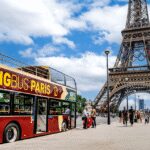
- Eiffel Tower views and the quick start advantage
- Orsay Museum frontage: why the left bank feels different
- Notre-Dame from the water: it’s bigger than your photos
- Oldest Paris architecture: noticing the details while you float
- Pont Neuf: lift your head and catch the sculptures
- The Louvre along the river: the long-building effect
- Audio guide reality: 14 languages, but ear comfort matters
- Timing: choosing day, sunset, or night departures
- Boarding lines and the “real world” of getting on the boat
- Crowds on the water: seats, standing, and visibility
- Weather and deck comfort: rain can change the whole feel
- Price and value: $20 for major landmarks
- Who this cruise suits best
- Should you book this Seine cruise?
- FAQ
- How long is the Paris Seine River Sightseeing Cruise?
- Where does the cruise depart from?
- Does the tour include hotel pickup or drop-off?
- Is there an audio guide, and what languages are available?
- Are there departures throughout the day?
- Do I need to print my ticket?
- Is outside food or luggage allowed?
- Is re-entry allowed once you’ve boarded or entered?
- What happens if weather is poor?
- Is this cruise refundable or changeable?
Key things to know before you board
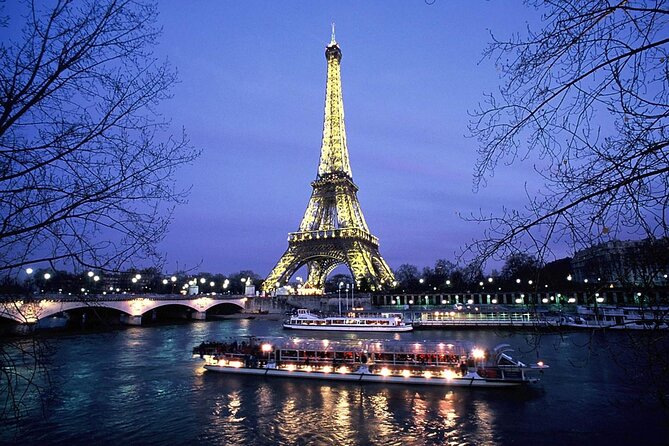
- Views that start at the Eiffel Tower without needing extra transit or tickets for each stop
- 14-language audio via onboard equipment or your smartphone
- You pass under Pont Neuf where the sculptures are the kind of detail you should look up for
- Iconic landmarks from below: Notre-Dame and the Louvre along the riverfront
- Crowds can be real on popular departures, especially around peak times and for groups
Why this Seine cruise is the fastest Paris primer
This cruise is the kind of activity that helps Paris click. From the water, the Seine turns into a long, moving “main street,” and suddenly the city’s layout feels logical.
It also fits modern travel life. You get about an hour to an hour and a bit on the water, you don’t have to switch neighborhoods or fight bus schedules, and you still see major sights along the same corridor. For a first-time visitor, that’s a win.
You can also read our reviews of more boat tours in Paris

The meeting point: Eiffel Tower area, easy to reach
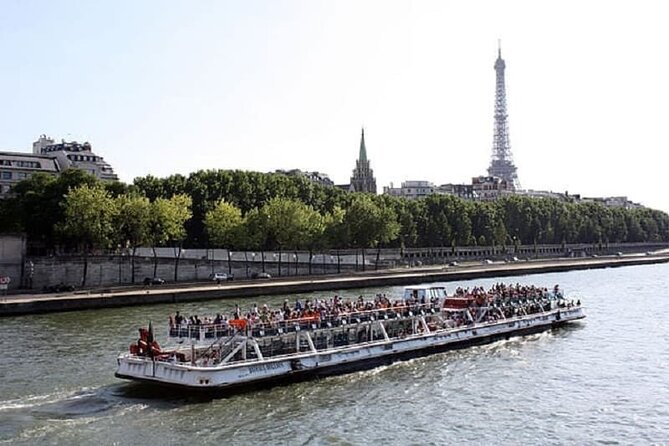
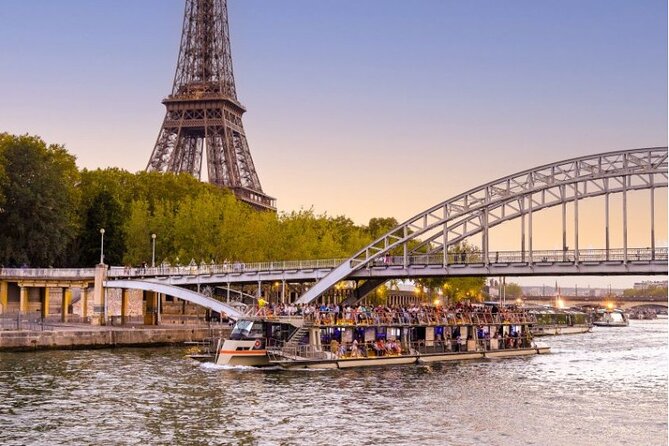
You start at Bateaux Parisiens, Port de la Bourdonnais, near the Eiffel Tower area. That matters because the location is central and tied to one of the city’s strongest visual anchors.
You’ll also want to plan for lines at the pier. Even though the ride itself is timed, the boarding experience can take longer than you expect. Build in extra buffer time, especially if you’re traveling with someone who doesn’t love long waits.
Practical note: you need your ticket for entry, plus a valid photo ID/passport. You’ll be showing ID at the entrance, and staff will ask for it.
Eiffel Tower views and the quick start advantage
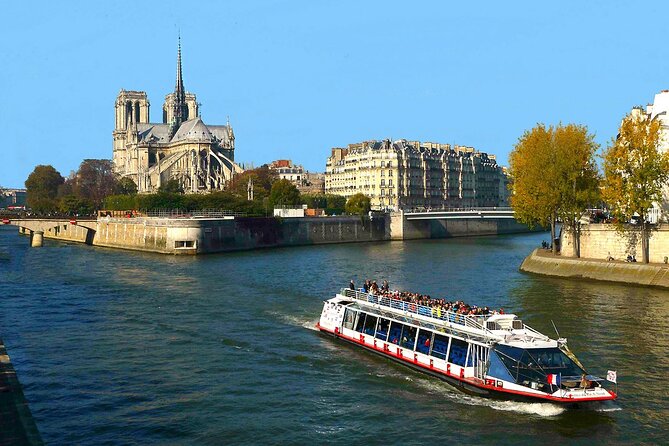
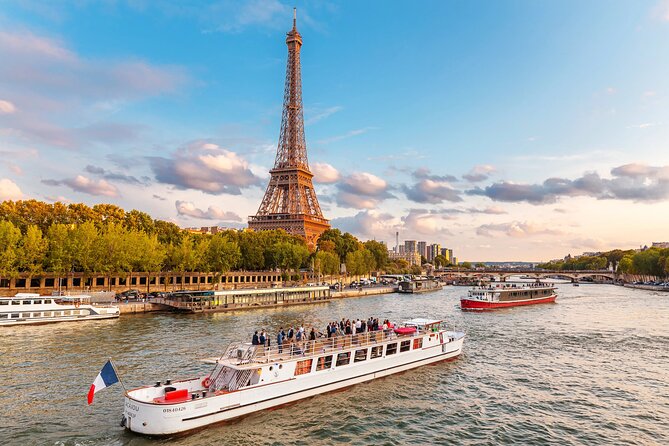
The cruise begins with a dramatic warm-up: you’re already looking at the Eiffel Tower area before the boat moves into the heart of the river sights.
This is a small thing that pays off. If you’ve just arrived in Paris, it helps you orient fast. If you’re ending your trip, it gives you a last look that feels satisfying and complete—without adding another walking day.
Orsay Museum frontage: why the left bank feels different
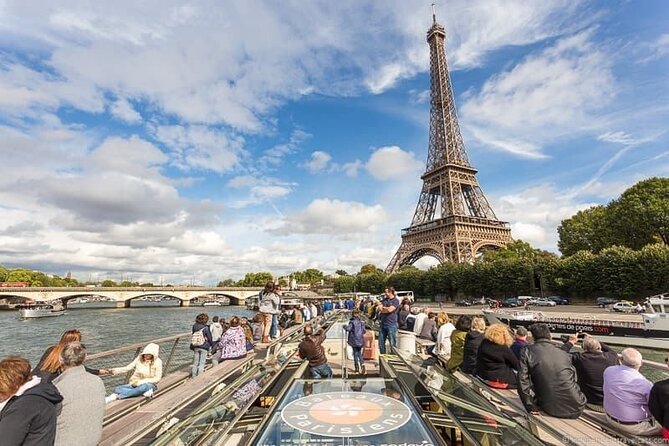
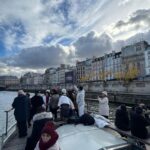
As you head along the river, you’ll pass the famous Orsay Museum building and the surrounding stretch. From the boat, the architecture reads in a new way: instead of climbing stairs and negotiating crowds on foot, you glide past with a consistent angle.
This part of the ride tends to be smooth and scenic, and it’s a good moment to get your audio working. Once the commentary is synced to your surroundings, it’s easier to connect what you hear with what you’re seeing.
If you’re the type who likes photos, this is one of the early “set your camera” zones. You’ll have enough time to settle in before the cruise moves into the denser landmark section.
Notre-Dame from the water: it’s bigger than your photos
Seeing Notre-Dame from the Seine hits differently. On a river cruise, you’re not only seeing the building—you’re seeing how it sits in the city’s geometry.
From the boat, you get multiple sight angles without needing to reposition. That’s useful because Notre-Dame views can be tricky on foot when streets are busy and viewing spots are limited.
I also like the way this segment makes your audio guide come alive. You can match the commentary to the exact stretch you’re passing, which turns a general description into something you can actually follow.
Oldest Paris architecture: noticing the details while you float
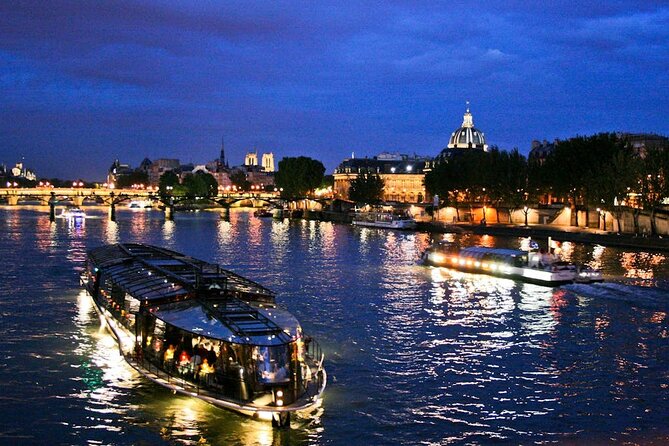
One stretch of the route highlights the charming architecture of Paris’s oldest areas. This is where the cruise helps even if you don’t know every neighborhood name.
From the water, older districts show texture: rooflines, building density, and the way the streets compress toward the river. It’s the kind of view that’s hard to recreate from one or two viewpoint stops.
If you want photos, keep expectations realistic. Some seats and some angles will be blocked by people standing. If you care most about views, try to choose your spot early once you’re seated.
Pont Neuf: lift your head and catch the sculptures
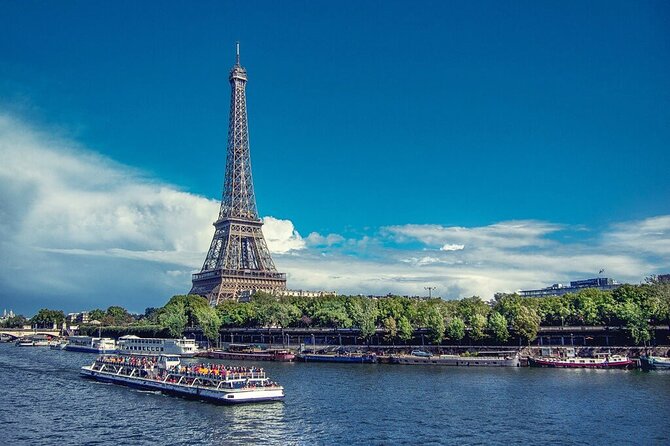
When you pass under Pont Neuf, pause the photo frenzy for a second. The key moment is the sculptures—detail that’s much easier to see from below and at the right timing than from across the river.
This is the kind of moment that pays off if you’ve been listening to the audio. Even if you don’t catch every word, the commentary helps you know when to look up.
Dress for this segment too. Even in decent weather, you can feel cooler on exposed parts of the boat, and under-bridge movement can create drafts.
The Louvre along the river: the long-building effect
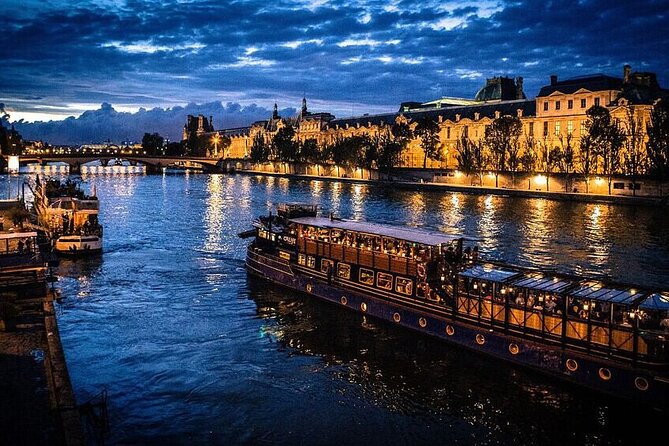
Later, you’ll see the Louvre along the riverfront, described as an ancient royal castle and also noted for its major length. From the Seine, that length becomes obvious. It’s not just one façade—it’s a long sweep of stone that feels monumental as it slides past.
This is a great moment for a mental connection. After this, the Louvre area on foot will make more sense, because you’ve already “mapped” its position relative to the river.
If you’re thinking about future museum time, this segment also helps you decide what kind of Louvre visit you might want. You’ll get the scale, so the next step feels less overwhelming.
Audio guide reality: 14 languages, but ear comfort matters
The cruise includes audio commentary in 14 languages, delivered either on board or via a smartphone audio guide. That’s excellent value, because you’re paying for the experience plus context.
That said, sound conditions matter. Some boats can get noisy, and hearing the audio can be harder if the boat is packed or if kids/groups are loud. If you’re hoping for perfect audio clarity, bring earbuds/headphones if the smartphone method is available and practical for you.
Also, don’t assume the audio will cover every tiny feature. Use it as a map, not a script. Listen for landmark cues, then look for the matching visual.
Timing: choosing day, sunset, or night departures
Departures run frequently, and the schedule changes by season:
- April to September: departures between 10 am and 10 pm, every 30 minutes
- October to March: departures between 10:30 am and 9 pm, every hour
If you want city lights, go later when possible. Multiple people specifically praise the evening feeling—especially when the Eiffel Tower lights up. Night and sunset can turn this from sightseeing into a mood.
Still, daytime has its own benefit: clearer visibility and less waiting-around stress if you’re scheduling other plans. If you have limited flexibility, pick the departure that keeps your overall day calm.
Boarding lines and the “real world” of getting on the boat
Here’s the honest part: the cruise can be great, but boarding can be chaotic. Several accounts describe long lines even when tickets were purchased for a specific time.
What to do with that info:
- Arrive at least 15 minutes early (and frankly, earlier is smarter on busy days).
- Keep your ticket ready on your phone or in the format they expect, and make sure it loads correctly.
- Bring your ID/passport so there’s no last-minute stall at the gate.
No re-entry is allowed once you’ve passed the entrance flow, so plan your bathroom breaks and meet-up details before you commit to the line.
If you’re someone who hates standing around, build extra time into your schedule. This is the best way to protect your day from a slow boarding moment.
Crowds on the water: seats, standing, and visibility
This cruise is sized for big groups, with a reported maximum of 400 travelers. That can be totally fine, but it does affect the quality of your view.
Some seats have good angles. Some have limited sightlines if people ahead of you stand and don’t move. If you care about photos or watching bridges, be proactive: choose a spot early and be ready to adjust once underway.
It can also get louder when school groups are on board. If you’re traveling with sensitive ears, consider bringing earplugs or using headphones for the audio.
Weather and deck comfort: rain can change the whole feel
This experience depends on weather. If it’s canceled due to poor weather, you’ll either be offered a different date or a full refund.
But even when the cruise runs, weather affects how much you can enjoy the outdoors. If it’s raining, you might find less incentive to head up top, and the ride can feel more enclosed. People also note it can get cold on the upper deck, particularly under bridges.
Bring layers. Think “cool wind” more than “just a little chill.”
Price and value: $20 for major landmarks
At about $20 per person, this cruise can be excellent value for what you see: Eiffel Tower area start, Orsay frontage, Notre-Dame views, Pont Neuf, the oldest districts, and the Louvre along the Seine.
Where value gets threatened is not the boat. It’s whether the experience flows smoothly for you. If you run into ticket/QR issues or waste time in lines, that $20 can feel expensive.
So my rule is simple:
- If you can arrive early and keep your ticket/ID ready, this is a very cost-effective overview.
- If your schedule is tight or you’re worried about waiting, you may prefer another option where entry is smoother.
Who this cruise suits best
This is best for you if:
- You want a clear overview without walking all day
- You like learning as you go, using an audio guide in multiple languages
- You want a relaxing, scenic activity that still hits the big sights
It might not be best if:
- You’re stressed by long lines and last-minute tech problems
- You need quiet, high-clarity audio with minimal crowd noise
- Your day has a hard stop with no flexibility for boarding delays
Should you book this Seine cruise?
I’d book it if your top goal is getting your bearings fast and seeing the headline attractions in one ride. The format is efficient, the audio adds real context, and later departures can feel extra magical when the city lights come on.
I’d hesitate if you’re arriving right before your departure time, if your phone app or QR code is unreliable, or if you’re traveling with someone who can’t handle long waits. In that case, spend a bit more for a smoother entry experience—or plan this cruise as a buffer activity with extra time.
If you do book, your best move is practical: show up early, keep your ID and ticket ready, and dress warm for the deck. That way, the cruise part stays the easy, scenic win it’s meant to be.
FAQ
How long is the Paris Seine River Sightseeing Cruise?
The cruise runs about 1 hour to 1 hour 20 minutes.
Where does the cruise depart from?
It departs from Bateaux Parisiens, Port de la Bourdonnais, 75007 Paris, France.
Does the tour include hotel pickup or drop-off?
No. Hotel pickup and drop-off are not included.
Is there an audio guide, and what languages are available?
Yes. Audio commentary is available in 14 languages, delivered via audio guides on board or through your smartphone.
Are there departures throughout the day?
Yes. Departures run between 10 am and 10 pm from April to September (every 30 minutes), and between 10:30 am and 9 pm from October to March (every hour).
Do I need to print my ticket?
No. E-tickets are sent by email by one day before the tour, and you can show them from your smartphone.
Is outside food or luggage allowed?
No. Outside food or beverages and luggage are not allowed.
Is re-entry allowed once you’ve boarded or entered?
No. Re-entry is not allowed.
What happens if weather is poor?
The experience requires good weather. If canceled due to poor weather, you’ll be offered a different date or a full refund.
Is this cruise refundable or changeable?
This experience is non-refundable and cannot be changed for any reason.