REVIEW · PARIS
Paris: Pastries & Tragedies – A sweet tour of Montmartre
Book on Viator →Operated by Bon Appétit walks · Bookable on Viator
Sweet pastries meet Montmartre’s darker stories. This Montmartre tour pairs French bakery stops with real, human-scale tales tied to the neighborhood’s artists, politics, and personal drama. You get a walking route through the cobblestone lanes where the history sticks because you’re also eating along the way.
What I love most is the balance: you’re not stuffed with trivia, and you’re not just hopping from dessert to dessert. I also like that the guide, Loïk, leans into story-driven history and brings you to specific spots tied to Montmartre’s legends, including the can-can origin and Toulouse-Lautrec’s fascination with the area.
One thing to plan for: the route is up-hill and on cobblestones. If you’re short on walking stamina, take that seriously—comfortable shoes help, and you may want to consider a calmer day if steep climbs are tough for you.
In This Review
- Quick hits before you go
- Why Pastries & Tragedies feels like Montmartre’s real rhythm
- Price and value: what $83.45 buys in practical terms
- Where you start at Place Blanche and why the finish matters
- Stop-by-stop: what happens in Montmartre’s story-driven walking loop
- Getting oriented with Montmartre’s “tragedies” layer
- Can-can origins and Toulouse-Lautrec’s Montmartre obsession
- The artist studio moment that turns curiosity into clarity
- Windmills you can still find in Montmartre
- Sacré-Cœur finale: construction stories and self-washing-stone lore
- The food part: what tastings feel like on this route
- What you’ll learn that actually helps you wander after
- Practical considerations before you book
- Should you book Pastries & Tragedies in Montmartre?
- FAQ
- How long is the Pastries & Tragedies Montmartre tour?
- Where does the tour start and end?
- How much does the tour cost?
- What’s included in the tour price?
- Are bottled water bottles included?
- How many treats will I get?
- Is the tour offered in English?
- What’s the maximum group size?
- Is the tour good for people who don’t want a very active day?
- Is tipping included?
- Is free cancellation available?
Quick hits before you go
- 6+ treats included as part of the tour price, so you’re paying for food as well as the walk
- Loïk’s storytelling makes Montmartre’s tragedies and art world feel personal, not textbook
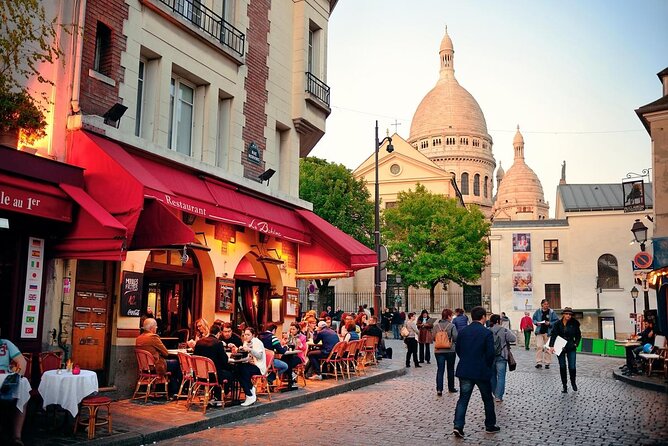
- Montmartre highlights on foot: artist studio views, old windmills, and the streets around Sacré-Cœur
- Tragic + sweet is the point: dessert keeps the mood lighter while the stories get darker
- Small group size (up to 10) means more time for questions and smoother stops
- Ends at Sacré-Cœur where the guide explains why the basilica looks the way it does
Why Pastries & Tragedies feels like Montmartre’s real rhythm
Montmartre has two speeds. One is the postcard speed: artists, viewpoints, charming streets, and that famous hill. The other is the human speed—hard choices, personal heartbreak, and reinvention. This tour threads those together so you experience the neighborhood as more than scenery.
Instead of treating sweets like a separate “bonus,” the tastings are timed to the story beats. That matters. When you hear why people hung around certain corners of Montmartre—who chased fame, who got burned, who survived change—it makes the neighborhood’s personality feel earned. And when you’re eating pastries, the walking time feels shorter and the mood stays friendly even when the details get heavy.
The tour is also built for variety. You’ll be moving through iconic areas and smaller corners, then stopping often enough to snack your way through the climb. At 2 hours, it’s a manageable chunk of time for your first or second visit to Montmartre, when you’re still figuring out where everything fits.
A few more Paris tours and experiences worth a look



Price and value: what $83.45 buys in practical terms
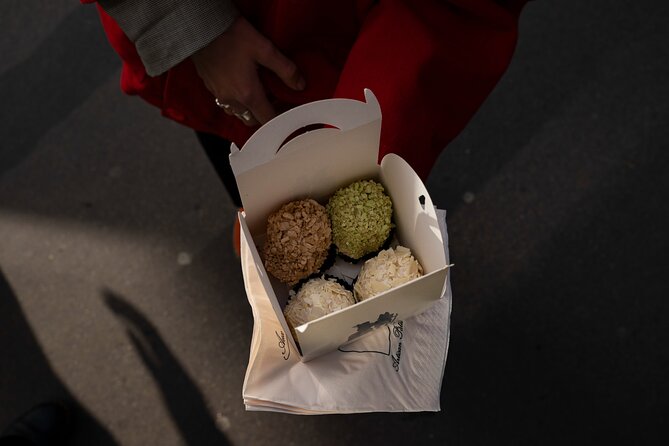
At about $83.45 per person, you’re not just paying for a guide and a walk. You’re paying for at least 6 different treats with food included in the price, plus the guided storytelling that connects each stop to Montmartre’s cultural pull.
If you like Montmartre (or even if you just like good pastry), it can be a strong value. Without a tour, you’ll still likely spend money on multiple snacks and drinks while wandering. Here, the tour structures that spending: tastings are part of the plan, and the guide helps you pick places with real character instead of only the easiest tourist counters.
Also, small touches like a mobile ticket and a group cap of 10 help it stay efficient. Less fuss means more time eating and walking in the right order.
Where you start at Place Blanche and why the finish matters
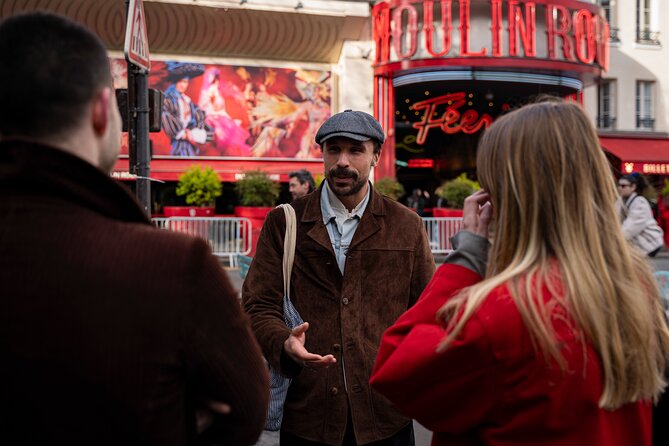
The tour starts at 5 Pl. Blanche (75009) and ends near Basilique du Sacré-Cœur de Montmartre, 35 Rue du Chevalier de la Barre (75018). That end point is not random. Sacré-Cœur is the natural “exhale” after a neighborhood climb, and it also gives the guide a perfect place to connect past to present.
By the time you reach the basilica, you’ll have the right context. Earlier stops explain how Montmartre became a magnet for artists and nightlife, and how those communities shaped the streets you’re walking now. Then the finale lets you see Sacré-Cœur as more than a big white church. You hear how the construction project unfolded, including the claim that the stones used have the capacity to automatically wash themselves, and that it was the biggest crowdfunded project of the 19th century.
Even if you don’t go inside for long, the area around Sacré-Cœur helps you orient yourself for the rest of your day in Montmartre.
Stop-by-stop: what happens in Montmartre’s story-driven walking loop
Getting oriented with Montmartre’s “tragedies” layer
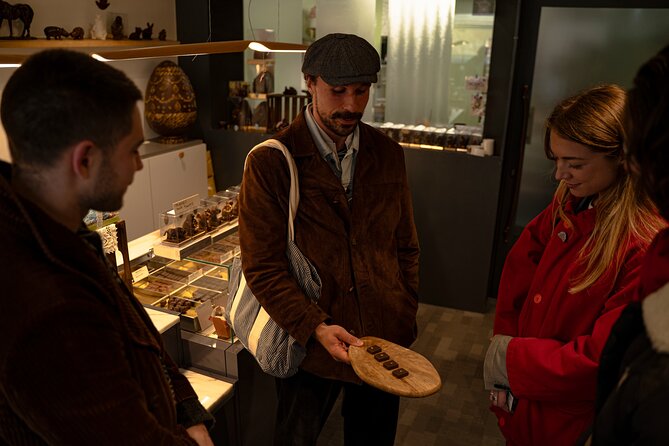
Your first major stop is all about setting the tone. Montmartre’s story here is described as fraught with tragedy, from war and political upheaval down to personal heartbreak. The guide takes you through cobblestone lanes and hidden corners, then explains what makes the place famous.
Why this works: starting with the darker thread helps the later art references land better. Instead of treating Montmartre as a theme park of artists, you get the sense that people made their work under pressure, with real risks and real change around them.
It’s also a smart way to keep history from feeling too heavy. You hear it, you walk it, and you keep moving into tastings. The story stays vivid, but your energy stays up because the pace includes breaks for treats.






Can-can origins and Toulouse-Lautrec’s Montmartre obsession
At a key point along the route, you stop in front of an iconic spot and get a few of Montmartre’s best-known stories. The tour mentions that the French can-can was invented right here, and it ties that creative energy to the red-light district and the women who drew attention in Montmartre.
You also hear how Toulouse-Lautrec was obsessed with that nightlife world and its beauties. That’s the kind of link that’s useful for your own wandering later: once you know which parts of Montmartre are connected to nightlife and performance, you start noticing details you would otherwise miss.
One practical note: Montmartre is full of small streets and side scenes. Stopping and starting gives you time to look up and around without getting lost in the fun.
The artist studio moment that turns curiosity into clarity
Another stop focuses on an artist studio that’s described as iconic for Montmartre. This part is less about one famous painting and more about helping you understand why artists clustered here in the first place—space, community, cheapness compared to other areas at certain times, and the neighborhood’s creative atmosphere.
This is also where the tour’s format shines: you’re not just standing and listening. You’re walking Montmartre like a person who cares about where things happened, not just where famous photos happen. Then you get a treat that keeps you grounded.
If you like art history but don’t want a museum pacing style, this stop is a good middle ground.
Windmills you can still find in Montmartre
Yes, the tour brings up windmills. You’re guided to learn that you can still find real windmills in Montmartre, even with how built-up the neighborhood feels today.
This is a small detail, but it’s a great one for Montmartre beginners. It reminds you the area wasn’t always all art cafés and souvenir streets. If you’re used to thinking of Paris as only grand avenues, a windmill reference is the kind of reality check that makes the whole neighborhood feel layered.
Sacré-Cœur finale: construction stories and self-washing-stone lore
The walking loop ends right at Sacré-Cœur, and the guide explains the story of its construction. You also get those signature claims: stones that can automatically wash themselves, and the project as the biggest crowdfunded effort of the 19th century.
This finale is valuable because it gives you a reason to look at the building carefully instead of snapping one photo and moving on. When you understand a project’s backstory, even architecture becomes a kind of narrative.
If you want an extra payoff, plan to linger after the tour in the Sacré-Cœur area for views. The tour ends there for a reason: it’s a natural landing spot.
The food part: what tastings feel like on this route

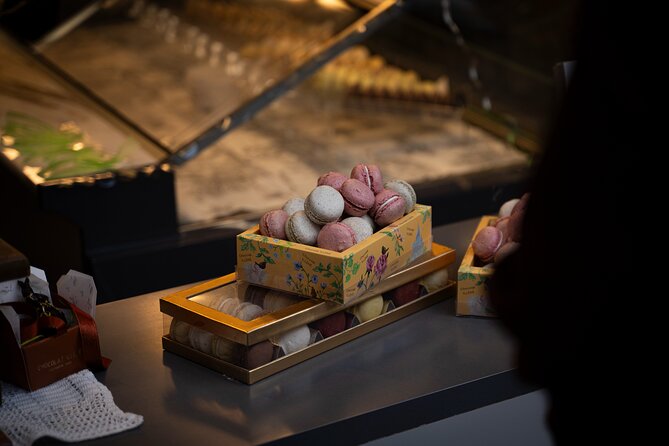
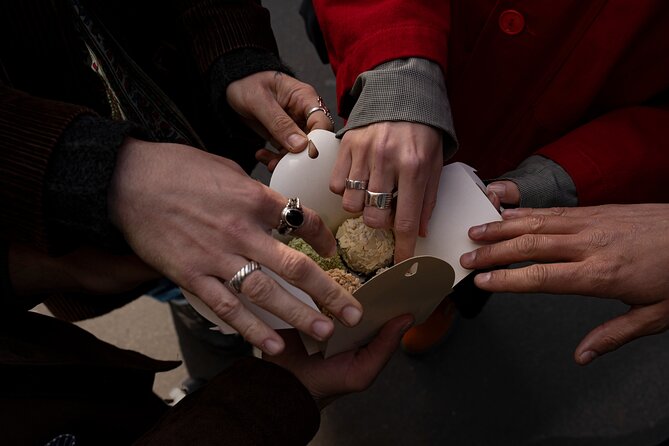
This tour includes at least 6 different treats, and food is included in the price. Based on the guide’s reputation in the stories shared during the tour, the tastings lean toward famous French pastry styles, with standouts like macarons and chocolate referenced in the experience.
You should expect a slow-to-moderate rhythm where tasting pauses break up the climb. That matters because Montmartre’s best streets aren’t on flat ground. If you’ve ever tried to “just walk around” Montmartre hungry, you know how quickly that turns into random eating. This keeps it purposeful.
Also, there’s no bottled water provided anymore to cut waste. You’re tasting for a reason, but you’ll still want to plan how you’ll stay hydrated. If you’re doing this in warm weather, carry a small reusable bottle before you meet.
What you’ll learn that actually helps you wander after
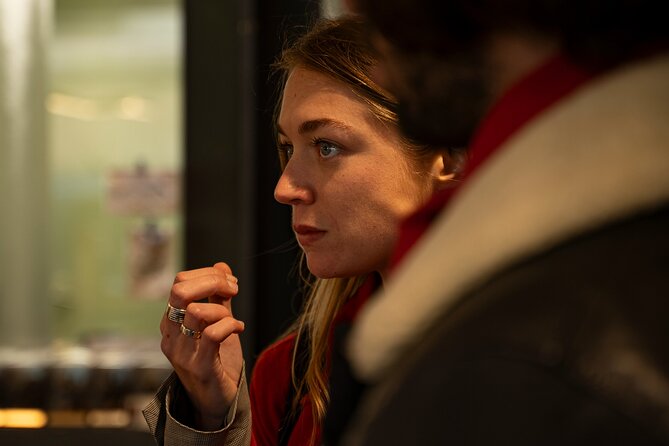
One of the best outcomes is that the tour helps you connect Montmartre’s art and nightlife to real streets. You’ll hear the can-can origin and Toulouse-Lautrec’s focus on the district. Then you walk through the neighborhood with that lens.
That means your self-guided time later feels sharper. You’ll recognize why certain places look the way they do. You’ll also understand why Sacré-Cœur is such an emotional finish to the day—because the tour gives you the human context first.
Another helpful skill: you get a sense of what to pay attention to in Montmartre. Instead of hunting for the biggest viewpoint, you start noticing the places where stories, performances, and creative lives overlapped.
Practical considerations before you book
A couple things can make or break your experience.
First: walking up a steep hill on cobblestones. Multiple people point out that this is not a flat stroll. If you’re traveling with kids, comfy sneakers and a patient pace make a difference. If you’re in your 80s or dealing with mobility limits, this can be strenuous.
Second: bring a warm layer if you’re visiting in cooler months. One tip from the experience is to bring a cup of your preferred warm drink to balance the cold and keep the sweetness from being too heavy.
Third: plan your timing around your energy level. The tour is about 2 hours, but it takes you from Place Blanche area into the Sacré-Cœur zone. You’ll feel like you’ve covered ground, so leave the rest of your afternoon flexible.
Should you book Pastries & Tragedies in Montmartre?
Book it if you want:
- A small-group Montmartre walk (up to 10) with frequent tasting breaks
- A guide like Loïk who tells stories that make the streets feel real
- A mix of art-world and neighborhood history with a “keep it moving” pace
Consider skipping or choosing another style of tour if:
- You have limited walking stamina. The uphill cobblestones are a real factor.
- You only want bright, light sightseeing and don’t want tragic themes woven in. The sweet part is there, but the stories are part of the deal.
If you’re on your first or second visit to Montmartre and want a high-payoff way to connect food with place, this one is easy to recommend. It gives you something to chew on—then something to think about—then a view to end on.
FAQ
How long is the Pastries & Tragedies Montmartre tour?
The tour lasts about 2 hours.
Where does the tour start and end?
It starts at 5 Pl. Blanche, 75009 Paris, France and ends at Basilique du Sacré-Cœur de Montmartre, 35 Rue du Chevalier de la Barre, 75018 Paris, France.
How much does the tour cost?
The price is $83.45 per person.
What’s included in the tour price?
The tour includes an expert guide, a minimum of 6 different treats, and admission ticket for the stops mentioned in the experience.
Are bottled water bottles included?
No. Bottled water is not provided to avoid unnecessary waste.
How many treats will I get?
You’ll enjoy a minimum of 6 different treats along the way, with all food included in the price.
Is the tour offered in English?
Yes, the tour is offered in English.
What’s the maximum group size?
The tour has a maximum of 10 travelers.
Is the tour good for people who don’t want a very active day?
Most travelers can participate, but Montmartre is hilly and the route uses cobblestones, so comfortable shoes and a realistic expectation about uphill walking help.
Is tipping included?
Tipping for the guide is not included.
Is free cancellation available?
Yes. You can cancel up to 24 hours in advance for a full refund. If you cancel less than 24 hours before the start time, the amount you paid will not be refunded.