REVIEW · FRANCE
Paris: Panthéon Private guided tour with entrance ticket
Book on GetYourGuide →Operated by TOUR FRANCE EXPERIENCE · Bookable on GetYourGuide
The Panthéon is more than a grand church-like monument. It is a French mausoleum where figures such as Voltaire and Marie Curie are honored, and a private tour gives you time to connect the building’s vast spaces with the people remembered below. I especially like the private format and the included access to both the nave and crypt.
I also like the priority entrance and the chance to ask questions as you go, rather than follow a fixed crowd. The main caution is the price: at $264 per person, this makes sense mainly if you value one-on-one attention. A serious meeting-point mix-up also occurred for one booking, so confirm your guide and contact details before setting out.
In This Review
- Key points to know before you book
- Why the Panthéon deserves two focused hours
- Starting at Place du Panthéon
- Entering the neoclassical façade
- The nave and its monumental sculptures
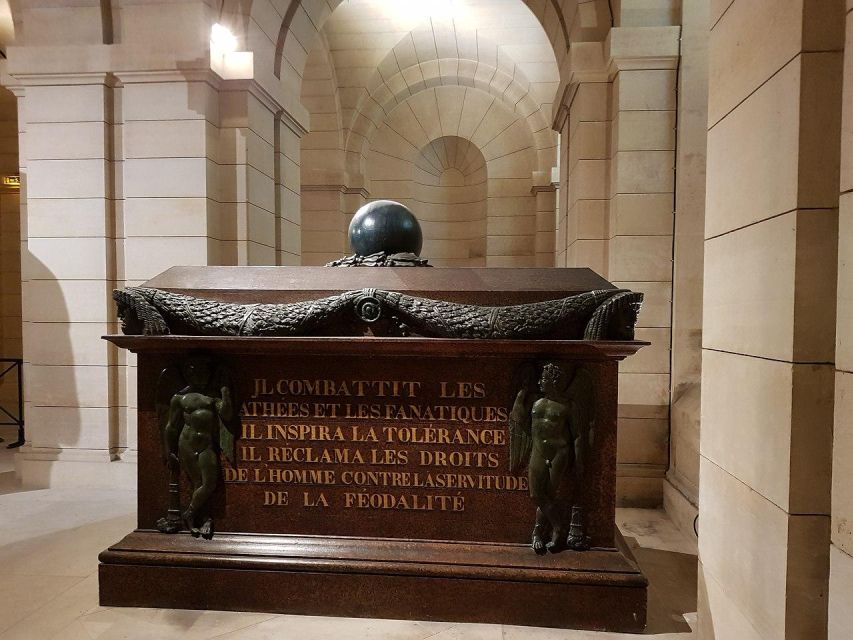
- The crypt and the people remembered below
- What the private guide adds
- What the $264 price means
- Who will get the most from this visit
- Languages, timing, and simple preparation
- How the two hours should feel
- Should you book the Panthéon private tour?
- FAQ
- Where does the Panthéon private tour begin?
- How long does the tour last?
- What parts of the Panthéon does the ticket include?
- Is transportation included?
- Which languages are available for the live guide?
- Is the tour suitable for people with mobility impairments?
Key points to know before you book
- The Panthéon is both monument and mausoleum: You see grand architecture above ground and the burial place of notable French figures below.
- You get a private two-hour visit: The guide can shape the pace and explain details that are easy to miss on a self-guided walk.
- Voltaire and Marie Curie are part of the story: Their presence gives the crypt a strong human focus.
- The ticket covers the nave and crypt: The panorama is not included, so do not expect rooftop views from this booking.
- The crypt includes 41 stairs: This is not a good fit if stairs or walking are difficult.
- Bring a warm layer: The stone monument stays cool throughout the year.
Why the Panthéon deserves two focused hours
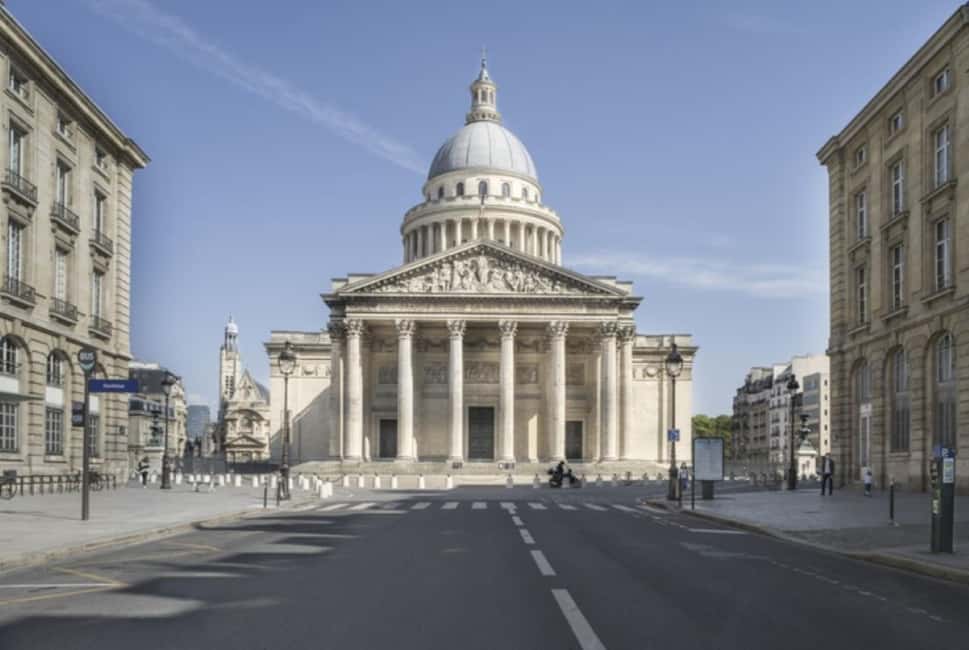
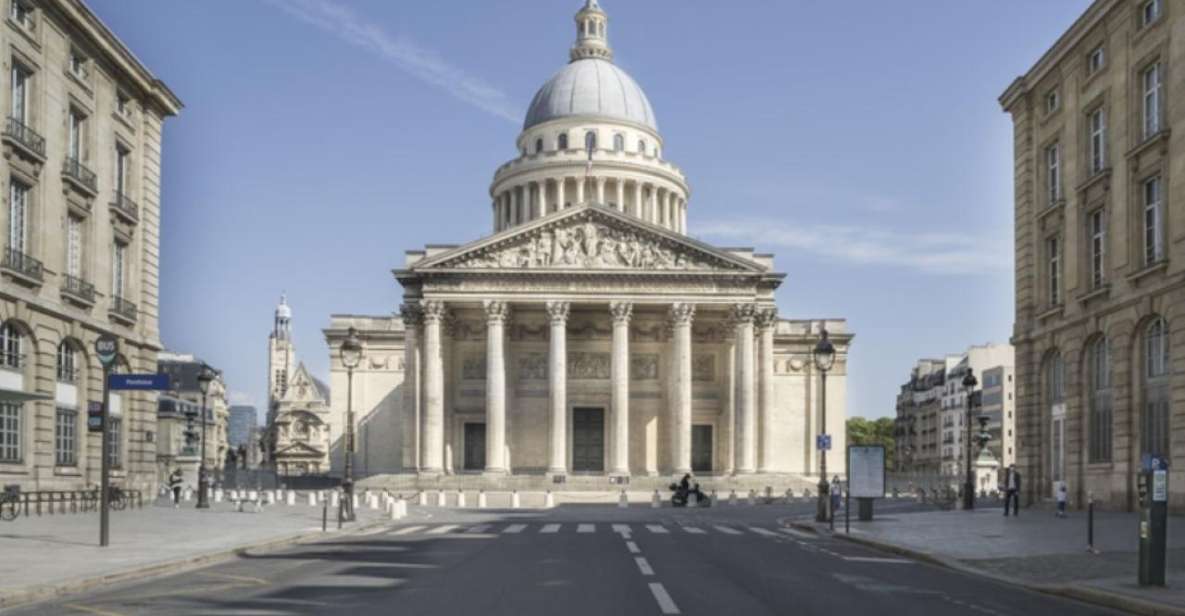
The Panthéon sits on Place du Panthéon, in the heart of the Latin Quarter. Your visit begins outside, where the neoclassical façade gives you the first clue that this is a building meant to project national importance.
A private guide can explain the façade before you enter, helping you look beyond its size. The columns, formal lines, and monumental entrance are not just decoration. They set the tone for a building that links architecture, public memory, and French culture.
You will not simply be passing through a church interior on the way to the crypt. The Panthéon has a ceremonial feel, and the two-hour format gives your guide enough time to connect the architecture with its later role as a mausoleum.
That extra time matters. On a quick visit, you may notice the scale but miss why the building feels different from an ordinary historic church. Here, the purpose is partly to honor the people buried within its walls.
A few more France tours and experiences worth a look


Starting at Place du Panthéon
The meeting point is Place du Panthéon, and your guide is supposed to hold a sign with your name. This is straightforward in theory, but I would arrive with your booking details easy to reach on your phone.
The square is a sensible place to meet because it puts you directly beside the monument. You do not need to arrange transportation as part of the experience, and the tour returns to the same area when it ends.
There was one serious communication failure in the feedback for this activity. A guide did not appear at the planned meeting point, and the guest eventually had to call before another guide took over. That problem appears to be an exception among otherwise positive comments, but it is worth taking practical steps: check the meeting instructions, watch for the signboard, and keep the provider’s contact information available.
Once you meet the guide, the private arrangement should feel much less rushed than a large group visit. You can ask about the building’s purpose, the figures buried here, or anything that catches your eye on the way inside.
Entering the neoclassical façade
The exterior is your first major stop, not just a backdrop for a photograph. The guide uses the façade to explain how the Panthéon presents itself to Paris and to France.
The neoclassical design gives the monument a formal, almost civic character. You can expect attention to the building’s creation and its visual language before the tour moves indoors. This opening is useful because it gives you a frame for everything that follows.
I like this part of the tour because it slows down the arrival. Many sightseeing stops begin at the ticket barrier and rush straight inside. Here, the exterior helps establish why the Panthéon feels important before you see the crypt or the tombs.
The tradeoff is that the information available is broad rather than highly specific in the tour description. Your experience will depend in part on the guide’s approach. The strongest feedback points to guides who make the site feel alive, while the named guide Bertrand was praised for helping a group learn a great deal about the Panthéon’s past.
The nave and its monumental sculptures
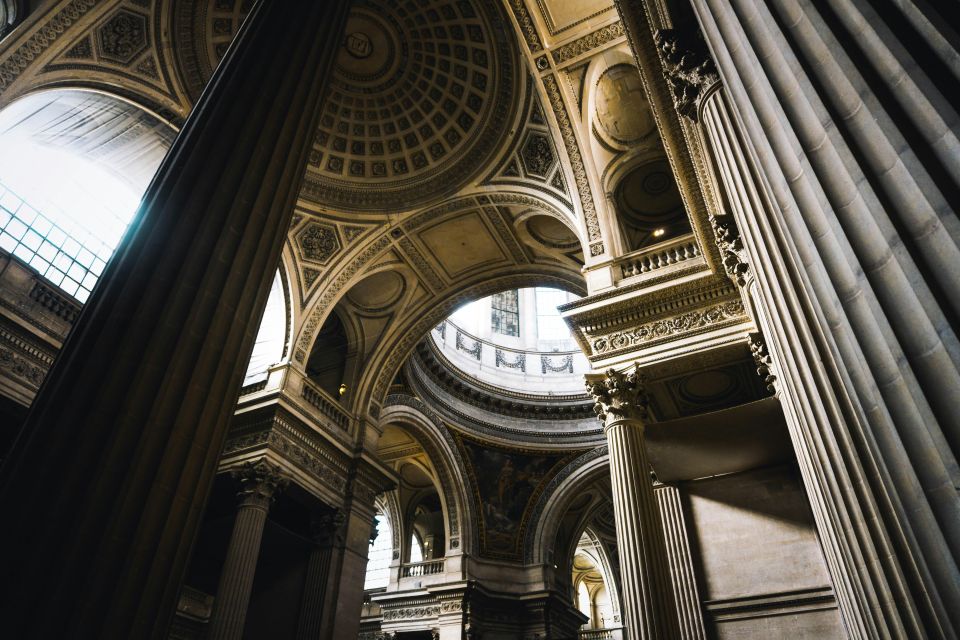
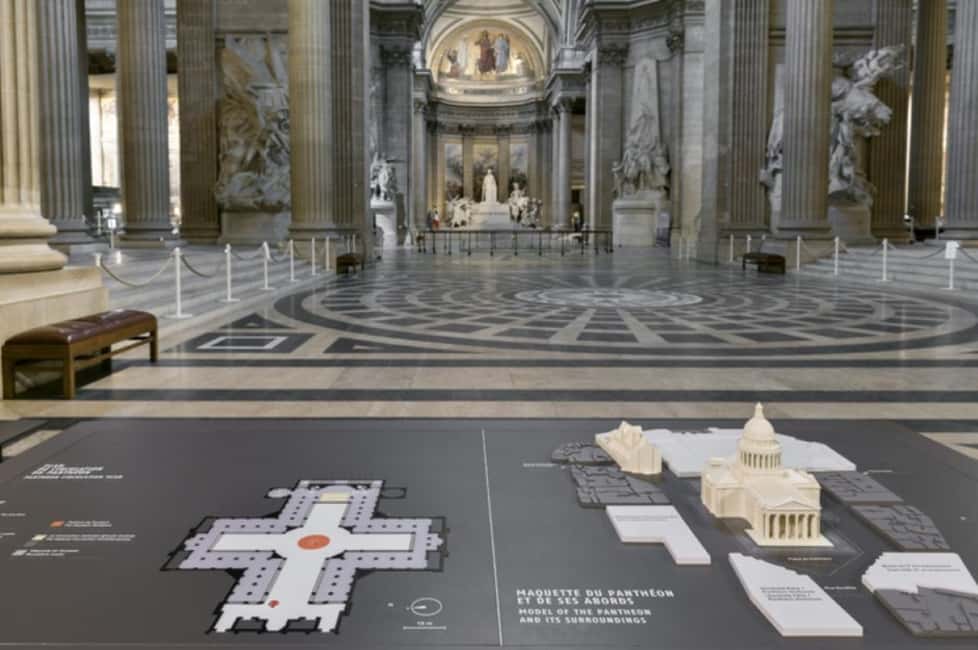
Inside, the nave is the visual heart of the visit. Its scale and monumental sculptures give the tour a more dramatic rhythm after the formal exterior.
Your guide will point out the major features and explain how the interior fits the Panthéon’s role. The sculptures are not small decorative pieces to glance at while walking. They are part of the building’s public message, and their size helps explain why the monument can feel solemn even when other parts of Paris are lively outside.
The private setting is especially useful here. In a large group, you might hear a short explanation and then move on. With your own guide, you can pause to ask why a sculpture matters, how the space functions, or how the building’s purpose affects what you are seeing.
I would not book this tour expecting an art-history lecture at a specialist level. The supplied details promise architectural and historical interpretation, not a narrow academic study. For most visitors, that balance is likely a strength: enough context to make the nave meaningful without turning a two-hour visit into a classroom.
The crypt and the people remembered below
The crypt changes the mood of the tour. Upstairs, the Panthéon presents grandeur through open space and sculpture. Below, the focus becomes personal, with the tombs and memorials of notable figures.
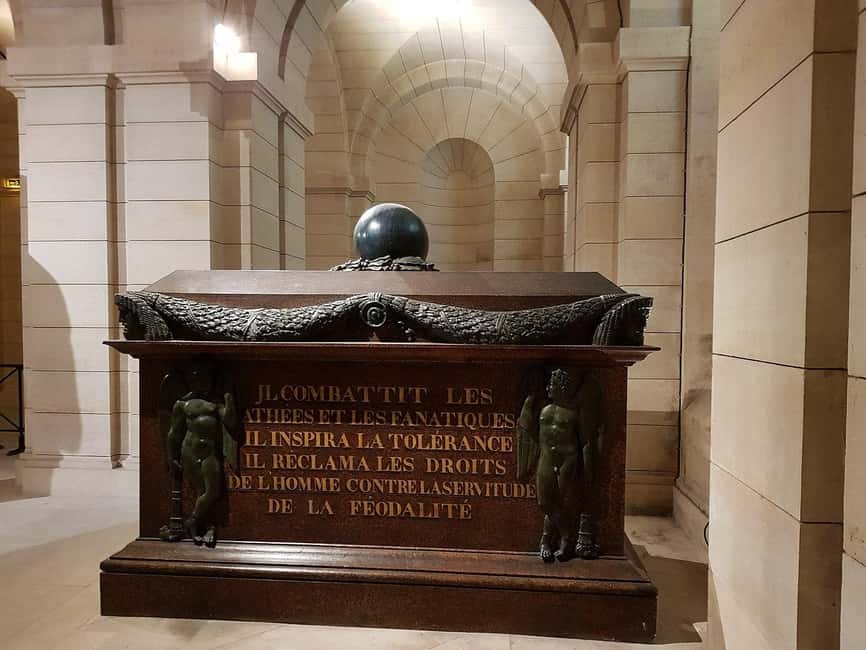
Voltaire and Marie Curie are two of the best-known names connected with the visit. Their presence gives the guide a clear way to discuss the people France has chosen to honor and the Panthéon’s role as a national mausoleum.
This is where a guide can add real value. A list of names on a wall is easy to forget. A good explanation can connect those names to the broader meaning of the monument, its place in French culture, and the difference between seeing a burial site and understanding why it is here.
You should allow for 41 stairs in the crypt. That detail is easy to overlook when planning a busy Paris day, but it matters if you have mobility limits, knee trouble, or simply dislike stair-heavy attractions. The activity is specifically not suitable for people with mobility impairments.
The crypt is also cool all year because of the stone used in the monument. Bring a warm layer even if Paris is mild outside. This is a small packing tip, but it can make the second half of the visit much more comfortable.
You can also read our reviews of more guided tours in France




What the private guide adds
A private guide is the main reason to consider this experience instead of buying a ticket and walking through on your own. You receive a live explanation in the language you select, with options including English, French, Spanish, Italian, German, Portuguese, Russian, Chinese, and Japanese.
The guide can adjust the narrative to your interests. You may want more about the neoclassical design, more about the mausoleum, or more about figures such as Voltaire and Marie Curie. The supplied feedback gives particular weight to guides who bring the site to life, and Bertrand is named as someone who made the history especially interesting.
That personal contact can also help with orientation. The Panthéon has large, imposing spaces, and a guide can direct your attention instead of leaving you to guess which details matter. You are paying for interpretation as much as admission.
Still, the private format does not guarantee a perfect experience. One booking had a major guide-arrival problem, and the overall rating of 4.1 from seven ratings suggests a good but not flawless record. I would treat the private setup as a strong benefit, while taking the meeting arrangements seriously.
What the $264 price means
At $264 per person, this is an expensive way to see one Paris monument. The price is easier to justify for a couple or small private party that values flexibility, a licensed guide, and a focused explanation of the Panthéon.
The admission ticket to the nave and crypt is included, as is priority entry. Transportation is not included, but that is less of a concern here because the tour starts and ends at Place du Panthéon. You are paying mainly for the guide and the private format, not for a complicated transfer service.
The panorama is not included. If you want the panoramic viewing area, you will need to check whether it is available separately and pay attention to the conditions for that visit. Do not assume this booking covers every part of the monument.
For a first visit to Paris, I would compare this cost with your priorities. If you enjoy historic buildings but often leave unsure what you just saw, the guide may earn the premium. If you are happy reading signs and moving at your own pace, a standard admission may be better value.
The two-hour duration is well judged for a focused monument visit. It is long enough to cover the exterior, nave, and crypt without taking over your whole day. You can pair it with other Latin Quarter sights before or after, but the tour itself does not include transportation or additional stops.
Who will get the most from this visit
I would recommend this tour to you if you want history explained in a personal way, especially if the Panthéon is high on your Paris list. It suits visitors who prefer a private group and who want to ask questions without feeling they are holding up a crowd.
It is also a good match if you care about famous people as much as architecture. Voltaire and Marie Curie provide memorable points of focus, while the mausoleum setting gives the visit a different tone from a standard church tour.
The experience may appeal to repeat visitors, too. If you have already seen the main Paris sights, the Panthéon offers a more focused look at French cultural memory. The guide’s stories can give structure to a building that might otherwise seem impressive but distant.
I would be cautious if you have limited mobility, cannot manage 41 crypt stairs, or dislike cool interiors. Baby strollers, baby carriages, luggage, and large bags are not allowed, so plan around that before arriving.
Families should also think about the private cost and the quiet nature of the site. The private format can help if your group needs a flexible pace, but the crypt and memorial spaces call for calm attention rather than a quick, noisy stop.
Languages, timing, and simple preparation
The activity lasts two hours, with starting times depending on availability. Because the tour is private, you are not joining a general group at a fixed public time, but you still need to arrive promptly at the square.
Choose your preferred language when booking from the available options. The guide is licensed, and the activity is designed around a live explanation rather than an audio guide or printed route.
Wear comfortable shoes and bring a warm layer. The cool interior is a year-round feature, and the crypt stairs are a practical concern. Leave large bags and strollers behind because they are not permitted.
The booking has free cancellation up to 24 hours before the scheduled start, and a reserve-now, pay-later option is available. Those terms help if your Paris plans are still moving, but they do not remove the need to verify the meeting details close to the day.
How the two hours should feel
A well-run visit should have a clear progression. You meet at Place du Panthéon, consider the façade and its neoclassical design, enter through the priority line, then move through the nave and its monumental sculptures before going down to the crypt.
The route ends back at Place du Panthéon. That makes the experience easy to fit into a walking day in the Latin Quarter, though no other attraction or transportation is included.
The best part is the change in focus from building to people. You begin with columns, scale, and design. You finish with names, tombs, and the question of why certain figures are honored in this particular place.
That balance is why the visit can work well in two hours. You are not merely admiring a grand interior, and you are not only visiting a crypt. You are seeing how architecture and public memory share one building.
Should you book the Panthéon private tour?
Book it if you want a personal guide, priority entry, and a clear account of the Panthéon’s nave, sculptures, crypt, and honored figures. The strongest part of the experience is the human interpretation, especially when a guide such as Bertrand brings the building’s past into focus.
Skip it if $264 per person feels too steep for one monument, if you want the panorama included, or if stairs and cool interiors will make the visit uncomfortable. Before booking, confirm the meeting instructions carefully because one reported guide-arrival failure was serious.
For the right visitor, this is a thoughtful two-hour addition to a Paris itinerary. You leave with more than photographs of a grand façade. You gain a better sense of why the Panthéon functions as both an architectural landmark and a place where France remembers its celebrated citizens.
FAQ
Where does the Panthéon private tour begin?
The meeting point is Place du Panthéon. Your guide is supposed to hold a signboard with your name.
How long does the tour last?
The private guided tour lasts two hours. Starting times depend on availability.
What parts of the Panthéon does the ticket include?
The ticket includes entrance to the Panthéon’s nave and crypt. Entrance to the panorama is not included.
Is transportation included?
No. Transportation is not included. The tour begins and ends at Place du Panthéon.
Which languages are available for the live guide?
The listed languages are Spanish, Italian, German, Portuguese, Russian, Chinese, Japanese, French, and English.
Is the tour suitable for people with mobility impairments?
No. The activity is not suitable for people with mobility impairments, and the crypt includes 41 stairs. Baby strollers, baby carriages, luggage, and large bags are also not allowed.