REVIEW · PARIS
Paris: Montmartre Macaron Baking Workshop
Book on GetYourGuide →Operated by MACA’RONG · Bookable on GetYourGuide
Macarons that actually work in 2 hours. This small Montmartre workshop at Maca’Rong turns French pastry math into doable steps, led by instructors like Kanika and Vouthy. I love the focus on the Italian meringue method for more reliable shells, and I love that you leave with 15 personalized macarons packed in a special box. One drawback: you may not get a printed recipe, so plan to take notes or pull it up later on Instagram.
The setup is friendly and hands-on at the ground-floor shop on Rue Legendre, with tea/coffee and pre-measured tant pour tant ingredients ready for each person. The pace can feel a bit fast since you are fully in the action the whole time and it is not a watch-only class. Also, it is not a match if you have food allergies or lactose intolerance.
Key things I’d focus on before you go
- Italian meringue for shells: learn a method that’s technical but efficient, not mysterious.
- Macaronage technique: you practice until the batter has the right shine and flow.
- Piping bag skills: you learn how to hold and fill the bag without waste.
- Double nozzle designs: you turn plain rounds into personal patterns.
- Take-home payoff: 15 macarons plus bag/box for transport, and a ganache filling lesson.
In This Review
- Montmartre’s Maca’Rong Shop: what this 2-hour class really feels like
- Finding your starting point on Rue Legendre
- Tant pour tant: the ingredients that remove the guesswork
- Italian meringue and the “right” batter: the shell-making core
- Macaronage practice and piping bag basics (yes, this is where most people struggle)
- Designing your macarons with the double nozzle
- Fillings and ganache: raspberry or mango-passion flavor lessons
- What you actually take home: 15 macarons in a special box
- Price and value: is $150 per person worth it?
- Who this class fits best (and who should skip it)
- Pair it with a Montmartre day (so you don’t feel rushed)
- Should you book this Montmartre Macaron workshop?
- FAQ
- How long is the Montmartre macaron baking workshop?
- How many macarons do I make and take home?
- What method do you learn for the macaron shells?
- Can I just watch if I don’t want to participate?
- Is the class suitable for lactose intolerance or food allergies?
- What languages are the instructors?
Montmartre’s Maca’Rong Shop: what this 2-hour class really feels like
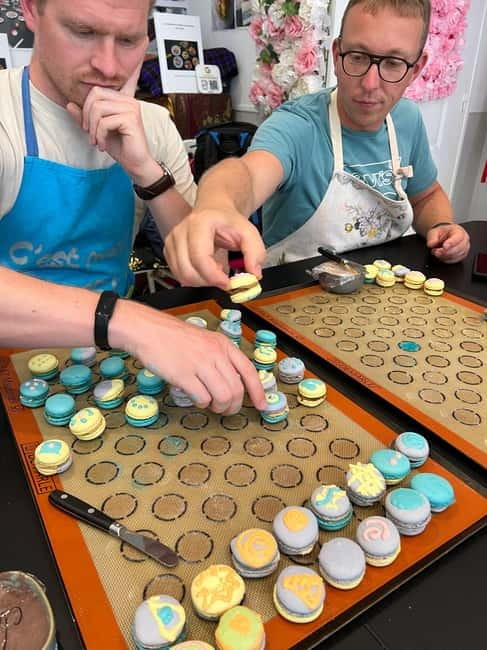
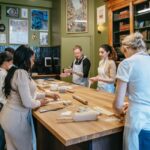
Paris is full of food tours, but this one is different because you leave with a skill, not just a snack. The whole experience happens inside the Maca’Rong shop on Rue Legendre in Montmartre, and the group stays small (limited to 6). That matters because macarons punish guessing, and you’ll need close guidance to nail the batter texture and piping consistency.
I also like that the class is structured like a real workshop: you start with ingredients set up for you, you get taught a method, and then you repeatedly do the step yourself. You’re not just standing around. Expect lots of hands-on time and the kind of quick troubleshooting that helps prevent cracked tops and hollow centers.
One more practical note: the studio is not meant for oversize luggage, and you cannot just drop in to observe. Everyone must have a reservation and you need to participate.
Finding your starting point on Rue Legendre
You meet at 175 Rue Legendre, at street level, inside the Maca’Rong shop on the ground floor. It is in Montmartre, so you’ll likely time it alongside a walking day up and around the neighborhood.
If you’re building your day, give yourself a little buffer to find the shop and get settled. These classes move with purpose, and there’s no value in arriving late when macarons are the main event.
A few more Paris tours and experiences worth a look


Tant pour tant: the ingredients that remove the guesswork
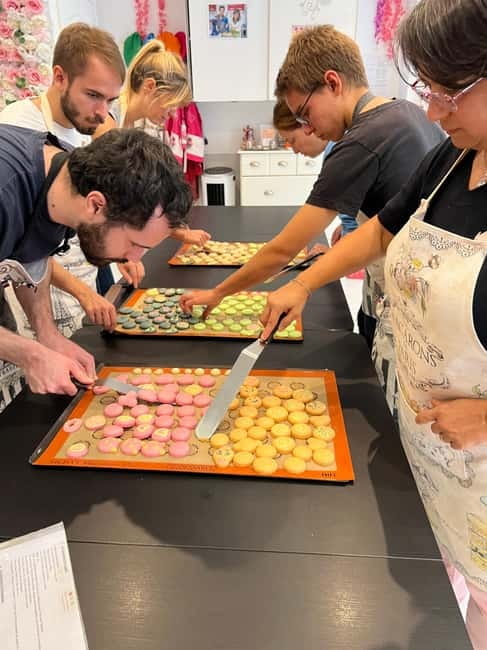
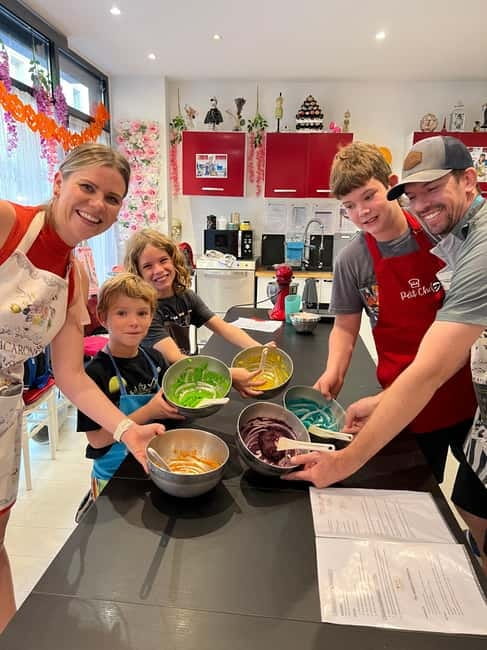
Before things get hands-on, your instructor gets you ready with tant pour tant ingredients portioned for each participant. This is the “measured, matched, ready” approach to the base mixture: you’re not trying to convert cups or estimate weights while everyone else is already piping.
This part of the class is more important than it sounds. Macarons fail for lots of reasons, but inconsistent measuring is a common one. Starting from a setup where ingredients are already prepared helps you focus on the parts that are actually tricky: whipping, folding, piping, and drying.
You also get tea and coffee as part of the class. In a 2-hour session, it’s a small comfort, but it also keeps you going while the batter and shells do their timing.
Italian meringue and the “right” batter: the shell-making core
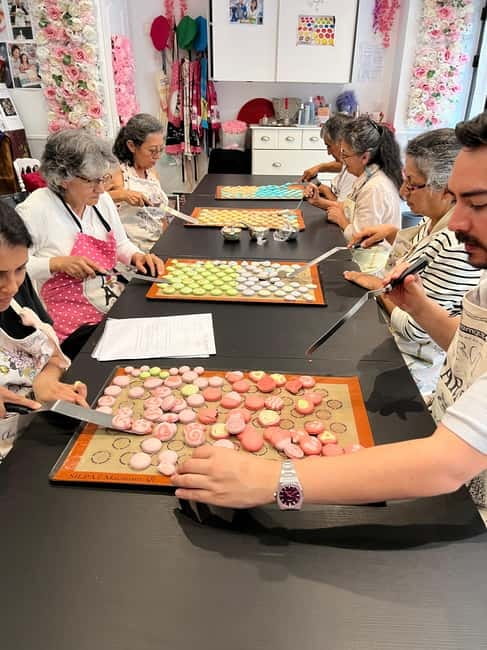
The heart of the workshop is learning the Italian meringue method to build more foolproof macaron shells. It’s slightly technical, but that’s also why it works: you’re not relying on a vague “looks about right” approach. Your instructor guides you through the logic of the method and then you practice the steps yourself.
Here’s what you’re really learning:
- how the meringue texture affects the batter
- how folding (often called macaronage) changes the viscosity and shine
- how batter behavior connects directly to whether your macarons develop feet and look smooth
You’ll also hear about alternate techniques as part of the bigger picture, which is useful if you’ve ever tried French or Swiss methods at home. The goal isn’t to confuse you with pastry trivia. It’s to help you understand why the Italian method is the one your instructor wants you to use here.
One thing I especially like: the workshop doesn’t treat batter texture like magic. The instructor gives essential tips that help you reproduce the look and flow in your own kitchen later.
Macaronage practice and piping bag basics (yes, this is where most people struggle)
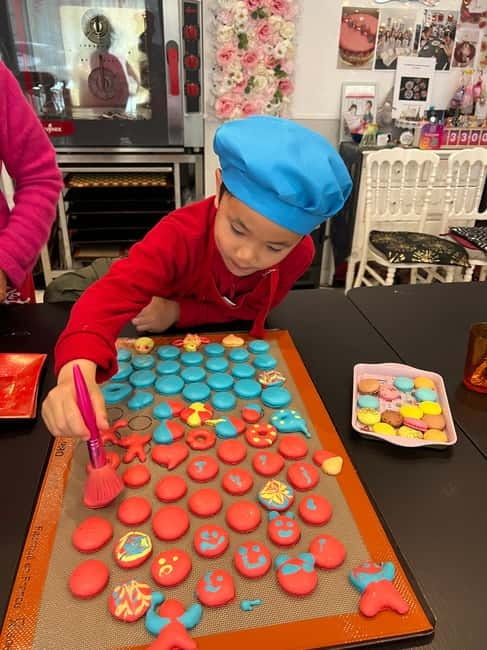
Once your batter is ready, you move into piping. This is the step where a lot of home bakers waste batter, overfill the bag, or pipe inconsistent rounds that bake unevenly.
Your instructor teaches you how to fill and handle the piping bag so you don’t fight it. It’s basic technique, but it’s the difference between calm piping and a doughy mess.
Then you practice piping on round templates first. That’s smart. Templates reduce errors early, so you can focus on the technique and pressure rather than drawing perfect circles freehand.
As you get more confident, the class transitions from “make it round” to “make it yours,” with the design step next.
Designing your macarons with the double nozzle
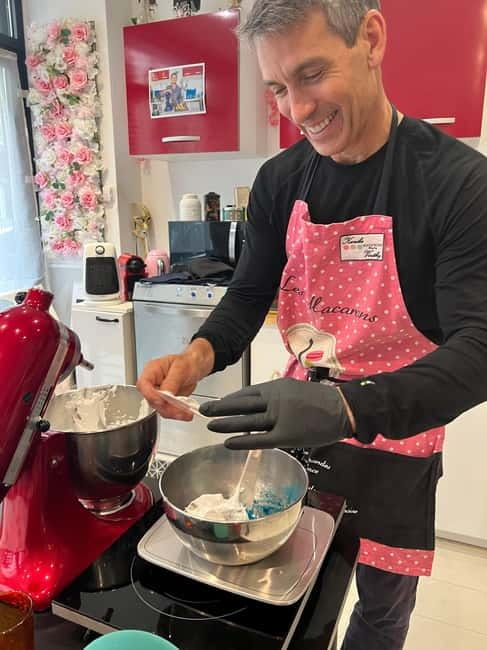
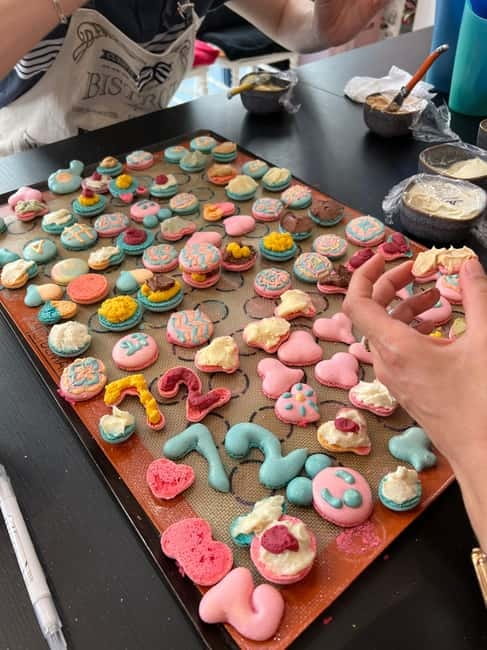
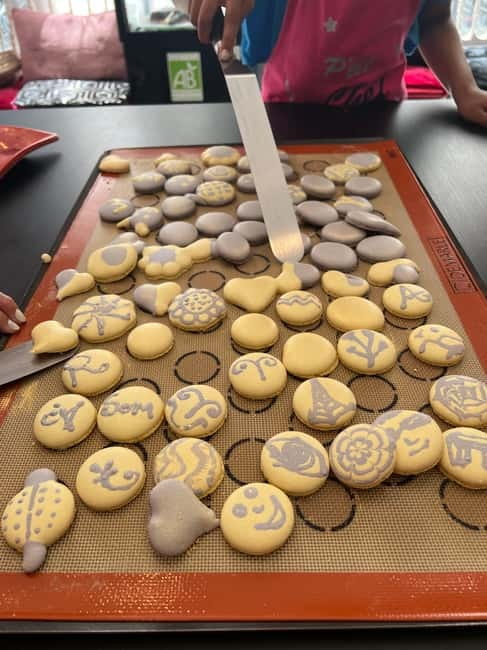
This is the fun part, and it’s also the part that makes the workshop feel like more than a baking lesson. You’ll embellish the shells using a smaller double nozzle, so each person can create their own patterns and designs.
The best part is that the class treats design like a skill, not an art test. You learn how to pipe the extra detail cleanly on top of your macaron shells without disturbing the base shape. That means your finished macarons don’t just taste good; they look intentional.
It also helps that you’re not stuck with one design idea for the whole class. You get to personalize, so the take-home box feels like your work, not a generic souvenir cookie.






Fillings and ganache: raspberry or mango-passion flavor lessons
While the shells bake, your culinary lesson continues with fillings. You get a demonstration on preparing a raspberry or mango-passion ganache that will fill the macarons you made.
Ganache matters because it’s the other half of the macaron experience: the shell’s texture is only half the story. The filling impacts sweetness balance, aroma, and the final chew. A well-made filling also helps prevent your macarons from feeling dry.
The class includes 10 fillings, so you likely have some choice. You’ll also get taught a “secret recipe,” which is part of the value of taking a class instead of just following a generic video. The instructor can show you what to watch for while it sets and thickens.
One helpful tip that comes up from people who’ve done this before: if you see a yuzu filling option, it’s worth paying attention to. Citrus flavors can make macarons feel lighter and more interesting.
What you actually take home: 15 macarons in a special box
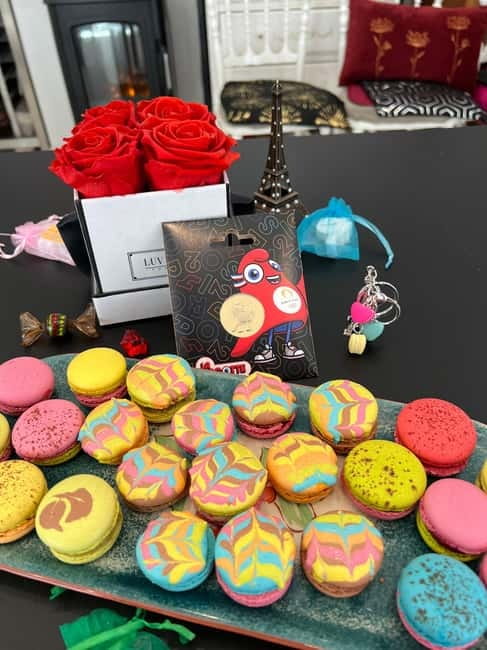
The payoff is concrete. Depending on your precision during the session, you’ll craft 15 macarons to take home. They come in a special box, plus you’re given bags for transporting them.
That box matters more than it sounds. Macarons can be delicate, and the goal is to get them from your hands to your day-to-day life without crushing them or turning the tops sticky.
Also, the class includes tea, coffee, and macarons along the way. So even before you take your work home, you’re not waiting around for the end result.
Price and value: is $150 per person worth it?
$150 per person is not cheap, so you should ask what you’re paying for. You’re paying for:
- a small-group lesson (max 6)
- guided Italian meringue technique with hands-on correction
- piping instruction, including how to avoid waste
- personalization with tools like the double nozzle
- filling instruction and a secret recipe
- 15 take-home macarons plus box and transport bags
If you usually buy a pricey box of macarons in Paris, the math can start to look reasonable. Here, you’re not just buying sweets. You’re getting the process you need to reproduce the results at home, which is where the value grows.
This class is also time-efficient. Two hours means you’re not committing an entire day, but you still get the full sequence from batter to filled, finished treats.
Who this class fits best (and who should skip it)
This workshop is a good match if you:
- want a hands-on food class instead of a tasting-only experience
- like learning a method you can repeat at home
- enjoy the creative part of piping designs
- travel with friends or family who enjoy baking (or want to try)
It’s less of a fit if:
- you have food allergies (not suitable)
- you are lactose intolerant (not suitable)
- you need wheelchair access (not suitable)
- you’re traveling with children under 6 (not suitable)
- you’re planning a watch-only activity (everyone must participate)
Also, the class moves quickly. If you’re easily overwhelmed by fast instruction, come with the mindset that macarons are a hands-on experiment.
Pair it with a Montmartre day (so you don’t feel rushed)
Because the class is in Montmartre, it pairs well with a walking afternoon. You can do a neighborhood stroll, then come back for your baking lesson without needing major transit planning.
The cleanest way to schedule it is to plan a food pause afterward. You’ll likely want a low-key dinner, since you’ll have macarons to snack on during your next stop or share later.
Should you book this Montmartre Macaron workshop?
I’d book it if you want a small-group class that teaches you the real mechanics of macaron shells, not just the final product. The strongest reason to go is the focus on Italian meringue, macaronage, and piping technique, plus the creative design step using the double nozzle. You also get a tangible result: 15 macarons packed for take-home.
Skip it if you’re lactose intolerant, have food allergies, or you want an observation-only experience. And if you care about having written instructions in front of you, plan to take notes or check for the recipe later since printed handouts may not be part of the session.
If you’re the kind of person who enjoys learning how something works, this is a satisfying use of two hours in Paris.
FAQ
How long is the Montmartre macaron baking workshop?
The workshop lasts 2 hours.
How many macarons do I make and take home?
You make about 15 macarons to take home, depending on your precision during the session, and they come in a special box.
What method do you learn for the macaron shells?
You learn the Italian meringue method, along with essential tips for successful shells and macaronage.
Can I just watch if I don’t want to participate?
No. Everyone in the workshop must have a reservation and it is not possible to stay just to observe.
Is the class suitable for lactose intolerance or food allergies?
No. It is not suitable for people with lactose intolerance or people with food allergies.
What languages are the instructors?
The instructors speak English and French.