REVIEW · PARIS
Paris Louvre PRIVATE TOUR with a Local Private Guide
Book on Viator →Operated by Withlocals · Bookable on Viator
The best reason to choose this Louvre tour is simple: a private guide gives you a plan inside one of Europe’s most confusing museums. In two hours, you’ll be led toward the Mona Lisa, Venus de Milo, Nike of Samothrace, French paintings, sculpture, and royal treasures instead of spending your visit trying to read a map.
I like the skip-the-line entry arrangements and the chance to ask questions as you go. Guides such as Emilie, Paola, Hugo, Bibiani, Elenore, Chrystelle, and Henrick have been praised for clear explanations, strong art knowledge, and skill at finding good viewing spots.
The main caution is the tight schedule. The Louvre is enormous, and two hours means a selective highlights tour, not a full museum visit. The advertised price is $100, but admission costs an additional €22 per person in cash, and a small number of serious complaints involve late cancellations, unclear meeting arrangements, or a guide who did not appear.
In This Review
- Key Points to Know Before You Book
- Why a Private Guide Helps Inside the Louvre
- Meeting at the Louvre Pyramid
- Getting Through the Entrance
- The Mona Lisa, With a Better View of the Room
- Venus de Milo and Nike of Samothrace
- David, Delacroix, Michelangelo, and the Crown Jewels
- What the Guides Add to the Visit
- Two Hours Is a Useful Taste, Not a Full Louvre Day
- When the $100 Price Makes Sense
- Reliability and Planning Details That Matter
- Who Will Get the Most From This Louvre Visit?
- Should You Book the Paris Louvre Private Tour?
- FAQ
- How long is the Louvre private tour?
- Is the Louvre admission ticket included?
- Where does the tour begin?
- Where does the activity end?
- Is this a private activity?
- Which Louvre works are included?
- Can I remain inside the Louvre after the tour?
- What information is needed for the Louvre tickets?
- Do I need to provide a phone number?
- Can I cancel or change the booking?
Key Points to Know Before You Book
- Two hours covers the Louvre highlights, not the whole museum: Expect a brisk route through famous paintings, sculptures, and selected historic objects.
- The tour is private: Only your own group takes part, so you can ask questions and move at a pace that suits your party.
- Admission costs extra: Pay the host €22 per person in cash for the Louvre ticket. The $100 tour price does not include museum entry.
- Meet at the Louvre Pyramid: This is an easy landmark, but it can be crowded, so use the guide’s phone contact and agree on an exact meeting spot.
- You can stay afterward: Once the guided portion ends, you may continue exploring the museum independently.
- The guide quality matters: Emilie, Paola, Hugo, Bibiani, Elenore, Chrystelle, and Henrick have received especially warm praise for explanation, navigation, and personal attention.
Why a Private Guide Helps Inside the Louvre
The Louvre is not simply a large museum. It is a former royal palace with long corridors, several wings, and an enormous collection spread across many departments. Without a plan, you can lose time finding the famous rooms and arrive at major works when your energy is already gone.
This private tour gives you a human route through that maze. Your guide meets you at the Pyramid, handles the entry arrangement, and leads you toward the works most first-time visitors want to see. You are not tied to a large group’s head count or forced to keep pace with strangers.
I especially like the question-and-answer element. An audio guide can give you facts, but a private host can respond when you want to know why a painting matters, how a sculpture was made, or what detail you should notice. The strongest guide comments have connected art with the political and social events around it, rather than treating each object as an isolated masterpiece.
This format also suits repeat visitors who want a sharper route. You can ask to spend more time on painting, sculpture, French royal history, or works outside the usual Mona Lisa stop, although the exact focus depends on your guide and the available time.
You can also read our reviews of more guided tours in Paris



Meeting at the Louvre Pyramid
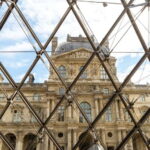
The tour begins at the glass Pyramid in the Louvre courtyard. It is the obvious meeting landmark, but not always the easiest place for a quick face-to-face connection. Many people gather there, and one person specifically found the guide difficult to identify among the crowd.
Use the phone number supplied when you book and make sure it is correct. The provider asks for a complete phone number because the guide may need to contact you before the tour. If the guide cannot reach you, the activity may be canceled.
You must also provide the complete name and birthdate of every person in your group. These details are required before tickets can be purchased. This is a small administrative step, but an important one. A missing name or incorrect birthdate could create trouble at the entrance.
The meeting area is near public transportation, and the activity finishes back at the meeting point. Plan to arrive with enough time to orient yourself. The instructions describe the Pyramid, but an exact meeting point within that busy area can still matter.
Getting Through the Entrance
The guide arrives with the Louvre tickets ready, according to the tour details. The experience describes skip-the-line access, which is one of its strongest practical benefits. The Louvre’s regular queues can be long, and getting inside without a drawn-out wait protects a large part of a two-hour visit.
The entrance fee is not included in the $100 price. You pay the host €22 per person in cash on the day. For a couple, family, or small group, add this amount for every person when comparing the tour with other Louvre options.
The price is easiest to justify when you value time and personal guidance. A private tour can be especially useful during a short Paris stay, when losing an hour in a line has a real cost. It is less attractive if you already know the Louvre well, prefer a slow independent visit, or want to spend an entire day in one department.
Group discounts are listed, but no discount amount is provided. Ask for the current terms before booking if your party is larger than two people.
The Mona Lisa, With a Better View of the Room
Leonardo da Vinci’s Mona Lisa is the headline stop. The guide takes you to the Italian painting section and explains the work within the larger story of Renaissance art and the Louvre’s collection.
Do not expect a quiet, private audience with the painting. The Mona Lisa is one of the museum’s biggest attractions, and the room can be crowded. The value of the guide is not that the painting becomes secluded. It is that you reach the correct area efficiently and receive context while making the most of your time there.
Several guide assessments praise the ability to find a good vantage point for photographs and viewing. One description specifically highlights front-row viewing, while another notes that an early 9 a.m. start reached the Mona Lisa and Venus de Milo with hardly anyone there. That makes the start time worth considering if you have a choice.
Your guide can also help you avoid treating the Mona Lisa as the only thing in the room. The surrounding Italian paintings give you a sense of the artistic world in which Leonardo worked. The tour is at its best when the famous portrait becomes one part of a wider art lesson.
Venus de Milo and Nike of Samothrace
The ancient Greek sculptures Venus de Milo and Nike of Samothrace provide a useful contrast with the Renaissance paintings. Venus is famous for its missing arms and balanced pose, while Nike is known for its dramatic movement and placement at the top of a grand staircase.
The guide’s role here is more than simply pointing out the statues. A strong explanation can help you compare the calm, controlled presence of Venus with the force and motion of Nike. It also gives you a reason to look closely at posture, fabric, scale, and the way each sculpture occupies its setting.
These stops are particularly helpful for families and visitors who do not usually spend much time with sculpture. You can ask direct questions without waiting for a scheduled group explanation. The private format also lets your party pause briefly when a work catches your attention, though the two-hour limit means your guide must keep the route moving.
The route may feel fast if you want detailed treatment of every sculpture. One unhappy account described seeing only a handful of works and feeling rushed. That criticism points to the central tradeoff: a guide who tries to cover too much may give you only short explanations, while a guide who slows down may show you fewer objects.
You can also read our reviews of more private tours in Paris





David, Delacroix, Michelangelo, and the Crown Jewels
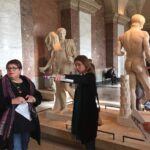
After the headline works, the tour turns toward other major parts of the Louvre. You may see paintings by Eugène Delacroix, sculptures by Michelangelo, and Jacques-Louis David’s The Coronation of Napoleon.
David’s painting offers a strong look at art used for political display. Its scale and ceremony help explain how official images shaped public memory and royal or imperial power. Delacroix brings a different energy, with dramatic composition and emotion that can open a discussion about French Romantic painting.
The Michelangelo sculptures add another major name, this time from Italian art and the world of marble. Your guide can help you notice the relationship between the human body, movement, and the limits of stone. The point is not to collect famous names. It is to see how the museum’s works connect across time and place.
The French crown jewels add an object-based change of pace. After paintings and sculpture, precious royal objects make the museum’s former palace setting feel more concrete. You are looking not only at art but also at the material culture of power.
The exact works shown beyond the main highlights are not fixed in the information provided. If a certain painting or sculpture matters most to you, tell the guide at the start. That gives the visit a better chance of matching your interests.
What the Guides Add to the Visit
The guide is the heart of this experience, and the names associated with especially strong feedback include Emilie, Paola, Hugo, Bibiani, Elenore, Chrystelle, and Henrick. Their strengths are not identical, which is useful to know.
Emilie has been praised for clear explanations, practical help, and knowing where to stand for photographs. Bibiani has been described as friendly, passionate, and full of useful information. Paola has received credit for discussing less familiar pieces instead of stopping only at the standard icons.
Hugo has been valued for placing art in its historical setting and for helping a visitor with limited walking ability navigate the museum. Elenore contacted her party before the visit, confirmed the arrangements, and suggested a better meeting location. Chrystelle also checked on ticket arrangements before the tour, which helped avoid confusion at the door.
Henrick has been praised for giving a lively sample of a very large museum while keeping the entry process easy. These details point to what you should seek from the experience: not just a guide who knows names and dates, but someone who can manage the route, explain clearly, and read the needs of your group.
Guide assignments are not guaranteed in the supplied details. You should treat those names as examples of guides who have led this experience, not as a promise that one particular person will be assigned to you.
Two Hours Is a Useful Taste, Not a Full Louvre Day
Two hours is long enough to see the principal masterpieces and get a working sense of the museum. It is short enough to fit before another Paris activity, which makes the tour practical for a tightly planned visit.
I would not book it expecting a leisurely survey of the Louvre. You will probably move through several galleries, stop at the best-known works, and hear concise explanations. The museum contains far more than any short visit can cover, so the tour succeeds by giving you a clear first route.
At the end, you may remain inside and explore on your own for as long as you wish. This improves the value considerably. The guided segment gets you oriented, and the remaining time lets you return to a favorite room or seek out a department your guide did not cover.
Bring a reasonable level of physical fitness. The activity gives no detailed route for visitors with mobility limitations, although one guide received praise for assisting a person with walking difficulties. If stairs, long corridors, or extended standing are concerns, contact the provider before the day of the tour.
When the $100 Price Makes Sense
The listed price is $100, with the €22 admission charge per person paid separately in cash. That means the true cost depends on the size of your party and the current exchange rate.
For a couple or family on a short Paris trip, the price can make sense because it buys a plan, a private guide, and time saved at the entrance. You are also paying for interpretation, not only access. A good guide can turn a fast look at famous objects into a connected story about art, monarchy, revolution, and power.
For a solo visitor, the cost is harder to justify unless you strongly prefer personal instruction. For a larger group, a listed group discount could improve the value, but you need to confirm the exact terms before booking.
The price is poor value if the guide covers too few works or gives repetitive explanations. One serious complaint described a costly two-hour visit with only five pieces of art and little variety. That appears to be an exception among the supplied feedback, but it identifies the question to ask at the beginning: what route will we follow, and can we include one or two personal interests?
Reliability and Planning Details That Matter
Most of the available feedback is strongly positive, with a 4.8 rating from 256 ratings and a 96 percent recommendation figure. The praise centers on guide quality, art explanations, crowd navigation, and easy entry.
There are also important service concerns. A few accounts describe a last-minute cancellation, a guide who did not arrive after a rescheduled booking, or difficulty getting a response. The provider apologized publicly and said it would investigate, but you should still take practical precautions.
Keep the confirmation details handy, enter a working phone number, and check messages before leaving for the Louvre. If the guide contacts you with a more precise meeting point, use that location rather than relying only on the Pyramid landmark.
The activity is non-refundable and cannot be changed for any reason. That makes accurate dates, guest names, birthdates, and contact information especially important. Book only when your Paris schedule is firm.
Who Will Get the Most From This Louvre Visit?
This tour suits first-time Louvre visitors who want the major works without spending hours finding them. It is also a good match for families, couples, and small groups who prefer asking questions to listening to a standard audio guide.
It works well for visitors who have a limited amount of time. A 9 a.m. start may offer a calmer beginning, based on the experience described by one party, though crowd levels can change.
Art lovers who want lesser-known works should tell the guide early. Paola’s approach, focusing at times on pieces outside the usual list, shows that the private format can offer more than a simple checklist of the Mona Lisa, Venus de Milo, and Nike.
You may want a different format if you prefer silence, photography, or a slow visit to one department. You may also find two hours too short if your main goal is to study many individual works in detail.
Should You Book the Paris Louvre Private Tour?
Book it if you want a focused introduction to the Louvre, value a personal guide, and dislike losing time in lines or confusing corridors. The strongest parts are the private format, the guide’s ability to explain art in context, and the option to continue alone after the two-hour route.
Before paying, remember the extra €22 admission charge per person, the cash requirement, the non-refundable terms, and the need to submit complete guest information. Confirm your phone number and watch for any meeting instructions.
I would choose an early start when possible and tell the guide which works matter most to you. With realistic expectations, this is a practical way to see the Louvre’s essential masterpieces without trying to conquer the entire palace in one morning.
FAQ
How long is the Louvre private tour?
The guided visit lasts approximately two hours.
Is the Louvre admission ticket included?
No. Entrance costs €22 per person and must be paid directly to the host in cash on the day.
Where does the tour begin?
The meeting point is at the Louvre Pyramid in Paris, at 75001 Paris, France.
Where does the activity end?
The activity ends back at the meeting point.
Is this a private activity?
Yes. Only your own group participates in the tour.
Which Louvre works are included?
The route includes the Mona Lisa, Venus de Milo, Nike of Samothrace, paintings by Delacroix, sculptures by Michelangelo, The Coronation of Napoleon by Jacques-Louis David, and French crown jewels, along with other works.
Can I remain inside the Louvre after the tour?
Yes. After the guided portion, you may stay at the museum and continue exploring independently.
What information is needed for the Louvre tickets?
The complete name and birthdate of every person in the group are required before tickets can be purchased.
Do I need to provide a phone number?
Yes. You must provide the correct phone number so the guide can contact you before the tour. If the guide cannot reach you, the tour may be canceled.
Can I cancel or change the booking?
No. The experience is non-refundable and cannot be changed for any reason.