REVIEW · PARIS
Paris Louvre Exclusive Semi Private Guided Tour Max 6 People
Book on GetYourGuide →Operated by LivTours - We craft tours, you live them · Bookable on GetYourGuide
The Louvre can swallow a whole day. This semi-private tour keeps you focused on the key rooms, with an expert guide and time at the Mona Lisa. I like the small-group feel (max 6) and the way the guide links masterpieces to the Louvre itself, from Greek sculpture to dramatic Delacroix. One thing to consider: at $199 per person for about 150 minutes, it is a splurge, so you’ll want to make sure you really want curated highlights, not free wandering.
You’ll meet right by the Louis XIV statue and then get your bearings around the glass pyramid before you head into the galleries for a guided loop of dozens of top works. The best part for your schedule is that your ticket doesn’t stop when the tour ends, so you can keep going after the guided portion on your own pace.
In This Review
- Key things I’d bet you’ll care about most
- Max 6 in the Louvre: why the small group is the real prize
- Meeting under the Louis XIV horse statue: where your tour actually begins
- The Louvre Pyramid pass-by: quick orientation without the lecture
- Guided highlights inside the galleries: Mona Lisa plus the “why it matters” stops
- Standing in front of the Mona Lisa (and not just looking at her)
- Venus de Milo and the Greek sculpture lesson
- Delacroix and the drama of French painting
- Da Vinci, Canova, and the sweep of master collections
- The Great Sphinx of Tanis: a reminder the Louvre is not only European art
- The Louvre itself as a fortress and royal palace
- Pacing and group dynamics: how 150 minutes actually feels
- After the tour: using your ticket to keep exploring on your terms
- Price and value: when $199 per person makes sense
- Language options: choose what makes art easier, not just what’s possible
- Practical tips so you get the most out of the time
- Should you book this Louvre semi-private tour?
- FAQ
- Where do I meet for the tour?
- How long is the tour?
- What group size is this tour?
- What does the tour cost and what’s included?
- Can I visit the Louvre after the guided part ends?
- What languages are available for the guide?
- Do I need identification?
- Is free cancellation available?
Key things I’d bet you’ll care about most

- Max 6 people means more attention, fewer bottlenecks, and easier conversations with your guide
- Mona Lisa time plus guidance on what to look for so it feels less like a photo stop
- Multiple eras in one route, from Greek sculpture like Venus de Milo to French painting such as Delacroix
- Louvre as a building with a story, not just a museum, including its past as a fortress and royal palace
- Your ticket continues after the tour, so you can return to favorite rooms without paying extra
Max 6 in the Louvre: why the small group is the real prize

The Louvre is popular for a reason, but that popularity can turn a first visit into a traffic jam. This tour uses a small group of up to 6, which changes how the museum feels. Instead of rushing to see everything, you can actually slow down enough to understand what you’re looking at.
I also like that the “exclusive” part isn’t just marketing. You’re not being dropped into a crowd and told to follow along. With an expert local guide, the pacing is built around meaningful stops—so you leave with context, not just images on your phone.
The trade-off is simple: you’re paying for guidance and for time at the highlights. If you want maximum freedom to wander without structure, you might prefer a different setup. If you want the Louvre in a smart, efficient slice, this is a strong match.
You can also read our reviews of more guided tours in Paris



Meeting under the Louis XIV horse statue: where your tour actually begins

Your meeting point is under the Louis XIV statue with a horse, in front of the glass pyramid. The guide holds a LivTours sign, so if you’re standing in the right spot, you should be able to find them quickly.
This matters more than it sounds. The Louvre is huge, and a few minutes lost at the wrong entrance can wreck the timing of a 2-hour visit. Plan to arrive 10 to 15 minutes early, then use that buffer to check where you are before the group starts moving.
The starting point is also tied to the Louvre’s outer courtyard energy. One of the first references is Louis XIV sous les traits de Marcus Curtius (copie), which helps set the tone that this place isn’t only about art—it’s also about power, monuments, and changing eras.
The Louvre Pyramid pass-by: quick orientation without the lecture

You’ll pass by the Louvre Pyramid early on. Even if you’ve seen it in photos a hundred times, seeing it in person helps you orient fast. From here, the museum layout makes more sense, and the guide can explain how the building’s different sections connect.
A big benefit of passing the pyramid at the start is mental. You get your bearings before you enter the galleries, so later, when you’re moving room to room, you’re not constantly asking yourself where you are.
If you’re the type who hates waiting in long lines without a plan, this portion helps. It’s brief, but it sets momentum and gets you into the main event while your head is still fresh.
Guided highlights inside the galleries: Mona Lisa plus the “why it matters” stops
Once you’re in the museum, the tour focuses on the Louvre’s greatest hits, with an emphasis on stories that connect works across time. The collection is enormous—over 35,000 works are on display—so you’ll never see it all in a couple hours. The value here is that the guide chooses an efficient route through what matters most.
Standing in front of the Mona Lisa (and not just looking at her)
The headline moment is clear: you’ll stand in front of Leonardo da Vinci’s Mona Lisa. But the guide’s job is to help you see beyond the famous face. With the museum crowded, it’s easy to experience her as a symbol rather than a painting.
In a smaller group, you typically get a calmer look. That makes a difference, because you can pay attention to details and brushwork cues the way you would in a gallery that isn’t shoulder-to-shoulder.
If you’re doing the Louvre for the first time, this stop alone often feels like it justifies the tour price. You’re not spending your time hunting for her, and you’re not learning the meaning of the painting from a label after you’ve already moved on.
You can also read our reviews of more private tours in Paris





Venus de Milo and the Greek sculpture lesson
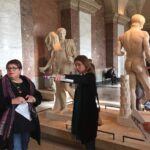
Next up is Greek sculpture, especially Venus de Milo. This is one of those works where people know the name but not the context. In a guided visit, you get the added layer: why this kind of sculpture mattered, what to notice, and how Greek art fits into the Louvre’s broader story of collecting.
Even if you’ve seen photos, seeing the sculpture in person can feel different. Guidance helps you focus on proportions, the sculptural presence, and what makes it enduringly influential.
Delacroix and the drama of French painting
The tour also includes dramatic French painting by Delacroix. That matters because the Louvre isn’t only marble and portraits—it’s also emotion, movement, and political and artistic shifts captured on canvas.
A good guide doesn’t treat this as a checkbox. You’ll get stories that explain what you’re looking at and why it’s remembered. That turns a stop from a quick viewing into an actual experience.
Da Vinci, Canova, and the sweep of master collections
You can expect mentions of major names beyond the Mona Lisa, including Canova and other key works attributed to giants like Da Vinci. The point isn’t to cram you with art-history trivia. It’s to give you a map of influence: what artists learned from earlier traditions, and how the Louvre became a place where different periods speak to each other.
That’s where a guided route earns its keep. When you walk without help, you can easily miss connections. With guidance, you see patterns.
The Great Sphinx of Tanis: a reminder the Louvre is not only European art
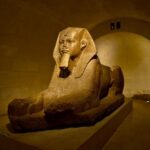
One of the more interesting inclusions is the Great Sphinx of Tanis. Egypt is a long way from Renaissance Italy and French Romantic painting, yet the Louvre places these works together for a reason: collecting, display, and interpretation.
This kind of stop helps you understand the museum as a global cabinet of cultures, not a single-style showcase. If you like museums that broaden your mental map, you’ll appreciate this detour from the usual “only paintings and sculptures” expectation.
The Louvre itself as a fortress and royal palace
Expect the guide to talk about the Louvre’s long transformation—from fortress and royal palace to the museum you know today. That context is useful because it changes how you read the building.
You start noticing architectural clues and how space affects what you see. It also makes the museum feel less like a warehouse of art and more like a stage where art history unfolded over centuries.
Pacing and group dynamics: how 150 minutes actually feels

The duration is 2 hours to 150 minutes, and with a max group size of 6, you should feel the pacing is purposeful. In practice, you’ll move between multiple highlights, but you’re not sprinting from one doorway to the next. Instead, you get a sequence of stops where the guide explains the key points before you move on.
I also want to flag something based on how these tours can run in real life: you may wear a small audio device or transmitter so you can hear the guide over crowds. That’s helpful in the Louvre, where sound can be chaotic, especially near the most famous works.
Because it’s semi-private, group behavior matters. In very rare cases, tensions between group members can affect the vibe, and a guide may react quickly if there’s a conflict. The good news is that the model is designed for smoother attention—so if your group is calm, it usually stays that way.
After the tour: using your ticket to keep exploring on your terms
A big advantage is that your entry ticket stays valid after the guided portion. That means you can extend the visit in a way that a strict tour schedule won’t allow.
This is where you can customize. If the guide points you toward a room you want to revisit, you can go back. If you spot another painting while walking out, you can detour without feeling like you’re breaking the plan.
It also helps if you’re not an all-or-nothing museum person. You can spend your guided time where it’s most efficient—then choose your own pace for the rest. For many first-timers, this strikes the right balance between structure and freedom.
Price and value: when $199 per person makes sense
At $199 per person for about 150 minutes, this tour is priced as a premium way to do the Louvre. Is it worth it? It can be, if you care about three things:
- You want the top highlights without spending your limited energy figuring out where to go
- You want context while you’re still in front of the art, not after you’ve already moved on
- You like the “attention per person” feel that comes from a group capped at 6
The value improves further because entry tickets are included. You’re not paying separately for admission and then paying again for the guide to lead you around.
Yes, it’s pricey compared to do-it-yourself. But for many people, the Louvre is one of those once-in-a-while stops where planning saves both time and frustration. This tour is built to reduce the guesswork and give you a guided highlight path that doesn’t feel like a conveyor belt.
Language options: choose what makes art easier, not just what’s possible

The tour is offered with a live guide in English, French, Portuguese, Spanish, Russian, and Swedish. If you’re comfortable speaking one of those languages, it’s worth selecting it carefully.
Art history is easier to absorb when you hear it in the language that lets you ask questions naturally. Even if your spoken language is only “good enough,” a clearer guide usually makes the experience feel more personal and less like a script.
Practical tips so you get the most out of the time

A few practical points can make or break your day at the Louvre.
Bring a passport or ID card, since that’s what’s listed as needed. Wear comfortable shoes. A 150-minute tour sounds short, but museum walking adds up fast.
When you arrive at the meeting point, don’t just locate the pyramid and hope for the best. Go to the exact location under the Louis XIV statue with the horse, and look for the LivTours sign. Arriving early helps because guides can be timed to get the group moving without delays.
Also, go in with the right mindset. This tour is designed to cover dozens of top masterpieces, not every room. If you treat it like your “greatest hits guide,” you’ll feel satisfied. If you try to compare it to a full day of wandering, you might feel limited.
Should you book this Louvre semi-private tour?
I’d book this if you’re a first-timer who wants a tight, high-impact Louvre plan with a small group, and you care about standing in front of the Mona Lisa with real context. It’s especially good if you like your museum time structured, but you still want to keep visiting afterward with your ticket.
I’d think twice if you’re on a tight budget or you’re the type who enjoys long freeform wandering and doesn’t want to stick to a highlight route. Also, if you’re very sensitive to delays, make early arrival part of your strategy so you start on the right foot.
Bottom line: for $199, you’re buying focused guidance, a small-group atmosphere, and a guided path through the Louvre’s biggest masterpieces—then you get to continue at your own pace. If that matches how you travel, this is a smart way to meet the Louvre on its home turf.
FAQ
Where do I meet for the tour?
You meet at the Louvre Museum under the Louis XIV statue with horse in front of the glass pyramid. Your guide will be holding a LivTours sign.
How long is the tour?
The duration is 2 hours to 150 minutes.
What group size is this tour?
It is a safe, intimate semi-private group with a maximum of 6 people.
What does the tour cost and what’s included?
The price is $199 per person, and it includes entry tickets and a guided visit to see dozens of the Louvre’s greatest masterpieces, including the Mona Lisa.
Can I visit the Louvre after the guided part ends?
Yes. Your ticket remains valid so you can stay in the museum and visit at your leisure after the tour.
What languages are available for the guide?
English, French, Portuguese, Spanish, Russian, and Swedish.
Do I need identification?
Yes. You should bring a passport or ID card.
Is free cancellation available?
Yes. You can cancel up to 24 hours in advance for a full refund.