A colorful neighborhood needs a guide like this. This Le Marais walking tour gives you clear context at major sights and then points you toward where to eat, drink, and shop right after. I also like the late-morning timing that helps you finish with lunch plans in mind, and the small group feel (max 15). The main drawback to watch for: on tight corners and busy streets, you’ll get more out of it if you stay close to the guide so you can hear.
You’ll start near Rue Brisemiche in the 4th arrondissement and end around Saint-Paul metro, about a mile and a half away, so plan on a light walk at the end. The tour runs in English, comes with a mobile ticket, and includes a Paris shuttle for convenient getting-around as needed. I’d just double-check the language when booking if you’re traveling with someone who speaks French only.
If you want an extra view of the city, you can upgrade to a narrated Seine cruise: one hour, round-trip from the Eiffel Tower area, and valid for a cruise anytime within a year of your tour date. It’s a nice pairing with a walking day because the water gives you a different angle on the same landmarks you’re seeing on foot.
In This Review
- Key Things You’ll Notice on This Marais Tour
- A 90-Minute Marais Walk That Fits Real Lunch Plans
- Small Group Size and Guides Who Tell the Story, Not Just the Facts
- Meeting Point to Metro Finish: Plan Your Walk Comfortably
- Stop 1: Centre Pompidou Without the Museum Rush
- Stop 2: Cloister of Billettes for a Medieval Pause
- Stop 3: Impasse des Arbaletriers and the Street That Tells Two Stories
- Stop 4: Rue des Rosiers in the Jewish Quarter for Food-First Guidance
- Stop 5: Bibliothèque Historique de la Ville de Paris for Old Mansion Details
- Stop 6: Musée Carnavalet for a City History Dose
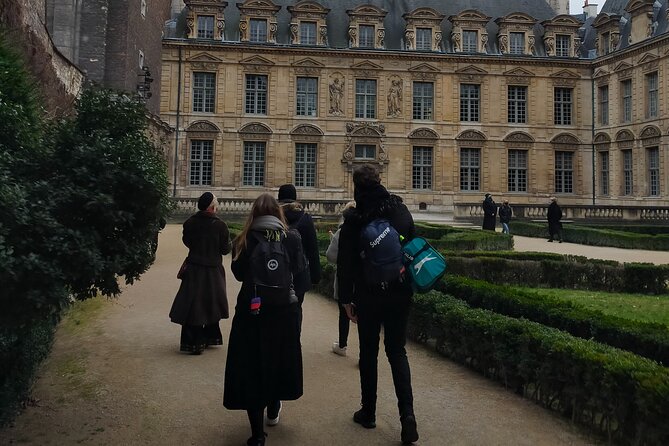
- Stop 7: Place des Vosges for Stories You’ll Remember Later
- Stop 8: Cour et jardin de l’Hotel de Sully for the Private-Space Feel
- Optional Seine River Cruise Upgrade: A One-Hour Reset View From the Water
- Price and Value: Does $43.55 Buy Real Usefulness?
- Who This Tour Suits Best (and Who Might Prefer Another Style)
- Should You Book This Marais Tour?
- FAQ
- How long is the Paris Le Marais walking tour?
- What language is the tour offered in?
- Is lunch included?
- What’s the maximum group size?
- Where does the tour start and end?
- Is the Seine river cruise included?
- Can I get a full refund if I cancel?
Key Things You’ll Notice on This Marais Tour
- A 15-person max group that keeps the guide’s attention on you
- Late-morning departure so you’re done before lunch
- Pompidou, Billettes, and Marais courts explained in plain, human terms
- Food and shopping direction for the Jewish quarter on Rue des Rosiers
- Optional Seine cruise with a ticket valid for up to a year
- Mix of free vs paid sights so you can decide what’s worth entering
A 90-Minute Marais Walk That Fits Real Lunch Plans
This tour is built for momentum. You’ve got about 1 hour 30 minutes, and the departure time is late morning, which means you’re not stuck walking through the Marais all afternoon. You can finish, grab a table, and still feel like you truly understand the neighborhood instead of just passing it.
The route also makes sense geographically. You start in the 4th arrondissement and end around the Saint-Paul metro area, so you’ll be close to more Marais strolling options after the tour. If your plan is to eat in the Jewish quarter or keep exploring Place des Vosges, this timing helps.
One more practical win: you’re not paying extra for everything. Several stops are free to enjoy from the outside, while a couple include optional admission tickets if you want more.
You can also read our reviews of more boat tours in Paris



Small Group Size and Guides Who Tell the Story, Not Just the Facts
The small group cap is what makes this work. With a maximum of 15 people, your guide can slow down, point, and explain without turning it into a parade. The experience also tends to shine because the guides are strong storytellers in English. I’m drawing this from the pattern of guide praise you can see in the guide names tied to the tour: Sophia, Katie, Paula, Sag, and Zac show up again and again in the feedback, and each name is linked to strong engagement and clear communication.
Here’s the key practical tip: even with a small group, the Marais can get crowded fast. If you want the full benefit at each stop, position yourself where you can see the guide and hear them when they’re talking. One past participant flagged that when the group felt harder to manage, people farther back missed details. You can prevent that with one simple move: stay close at the listening moments.
Also, the tour uses a mobile ticket, which keeps you from digging through emails on your phone at a busy street corner. You’ll still want your head up for your exact meetup point.
Meeting Point to Metro Finish: Plan Your Walk Comfortably
You meet at 2 Rue Brisemiche, 75004 Paris, and the tour ends in front of the Saint Paul metro station, about a mile and a half from the start. That end location is useful. It anchors you near the core of the Marais, so you’re not accidentally dropped somewhere inconvenient.
One detail that affects your comfort level: the tour is walking. Even though it’s short (about 1.5 hours), the streets are narrow in the Marais, and you’ll be moving at a neighborhood pace rather than a major-boulevard sprint. If your day includes other sightseeing, build in a little rest after, especially if you’re visiting Pompidou or a museum stop later.
Stop 1: Centre Pompidou Without the Museum Rush
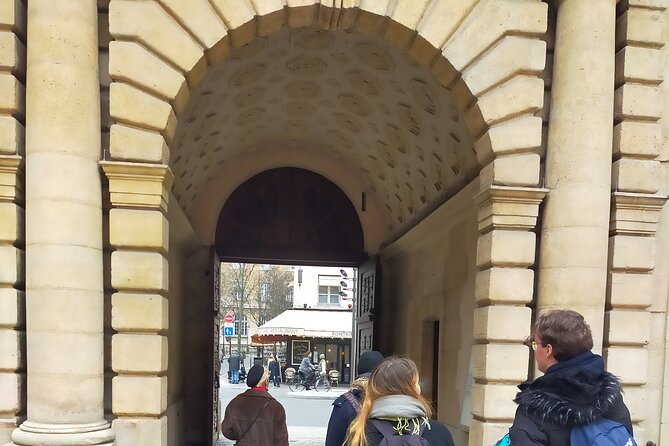
The tour starts at Centre Pompidou, the famous inside-out building that looks like it’s showing its machinery. Your guide explains why this “inside-out” design became a love-hate symbol for many Parisians, not just a photo spot.
What I like about this approach is that you get the meaning before you decide what to do. You’ll have quick orientation time—just enough to understand why it matters—then you can choose your next step. If you want to pay to go inside later for current exhibitions, that’s your call. If you don’t, there’s still the free option to ride up for views.
If you’re sensitive to crowds, consider your timing. Pompidou is a magnet. Even with a guide controlling the pacing, it’s a place where people naturally gather.
Stop 2: Cloister of Billettes for a Medieval Pause
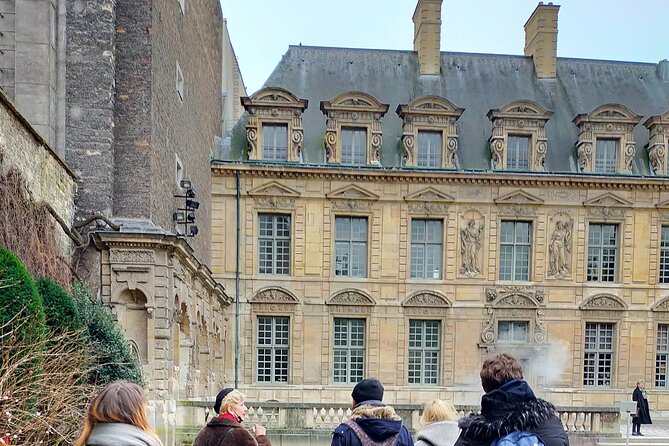
Next comes the Cloister of Billettes, where you get a peek behind a door. This stop is short, but it’s the kind of contrast the Marais does well: one moment you’re in a modern Paris landmark mood, and the next you’re back in a medieval-feeling pocket.
The value here is context. Your guide gives the brief history of one of the last remaining cloisters in Paris. You’re not trying to memorize dates—you’re learning how the city preserved something old inside a neighborhood that keeps changing.
This is also a great stop if you like texture: stone, quiet corners, and the sense that the city has layers. If you prefer only big-name sights, you might feel this is lighter. But it’s exactly these small moments that make the tour feel like you understand the Marais.




Stop 3: Impasse des Arbaletriers and the Street That Tells Two Stories

Impasse des Arbaletriers is one of those streets you’d miss if you weren’t looking for it. It’s a medieval dead-end road named for a crossbow shooting range, and you’ll hear how its story stretches back to buildings from the 13th century.
The fun part isn’t just the naming—it’s what the guide explains about the street’s surfaces. You’ll also learn why one side looks shiny and new while the other feels gritty. Expect some street art and graffiti along the way, so it’s not a museum-like stop. It’s real life layered over old history.
If you like photography, this is a stop where your camera comes out naturally. If you hate waiting or wish there were more time at each point, this is one reason to stay engaged. The explanation helps you notice what you’d otherwise shrug past.
Stop 4: Rue des Rosiers in the Jewish Quarter for Food-First Guidance
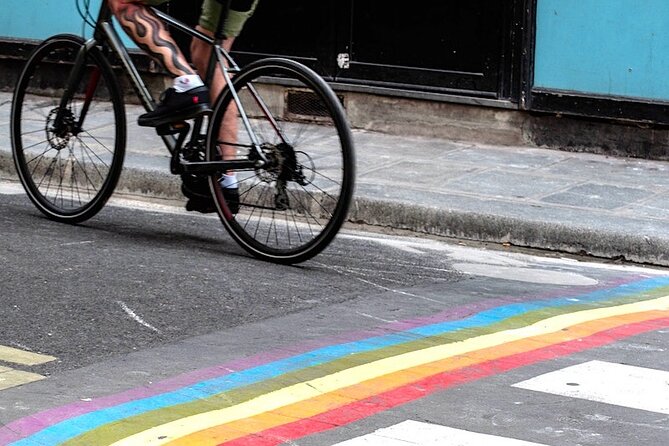
This is where the tour becomes practical. Rue des Rosiers is a classic Marais street and a major part of the Jewish quarter. Your guide shares culture and how the area has endured through gentrification pressures, and then you get real guidance: where some authentic delis and shops still are.
I like that you’re given time to stop for a snack. Not everyone wants a formal meal right at the end of a tour, and this lets you test-drive the neighborhood right away.
If you’re a planner, use this moment to decide what you’ll do next. Should you return to a bakery? Should you come back for dinner? Your guide’s suggestions can help you skip the trial-and-error line.
Stop 5: Bibliothèque Historique de la Ville de Paris for Old Mansion Details
At the Bibliothèque historique de la ville de Paris, you’ll visit a historic library housed in Hôtel de Lamoignon, one of the oldest mansions in the Marais. Even when you don’t go deep into collections, the setting does a lot of the work: you’re seeing how aristocratic spaces became public-facing institutions.
Your guide gives you the big picture about its holdings—over 1 million books, documents, and maps covering Paris from the 16th century to today. It’s one of those stops that makes you want to come back later and read, but you don’t have to sacrifice the rest of your day to do it.
The downside is purely time-related: this is a brief stop. If you’re the type who could spend hours in archives, you might wish you had more time here. But that’s why the tour structure works—you get the hook, then you choose your follow-up.
Stop 6: Musée Carnavalet for a City History Dose
The tour then hits Musée Carnavalet: Histoire de Paris, described as the city’s top history museum and an example of Renaissance architecture. You get a short stroll feel, plus access to the museum’s garden area.
I like history museums best when they’re paced. In this case, you’re not trying to do everything. Instead, you get a flavor of the building and the setting and learn what makes it special in the Paris story.
If you’re history-heavy, you’ll probably want to return. If you’re more of a neighborhood-walker, this stop still gives you a sense of why the Marais matters beyond streets and shops.
Stop 7: Place des Vosges for Stories You’ll Remember Later
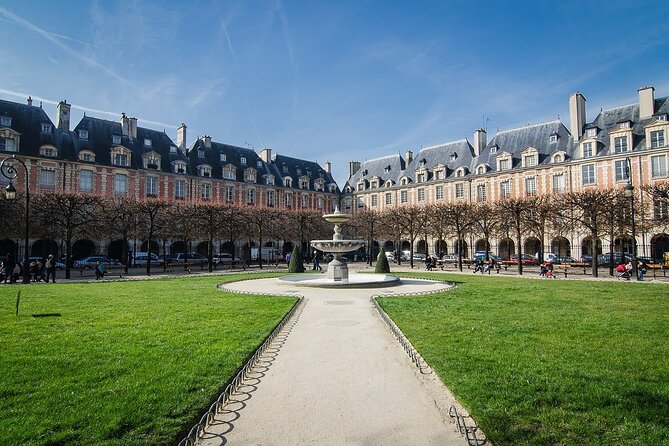
Place des Vosges is a stop that can feel like a postcard if you don’t learn anything. The guide changes that by tying the square to major names—Victor Hugo being the one you’ll hear about—and giving you stories about why this place served as an epicenter of the Marais.
You’ll have time to pause. That matters. The Marais moves fast because it’s popular, but the square is designed for lingering.
Practical note: if it’s sunny, this stop is where people relax. Bring your patience for a bit of crowd movement.
Stop 8: Cour et jardin de l’Hotel de Sully for the Private-Space Feel
The final walking stops include the Cour et jardin de l’Hotel de Sully, a courtyard of a private mansion. Built in the early 17th century, it reflects when the Marais was especially associated with royalty and upper-class residents and visitors. Today, the tour route explains how these buildings are managed as historic monuments.
This is another contrast stop. You’re not just looking at the outside of a building; you’re getting the “what it feels like” space—courtyard, garden-like area, and the sense of an enclosed world inside the neighborhood.
Admission details here are listed as not included, so you’ll likely enjoy it as part of the guided access and views rather than a full ticketed museum experience.
Optional Seine River Cruise Upgrade: A One-Hour Reset View From the Water
If you add the river cruise, it starts and ends at the Eiffel Tower area and lasts one hour. The ticket is valid for a cruise anytime within one year of your tour date, which is smart if you want flexibility later.
During the cruise, you’ll pass by key landmarks including Notre Dame, the Petit Palais, the Musée d’Orsay, the Conciergerie, and more. The value of this option is simple: you get landmark confirmation. Places you’ve been looking at on streets feel less abstract when you see them from the Seine.
This is also a good choice if your legs are tired. After walking the Marais, the cruise is a break that still feels like sightseeing.
One thing to keep in mind: the cruise isn’t included in the base price. If you’re trying to keep your day minimal, you can skip it and use the extra time for lunch and a second neighborhood wander.
Price and Value: Does $43.55 Buy Real Usefulness?
At $43.55 per person for about 1.5 hours, this isn’t just a basic “walk and point” deal. You’re paying for a guide who helps you connect dots: what the building means, why a street got its name, and where food is still worth chasing.
The value also comes from the structure: many stops are free to access without admission, so your money goes into interpretation and direction rather than ticket costs. If you do choose to add paid entries later—like coming back to Pompidou for exhibits—that’s still optional, not forced.
The other value factor is group size. With a max of 15, you’re less likely to get stuck behind a wall of shoulders at each stop. That matters in the Marais, where spacing can make or break what you hear.
So if you want one organized hour-and-a-half that sets up the rest of your Paris day, this price is easier to justify.
Who This Tour Suits Best (and Who Might Prefer Another Style)
This tour is a great fit if you:
- Want the Marais explained with real neighborhood context, not just landmark names
- Plan to eat nearby right after and want useful tips on where to snack, drink, and browse
- Prefer smaller groups and a guide who interacts and keeps the pacing human
You might think twice if you:
- Want long museum time at each location (this is paced and brief at each stop)
- Hate any situation where you must stand close to hear (the route includes listening moments)
If language matters for your group, remember: the tour is offered in English. If you booked expecting French, that mismatch can spoil the day.
Should You Book This Marais Tour?
I’d book it if you want a dependable, short walking plan that makes the Marais feel legible fast. The high average rating (4.9) and a strong recommendation rate (99%) suggest most people leave feeling it was worth the time.
My practical decision rule is this: if you’re the type who values good direction—where to go next, what a building means, and what streets are actually worth your attention—this will feel like a smart use of your morning. If you prefer to wander with zero structure, you may find the stops too short to satisfy.
If you do book, choose your spot wisely at each stop. Stay close to the guide when they talk, and you’ll pull more value from every corner.
FAQ
How long is the Paris Le Marais walking tour?
It’s about 1 hour 30 minutes.
What language is the tour offered in?
The tour is offered in English.
Is lunch included?
No. Lunch isn’t included.
What’s the maximum group size?
The tour has a maximum of 15 travelers.
Where does the tour start and end?
It starts at 2 Rue Brisemiche, 75004 Paris, and ends in front of Saint Paul metro station in the 4th arrondissement.
Is the Seine river cruise included?
The Seine river cruise is an optional upgrade. The ticket is for a one-hour cruise along the Seine anytime within one year of your tour date.
Can I get a full refund if I cancel?
Yes. Free cancellation is available if you cancel at least 24 hours in advance for a full refund.