REVIEW · NIMES
Nîmes, chronicle of a legacy from the Enlightenment to the Belle Époque
Book on GetYourGuide →Operated by DIDASKO · Bookable on GetYourGuide
You can feel centuries in Nîmes with every turn. This tour blends Roman landmarks with a story that travels from 1764 through later elegance, guided in a way that makes the stones feel personal. I especially like how it’s optimized for flow, so you don’t waste time zigzagging, and how the Belle Époque mood gets tied to iconic stops rather than treated like trivia.
One thing to consider: the live guide language is French, so if you don’t speak much French, you’ll want to be ready for a mix of explanations or plan for more reading on your own at stops.
In This Review
- Key highlights to know before you go
- A 90-Minute Time Machine in Nîmes (From Étienne to the Belle Époque)
- Jardins de la Fontaine: Your starting line and the first “aha” moments
- Temple de Diane: Roman geometry that feels calm, not cold
- Wandering the in-between streets: why the “pass by” moments matter
- Maison Carrée: the square temple that teaches you how Nîmes “reads”
- Food tasting: a short break that keeps the tour human
- Arena of Nîmes: Roman scale with city energy (and a realistic expectation)
- Finishing at Fontaine Pradier: a water moment that makes the walk feel complete
- Cassidy’s guiding style: clarity, energy, and making the story stick
- Price and timing: is $18 worth it for a 90-minute walk?
- Who should book: architecture lovers, history curious folks, and hot-weather planners
- Planning tips that make the walk easier
- Should you book this Nîmes Enlightenment to Belle Époque tour?
- FAQ
- How long is the tour?
- How much does it cost?
- Where do I meet the guide?
- What sites are included?
- Is the tour in French?
- Is the tour wheelchair accessible?
- Do I get a food tasting?
- Can I cancel for a refund?
Key highlights to know before you go

- Two-era storytelling: 1764 antiquarian Étienne, then Élise carrying the torch later.
- A smart 90-minute route: major monuments in a compact walking loop.
- Clear, lively guiding: Cassidy has a track record for energetic, easy-to-follow explanations.
- Iconic Nîmes you can recognize fast: Temple de Diane and the Maison Carrée.
- A classic Nîmes stop plus food tasting: you finish with the Arena area and a small taste along the way.
A 90-Minute Time Machine in Nîmes (From Étienne to the Belle Époque)

Nîmes is one of those French cities where history isn’t trapped behind glass. It’s on the street. On the walls. In the angle of a column. This experience leans into that reality with a simple concept: follow a man in 1764 who can’t stop looking at Roman traces, then feel how that same curiosity evolves into later elegance.
What makes the tour work well for most people is its tight timing. Ninety minutes is enough to hit the key visual anchors—then get out before you start rushing through details you actually want to remember. The pacing also feels “optimized,” meaning the route is arranged to reduce backtracking and keep you moving while the light and mood stay pleasant.
At $18 per person, you’re not paying for a long bus ride or a big production. You’re paying for a guide to connect the dots: why these monuments matter, how the city’s identity formed around them, and how later centuries reinterpreted that Roman presence.
You can also read our reviews of more tours and experiences in Nimes.

Jardins de la Fontaine: Your starting line and the first “aha” moments

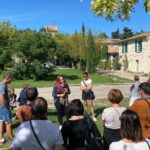
Your walk begins at Les Jardins de la Fontaine, right in front of the large main gate. This matters because it frames the whole visit. You start in a landscaped, everyday place—not at a monument with a ticket booth vibe—so the city feels lived-in from the first minute.
In the garden, your guide sets the tone with the story of Étienne, the ink-stained notebook type who copied Latin inscriptions and studied Roman moldings. Even if you’re not into epigraphy, this approach is useful: it teaches you how to look. Instead of only seeing “old stuff,” you learn to notice small features—shapes, materials, and how people reused or respected Roman forms over time.
Practical tip: the gardens can be a welcome buffer before the midday sun. Still, the city can get hot fast, so I’d treat hydration as non-negotiable.
Temple de Diane: Roman geometry that feels calm, not cold

Next comes the Temple de Diane, one of Nîmes’ best-known Roman silhouettes. The main reason people love this stop is visual. It’s clear from a distance, and it stays interesting up close because you can see how the structure carries itself.
The guide’s value here is interpretation. They don’t just name the building; they explain the atmosphere around it—how a Roman temple sits inside a city that changed centuries later. That contrast is where the Enlightenment-to-Belle Époque idea starts to make sense. You begin to realize that later eras didn’t erase the Roman past. They built conversations with it.
What to watch for: column rhythms, proportions, and the way the monument frames a pocket of space. Even if you’ve seen photos before, this stop usually lands as something you can recognize instantly and still feel curious about.
Wandering the in-between streets: why the “pass by” moments matter
The itinerary includes a couple of “pass by” segments between major monuments. That sounds minor, but it’s actually part of the experience’s strength. Nîmes isn’t just a list of famous sites. It’s a layered city where everyday street life sits next to ancient structures.
So during these walking sections, you’re doing two things at once:
- getting your bearings fast
- watching the city texture shift from one era’s feel to another
If you only focus on the big names, you’ll miss the fun. The guide’s storytelling helps you connect what you’re seeing outside the postcard frame. It’s the difference between memorizing monuments and understanding how they fit into a real city.
Maison Carrée: the square temple that teaches you how Nîmes “reads”

Maison Carrée is the kind of monument people expect to look impressive—and it does. But it’s also a learning stop. It’s compact, iconic, and sharply proportioned. In other words, it’s the perfect place for a guide to teach you what Roman design was aiming for.
This is where the tour’s “elegance” theme becomes more than a slogan. The Belle Époque part of the story isn’t about pretending the Roman world was suddenly fancy. It’s about how later centuries used that Roman clarity as inspiration and cultural proof. You start to understand why Nîmes has such pride in its Roman identity.
Practical note: you’ll get a guided experience here, but you’ll also have a moment to simply look. Take 30 seconds to notice how the façade feels both monumental and orderly. If you like architecture, this is one of the best stops for that calm, satisfying feeling.


Food tasting: a short break that keeps the tour human

You’ll have a food tasting stop during the walk. The exact items aren’t specified in the information you get beforehand, so treat it as a “small local taste” moment rather than a full meal.
This break is valuable for two reasons:
- it prevents the 90-minute route from feeling like only standing still and looking up
- it gives you a sensory memory to attach to the monuments you just learned about
Timing-wise, it also acts like a pace reset. If you tend to get tired in hot weather, the tasting slot is a welcome moment to cool down, sit if possible, and refocus.
Arena of Nîmes: Roman scale with city energy (and a realistic expectation)
The Arena of Nîmes is the big draw for many people, and for good reason. Even from a distance, the building reads as Roman power. The curved scale is hard to ignore.
In a 90-minute experience, you shouldn’t expect a long, step-by-step inside visit unless additional time is built in later (and your materials here don’t promise extra time inside). What you can expect is a guided look that explains what you’re seeing and why it matters to the story of Nîmes.
This stop is also where the tour’s “optimized” approach becomes clear. You’re not wandering around for ages trying to find the right angles. The guide helps you understand what the monument represents, then positions you so the time feels worthwhile.
If you love photos, this is your best window for shots that feel like they belong to the city rather than just your camera roll. Look for angles that show the arena’s mass against surrounding streets.
Finishing at Fontaine Pradier: a water moment that makes the walk feel complete

Your tour ends at Fontaine Pradier. A fountain finish might sound simple, but it’s actually a smart way to wrap up. Water structures are part of everyday urban identity, and ending here helps the city feel lived-in, not frozen in the Roman past.
It also gives you a natural landing point for moving on. After the monuments, you’ll have a calm reference marker in your mind: you’re done, you’ve covered the highlights, and now Nîmes is yours to explore on foot or by hopping to your next stop.
Cassidy’s guiding style: clarity, energy, and making the story stick
One of the strongest reasons people rate this tour so highly is the guide. Cassidy comes through as energetic without being chaotic. Explanations are described as clear, and the pacing doesn’t feel forced.
There’s also a useful detail for many groups: while the tour is French-language, real-world communication can be flexible. In at least one case, a family group still managed to connect meaningfully even when French wasn’t everyone’s strongest language. That tells me the guide’s priority is understanding and engagement, not just delivering lines.
If you speak French, you’ll likely enjoy the experience even more, because the tour includes some content shown in its original language. But even if you don’t catch everything, the storytelling structure makes it hard to feel lost—Roman traces lead to 1764 curiosity lead to later elegance.
Price and timing: is $18 worth it for a 90-minute walk?
At $18 per person for a 90-minute private walking tour with a passionate guide, the value comes from focus. You’re not paying for transport or a long itinerary. You’re paying for:
- a short route that hits major sights efficiently
- a guide who connects eras into one story
- a human pace with a food tasting break
Would I do it if I had two hours and no guide? Maybe, but you’d lose a lot of the “why.” These sites can look like a set of famous objects. With guidance, they turn into a timeline you can follow with your eyes.
This is also a good length for first-timers. You get enough to orient yourself in Nîmes, then you can return later (at your own pace) if you fall in love with a specific monument.
Who should book: architecture lovers, history curious folks, and hot-weather planners
This tour fits best if you:
- like seeing Roman monuments without turning it into a lecture
- want a compact route that still feels meaningful
- appreciate storytelling that connects centuries instead of listing facts
- can manage a sunny outdoor walk
It’s also a solid pick if you’re traveling with a family group that includes mixed interests. The monuments keep the attention, and the food tasting keeps it grounded. If you’re the type who wants free time afterward, the 90-minute duration helps you plan the rest of your day without scrambling.
And yes, there’s a built-in reminder to stay comfortable: bring water. Nîmes sun can be intense, especially in warmer months. Your guide even flags it as a key item so the walk stays enjoyable instead of tiring.
Planning tips that make the walk easier
A few practical things will make your experience smoother:
- Bring water. Do not rely on finding something instantly along the way.
- Wear sunscreen and consider a hat. The route is mostly outdoor.
- If you’re sensitive to heat, pick a cooler time of day.
- Bring your phone for photos, but also leave 10–20 seconds at each stop for looking without a screen.
Because the guide is live and the route involves short walking segments, your comfort level matters. Think “easy walking with major photo moments,” not “marathon sightseeing.”
Should you book this Nîmes Enlightenment to Belle Époque tour?
I’d book it if you want the highlights of Nîmes—Jardins de la Fontaine, Temple de Diane, Maison Carrée, the Arena area, and a finish at Fontaine Pradier—linked into a story that makes you see more than just what’s in front of you.
Skip it or add a backup plan if:
- you need an English-led tour and French is a barrier
- you prefer long, inside-only monument time rather than a guided highlights loop
- you’ll be uncomfortable walking under strong sun and don’t want to carry water
Overall, for the time and price, it’s a smart way to get oriented and emotionally attached to Nîmes’ layered identity. You leave with clearer context, not just photos.
FAQ
How long is the tour?
The tour lasts 90 minutes.
How much does it cost?
It costs $18 per person.
Where do I meet the guide?
Meet in front of the large main gate of Les Jardins de la Fontaine.
What sites are included?
The tour includes guided visits at Les Jardins de la Fontaine, Temple de Diane, Maison Carrée, and the Arena of Nîmes, plus a stop for food tasting, and it finishes at Fontaine Pradier.
Is the tour in French?
Yes, the live tour guide language is French. Some content may also be shown in its original language.
Is the tour wheelchair accessible?
Yes, the tour is wheelchair accessible.
Do I get a food tasting?
Yes, there is a food tasting included during the route.
Can I cancel for a refund?
Free cancellation is available up to 24 hours in advance for a full refund.