REVIEW · PARIS
Paris – Latin Quarter Free Tour in English (Tip-Based)
Book on Viator →Operated by StellarTours · Bookable on Viator
Old Paris starts here. This tip-based Latin Quarter tour strings together some of the oldest streets and buildings in Paris with a guide who keeps the story moving, even on a tight 2-hour schedule. I like the pay-what-you-want style because it fits different budgets, and I like that the route covers big names like Shakespeare and Company and the Panthéon without making you plan ticket lines. One thing to plan for: tips are accepted only via credit/debit and electronic payments, and several stops are short photo breaks rather than long visits.
The guide experience is a major part of the value. Names that came up in past groups include Bruce, Sanna, and Sunna, and the common thread is clear storytelling and solid timing. The tour ends in a lively pocket of the Latin Quarter—place de la Contrescarpe—so you can turn history into a meal without changing neighborhoods.
In This Review
- Key Highlights Worth Your Time
- Pay-What-You-Want Latin Quarter: What You’re Really Buying for $3.62
- Meeting at Fontaine Saint-Michel and What to Expect in a 2-Hour Walk
- Stop-by-Stop: Old Streets, Big Names, and the Latin Quarter’s Best Contrasts
- Fontaine Saint-Michel: Where the Tour Opens the Door
- Rue de la Huchette: Narrow Streets and Stories of Old Paris
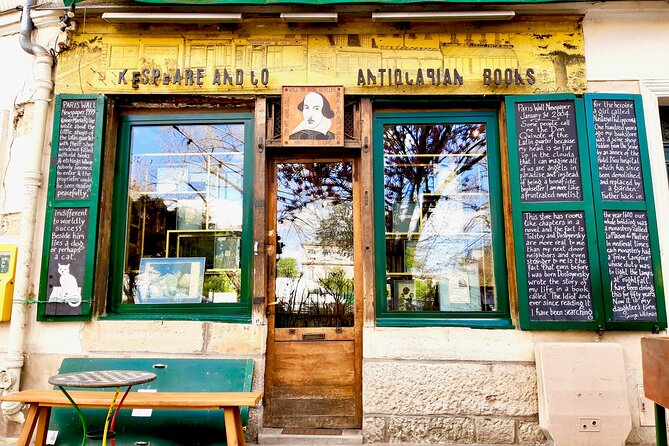
- Shakespeare and Company: A Bookshop That Carries Decades
- Notre-Dame de Paris: Breathtaking Views, Even in a Brief Stop
- The 1601 Oldest Tree Wish Ritual
- Eglise Saint-Julien Le Pauvre: One of Paris’s Oldest Church Centers
- Salvador Dalí Sundial: Art Meets the Camino de Santiago Story
- Eglise Saint-Severin: Gothic Architecture Plus Palm Columns
- Les Thermes de Lutece: Roman Baths After the 52 B.C. Invasion
- Musée de Cluny: The Medieval Museum in a Beautiful 15th-Century Building
- La Sorbonne: A University Core That Stays at the Center
- The Panthéon: The Main Event and the Mausoleum Story
- St-Étienne-du-Mont: Saint Genevieve and Relics
- Hemingway’s First Home Office: The Latin Quarter’s Literary Afterlife
- Place de la Contrescarpe: End Here, Then Eat
- How Much Should You Tip When It’s Card-Only and VAT Adds Up?
- Best Ways to Make This Tour Feel Worth It (Not Just Fast)
- Who This Latin Quarter Tour Is For
- Should You Book the Paris Latin Quarter Free Tour?
- FAQ
- Is the Latin Quarter tour in English?
- How long is the tour?
- Where does the tour start and end?
- What time does the tour begin?
- What is the tour price?
- Are admission tickets required for the stops?
- How do you pay tips?
- How big is the group?
- Can most people participate, and are service animals allowed?
Key Highlights Worth Your Time
- Pay what you want, with a low starting cost for a guided walk through the Latin Quarter
- Old streets, major landmarks, from Rue de la Huchette to the Panthéon
- A stop that mixes art and legend, with Salvador Dalí’s sundial and the Camino connection
- Roman + Gothic in one route, including Les Thermes de Lutece and Eglise Saint-Severin
- Book a morning or afternoon start, so it fits your day
- Good post-tour location, ending at place de la Contrescarpe for food and bars
Pay-What-You-Want Latin Quarter: What You’re Really Buying for $3.62
This is priced in a way that feels fair for a first day in Paris. The listing shows a low per-group amount (about $3.62 per group, up to 9), but the real model is tip-based: you pay what you feel the guide’s time and storytelling are worth.
Here’s why I think that matters. In a neighborhood like the Latin Quarter, you can easily wander on your own and still see impressive sights. The value here is that you don’t just pass by buildings—you get the human scale of why these places matter and how Paris shifted from medieval streets to modern landmarks.
Two practical notes to keep you comfortable:
- Tips are only accepted via credit/debit and electronic payments.
- VAT is added to contributions, so don’t expect it to be a perfectly simple cash tip experience.
If you prefer classic guided sightseeing with a clear route and a guide leading the timing, this works. If you hate any form of card-only tip rules, you’ll want to plan ahead.
You can also read our reviews of more tours and experiences in Paris.



Meeting at Fontaine Saint-Michel and What to Expect in a 2-Hour Walk
The tour starts at Fontaine Saint-Michel, Pl. Saint-Michel (75005). The end point is place de la Contrescarpe (also 75005). That ending spot is useful: you’re not dropped in a dead zone. You land in the middle of the action, with plenty of restaurants and bars right there.
Time-wise, it’s about 2 hours. The route is dense, but it doesn’t feel rushed in the way some short walking tours do, mostly because many stops are framed as quick “see it, then learn it” moments. You’ll get brief pauses at each highlight, plus the guide’s explanation so you leave with context.
Group size is capped in a way that keeps it manageable: max 50 travelers overall, and pricing shows groups up to 9 for the per-group amount. Translation: you should expect a social, small-ish tour experience rather than a giant herd.
Also, it’s mobile-ticket friendly, in English, and it runs with confirmation at booking time. Service animals are allowed, and it says most people can participate, which usually means the walking is straightforward.
Stop-by-Stop: Old Streets, Big Names, and the Latin Quarter’s Best Contrasts
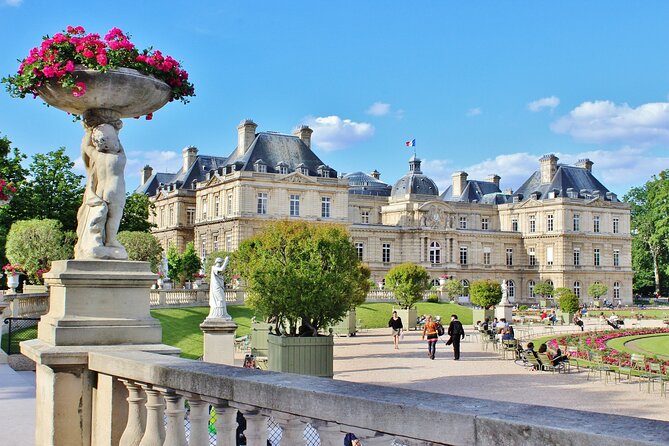
Fontaine Saint-Michel: Where the Tour Opens the Door
The first stop is the Fontaine Saint-Michel. It’s described as part of the Grand Reconstruction of Paris, and that sets up the tour’s big theme: how the city reinvented itself fast. Even if you’ve seen Saint-Michel from across the street, the fountain works as a readable “before and after” point—medieval roots giving way to a modern, showpiece Paris.
This is a strong warm-up stop because it tells you what to watch for later: layers. When you hit the older streets afterward, you’ll know you’re not just collecting landmarks—you’re watching time build on time.
Rue de la Huchette: Narrow Streets and Stories of Old Paris
Next you walk along Rue de la Huchette, one of the oldest streets in Paris. This is where the Latin Quarter starts to feel physical: tight lanes, that lived-in street rhythm, and the kind of scale that makes Paris look older than it looks on postcards.
The guide focuses on old-Paris stories, and this stop is short, which is perfect for the first half. You get a quick burst of atmosphere without losing the thread of the tour.





Shakespeare and Company: A Bookshop That Carries Decades
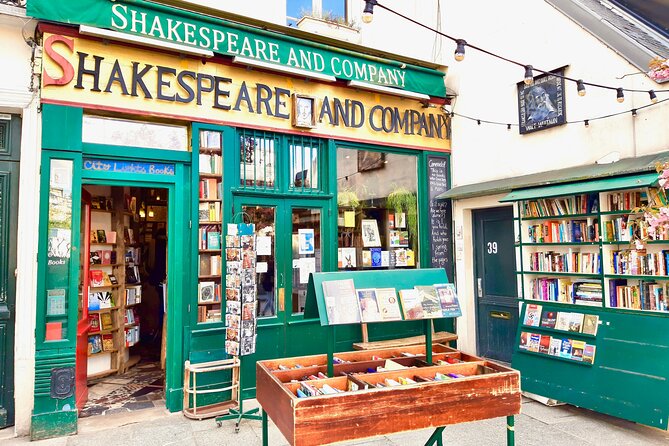
Then it’s Shakespeare and Company, the famous bookstore with roots in the 1920s. This stop is a great contrast to the street-walking moments. You shift from stone and narrow lanes to words and literary history.
The details are the draw here: writers tied to the lost generation—Hemingway, James Joyce, and F. Scott Fitzgerald are named in the tour concept. You don’t need to be a hardcore literature fan for this to land. It’s more like stepping into a cultural “anchor point” for how the Latin Quarter became a magnet for thinkers.
Notre-Dame de Paris: Breathtaking Views, Even in a Brief Stop
After the bookstore energy, the tour heads toward Cathedrale Notre-Dame de Paris for views. This is one of those stops where timing matters: you’re not trying to fit a full cathedral visit into a 2-hour tour. You’re getting the high-impact look plus the story framing around what Paris built and rebuilt.
If your priority is long interior time, keep expectations realistic. If your priority is seeing the monument plus learning why it matters, this stop does the job.
The 1601 Oldest Tree Wish Ritual
There’s also a pause for the oldest tree in Paris dating back to 1601. You’ll hear the local tradition: touch the leaves and make a wish.
This is an easy stop to love because it’s low effort and playful. It’s also a reminder that the Latin Quarter isn’t only big monuments. It’s daily traditions, small rituals, and the weird little things that survive because people keep doing them.
Eglise Saint-Julien Le Pauvre: One of Paris’s Oldest Church Centers
The next church stop is Eglise Saint Julien Le Pauvre. It’s described as one of the oldest buildings in Paris and once a center of education alongside Notre-Dame. That angle is smart. Instead of treating the church as only a religious landmark, the guide uses it as an education-and-community clue for understanding the Latin Quarter.
Because the tour is timed, you won’t have hours here. But the payoff is that you get the “why here” story in a way that makes later church stops easier to interpret.
Salvador Dalí Sundial: Art Meets the Camino de Santiago Story
Now you hit a stop that feels unexpected in the best way: the Salvador Dalí sundial. Dalí is linked to the Latin Quarter, and the sundial is said to represent the Camino de Santiago de Compostela.
This is exactly the kind of detail that makes a guided walk feel worth it. Without a guide, you might notice a sundial and move on. With the guide, it becomes a small piece of how the neighborhood attracted artists—and how they left traces in public space.
Eglise Saint-Severin: Gothic Architecture Plus Palm Columns
Then it’s Eglise Saint-Severin, a 13th-century Flamboyant Gothic church. The standout description includes beautiful vaulted ceilings and palm tree columns.
The tour also mentions a chance to hear the pipe organ if you’re lucky. In practical terms, that’s a good incentive to stand where the sound would carry, not drift off to take photos from one spot the whole time.
This stop is one of the best for people who like architecture details. Even in a short visit, the ceiling and column shapes give your eyes something to work with while the guide brings the setting to life.
Les Thermes de Lutece: Roman Baths After the 52 B.C. Invasion
Next is Les Thermes de Lutece, the Roman baths. The tour concept places them after the Roman Empire invaded Paris in 52 B.C., establishing a city and building baths for citizens.
What makes this stop valuable is the shift from medieval streets back into Roman planning. You start seeing the Latin Quarter as a long-running stage where each era used the same core location, just with different goals and styles.
If you like “how the city worked” rather than just “how it looks,” this is a highlight.
Musée de Cluny: The Medieval Museum in a Beautiful 15th-Century Building
At Musée de Cluny, you’re led to the setting and story behind the medieval collection. The building is described as dating to the 15th century, and the tour frames it as a dazzling, ornate doorway to Paris of old.
Even if you don’t plan to go deep inside for a full museum visit, the guided explanation helps you read the building. It turns a pretty facade into an actual clue about medieval life.
La Sorbonne: A University Core That Stays at the Center
Next is La Sorbonne. The tour describes it as the 3rd oldest university in the world and connects it to the Latin Quarter’s role as a center of education since the 11th century.
This matters because it explains why the neighborhood feels like more than streets and churches. It’s also ideas. The tour notes that the university’s nucleus dates back to 1257, which gives you a timeline you can hold onto as you move between literary, religious, and educational landmarks.
The Panthéon: The Main Event and the Mausoleum Story
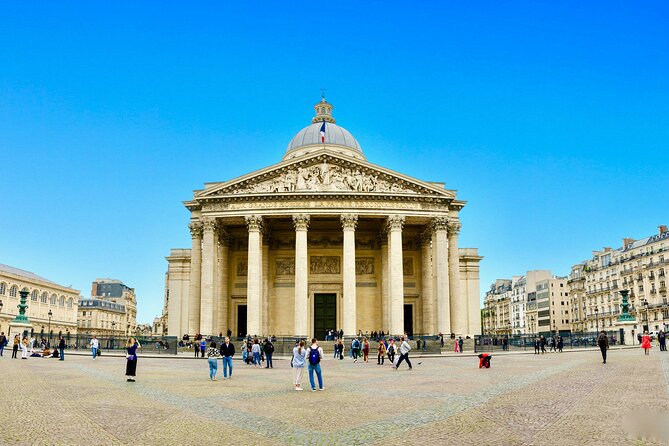
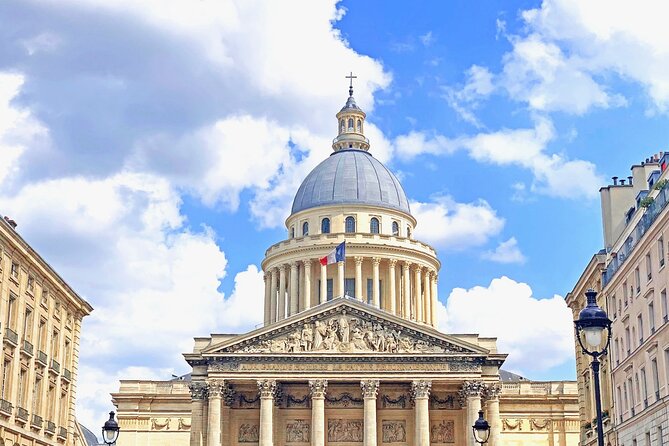
Then comes the big one: Pantheon. The tour spells out the meaning of the word—“all the gods”—and then flips the story: it began as a major religious structure and later became France’s most important mausoleum.
What I like about how this stop is set up is that it’s not only about famous names. You get a transformation narrative. The tour also highlights burials of major French minds, including Victor Hugo and Marie Curie.
If your only Paris plan today was one stop, I’d put this in your shortlist. It’s a strong closing landmark before you head into smaller, more intimate church stops.
St-Étienne-du-Mont: Saint Genevieve and Relics
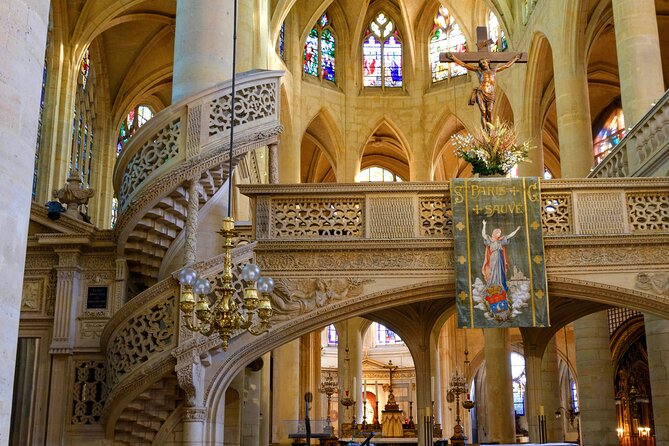
After the Pantheon, you go to St. Etienne du Mont, a majestic 15th-century church where the tour mentions the tomb and knuckle of Saint Genevieve, patron saint of Paris.
The guide also frames it around how Paris was handled as the Roman Empire fell, and how Genevieve played a key role. That context helps you avoid the common problem: churches can feel like stand-alone beauty rather than part of the city’s survival story.
Even in a short stop, this one tends to stick because it’s specific: a named saint, specific relic details, and a dramatic timeline.
Hemingway’s First Home Office: The Latin Quarter’s Literary Afterlife
Next is Ernest Hemingway’s first home office in the Latin Quarter. The tour connects Hemingway’s love for Paris to the neighborhood’s creative pull and points you to his first apartment and what inspired him.
Hemingway is quoted in the tour concept with a famous line about how living in Paris as a young man stays with you. I like the idea here: it turns the route into a map of creative influence, not just a checklist of monuments.
If you’re traveling alone and want one stop that feels personal and story-driven, this one does that.
Place de la Contrescarpe: End Here, Then Eat
The tour ends in place de la Contrescarpe, described as lively and full of restaurants, bars, and cafes in the heart of the Latin Quarter.
This is a small detail that makes a big difference. Instead of rushing to find something after your tour, you can grab a drink or a simple bite nearby while the guide’s stories are still fresh.
How Much Should You Tip When It’s Card-Only and VAT Adds Up?
Because this is pay-what-you-want, there’s no single correct number. But you can tip in a way that matches the experience style:
- A short, structured 2-hour route with many quick stops usually calls for a tip that rewards good timing and clear storytelling, especially since the guide is the main “ticket” you’re buying.
- Since tips are card/electronic only, I recommend you decide your budget before you arrive. Bring the card you want to use, and expect VAT to be part of the contribution.
If you’re traveling as a budget-minded solo or couple, the starting cost keeps it accessible. If you’re a group, the per-group pricing shown makes it easy to treat the guide as part of your itinerary’s value.
Best Ways to Make This Tour Feel Worth It (Not Just Fast)
This itinerary packs a lot. So you’ll get more if you go in with a simple mindset: treat each stop like a clue.
A few practical moves:
- Take notes on one theme you care about: education (Sorbonne), art (Dalí), or how Paris reinvented itself (Fontaine Saint-Michel and Notre-Dame).
- At church stops, watch ceilings and structural details first, then listen. It makes the short time feel longer.
- At Roman bath stops, look for the scale cues. You’re seeing remnants of a larger complex, so context helps a lot.
- Keep your phone ready for street names like Rue de la Huchette. It’s the kind of lane you may want to find again later.
And if you want the food plan to work: end at place de la Contrescarpe and pick something simple nearby. You’ll already be in the right neighborhood.
Who This Latin Quarter Tour Is For
This is a great fit if you want:
- A guided introduction to the Latin Quarter without wasting a full day
- A mix of literary Paris, churches, Roman ruins, and the Panthéon
- A route that works for first-timers because it gives structure and context
It might be less ideal if you:
- Want long museum time or extended interior visits at every stop
- Hate card-only payment for tips and don’t want to plan for VAT-added contributions
Should You Book the Paris Latin Quarter Free Tour?
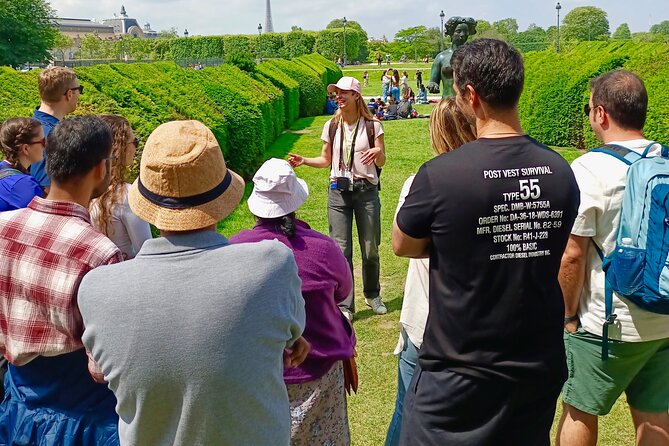
I’d book it if you want a smart orientation walk through the Latin Quarter that connects famous places to a clear story of how Paris layers its past. The blend is the point: narrow medieval streets, literary landmarks, Gothic churches, Roman baths, and the Panthéon within a manageable 2-hour window.
You should also book if you like getting a feel for where to eat afterward. Ending at place de la Contrescarpe is a practical win.
Skip it only if you’re chasing a slow, museum-heavy day or you dislike tip rules that require card/electronic payment. For everyone else, it’s one of those tours that pays you back immediately: you leave understanding what you’re looking at, not just seeing it.
FAQ
Is the Latin Quarter tour in English?
Yes. The tour is offered in English.
How long is the tour?
It runs for about 2 hours.
Where does the tour start and end?
You start at Fontaine Saint-Michel, Pl. Saint-Michel, 75005 Paris. You end at place de la Contrescarpe, Pl. de la Contrescarpe, 75005 Paris.
What time does the tour begin?
The listed start time is 11:00 am. The tour also notes you can choose a morning or afternoon start time.
What is the tour price?
The price is listed as $3.62 per group (up to 9). The experience is tip-based, meaning you pay what you want in addition to the listed price.
Are admission tickets required for the stops?
The itinerary shows the stops as free with no admission ticket required.
How do you pay tips?
Tips are accepted only via credit/debit cards and electronic payments. VAT is added to contributions.
How big is the group?
The maximum size is 50 travelers.
Can most people participate, and are service animals allowed?
The tour says most travelers can participate, and service animals are allowed.