REVIEW · PARIS
Paris : Late Night Louvre Tiny Group Tour
Book on GetYourGuide →Operated by Toorers · Bookable on GetYourGuide
The best feature of this Louvre tour is its size: six people maximum makes a major difference inside a museum built on a huge scale. In two evening hours, your art historian guide takes you to the Mona Lisa, Venus de Milo, Winged Victory of Samothrace, and other high points without leaving you to wander the galleries alone.
I like the calmer evening setting, which gives the visit a more measured feel than a rushed daytime stop. I also like the practical setup: your guide brings the entrance tickets, gets you past the ticket line, and keeps the route focused on art worth your limited time.
The main drawback is the fixed two-hour limit. The Louvre is too large to cover properly in one visit, so you will see a carefully chosen selection rather than every major room. At $181 per person, this suits you best if expert direction and a tiny group matter more than keeping the museum visit cheap.
In This Review
- Key points at a glance
- Why a six-person Louvre tour changes the visit
- Meeting at Place Colette without confusion
- The first masterpieces: Mona Lisa, Venus de Milo, and Winged Victory
- Egyptian Antiquities and ancient cultures
- Greek and Roman sculpture in a royal setting
- Italian Renaissance paintings and possible Napoleon III rooms
- What the art historian adds
- Is $181 per person a fair Louvre price?
- Timing, accessibility, and booking flexibility
- Who should book this evening Louvre tour?
- Should you book the Late Night Louvre Tiny Group Tour?
- FAQ
- How long does the Louvre tour last?
- What time does the tour start?
- Where do I meet the guide?
- Which metro station serves the meeting point?
- Which metro exit should I use?
- How will I recognize the guide?
- Is the entrance ticket included?
- Does the tour skip the ticket line?
- What language is the tour conducted in?
- Is the tour wheelchair accessible?
- How many people can join the group?
- Where does the tour end?
- Can I cancel for a refund?
- Do I have to pay at the time of booking?
Key points at a glance
- Six people maximum: A tiny group makes it easier to hear the guide and ask questions.
- Evening Louvre visit: The tour is designed for a calmer setting after the busiest part of the day.
- Art historian guide: You get live English commentary on famous works and major collections.
- Major masterpieces included: The route features the Mona Lisa, Venus de Milo, and Winged Victory of Samothrace.
- Tickets handled for you: Entrance is included, and the guide gives you your ticket at the meeting point.
- Two-hour focus: The route is built around the Louvre’s essential sights, not a full museum survey.
Why a six-person Louvre tour changes the visit

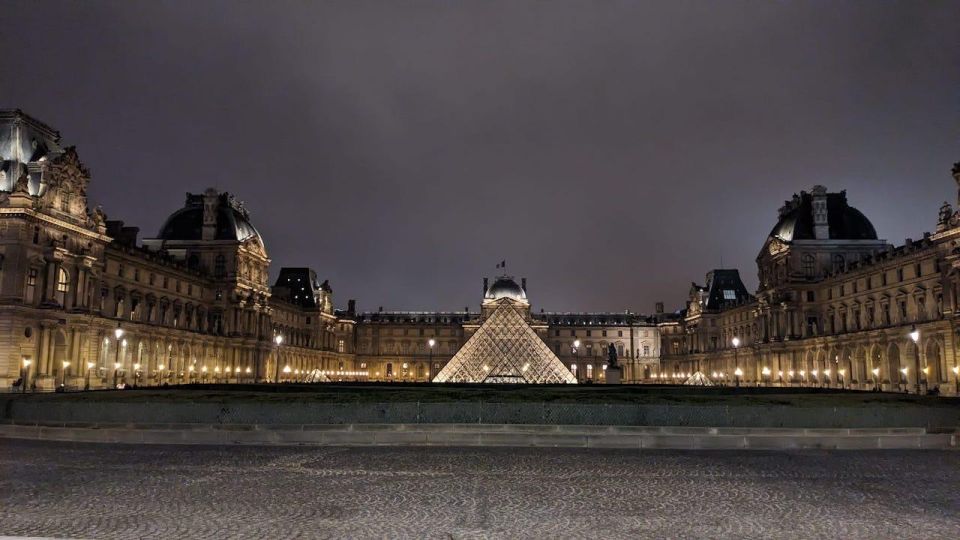
The Louvre can overwhelm even experienced museum visitors. Its galleries spread across a former royal palace, and the famous works are separated by long corridors, grand staircases, and rooms filled with more art than you can sensibly process in one afternoon.
A group limited to six gives this tour a useful middle ground. You get the social energy of a small group, but not the lost-in-the-crowd feeling of a large museum outing. Your guide can speak at a normal volume, respond to questions, and keep the group moving without waiting for a long line of people to catch up.
That matters most in front of the Mona Lisa. The painting draws a great deal of attention, and the viewing area can feel hectic. A guide who knows the route can help you reach the room efficiently, explain what you are seeing, and then move you onward before the visit turns into a long wait for one artwork.
The small group also helps with the less famous rooms. The tour is not limited to a checklist of celebrity paintings. It includes ancient Egyptian works, Greek and Roman sculpture, and Italian Renaissance paintings, so you get a wider sense of what makes the Louvre important.
You can also read our reviews of more evening experiences in Paris



Meeting at Place Colette without confusion
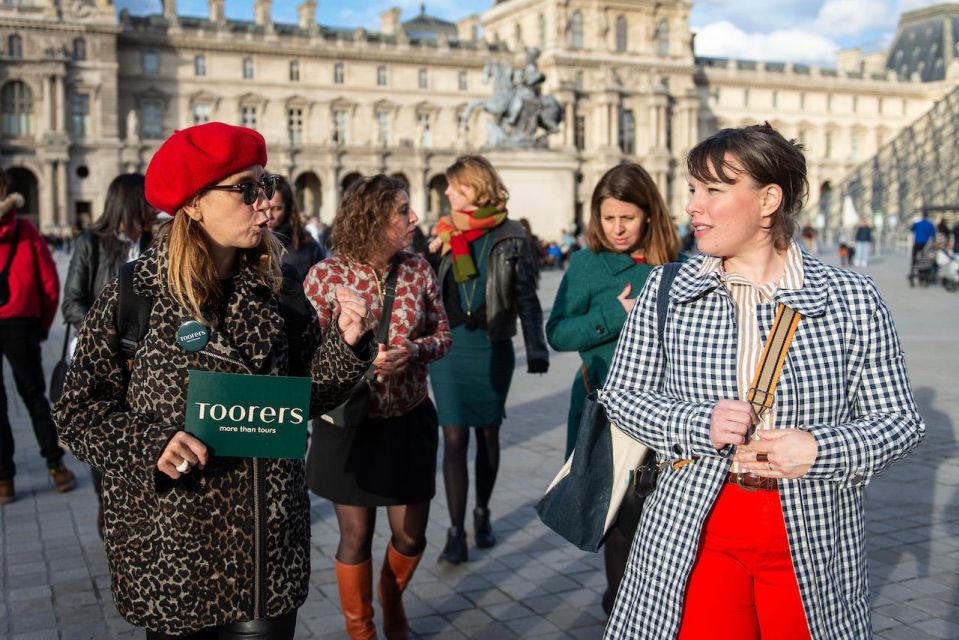
You meet at Le Kiosque des Noctambules, the brightly colored metro entrance on the edge of Place Colette. The metro stop is Palais Royal-Musée du Louvre, served by lines 1 and 7.
Use Exit 5, marked Place Colette and Théâtres. This detail matters. The Louvre area has several entrances, large open spaces, and plenty of signs pointing in different directions. Going to the correct exit saves you from circling the square while watching the clock.
Your guide wears a badge with the Toorers logo. Since the group is small, finding the correct person should be straightforward, but arrive with enough time to get out of the metro, orient yourself, and reach the kiosk. The exact starting time depends on the date you select, so check availability before building this into your evening plans.
The activity ends back at the meeting point. That is useful if you want to continue around Place Colette afterward, though the tour does not include transportation beyond the metro access at the start.
The first masterpieces: Mona Lisa, Venus de Milo, and Winged Victory
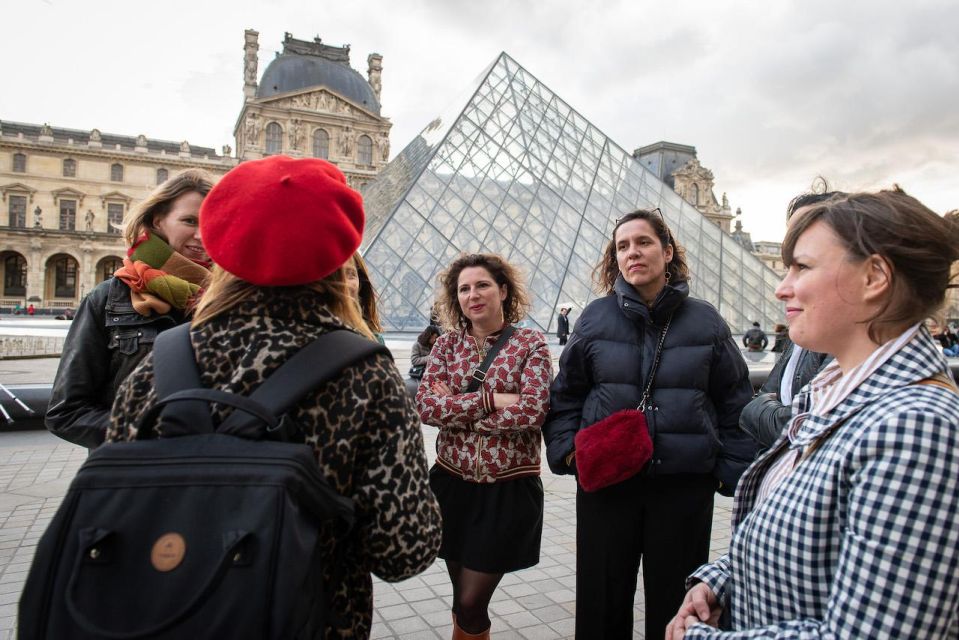
The tour’s headline works are the Mona Lisa, Venus de Milo, and Winged Victory of Samothrace. These are the pieces most visitors expect to see, and the route is designed to include them.
The Mona Lisa is famous enough to need little introduction, but context can make the stop more rewarding. Your guide can place the painting within the Italian Renaissance section and explain why it has become such a powerful symbol of the museum. The value here is not simply getting close enough to see the portrait. It is having someone help you look beyond the crowd and notice the work itself.
The Venus de Milo offers a very different experience. This ancient Greek sculpture invites questions about its missing arms, pose, and idealized human form. It also helps show how the Louvre moves between time periods and cultures. You are not just hopping from one famous object to another. You are comparing different ideas of beauty, power, and artistic skill.
Winged Victory of Samothrace is one of the Louvre’s most dramatic sculptures. Its position and scale make it memorable before you even study the carved details. The work gives the tour a strong visual moment and connects the sculpture galleries with the wider design of the museum.
A drawback comes with these famous stops: popularity can never be fully removed. An evening visit is intended to provide a calmer setting, but these works remain major attractions. The small group and efficient route help, yet you should not expect a private museum.
Egyptian Antiquities and ancient cultures
The Egyptian Antiquities section adds needed breadth to the tour. After seeing European masterpieces, you shift to objects connected with ancient Egyptian life, religion, and art.
The supplied tour plan does not name individual Egyptian objects, so the exact selections can depend on the guide’s route and the museum’s current access. That is not a weakness by itself. A skilled art historian can choose works that fit the pace and explain how they connect to the Louvre’s larger collection.
For you, this section is valuable because it prevents the visit from becoming a greatest-hits march through French and Italian art. The Louvre is also a museum of ancient civilizations. Even a short stop in the Egyptian galleries can show how the museum’s collections extend well beyond the paintings and sculptures that appear in most guidebooks.
The time limit is important here. You will not get a full survey of Egyptian art in a two-hour tour. Think of this as an introduction, with enough explanation to help you decide if you want to return for a longer look.
Greek and Roman sculpture in a royal setting
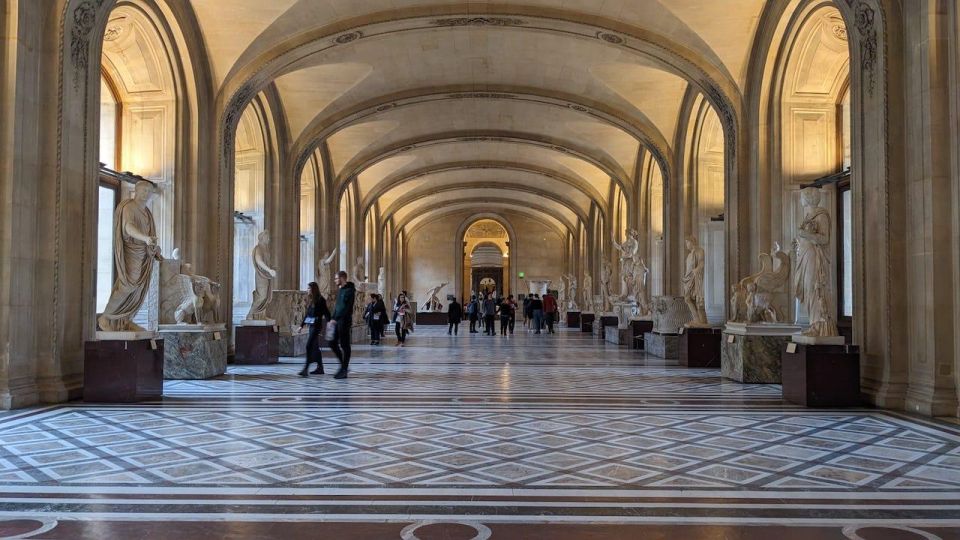
The Greek and Roman Sculpture galleries give the tour another layer of context. The Venus de Milo belongs to this broad ancient world, but the collection around it offers more than one famous statue.
Your guide can help you read the differences between Greek ideals and Roman approaches to sculpture, along with the way later European audiences collected and displayed these works. That kind of explanation is especially useful if you do not already have a background in art. Without guidance, sculpture galleries can blur together. With a clear route, each room has a purpose.
The Louvre itself is part of the experience. You are walking through a former palace as well as a museum, and the scale of the rooms helps explain why the collection can feel almost endless. A guide who manages the route well can keep that grandeur from becoming tiring.
The small group is again a practical advantage. Sculpture rooms often invite questions because the works are less immediately familiar than the Mona Lisa. With only a few people, you have a better chance to ask about a figure, pose, material, or historical period before the group moves on.




Italian Renaissance paintings and possible Napoleon III rooms
The Italian Renaissance paintings are another core part of the route. This section provides the setting for the Mona Lisa and gives you a chance to see the wider artistic world around that single portrait.
The tour description also allows for the possibility of visiting the Napoleon III Apartments. These rooms offer a change of pace from the galleries. Instead of focusing only on individual works, you see decorative interiors and the scale of nineteenth-century imperial taste.
Because the tour lasts two hours, you should treat these apartments as a possible part of the route rather than a guaranteed extended visit. The guide must balance the museum’s famous paintings, sculpture, ancient collections, and the evening schedule. If the apartments are included, they provide a useful reminder that the Louvre is both a museum and a historic palace complex.
This is where the guide’s route planning matters most. The strongest praise for this experience centers on a guide who is very competent, friendly, and good at using limited time. That is exactly the skill you need in the Louvre. The quality of the visit depends less on seeing a long list and more on making each stop count.
What the art historian adds
The guide is not simply there to lead you from room to room. The tour is built around an expert art historian who explains the works and sets a sensible order for the visit.
That expertise can save you from two common Louvre problems. First, you may spend too long searching for a famous painting. Second, you may stand in front of a major work without knowing what details deserve your attention. A live guide can solve both problems in real time.
The strongest praise attached to this tour describes the guide as friendly, highly competent, and effective at optimizing the available time. Those are useful qualities to look for in a short museum tour. You need clear explanations, a route that does not waste steps, and enough warmth to make the experience feel like a conversation rather than a lecture.
The tour is conducted in English. If you want a private tour in another language, this is not the right match. If English works for you, the small group gives you a better chance to interact with the guide than a standard large museum group.
Is $181 per person a fair Louvre price?
At $181 per person, this is not a budget museum visit. The Louvre’s regular admission can be far less than that, so the extra cost pays for more than entry.
You are paying for a two-hour route, an art historian guide, a group capped at six, ticket handling, and the convenience of not having to plan the museum’s confusing geography yourself. You are also paying for a calmer evening format, which may fit better if your daytime schedule is already packed with Paris sights.
The value depends on how you normally visit museums. If you enjoy wandering alone, reading labels, and spending half a day in one collection, buy a ticket and explore at your own pace. You will have more freedom and a lower cost.
If the Louvre feels intimidating, or if you have only two hours and want to see its essential works with useful context, the price becomes easier to justify. The feedback around this experience specifically praises its ability to cover the highlights efficiently and describes it as worth the cost. I would still reserve it for visitors who place a high value on expert guidance and a very small group.
Timing, accessibility, and booking flexibility
The duration is two hours, but the starting time varies. Check the available times for your date before booking, especially if you have a dinner reservation or an evening train to catch.
Entrance tickets are included and handed to you by the guide. The tour also skips the ticket line, removing one source of delay at a museum where time can disappear quickly.
You can cancel up to 24 hours in advance for a full refund. The reserve-now-and-pay-later option lets you hold a place without paying immediately, which can help while you are still arranging a Paris schedule.
The activity is listed as wheelchair accessible. Since the tour covers a large museum with a specific route, it is still sensible to raise any mobility questions when booking, but the stated accessibility makes this more practical than many historic-site walks.
Who should book this evening Louvre tour?
I would recommend it to a first-time Louvre visitor who wants the famous works but also wants a guide to explain what they mean. It also suits couples, families, and small groups of friends who prefer a personal setting without paying for a fully private tour.
It is particularly useful for you if the Louvre is one part of a busy Paris plan. Two focused hours can give you a strong introduction without consuming an entire day. The evening setting may also help you fit the museum around other sightseeing.
Art lovers who already know the Louvre well may find the route too limited. The same goes for visitors who want to study one department at length. You will see a selection, not a scholarly survey.
The tiny group is the key selling point. If the tour had 20 or 30 people, the price would be harder to defend. With no more than six participants, the guide can keep the pace lively, answer questions, and make the route feel tailored to the group.
Should you book the Late Night Louvre Tiny Group Tour?
Book it if you want a short, guided introduction to the Louvre with the museum’s major icons, ancient collections, and possible palace rooms in one organized visit. The art historian guide, ticket handling, small group, and evening timing make it a practical choice for a first visit.
Skip it if your top priority is the lowest possible admission price or several unhurried hours in one gallery. At $181, this is a convenience and expertise purchase, not a cheap museum ticket.
For most first-time visitors with limited time, I think the six-person format makes the strongest case. You get the Louvre’s essential works, a clear route, and a guide who can help you spend your attention where it matters.
FAQ
How long does the Louvre tour last?
The tour lasts two hours.
What time does the tour start?
Starting times vary by date. Check availability for the day you want to visit.
Where do I meet the guide?
Meet at Le Kiosque des Noctambules, the brightly colored metro entrance at the edge of Place Colette.
Which metro station serves the meeting point?
The meeting station is Palais Royal-Musée du Louvre, served by metro lines 1 and 7.
Which metro exit should I use?
Use Exit 5, marked Place Colette and Théâtres.
How will I recognize the guide?
The guide wears a badge with the Toorers logo.
Is the entrance ticket included?
Yes. Entrance tickets are included and given to you by the guide.
Does the tour skip the ticket line?
Yes. The activity includes skip-the-ticket-line access.
What language is the tour conducted in?
The live tour guide conducts the experience in English.
Is the tour wheelchair accessible?
Yes. The activity is listed as wheelchair accessible.
How many people can join the group?
The group is limited to six participants.
Where does the tour end?
The activity ends back at the meeting point.
Can I cancel for a refund?
Yes. You can cancel up to 24 hours in advance for a full refund.
Do I have to pay at the time of booking?
No. The reserve-now-and-pay-later option lets you book while keeping your plans flexible.