REVIEW · PARIS
Paris: Guided City Sightseeing Tour by Bike/E-Bike
Book on Viator →Operated by Sergey Multakh · Bookable on Viator
Paris reveals its grandest sights at street level, and this 10-kilometer bike ride links an impressive string of them in about two and a half hours. You move from the Palais-Royal and Louvre to Notre-Dame, the Eiffel Tower, Invalides, and the Opera Garnier without spending the day underground or walking between distant monuments.
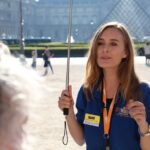
I like the small maximum group of 15, which should make stopping and listening easier, and I like the choice of a regular city bike or e-bike. The e-bike is especially useful when you need a little help getting away from traffic lights, a detail that made a real difference for one rider. The guide has also been praised for lively stories and memorable facts, including by families with teenagers.
The main caution is that this is a sightseeing ride, not a museum tour. You stop for views and explanations, but admission to places such as the Louvre, Notre-Dame, the Eiffel Tower, and the Palais Garnier is not included. There was also a serious communication problem when a scheduled outing was affected by a strike, so it is wise to confirm arrangements close to departure.
In This Review
- Key points to know before booking
- Why seeing Paris by bike makes sense
- Palais-Royal and the Louvre: a polished opening
- Tuileries Garden and the Carrousel arch
- Medieval Paris at Saint-Jacques Tower
- Hôtel de Ville and Notre-Dame beside the Seine
- Pont Alexandre III and the Invalides
- The Eiffel Tower from street level
- Grand Palais, Petit Palais, and Place de la Concorde
- Opera Garnier and the return to Rue Feydeau
- What $45 gets you
- Who will enjoy this ride most
- Should you book it?
- FAQ
- Where does the Paris bike tour begin?
- Where does the activity finish?
- How long is the tour?
- Is an e-bike available?
- What equipment is included?
- Are monument and museum admission tickets included?
- What is the cancellation policy?
Key points to know before booking
- A long list of Paris icons in one ride: The route takes in the Louvre, Tuileries Garden, Notre-Dame, Pont Alexandre III, Invalides, Eiffel Tower, Grand Palais, Place de la Concorde, and Opera Garnier.
- Choose the bike that suits you: A standard city bike is available, along with an e-bike that can make starts and longer stretches easier.
- About 10 kilometers in 2.5 hours: This is an active overview of central Paris, with short stops rather than extended visits inside monuments.
- Small group, practical equipment: The maximum is 15 people, and the package includes a helmet, phone holder, luggage storage, bottled water, and the bicycle.
- The guide adds local color: The strongest praise focuses on inspiring explanations, unusual facts, and a style that kept teenagers interested.
- Good value for a first look: At $45, the ride can save you time and help you decide which landmarks deserve a longer visit later.
Why seeing Paris by bike makes sense
Paris is compact in the center, but its major sights are not all next door to one another. A bike lets you connect the royal quarter, the Seine, the grand western monuments, and the Opera district in one continuous outing.
I particularly like the way this route gives you changing views. You are not simply collecting entrance halls. You see buildings as part of the city, with gardens, bridges, squares, river crossings, and broad avenues linking them together.
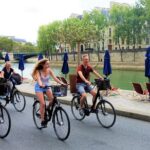
The riding distance is about 10 kilometers. That is enough to feel like an outing, but the pace is broken by regular stops. You should still be comfortable riding in a city for two and a half hours, and you should expect to remain alert around traffic and other road users.
The e-bike option is worth considering if you are unsure about your stamina. One rider specifically appreciated the extra help when starting from traffic lights. That small push can make the difference between enjoying the route and worrying about every restart.
The meeting point is Orange Fox at 32 Rue Feydeau in the 2nd arrondissement. The activity returns there at the end. It is near public transportation, which helps if you are coming from another part of Paris.
You can also read our reviews of more cycling tours in Paris


Palais-Royal and the Louvre: a polished opening
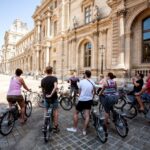
The tour begins at the Palais-Royal, a former center of royal power that now feels calmer and more elegant. Its garden and surrounding galleries offer a gentle start before the ride moves toward the Louvre.
You get about five minutes here, so think of it as an introduction rather than a full visit. The value is in understanding the setting. Paris often layers court life, public gardens, shopping arcades, and modern city life in the same few blocks, and the Palais-Royal shows that mix well.
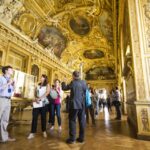
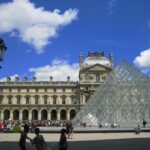
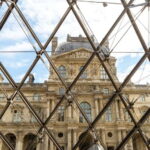
The Louvre receives a longer stop of around 10 minutes. The glass pyramid is the obvious focus, but the real point is the contrast between the old palace buildings and the modern entrance. You will not enter the museum on this tour, and admission is not included.
That is not a flaw if you see this ride as an orientation. The Louvre can consume half a day or more on its own. A brief exterior visit lets you note the entrances, take in the scale, and return later with a plan instead of trying to fit the entire museum into a rushed morning.
Tuileries Garden and the Carrousel arch
From the Louvre, you ride through the Tuileries Garden. This formal park stretches toward Place de la Concorde and provides one of the easiest places in central Paris to appreciate long views and carefully planned gardens.
The stop lasts about 10 minutes. You can expect statues, clipped plantings, broad paths, and a quieter rhythm than the surrounding streets. The garden is also a useful pause early in the ride, giving you a chance to settle into the bike before the route becomes more monument-heavy.
Nearby, the Arc de Triomphe du Carrousel recalls Napoleon’s military victories. It is smaller and less famous than the Arc de Triomphe at the top of the Champs-Élysées, but its position between the Louvre and Tuileries makes it an important part of the royal and imperial axis.
The five-minute stop keeps the tour moving. You will get context and a look at the monument, but not a long architectural examination. If you enjoy military symbolism and imperial Paris, make a mental note to study the arch more closely when you return on foot.
Medieval Paris at Saint-Jacques Tower
The Saint-Jacques stop shifts the mood. This solitary tower is the surviving part of a 16th-century church and gives you a glimpse of medieval Paris amid the later city.
Only about five minutes are set aside here, so the guide’s explanation matters. The tower is an easy detail to miss when you are focused on the bigger sights, yet it helps show that Paris was not built in one grand campaign. Older fragments remain tucked into streets shaped by later rulers and planners.
This is one of the route’s more useful smaller stops. The Eiffel Tower and Louvre need no introduction. Saint-Jacques Tower gives you a reminder that the city’s story also survives in single structures and partial remains.
Hôtel de Ville and Notre-Dame beside the Seine
The Hôtel de Ville is the city hall and a major civic building with French Renaissance influence. The route allows about 10 minutes here, enough to take in its broad facade and discuss its role as both a working municipal building and a place tied to Parisian public life.
The next major stop is Notre-Dame de Paris. The cathedral remains under restoration, so you should not expect a normal interior visit. Admission is not included, and the tour focuses on the exterior and the Gothic structure.
Even from outside, Notre-Dame is a powerful sight. Its location beside the Seine makes it easy to connect the cathedral to the older center of Paris. The restoration also adds a current chapter to the building’s long story, centered on repair, survival, and the effort to preserve a national symbol.
The 10-minute stop is enough for photographs and an explanation, but not for a detailed look at every sculptural feature. If Notre-Dame is high on your list, plan a separate return visit to check the latest access arrangements.
You can also read our reviews of more guided tours in Paris


Pont Alexandre III and the Invalides
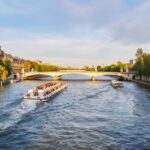
The route includes a view of Pont Alexandre III, one of the city’s most decorative bridges. It was built to symbolize friendship between France and Russia, and its ornamented design gives you a very different experience from the plain utility of an ordinary river crossing.
This is a strong photo stop because the bridge opens views along the Seine and toward several major landmarks. The supplied schedule does not give a separate time for this stop, so the exact pause may depend on traffic and the guide’s handling of the route.
Next comes Les Invalides, visited for about five minutes. Its great golden dome is linked to the military museum and Napoleon’s tomb. Even a short stop helps place French military history within the city’s grand ceremonial architecture.
Admission is listed as free for this portion of the tour, but that does not mean the full military museum visit is included. Treat Invalides as an exterior stop unless the guide tells you otherwise.
The Eiffel Tower from street level
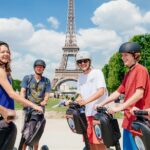
The Eiffel Tower gets about 10 minutes, giving you time to see the structure, take photographs, and hear the essential story behind Paris’s most recognizable landmark.
The tour does not include entry. That distinction matters because tower tickets, security, and elevator or stair access require separate planning. This ride is better for getting a well-placed exterior view than for replacing a tower visit.
I like having the Eiffel Tower placed within a wider route. It is easy to think of the monument as a stand-alone attraction, but seeing it after the bridges, gardens, and Invalides helps you understand how it fits into western Paris.
The short stop also keeps the price reasonable. A guided Eiffel Tower visit would require a very different schedule and cost structure. Here, you get the landmark without sacrificing the rest of the city route.
Grand Palais, Petit Palais, and Place de la Concorde
The Grand Palais and Petit Palais face one another near the Champs-Élysées. The Grand Palais is known for its stone facade and huge glass roof, while the Petit Palais houses a fine arts museum inside an ornate Belle Époque building.
Each receives about five minutes. These stops are about architecture and orientation, not museum entry. Admission to both is not included, so note them as possible later visits if their exhibitions appeal to you.
The route then reaches Place de la Concorde, the largest square in Paris. Its central Luxor Obelisk and long historical associations give the square a strong sense of scale. The schedule does not assign a separate time to this stop, but passing through it helps connect the Tuileries, the Champs-Élysées, and the Opera district.
This section is especially good for understanding Parisian planning. Instead of isolated sights, you see how broad avenues, ceremonial squares, museums, gardens, and bridges were designed to work together.
Opera Garnier and the return to Rue Feydeau
The final listed landmark is Palais Garnier, the ornate Paris Opera House. You get about five minutes to admire its exterior and hear why it matters to the city’s cultural life.
Admission is not included, so this is another place to revisit if you want to see the grand interior. The exterior alone is worth a pause, with its theatrical decoration and formal presence.
From here, the activity returns to the starting point at 32 Rue Feydeau. Ending where you began is convenient because you can collect stored luggage and continue with dinner, shopping, or another visit in central Paris.
What $45 gets you
At $45, this is a fair price for a guided overview if you want to cover a lot of ground quickly. The fee includes the bicycle, e-bike option, helmet, phone holder, luggage storage, and bottled water. The guide’s commentary is the part that turns a simple rental into a city experience.
The value is strongest for a first visit or a short stay. You can see where the major sights sit in relation to one another, then choose which ones deserve a longer return visit.
The price is less attractive if you want interior access. None of the major museum or monument admissions are included, and the stops are short. You are paying for movement, context, equipment, and time saved, not for entry tickets.
The public score is 3.2 out of 5 from 13 ratings, which calls for a measured decision rather than blind confidence. Several pieces of feedback praise the guide’s engaging facts and personal style, and one family found the ride enjoyable for two teenagers. At the same time, a serious complaint describes an activity affected by a strike without proper notice, followed by a request for a refund.
That communication failure should not be ignored. Free cancellation is available up to 24 hours before departure, with no refund for cancellations inside that period. Because strikes can disrupt Paris transport and activities, check your confirmation and contact the provider if local conditions look uncertain.
Who will enjoy this ride most
I would recommend it to you if you want a fast, active introduction to Paris and prefer seeing many exteriors rather than spending one morning inside a single museum. It also suits families with older children or teenagers who may lose patience with long walking tours or formal museum visits.
The e-bike makes the outing more approachable if you are concerned about distance or repeated starts. The standard city bike may suit confident riders who want a more traditional ride.
This may not be the right choice if you dislike city cycling, need long photo stops, or want in-depth discussion at every monument. The route is packed. You will see more places, but you will not study each one in detail.
A phone holder is included, which is practical for keeping directions or personal navigation within reach. Luggage storage is also useful if you have bags with you, though you should confirm the storage arrangement at the meeting point.
Should you book it?
Book this tour if your priority is coverage and orientation. For $45, you get a small-group ride through some of Paris’s most important areas, plus a choice of bike styles and a guide whose storytelling has been a strong part of the experience.
Skip it if your main goal is entering the Louvre, climbing the Eiffel Tower, or spending serious time at Notre-Dame. Those require separate planning and tickets. Also take the strike-related communication issue seriously and confirm the outing before you set aside your morning.
For many first-time visitors, this is a useful way to get your bearings fast. You will leave with a clearer map of Paris and a shortlist of places worth seeing on foot later.
FAQ
Where does the Paris bike tour begin?
The tour begins at Orange Fox, located at 32 Rue Feydeau, 75002 Paris, France.
Where does the activity finish?
The activity ends back at the original meeting point on Rue Feydeau.
How long is the tour?
The ride lasts approximately 2 hours and 30 minutes and covers about 10 kilometers.
Is an e-bike available?
Yes. You can use either a city bike or an e-bike.
What equipment is included?
The package includes the bicycle, helmet, phone holder, luggage storage, and bottled water.
Are monument and museum admission tickets included?
No. Admission is not included for sights such as the Louvre, Hôtel de Ville, Notre-Dame, Eiffel Tower, Grand Palais, Petit Palais, and Palais Garnier. The tour mainly provides exterior stops and guided sightseeing.
What is the cancellation policy?
You can cancel at least 24 hours before the start time for a full refund. Cancellations or changes made less than 24 hours before departure are not accepted for a refund.