REVIEW · PARIS
Paris Croissant and Breakfast Pastry Class with a French Chef
Book on Viator →Operated by Patisserie a la Carte · Bookable on Viator
Croissants are a skill, not just a snack. This small-group Paris class (max six) teaches you classic technique hands-on with a French pastry chef, and you leave with freshly baked croissants and pain au chocolat in your take-home bags. I especially like the tight group size and the fact that you’re guided through the real process, including the turns, the layering, and the patience of fermentation.
Here’s the one catch: croissants take serious timing and prep, and this course is built around that reality. You’ll still work the dough during class, but some stages rely on prep that typically starts the day before—so set your expectations for a well-run, staged lesson rather than a start-from-scratch marathon.
In This Review
- Why This Croissant Class Works So Well in Paris (Max 6, Real Chef Instruction)
- The Pastry Techniques You’ll Learn (And Why They Matter)
- Your Morning at Patisserie a la Carte: A Real Kitchen, Not a Demo Room
- Your 3 Hours: From Dough Structure to Fresh Croissants
- What You’ll Bake: Croissants and Pain au Chocolat (Plus a Thursday Twist)
- Price and Value: Is $131.54 a Fair Deal?
- Who This Class Is Best For (And Who Might Want to Think Twice)
- Practical Tips Before You Go (Wear This, Bring Nothing Extra)
- Meeting the Chef: Instruction Styles You Might Notice
- Final Call: Should You Book This Croissant Class?
- FAQ
- How long is the croissant and breakfast pastry class?
- What is the group size?
- Is the class taught in English?
- What ages can attend?
- What pastries will I make and take home?
- Is there a special option on Thursdays?
- What’s included in the price?
- What should I bring or wear?
- What is the cancellation window?
Why This Croissant Class Works So Well in Paris (Max 6, Real Chef Instruction)
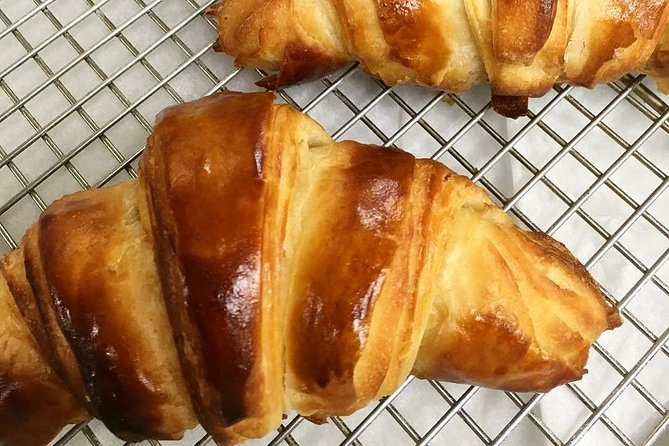
The best part of this experience is that it doesn’t try to rush you through a bakery show. With a cap of six participants, the chef can actually correct your folding, watch your dough, and answer your questions while you’re doing the work. That matters because croissants are all about consistency: butter temperature, dough texture, and how evenly you build the layers.
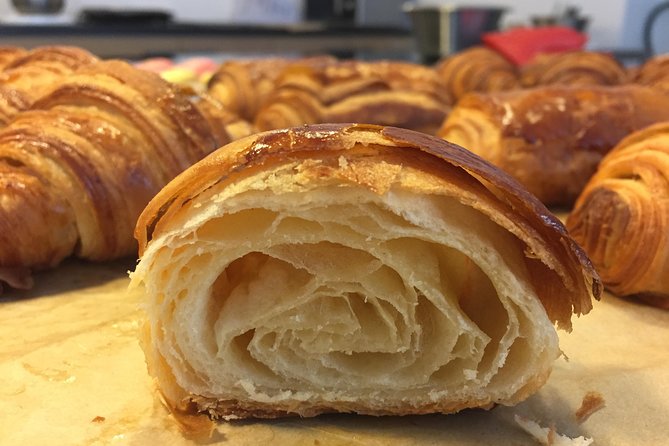
The second big win is the instruction style. You get step-by-step professional pastry technique, not just a quick overview. The class focuses on the structure that makes croissants light and flaky: building butter layers into the dough and then shaping them into the classic crescent.
One more practical plus: you get what you make. This isn’t only about tasting something warm in the room. You take home the croissants and pain au chocolat you’ve prepared, which makes the class feel like a real win for your morning and your week of breakfasts.
The Pastry Techniques You’ll Learn (And Why They Matter)
Croissant dough sounds simple until you try it. The class teaches the key vocabulary and actions that pastry chefs use, and you’ll practice the process enough to understand what’s going on under the hood.
Here are the specific techniques the class emphasizes:
- Beurrage: how butter is added and sealed into the dough (butter laminated into the dough’s core).
- Pâton: the dough block after the butter has been folded in, forming a sealed envelope.
- Turns: rolling and folding the pâton to distribute butter evenly and build structure.
- Feuilleter: the rolling-and-folding routine that creates thin layers, sometimes described as making the dough into sheet-like leaves.
- La pousse: the fermentation and rising phase driven by yeast, which expands the dough.
If you’ve ever wondered why your homemade croissants turn out dense or greasy, these steps explain the likely cause. Too-warm butter can leak and reduce separation into layers. Uneven turns can create thick spots that don’t bake the same way. And fermentation that’s too short can leave you with less lift and a tighter crumb.
Also, the course acknowledges reality: layered dough needs time. They run the lesson in stages so you’re not stuck waiting all day, while still learning the core workflow.
A few more Paris tours and experiences worth a look


Your Morning at Patisserie a la Carte: A Real Kitchen, Not a Demo Room
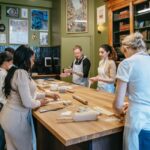
The class meets at 9 Rue Thimonnier, 75009 Paris. From there, you’ll work in a proper pastry setting with the tools you need. The important detail for your comfort: all cooking equipment, aprons, and recipe documents are provided, so you’re not showing up to hunt for missing gear.
You’ll also have a chance to slow down and ask questions. Several past participants highlighted that instruction is step-by-step, with clear demonstration first, then hands-on time. That is exactly what you want with croissants, because small mistakes compound fast once you start turning and rolling.
Another practical detail: the class is offered in English, and you receive an English copy of the recipes. That reduces confusion when the chef is talking through dough feel, timing, and temperature.
Your 3 Hours: From Dough Structure to Fresh Croissants
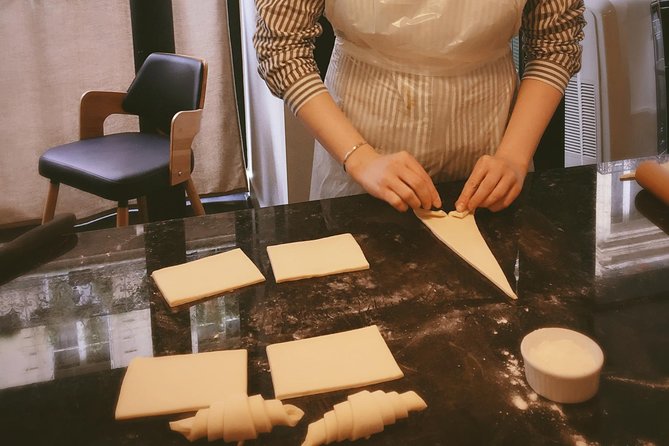
This is a three-hour class, designed to keep you moving but not just passing through stations. Croissant-making has multiple stages, so the session is organized to cover both technique and results.
Here’s how the timing usually feels in a class like this:
First, you’ll learn what you’re building. You’ll work on the foundation steps that create the dough-and-butter envelope, including the beurrage concept and forming the pâton. This is where understanding matters most, because the dough envelope is what lets butter become steam layers in the oven.
Next comes the part most people find tricky: the turns and layering. You roll and fold the dough to create even thickness and repeatable layers. Then you move toward the feuilleter process, where layers become thinner and more numerous. This is the stage where the chef’s coaching makes a noticeable difference—because your folds determine the final flake.
Then you’ll follow what happens during la pousse. Yeast fermentation and rising is what gives croissants their lift. The course notes that croissant dough requires a lot of prep time, preferably starting the day before, and that the lesson is staged so you can enjoy the pastries at the end. In practice, that means you still do hands-on work during the class, but the schedule uses the necessary dough prep timing so the baking moment is real.
Finally, you end with baked results. You take home what you’ve prepared, and you’ll typically enjoy tea or coffee with the session’s end pastries. One small but useful perk: coffee and tea are included, so you’re not scrambling for a café stop right after class.
What You’ll Bake: Croissants and Pain au Chocolat (Plus a Thursday Twist)

This class focuses on two core items:
- Croissants
- Pain au chocolat (chocolate-filled croissants)
That pairing makes sense because it keeps the lesson coherent. You’re practicing the same underlying laminated dough technique, and then applying it to two classic shapes and fillings. If you care about learning the method, this course design does the job.
On Thursday morning classes, there’s an extra option: bicolor croissants filled with chocolate pralin. This is a fun variation if you’re curious how flavor and presentation can change while still relying on the same laminated-dough logic.
One heads-up, based on what some participants expected versus what the class delivers: this is not a pastry sampler. It’s a croissant-focused workshop. If you’re specifically hoping to make other filled pastries like pain aux raisins, you might find the focus stays on croissants and pain au chocolat, with the Thursday bicolor pralin variation.
Price and Value: Is $131.54 a Fair Deal?
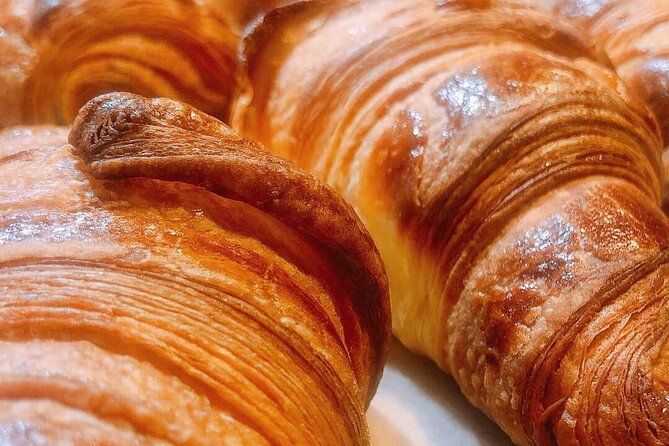
At $131.54 per person for about three hours, you’re paying for three things that matter in Europe: expert labor, a small group, and real ingredients + equipment.
Here’s what you get for the price:
- a professional French pastry chef
- small group size capped at six
- English recipe copies
- aprons and all cooking equipment
- tea and coffee
- take-home bags
- and, for their 10th anniversary, an Everyday Gourmet French Tarts eBook
The value part isn’t just that you learn. It’s that you leave with substantial baked goods you made. The take-home element turns the class into something you can share or eat over multiple days—less like a souvenir, more like food you can plan around.
Also, because the class cap is small, the chef’s time is less diluted. With croissants, that chef interaction is what helps you avoid costly errors. Even if you bake casually at home, that guidance can save you trial-and-error hours later.






Who This Class Is Best For (And Who Might Want to Think Twice)
This experience is ages 15 and up. If you’re traveling with a younger teen, the rule is clear: children must attend with a registered adult, with one adult per child.
Skill level is the other question. Croissant dough is demanding by nature. The course notes that the layered, yeast-leavened process has technicalities and time requirements, which is exactly why it uses stages. Some participants mentioned it can be a lot of work and is best if you have at least a bit of baking experience. So here’s my practical take:
- If you enjoy cooking and don’t mind hands-on repetition, you’ll likely have a blast.
- If you’re looking for a light, casual activity with minimal dough handling, this might feel like more labor than you expected.
The class also requires patience. You’ll be working through steps that build toward a baked result. If you’re the type who wants everything fast and frictionless, this isn’t that kind of morning.
Practical Tips Before You Go (Wear This, Bring Nothing Extra)
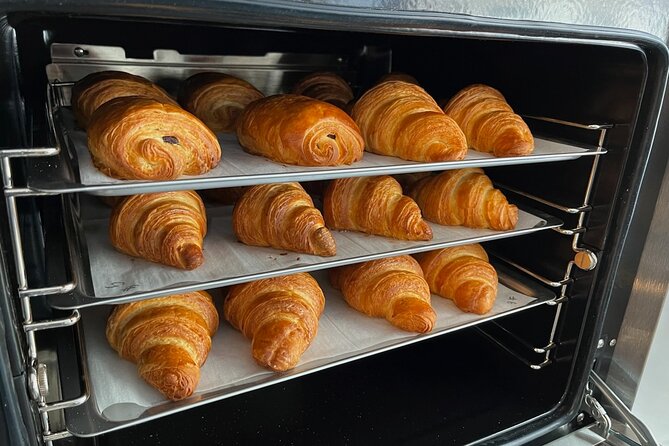
You don’t need to bring pastry tools. Everything cooking-related is provided: equipment, aprons, and recipe sheets. But you should prepare your body and your timeline.
- Wear comfortable, casual clothing.
- Use flat, comfortable shoes.
- Tie back long hair.
- Plan to arrive on time because the course starts promptly: after a short delay, the class may begin without late participants, and if nobody shows within a longer window, the session can cancel.
It’s also useful to know there’s no hotel pickup or drop-off. You’ll get there on your own, and it’s near public transportation. That’s good for flexibility, especially if you’re combining class with a morning of sightseeing.
Dietary needs and allergies should be shared when you book. The class asks you to advise allergies or special dietary requirements ahead of time, which helps everyone stay safe.
Meeting the Chef: Instruction Styles You Might Notice
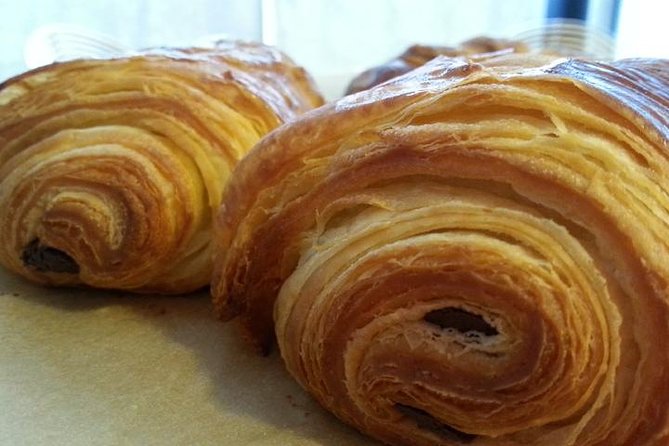
In the reviews data you provided, instructors are listed with different names across sessions, including Hiba, Julie, Marie, Gaëlle, Mary, and Gayle. Your particular chef may differ, but the teaching goal stays consistent: clear demonstration, then hands-on practice, with enough patience to let you learn rather than just watch.
If you care about communication, this is a strong sign. The class is offered in English, and several participants praised detailed step-by-step guidance in clear English.
Final Call: Should You Book This Croissant Class?
If you want a Paris experience that goes beyond eating and shopping, I’d recommend this class. You’ll learn the actual method behind the flaky layers—beurrage, pâton, turns, feuilleter, and la pousse—then take home croissants and pain au chocolat you helped make.
Book it if:
- you like hands-on cooking
- you want a small-group format with real coaching
- you’d rather bring home food than just photos
Skip it (or choose carefully) if:
- you want a quick, low-effort activity
- you’re hoping to make a wide variety of pastries beyond croissants and pain au chocolat
- you don’t want dough work with timing and staging involved
For most travelers, this hits a sweet spot: skill-building, delicious payoff, and a classroom that respects how tricky croissants really are.
FAQ
How long is the croissant and breakfast pastry class?
The class lasts about 3 hours.
What is the group size?
It’s a small group with a maximum of 6 participants.
Is the class taught in English?
Yes, it is offered in English.
What ages can attend?
The minimum age is 15. Children must attend with a registered adult (one adult per child).
What pastries will I make and take home?
You’ll learn to make classic buttery croissants and pain au chocolat, and you’ll take home the pastries in provided take-home bags.
Is there a special option on Thursdays?
Yes. On Thursday morning classes, the class offers bicolor croissants filled with chocolate pralin.
What’s included in the price?
Professional French pastry chef instruction, small group format, English recipe documents, aprons, cooking equipment, take-home bags, tea and coffee, plus the Everyday Gourmet French Tarts eBook (10th anniversary).
What should I bring or wear?
Wear comfortable casual clothing and flat comfortable shoes. Long hair should be tied back. No hotel pickup is included, and you’ll make your own way to the meeting point at 9 Rue Thimonnier.
What is the cancellation window?
You can cancel up to 24 hours in advance for a full refund, and cancellations within 24 hours are not refunded.