REVIEW · PARIS
Paris: City Discovery Tour by Vintage Citroën DS Car
Book on GetYourGuide →Operated by Regencia Transfert · Bookable on GetYourGuide
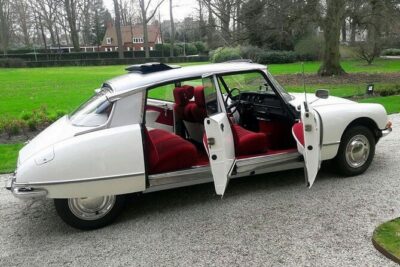
Paris glides differently in a Citroën DS.
I like that this tour mixes major landmarks with lots of quick “stop for a picture” moments, so you leave with both memories and photos. I also love the personal feel of a private group (up to 4) where the driver can tailor pacing and angles as you move through central Paris.
The main thing to think about is the weather. The DS has a convertible roof, and rain can change what’s possible with the top, which can affect the vibe you’re aiming for (especially on photo-heavy stops).
Key highlights to expect
- Vintage Citroën DS comfort with a classic Paris-machine feel
- Photo-stop flexibility where you can ask to pull over briefly
- Live English/French guide with on-the-road stories and sight context
- A route built for icon views: Eiffel Tower, Arc de Triomphe, Notre-Dame area, Sacré-Cœur
- A group size of up to 4 for a calmer, more conversational ride
- Age limit: kids must be at least 11
In This Review
- Riding the Legendary Citroën DS Through Paris
- 1–3 Hours: What You’ll Actually Fit (And What You Should Skip in Your Head)
- Champs-Élysées and Arc de Triomphe: The Paris-You-Expect Start
- Eiffel Tower and Pont de Bir-Hakeim: Views That Make the Convertible Matter
- Invalides and Musée d’Orsay: Two Sides of Paris’ Storytelling
- Petit Palais and Grand Palais: When Paris Shows Its Craft
- Saint-Germain-des-Prés and the Pantheon: Walkable Paris, Seen From a Ride
- Île de la Cité and Notre-Dame: Where Central Paris Turns Sacred
- Louvre Museum: The World-Famous Stop Without the Ticket Pressure
- Sacré-Cœur Basilica: The Panoramic Payoff
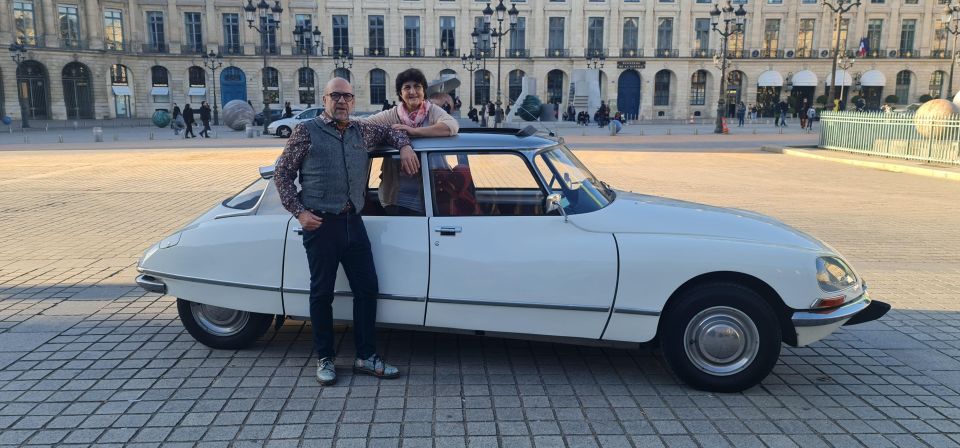
- Place de l’Opéra, Place Vendôme, and Place de la Concorde: The Center’s Three Personalities
- Comfort and Value: Why This Works for a Group of 1 to 4
- Timing Strategy: Morning for Bearings, Night for Atmosphere
- Who This Tour Fits Best (And Who Might Prefer Something Else)
- Small Details That Can Change Your Ride
- Should You Book This Paris Citroën DS City Tour?
- FAQ
- How long is the Paris City Discovery Tour by Vintage Citroën DS Car?
- How many people are in the group?
- What does the price include?
- Where do you get picked up?
- What languages are available for the tour guide?
- What are some of the main places you’ll see?
- Is the tour allowed for children?
- Is there a cancellation option?
Riding the Legendary Citroën DS Through Paris
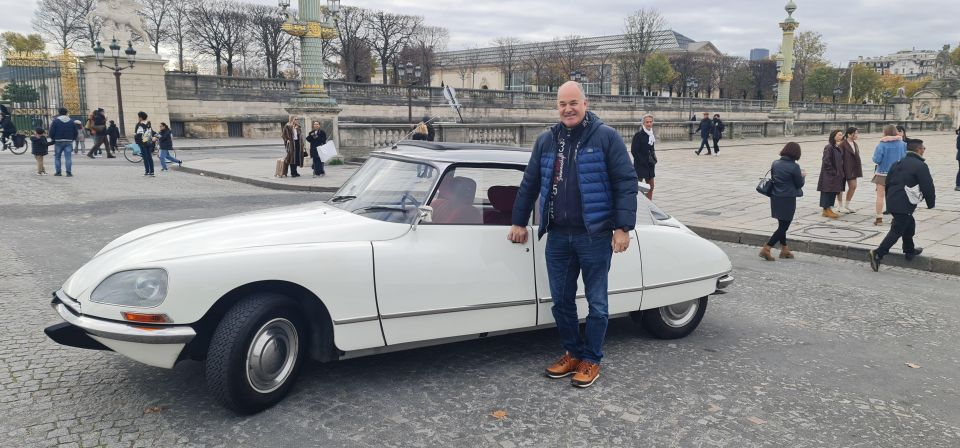
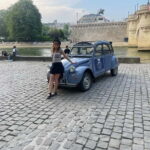
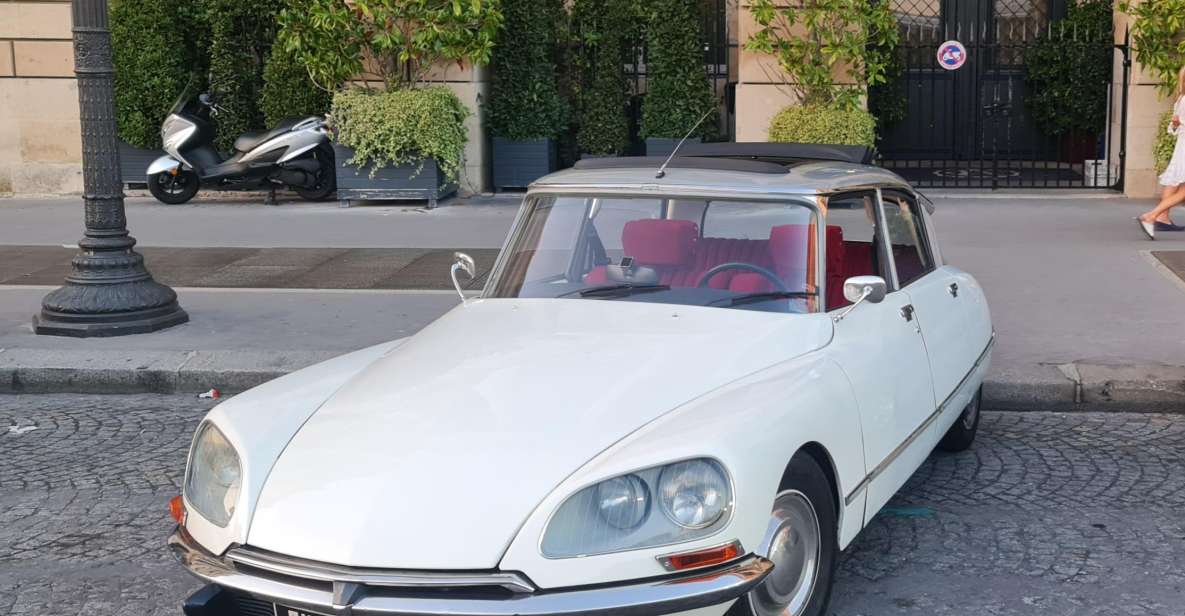
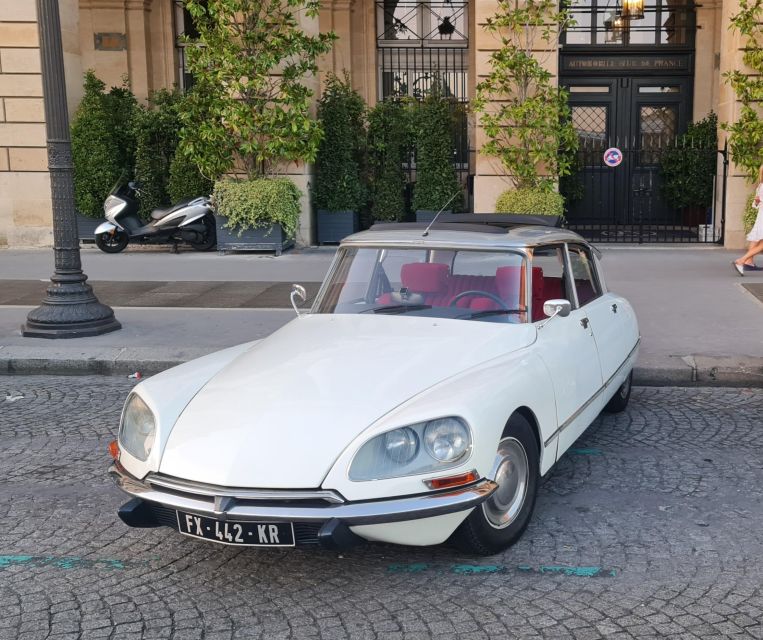
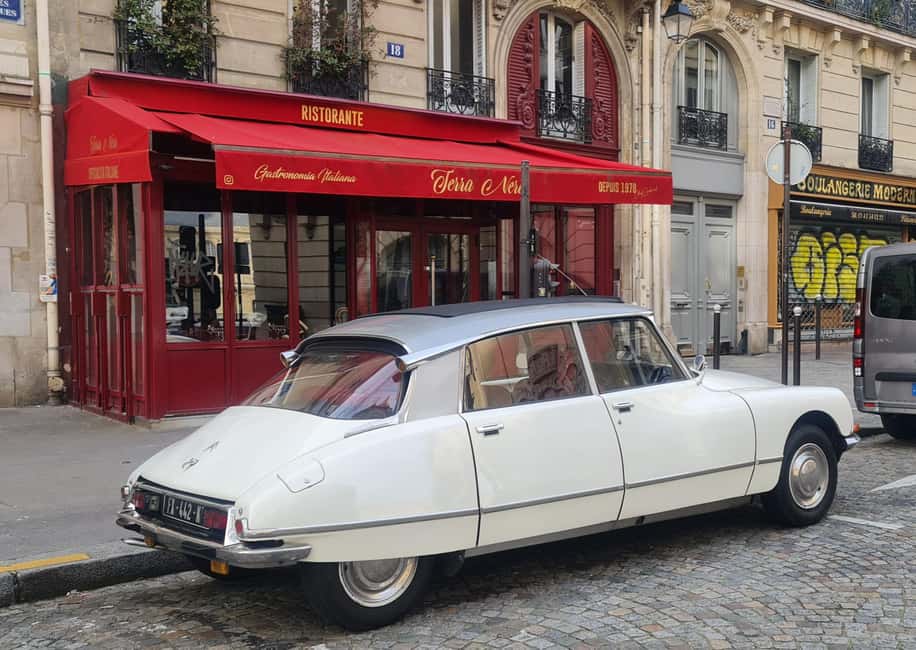
This is the kind of Paris tour that feels less like a route and more like a guided drive through your favorite scenes in real life. The star here is the Citroën DS, a genuinely iconic French car with a convertible roof—so even the drive itself feels like part of the show.
You’ll also get something that many big-vehicle tours struggle with: back-and-forth conversation. In real bookings, the driver often leads with sharp, story-driven commentary and keeps things friendly and interactive. Some guides named in recent experiences include Alain and Frederic, and both styles point to the same idea: you’re not just transported, you’re explained.
1–3 Hours: What You’ll Actually Fit (And What You Should Skip in Your Head)
The tour window is flexible—choose from about 1 to 3 hours depending on what you want from the day. In a shorter slot, you’ll focus on the biggest photo magnets and a tight loop of key neighborhoods. In a longer slot, you get more breathing room at the stops where Paris is best seen from the street.
I’d treat this tour as either:
- a fast “get your bearings” introduction early in your trip, or
- a relaxed “see the city at its best” outing later, when lighting and atmosphere do half the work.
The itinerary-style flow is built around a classic arc: grand boulevards, major monuments, then across the Seine toward the Left Bank and back toward the center again.
You can also read our reviews of more city tours in Paris


Champs-Élysées and Arc de Triomphe: The Paris-You-Expect Start
You start on the Champs-Élysées, where the sidewalks are wide, the buildings are showy, and the whole street screams iconic. Even if you’ve seen photos, the scale hits different when you’re rolling along inside the city rather than standing still.
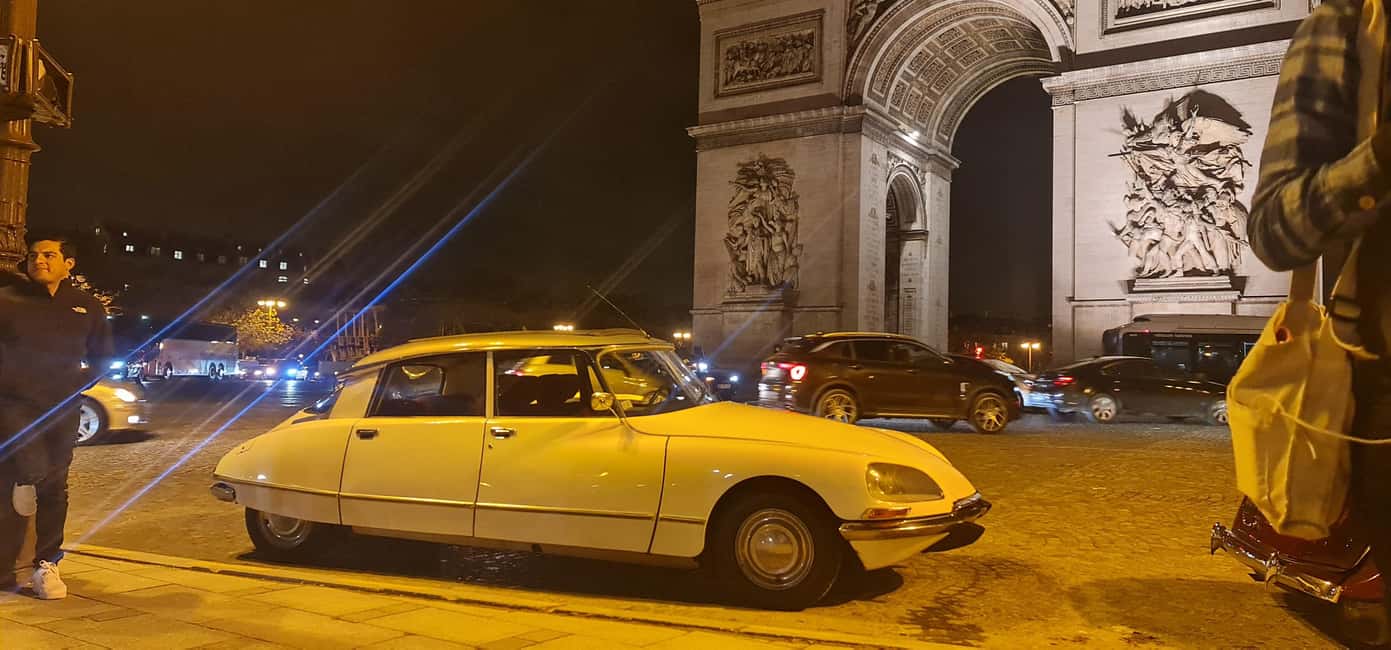
Next is the Arc de Triomphe area. This is a useful stop because it’s not just about the monument itself. It’s where you feel Paris’ traffic geometry—how streets feed into each other—and it helps you understand why some views work so well from specific angles.
If you’re doing a shorter tour, I’d prioritize snapping pictures here because this stretch gives you strong Paris identity in minutes.
Eiffel Tower and Pont de Bir-Hakeim: Views That Make the Convertible Matter
The Eiffel Tower stop is the obvious highlight, but what matters is how you see it. You get a classic viewing moment, plus the chance to take photos with the DS and at the Eiffel viewpoint. If you’re aiming for the best “wow” photos, this is where you’ll want your phone ready and your best angle in mind.
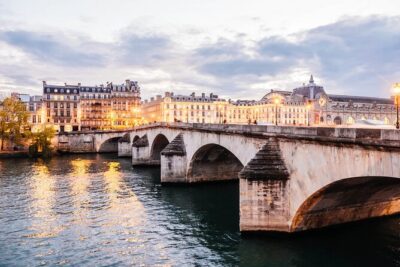
Then comes Pont de Bir-Hakeim, a bridge stop known for its dramatic view line. From there, Paris feels like a series of layers: water, architecture, and long sightlines that make even a quick stop feel cinematic. It’s also one of those spots where being in an open-top classic car pays off—you’re close to the scene, not buffered by a large bus.
Practical note: if it’s warm, you’ll likely want the roof open for the full experience. If it’s wet, plan on a more enclosed ride.
Invalides and Musée d’Orsay: Two Sides of Paris’ Storytelling
As you move toward Invalides, you’re stepping into the world of Paris’ monumental grandeur. The Invalides area gives you a sense of how the city honors power and memory—big architecture, strong lines, and a “main character” feel.
Then it’s Musée d’Orsay. Even if you don’t enter museums on this tour, the stop works because it places you in the Seine corridor where the city’s beauty shows up in reflections, bridges, and building facades. Orsay also helps you connect Paris’ timeline: it sits between the historic and the modern in a way that’s easy to “get” from the street.
If you love architecture more than shopping, this section tends to be a favorite.
Petit Palais and Grand Palais: When Paris Shows Its Craft
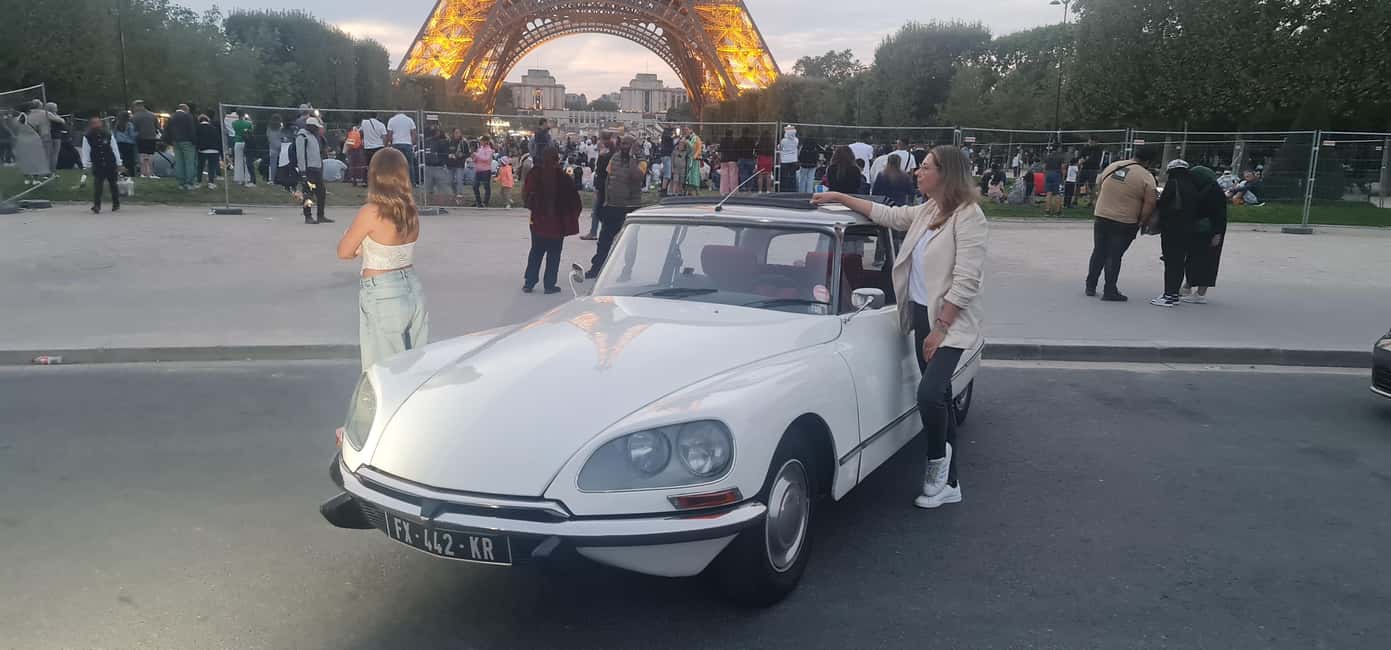
Petit Palais and Grand Palais are quick stops, but they’re worth treating like a mini lesson in how Paris celebrates design. These buildings show off stonework, scale, and the kind of civic pride that was built to last.
I like that they’re paired in the experience because the contrast is clear. You’re not stuck staring at one style for too long, and you’ll come away noticing details you might miss when rushing on foot.
Photo advice: ask for a brief pause so you can shoot the facades without people blocking your frame—these spots often have lots of passersby.






Saint-Germain-des-Prés and the Pantheon: Walkable Paris, Seen From a Ride
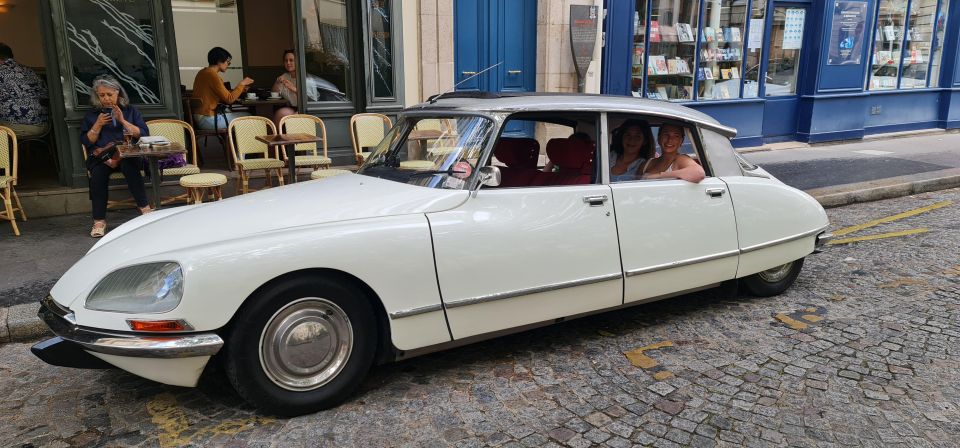
Next is the Left Bank mood—Saint-Germain-des-Prés. This is where Paris feels more literary and lived-in, with streets that seem to invite wandering. Even from the car, you get a sense of the neighborhood character.
After that, the Pantheon stop brings you to another kind of monument: one that carries a “big idea” feeling. It’s a strong contrast to the open boulevards, and it helps you understand Paris as more than postcard views. This part of the tour is where your driver’s stories really make sense, because the city’s symbolism becomes more legible when someone points it out.
Île de la Cité and Notre-Dame: Where Central Paris Turns Sacred
Île de la Cité is one of those places where the city seems to compress centuries into a small area. You’ll be in the heart zone, where the street angles and the river create that classic “Paris at once” feeling.
Notre-Dame is the standout stop here. Even if you’re not lingering for hours, the experience works because it’s timed within the flow of your loop—so you’re seeing Paris’ grand center as a functioning place, not only as a backdrop.
If you care about photos, this is one of the best times to ask for a short stop. You want to capture the moment without rushing your framing.
Louvre Museum: The World-Famous Stop Without the Ticket Pressure
The Louvre Museum stop gives you the famous silhouette and the surrounding palace energy without forcing you into museum lines. This matters because the tour is time-limited—you get to stay focused on seeing and photographing the city, then decide later if you want to go deeper.
I like using a quick Louvre-area visit this way. It helps you spot what you actually want to return for, instead of trying to cover everything in one day.
Sacré-Cœur Basilica: The Panoramic Payoff
Sacré-Cœur Basilica is where the tour often feels like it peaks. The area tends to deliver wide, sweeping views back across the city, and it’s a different Paris experience than the Eiffel Tower viewpoint—more hilltop, more layered, more “from above.”
In at least one booking, a panoramic view of Paris at night from the Sacré-Cœur side was called out as a major highlight. That matches what you’re probably hoping for: not just famous buildings, but a view that makes Paris look like a living map.
If your timing works, ask the driver for a quick photo stop that gives you the “city spread,” not only the basilica front.
Place de l’Opéra, Place Vendôme, and Place de la Concorde: The Center’s Three Personalities
The middle-to-end stretch hits several places that each feel like a different chapter.
- Place de l’Opéra brings elegance and big-city energy.
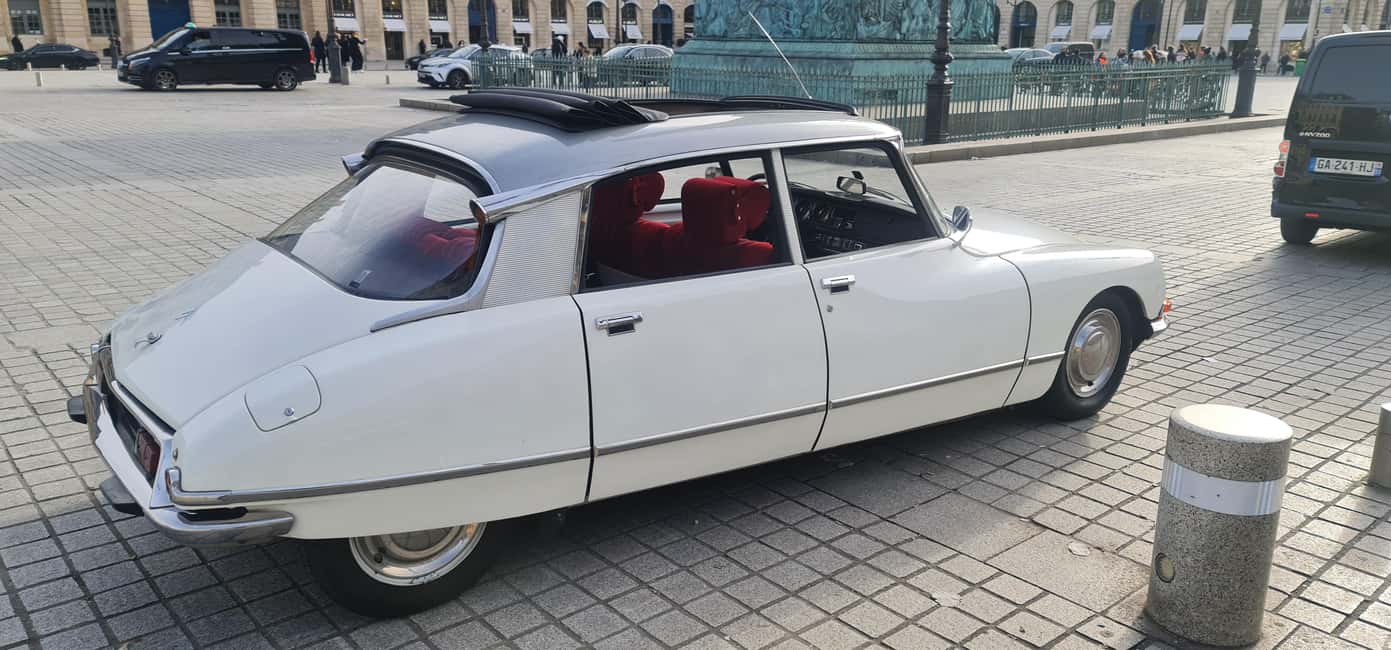
- Place Vendôme feels refined and composed, with a strong “Paris of luxury and precision” mood.
- Place de la Concorde is about scale and drama—an open space that helps you feel how wide central Paris really is.
You’ll likely pass these in a smooth loop rather than spend long periods stopped. That’s a feature: it keeps the tour moving and gives you a big-picture view of how Paris centers connect.
If you want one of these places to be your photo priority, tell your driver early in the ride so you’re not stuck deciding at the last minute.
Comfort and Value: Why This Works for a Group of 1 to 4
At $188 per group (up to 4 people), the value depends on what you compare it to. If you’re splitting the cost among friends or family, it can land in the range of other private experiences—except you get a whole-city drive with photo stops and a live guide.
The real value is the combination:
- private transportation (no waiting for a bus load),
- a driver-guide who can point out what you’re seeing,
- and the ability to move quickly between far-apart landmarks.
Also, you’re not crammed. In recent experiences, people praised the DS comfort, including how the seating felt better than they expected for a vintage car. And because the group is small, you’re more likely to ask questions and get direct answers.
Timing Strategy: Morning for Bearings, Night for Atmosphere
If you’re trying to maximize your first impressions, do this early. One recent booking specifically recommended morning because later traffic can get heavy. That tracks with common Paris logic: mornings often move faster, and you can get your “what goes where” map built before the day gets complicated.
Night has its own payoff. Multiple experiences highlighted Paris at night as magical, especially with a DS rolling past iconic spots with lights on. If your goal is atmosphere and photos, consider an evening slot—just be ready for weather to affect the convertible roof.
Who This Tour Fits Best (And Who Might Prefer Something Else)
This tour is a good match if you want:
- iconic landmarks with minimal walking,
- photo stops built into the ride,
- and a more personal guide experience than a large-group bus tour.
It’s also a solid choice for families only if your kids meet the age requirement. This activity is forbidden for kids under 11 years old.
If you’re the type who loves museums and wants deep time in galleries, this probably won’t satisfy you alone. Think of it as the best front-door view of Paris—then you return later for the places that grabbed you.
Small Details That Can Change Your Ride
Two practical factors can shape your day more than you’d expect:
1) Convertible roof vs weather. On a rainy night, one booking mentioned the roof could not be put back as expected. If rain is likely, keep your expectations realistic and plan your photos around the views you can still get from inside.
2) Photo-stop requests. The tour includes stops on request to take pictures. That means you’ll get what you ask for, but you should ask clearly and early so the driver can plan safe, quick moments.
Also, the tour includes pickup and drop-off, and you can choose the pickup address. That saves time and keeps the day from turning into a logistics puzzle.
Should You Book This Paris Citroën DS City Tour?
I think you should book it if you want a classic, low-stress way to see Paris’ headline monuments while spending most of your energy on photos and questions. The private group format (up to 4) makes the price easier to justify, and the DS experience is genuinely different from standard city sightseeing.
Skip it if you only care about museum time or you’re looking for a deep, stop-at-every-corner walking tour. This is a driven, guided “see the city fast and well” outing, with lots of photo moments and landmark context.
If you can, pick a time that matches your goal: morning for getting your bearings, or night for the lights—and bring a weather-ready mindset for the roof.
FAQ
How long is the Paris City Discovery Tour by Vintage Citroën DS Car?
The duration is 1 to 3 hours, depending on the starting time you choose.
How many people are in the group?
It’s a private group, up to 4 people.
What does the price include?
The price includes pick-up and drop-off, stop on request to take pictures, and a driver.
Where do you get picked up?
Pickup is included, and you can choose the address of the pick-up in Paris.
What languages are available for the tour guide?
The live tour guide is available in English and French.
What are some of the main places you’ll see?
You’ll pass major sights including the Champs-Élysées, Arc de Triomphe, Eiffel Tower, Invalides, Musée d’Orsay, Notre-Dame area (Île de la Cité), Louvre Museum, Sacré-Cœur Basilica, plus central squares like Place Vendôme and Place de la Concorde.
Is the tour allowed for children?
No. It is forbidden for kids under 11 years old.
Is there a cancellation option?
Yes. Free cancellation is available up to 24 hours in advance for a full refund.