REVIEW · PARIS
Montmartre: Guided tour to Sacré-Coeur
Book on GetYourGuide →Operated by My Super Tour · Bookable on GetYourGuide
Montmartre still feels like Paris’s great stage set, but this two-hour walk looks past the postcard views. You begin at the Moulin Rouge, follow streets linked with Renoir, Van Gogh, Picasso, and Zola, then reach Sacré-Cœur for a 180-degree view across Paris.
I like the small group, limited to eight people, and the route’s mix of famous sights and odd local stories. The pink La Maison Rose, the old windmills, the artists’ vineyard, and the wall-crossing figure called Le Passe-Muraille give the walk more character than a simple basilica visit. The main consideration is the climb: the route is designed to use only one short stair section, but it is not suitable for wheelchair users.
I also like the guides’ local connection. Sasha, also spelled Sacha in the tour information, lives in the area and can offer food suggestions, while Dina has led the same route in English. The tour ends at Place du Tertre, so you can keep exploring, eat, or take the funicular-style cog railway down toward Anvers afterward.
In This Review
- Key points at a glance
- From Pigalle’s Moulin Rouge to the hilltop
- Place des Abbesses and the first climb
- Le Bateau-Lavoir and Montmartre’s artists
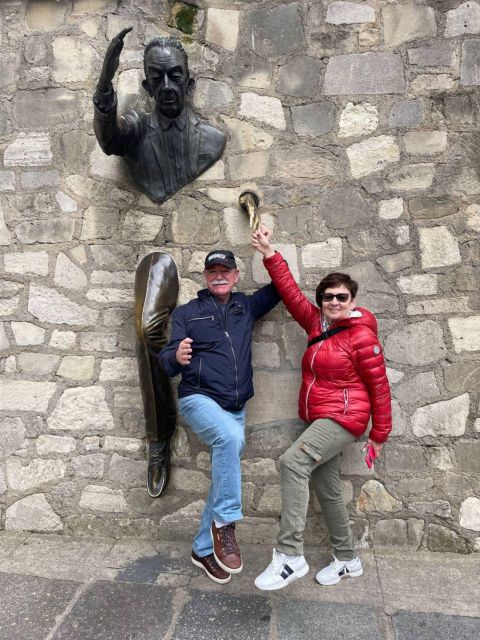
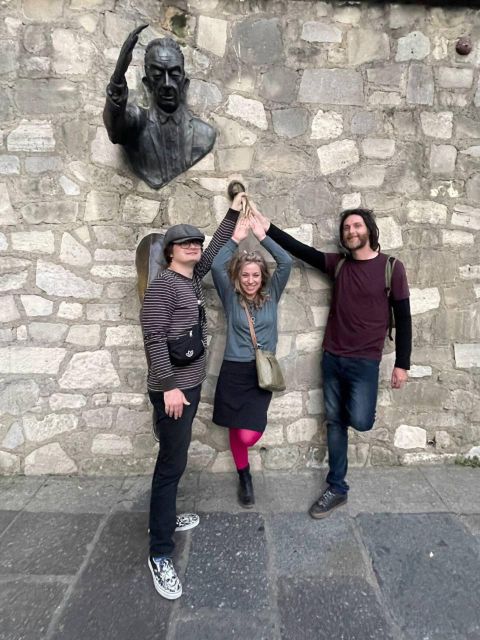
- Le Passe-Muraille, a wall-crossing character
- Square Suzanne Buisson and quiet Montmartre
- La Maison Rose and the story behind the color
- The vineyard, old windmills, and a different hilltop
- Square Marcel Bleustein Blanchet and the final approach
- Inside Sacré-Cœur Basilica
- The 180-degree Paris view
- Ending at Place du Tertre
- What the $50 price buys you
- Who should book this Montmartre walk?
- Should you book it?
- FAQ
- Where does the tour start?
- How do I identify the guide?
- How long does the tour last?
- What languages are available?
- How large is the group?
- Is Sacré-Cœur included?
- Does the tour include food or drinks?
- Is hotel pickup available?
- Is the tour suitable for wheelchair users?
- Where does the tour end?
- Can I cancel the booking?
Key points at a glance
- Start at the Moulin Rouge: Hear the cabaret’s long connection with artists and writers before leaving Pigalle behind.
- Follow Montmartre’s art trail: Visit places linked with Manet, Renoir, Van Gogh, Picasso, and Émile Zola.
- See more than Sacré-Cœur: The route includes La Maison Rose, Le Passe-Muraille, old windmills, a vineyard, and quiet squares.
- Enter the basilica: The price includes a guided visit inside Sacré-Cœur, not only an exterior photo stop.
- Finish above Paris: The tour ends at Place du Tertre, close to cafés, brasseries, portrait painters, and small shops.
- Keep the group small: A maximum of eight people makes it easier to hear stories and ask questions.
From Pigalle’s Moulin Rouge to the hilltop
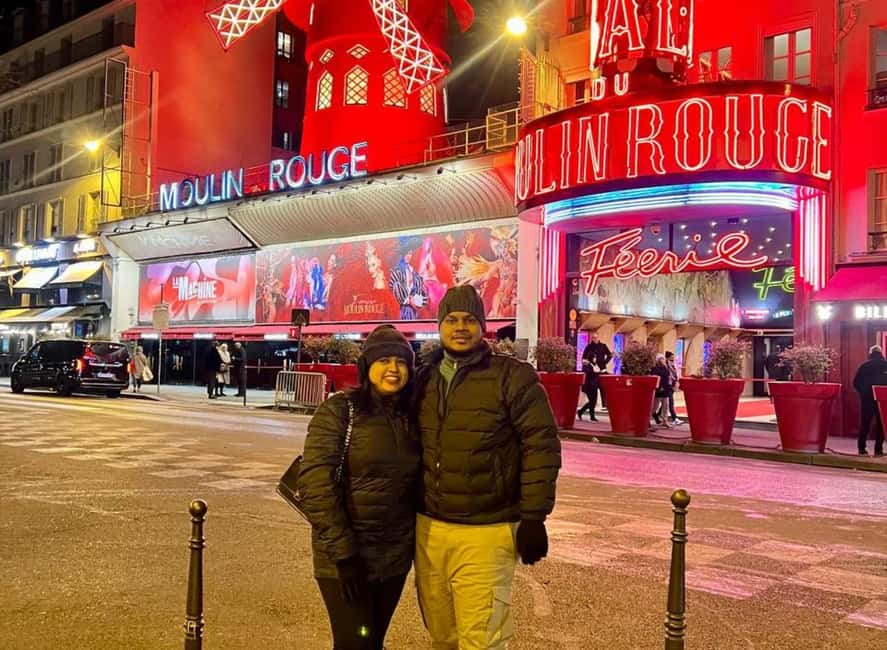
The meeting point is outside the only metro entrance at Blanche station on Line 2. If you arrive by taxi, use 80 Boulevard de Clichy. Look for a guide holding a My Super Tour sign.
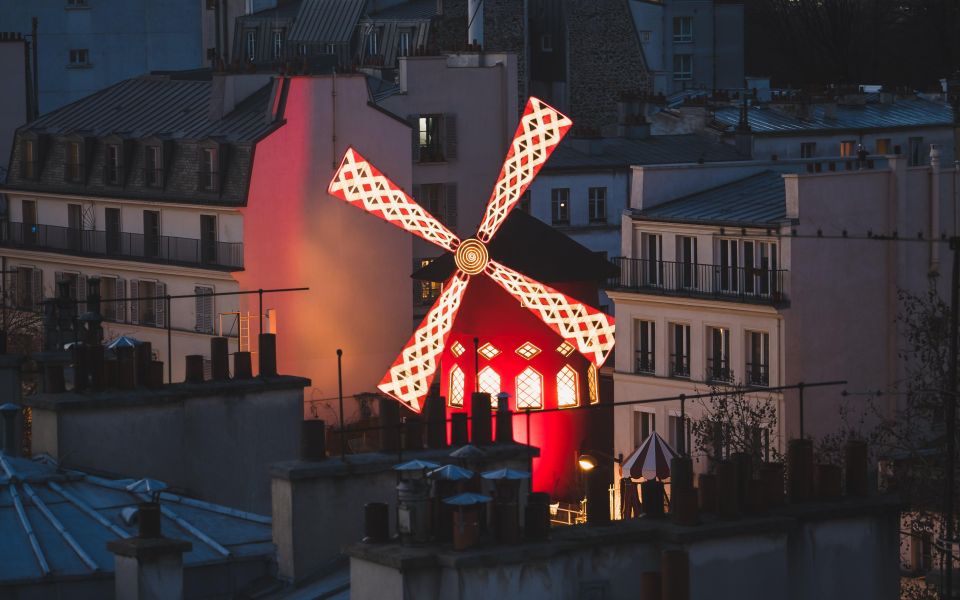
This is a practical starting point because the Moulin Rouge is immediately nearby. The famous red windmill is a natural photo stop, but the guide uses it as more than a backdrop. You hear about the cabaret’s long story and its ties to painters, writers, and Paris nightlife.
Pigalle has a reputation as Paris’s red light district, and that gives the opening of the tour a sharper edge than the quieter streets higher on the hill. I like beginning here because Montmartre’s artistic past did not grow in isolation. Cabarets, dance halls, studios, cheap rooms, and cafés all helped make the area attractive to artists.
You spend about 15 minutes at the Moulin Rouge. That is enough for an introduction and photographs, but not enough for a long interior visit, which is not part of this tour. If you want a full cabaret show, you will need a separate booking.
You can also read our reviews of more guided tours in Paris



Place des Abbesses and the first climb
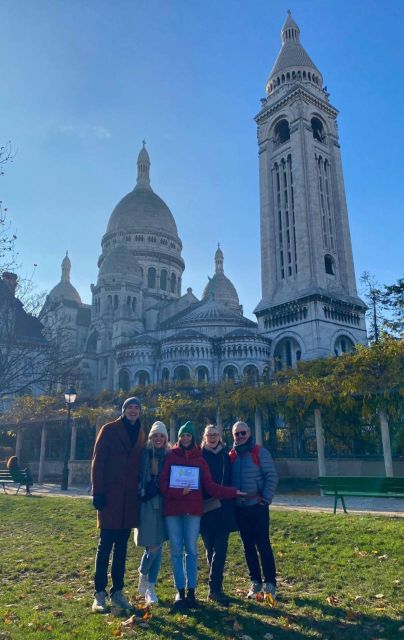
The route continues to Place des Abbesses, another useful point for understanding Montmartre as a neighborhood rather than only a monument. The guide spends around 15 minutes here, mixing sightseeing with local stories.
This part of the walk begins to shift the mood. Below the hill, Pigalle feels tied to nightlife. Around Abbesses, you start seeing the village-like side of Montmartre that makes the area so popular. Expect streets that rise and turn, along with cobblestones and small corners where the guide can explain how artists and writers used the neighborhood.
The tour description promises an easier way up with only one short run of stairs. That matters because Montmartre is famously hilly. You should still wear shoes that handle uneven streets and a steady uphill walk. The route avoids making the climb a staircase workout, but it does not remove the hill itself.
Le Bateau-Lavoir and Montmartre’s artists
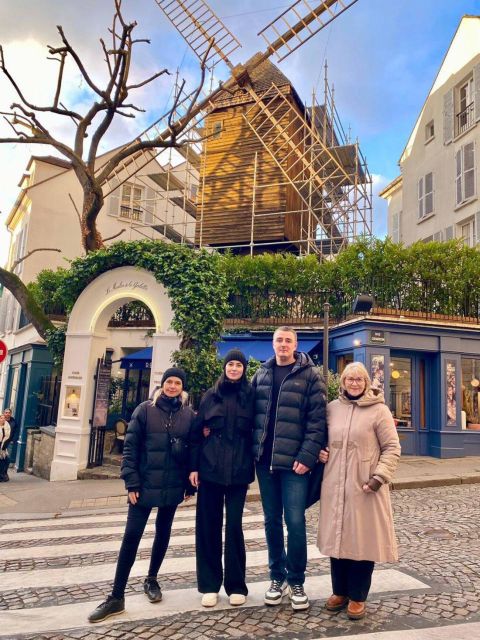
At Le Bateau-Lavoir, the guide brings the art story into focus. This stop is linked with the great artists of Montmartre, including Picasso, and the broader circle of painters who made the hill famous.
The value here is the setting. Instead of treating names such as Manet, Renoir, Van Gogh, and Picasso as a list from a museum label, the walk places them within the streets where artists worked and met. You get a better sense of why Montmartre became a center for impressionist art and later modern painting.
The stop lasts about 15 minutes. That is enough for an explanation and sightseeing, though anyone hoping for a formal museum visit should know that no museum admission is included. This is a street-level art tour, built around buildings, squares, and stories.
Le Passe-Muraille, a wall-crossing character
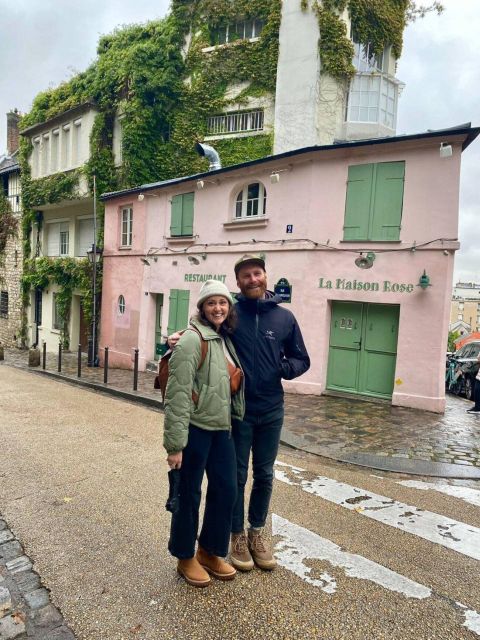
Le Passe-Muraille is one of the more unusual stops. The name refers to a figure able to pass through walls, and the guide uses the site for a photo stop and a short story.
I appreciate this kind of pause because it breaks up the parade of major names and churches. Montmartre is full of legends and small surprises, and a 15-minute stop at a curious landmark helps keep the walk light.
The guide also has room here to connect local folklore with the neighborhood’s artistic spirit. You are not only looking at grand buildings. You are being shown the playful details that make Montmartre feel different from central Paris.
Square Suzanne Buisson and quiet Montmartre
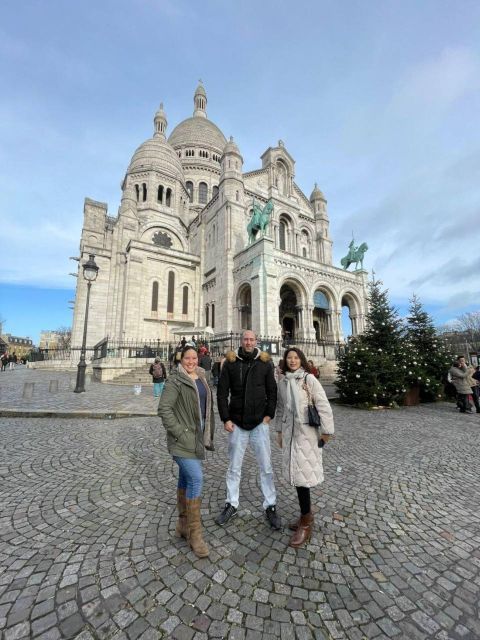
Square Suzanne Buisson gives the group a chance to see a greener, calmer corner of the hill. The tour allows about 15 minutes for a visit.
This is a useful contrast with the Moulin Rouge and the busy artists’ square later in the route. Montmartre has a public face filled with painters, cafés, and photo spots, but it also has small squares and residential streets. I like that the walk includes both sides.
The exact story told here depends on the guide, but the format is clear: you visit the square as part of the neighborhood tour rather than rushing straight to Sacré-Cœur. Guides Sasha and Sacha are noted for sharing many anecdotes, and Dina is also named as a guide for this experience.





La Maison Rose and the story behind the color
La Maison Rose is one of Montmartre’s most recognizable buildings. Its pink exterior makes an easy photo stop, but the explanation behind it is more memorable than the color alone.
The story told on the walk is that the restaurant became completely pink because of a drunk artist. That is exactly the sort of compact Montmartre anecdote that makes the route worth taking with a guide. You can photograph the building on your own, but you are less likely to know why it looks the way it does.
The stop includes sightseeing, a guided explanation, and photographs. It is another 15-minute pause, so do not expect to sit down for a meal here during the tour. Food and drinks are not included, though you can return later or choose a restaurant near the end of the walk.
The vineyard, old windmills, and a different hilltop
The route also brings you to the last still-existing windmills on the hill and a vineyard created by artists that continues to produce wine. These details are important because they challenge the idea that Montmartre is only a dense city quarter.
The vineyard is not presented as a wine tasting. You see it as part of the neighborhood’s story, and the tour uses it to explain how artists helped shape the area’s identity. The old windmills add another layer, recalling an earlier working side of the hill.
I would pay close attention during this stretch. The stops are less famous than Sacré-Cœur, but they are among the details you may remember best. The guide’s job is especially useful here because the meaning of a small vineyard or surviving windmill is easy to miss when you walk past on your own.
Square Marcel Bleustein Blanchet and the final approach
At Square Marcel Bleustein Blanchet, the route continues toward the basilica with another guided sightseeing stop. The square helps frame the approach to Sacré-Cœur and offers more of the hill’s quieter paths.
By this point, you have moved from Pigalle’s nightlife through artists’ addresses, legends, gardens, and old working features. The walk is not simply a direct climb to the church. Its strength is the gradual build-up, with each stop adding a different piece of Montmartre.
The tour lasts two hours, so the pace needs to stay steady. Each listed stop is planned for roughly 15 minutes, and that leaves little time for long breaks. If you like a slow morning with coffee stops and extended photography, this may feel brisk. If you want a focused introduction before exploring alone, the timing works well.
Inside Sacré-Cœur Basilica
Sacré-Cœur is the final major stop and the tour includes entry inside the basilica. That is an important part of the price. Many Montmartre walks end with an exterior look and a photo from the steps, while this experience adds a guided visit inside the building.
The tour describes it as Paris’s biggest church. The basilica is also the visual reward for the climb, rising above the hill and giving the walk a clear destination. Your guide can explain the building and its place in Montmartre, rather than leaving you to take in the interior without context.
The visit is scheduled for around 15 minutes, so expect an introduction rather than a long, detailed church study. The stop is also subject to the practical limits of a working religious building. The supplied information does not promise special access, a tower visit, or a long private viewing, so you should not book this expecting those extras.
Dress and behave suitably for a place of worship. The tour information does not list a formal dress code, but respectful clothing and a quiet manner are sensible.
The 180-degree Paris view
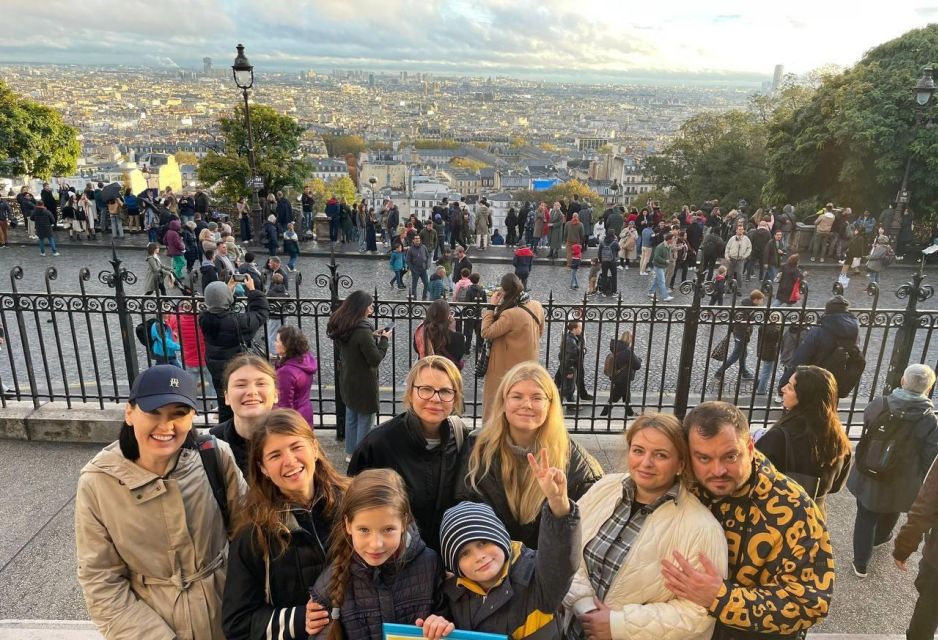
The final reward is the view over Paris, including the Eiffel Tower. The experience is promoted for sunset, and the changing light can make this the strongest moment of the walk.
Starting times vary, so check availability if sunset matters to you. A daytime booking will still provide the city view, but it will not have the same evening light. The data does not promise a particular sunset time for every date, so treat this as a timing feature to confirm rather than an automatic guarantee.
The view is broad, reaching across Paris in a 180-degree sweep. You should have your camera ready, but leave some attention for the guide’s explanation. The point is not only to collect a familiar Eiffel Tower photograph. It is to understand how Montmartre sits above the city and why this hill has always attracted painters, writers, performers, and sightseers.
Ending at Place du Tertre
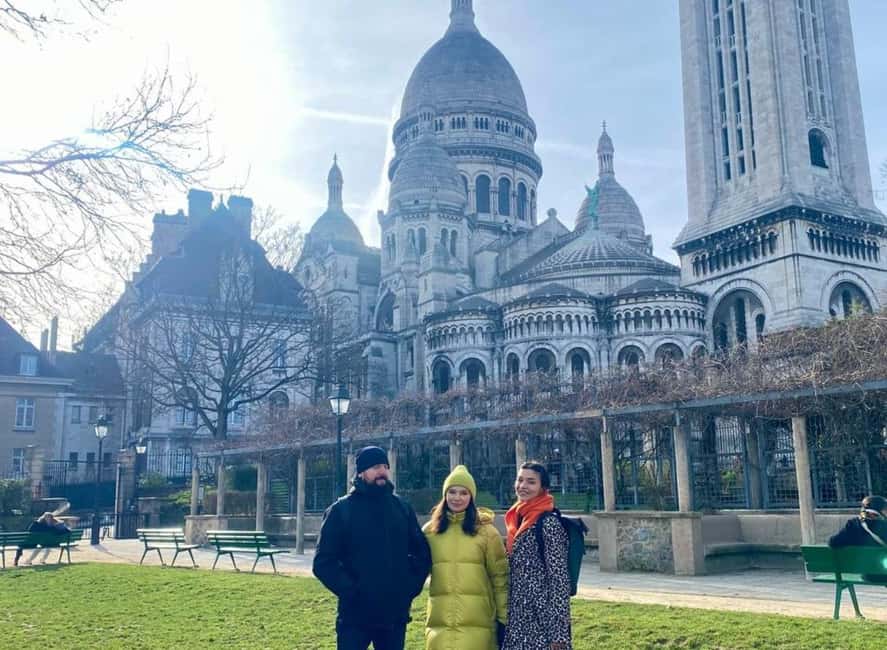
The tour ends at Place du Tertre, the famous square where painters work. This is a good finish because you are left in the heart of Montmartre rather than sent back to the starting point.
You can continue looking through small shops, watch the painters, or choose a typical French restaurant, café, or brasserie. Food and drinks are not included, so plan to pay separately if you want to make an evening of it.
For the return journey, you can use the open stairs or the cog railway leading down toward Anvers metro station. The walk ends at Place du Tertre, not at Blanche, so this onward option is useful. You should not expect hotel pickup or a ride back to your accommodation.
What the $50 price buys you
At $50 per person, the value depends on how much context you want. You are paying for two hours with a professional guide, a small group capped at eight, and a guided visit inside Sacré-Cœur. The route also covers many separate points that would take effort to connect on your own.
I think the price is strongest for a first visit to Montmartre or for anyone who wants art and local stories without committing to a full-day tour. The small group matters here. With eight or fewer people, you have a better chance of hearing the guide on narrow streets and asking about places that catch your eye.
The price does not include food, drinks, transport, or hotel pickup. You need to reach Blanche independently and arrange your own plans after Place du Tertre. Those omissions are reasonable for a walking tour, but they should be part of your budget.
The experience has a perfect 5 rating from seven verified bookings, and the praise centers on the guides’ storytelling, flexibility, local knowledge, and food suggestions. Sasha is described as funny and adaptable, while Dina is praised for making the tour informative. I would treat those comments as a good sign, but the exact guide and style can vary.
Who should book this Montmartre walk?
I would choose this tour if you want a compact introduction to Montmartre with a strong art angle. It suits adults, couples, families with older children, and first-time visitors who prefer a guide to connect the sights.
It is also a good fit if you have visited Montmartre before. One guest who had taken guided tours over four decades still found new details to learn, which says something about the number of stories packed into this hill.
You may prefer another option if you want a museum interior, a long meal, a cabaret performance, or a private tour. The two-hour format is focused and active. You will walk uphill, pause often, and finish without a return transfer.
Wheelchair users should not book this activity because it is specifically listed as unsuitable. Anyone with limited mobility should also read the route carefully before reserving, even though the tour uses only one short range of stairs.
Booking is flexible: you can cancel up to 24 hours before the start for a full refund, and you can reserve now while paying later. The available languages are English and Russian.
Should you book it?
Book this tour if you want Montmartre explained through its artists, odd stories, old streets, and hilltop view, rather than only a quick visit to Sacré-Cœur. The small group and guides such as Sasha, Sacha, and Dina add useful personal detail, while the finish at Place du Tertre leaves you in a good spot for dinner or more exploring.
Skip it if you need wheelchair access, dislike uphill walking, or want a slow tour with long café breaks. For most able walkers seeking a well-paced two-hour introduction, the $50 cost is fair because it combines the basilica interior, a broad art route, and one of Paris’s best views.
FAQ
Where does the tour start?
It starts outside the only metro access at Blanche station on Line 2. The taxi address is 80 Boulevard de Clichy, 75018 Paris, France.
How do I identify the guide?
The guide will hold a sign reading My Super Tour.
How long does the tour last?
The tour lasts two hours. Starting times vary, so you need to check availability for your chosen date.
What languages are available?
The tour is offered in English and Russian.
How large is the group?
The group is limited to eight participants.
Is Sacré-Cœur included?
Yes. A guided visit inside Sacré-Cœur Basilica is included.
Does the tour include food or drinks?
No. Food and drinks are not included.
Is hotel pickup available?
No. You need to make your own way to the Blanche meeting point.
Is the tour suitable for wheelchair users?
No. The activity is listed as unsuitable for wheelchair users.
Where does the tour end?
The tour ends at Place du Tertre. From there, you can explore nearby shops and restaurants or use the open stairs or cog railway toward Anvers metro station.
Can I cancel the booking?
Yes. You can cancel up to 24 hours in advance for a full refund. You can also reserve now and pay later.