Paris looks different before breakfast. On this private run, you move through central streets while the famous monuments are still relatively quiet, ticking off the Eiffel Tower, Louvre, Seine, Notre-Dame, and a long list of grand landmarks. Guide Ludovic adds local stories, food advice, and practical Paris tips as you go.
I like the early start, which gives you a fresh view of places that can feel crowded later. I also like the personal format: Ludovic can adjust the pace to your needs instead of forcing you into a large group. The main caution is simple: this is a real running tour, not a sightseeing walk, and one participant found it best suited to someone fit enough for 10 kilometers or more.
In This Review
- Key points to know before booking
- Why a dawn run works so well in Paris
- Starting near the Pompidou Center
- From the Louvre to the Tuileries Gardens
- The Grand Palais, Petit Palais, and the Seine
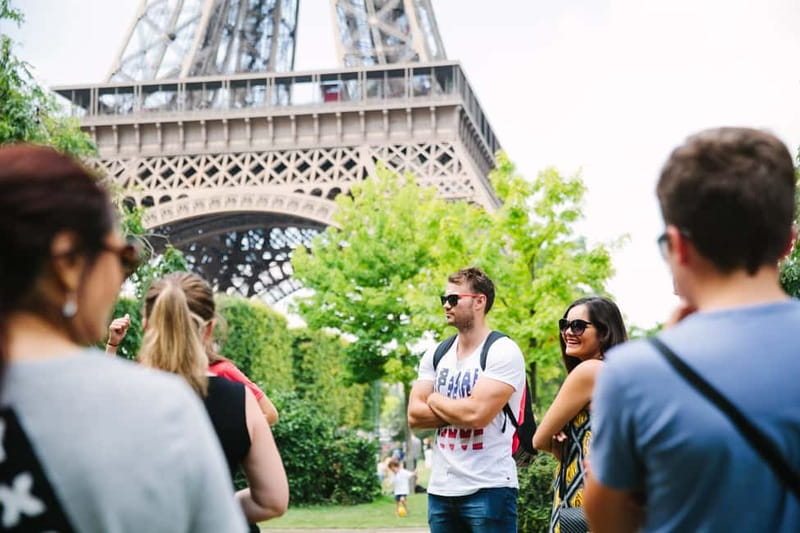
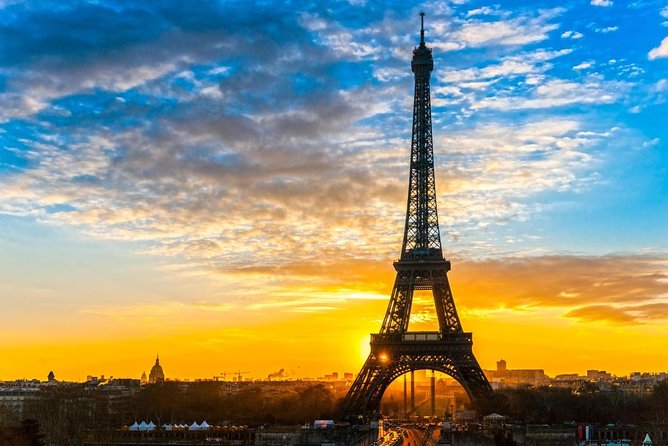
- The Eiffel Tower as the main landmark
- Notre-Dame, the Town Hall, and the older streets
- What the two hours feel like
- Price, private value, and group size
- Who should book this Paris running tour
- Booking, weather, and small practical details
- Should you book the dawn run?
- FAQ
- How long does the running tour last?
- What time does the tour take place?
- Where does the tour start?
- Where does the tour finish?
- Is this a private tour?
- Is the tour offered in English?
- What landmarks are included?
- Can I cancel for a full refund?
Key points to know before booking
- Dawn changes the feel of Paris: You see major sights before the daytime crowds arrive.
- Ludovic provides a personal pace: The private format lets the guide pay attention to your running level and interests.
- The route covers a remarkable slice of central Paris: Expect the Louvre, Eiffel Tower, Seine, Notre-Dame, Tuileries, and many more landmarks.
- You may see lesser-known corners: The run includes a narrow street and local details that are easy to miss on a standard city tour.
- The price reflects private guiding: At $84.11 per person, the value improves when shared by a small group.
- You need to be ready to run: The tour lasts about two hours and may cover 10 kilometers or more.
Why a dawn run works so well in Paris
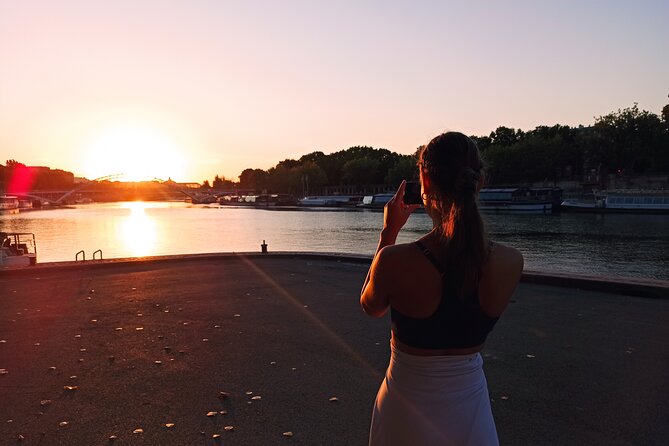
Paris rewards early risers. The streets around the major monuments are calmer, the light is often softer, and you can move through the city without stopping every few steps for a crowd or a traffic signal. You still need to share the streets with other people and vehicles, but the first hours of the day give the route breathing room.
This tour is useful if you want sightseeing and exercise in the same block of time. Instead of giving up a morning to visit a gym, you make a long circuit through the city and see places that might otherwise require several separate outings.
The private setup matters. Ludovic is not managing a busload of people or trying to keep a wide range of runners together. He can pay attention to your pace and needs, and the route can feel more like a guided run with a local than a fixed group excursion.
You should still treat the outing as exercise first. The route links many major sights, and one detailed account describes it as appropriate for someone fit enough to run 10 kilometers or more. If your normal routine is a gentle jog, ask yourself if two hours on Paris streets sounds enjoyable or tiring. The tour may suit regular runners best, especially those training for a race while on holiday.
You can also read our reviews of more tours and experiences in Paris.



Starting near the Pompidou Center
The meeting point is 2 Rue Brisemiche, in the 4th arrondissement. That places you near the Pompidou Center and the historic center of Paris, a convenient launch point for a route toward the Seine and the city’s major monuments.
You meet your guide there and finish back at the same place. This makes the practical side easier: you do not have to arrange transport from a distant endpoint after a two-hour run. It also gives you a clear place to leave belongings and plan your next stop, though the supplied details do not promise storage facilities, so you should arrive with only what you can comfortably carry.
Starting near the Pompidou area also gives the first part of the run a distinctly central Paris feel. You are close to the Town Hall, the Seine, and the older streets of the Right Bank. The route then expands into a grand tour of monuments, gardens, bridges, and river views.
The activity is offered in English and uses a mobile ticket. Confirmation is sent within 48 hours of booking, subject to availability. Since the tour depends on good weather, keep your schedule flexible enough to accept another date if poor conditions cause a cancellation.
From the Louvre to the Tuileries Gardens
The Louvre is one of the two named stops, and it is an effective early-morning landmark. You get the scale of the former palace from outside while running along the surrounding streets and open spaces. The building is too large to absorb in a quick glance, so seeing it as part of a moving route gives you a useful first orientation rather than pretending you have visited the museum itself.
This distinction is important. The tour takes you next to the Louvre, but it does not include museum entry or an indoor visit. If you want to see the Mona Lisa or spend several hours with the collections, plan a separate Louvre visit.
From the Louvre, the route continues toward the Tuileries Gardens. The gardens provide a more open stretch than the tight city streets, and the change of setting can make the run feel less stop-and-start. You can take in the formal paths and long views while keeping your legs moving.
The Place de la Concorde follows as part of the central Paris circuit. It connects the Tuileries to the Champs-Elysées area and gives you a sense of how Paris arranges its grand public spaces. You should expect brief pauses for orientation and sightseeing, but this is not a walking lecture with long stops at every monument.
The Grand Palais, Petit Palais, and the Seine
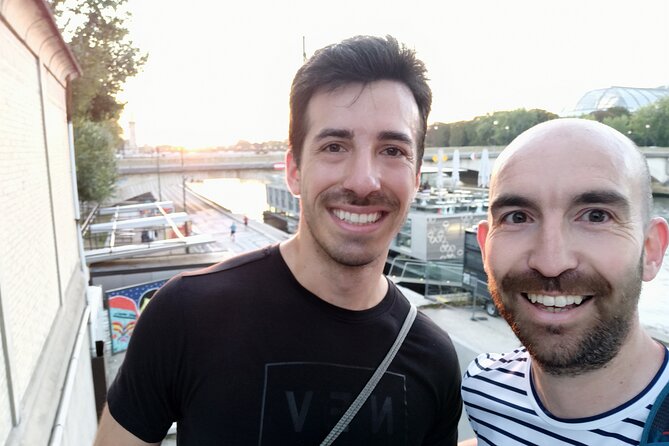
The Grand Palais and Petit Palais bring the route into one of Paris’s most impressive monument zones. Their decorated exteriors are worth seeing even if you are not visiting an exhibition. Running past them lets you compare two neighboring buildings without spending the morning inside either one.
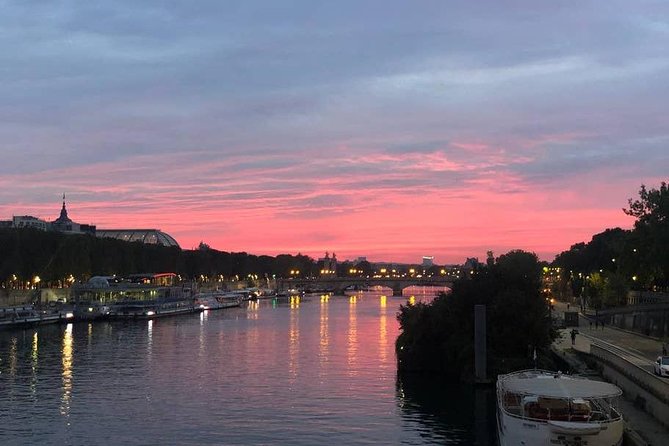
The Seine is the natural thread tying the route together. River sections offer a break from the tighter streets and help you understand the city’s layout. You may see the relationship between the river, the Louvre, the Musée d’Orsay, the Eiffel Tower, and the monumental spaces on both banks more clearly than you would from a single neighborhood walk.
The route also includes the Musée d’Orsay, the National Assembly, and Les Invalides. Each adds a different piece to the city’s visual story: a former railway station turned museum, a major government building, and one of Paris’s best-known domed monuments. You will not have time to tour their interiors during this activity, but passing them helps you build a useful map for later sightseeing.
This is one of the strongest reasons to choose the run over a short neighborhood jog. You cover a wide area in a single morning, and Ludovic can explain what you are seeing as you go. His guidance also includes practical food suggestions and advice for the rest of your stay, which can be especially handy early in a Paris visit.
The Eiffel Tower as the main landmark
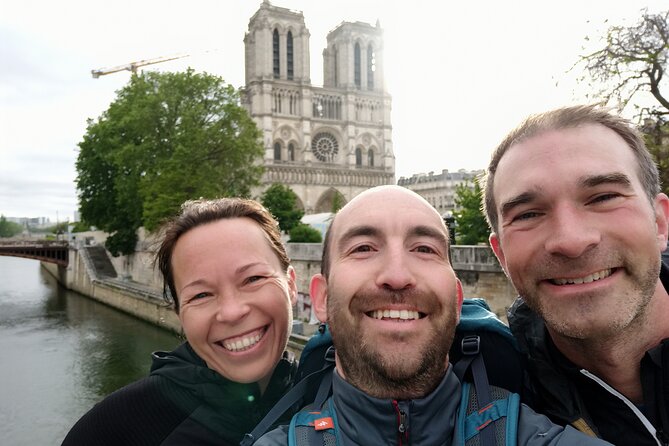
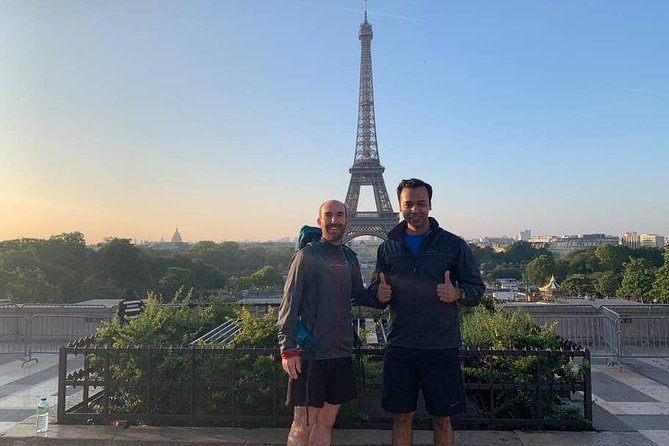
The Eiffel Tower is the other specifically named stop. Reaching it by running gives the monument a sense of arrival that you do not get from simply stepping off a train nearby. The tower is visible from many parts of Paris, but being close to its iron structure is different from seeing the familiar silhouette in the distance.
The surrounding Trocadero area is also included. From there, you can appreciate the tower’s position across the Seine and get one of the city’s classic views. The exact amount of time spent at the tower depends on the run’s pace and the needs of your group, so do not book this expecting a long photo session or a ride to the summit.
The Musée Branly is included near the Eiffel Tower. Again, think of the route as an exterior orientation. You will pass the museum rather than tour its galleries, but its presence adds another cultural stop to the circuit.
The run then reaches the Russian Orthodox Church, another detail that keeps the route from being only a parade of the most famous attractions. A major advantage of a local guide is that these less expected landmarks can get a quick explanation instead of disappearing into the background.



Notre-Dame, the Town Hall, and the older streets
Notre-Dame de Paris brings the route back toward the historic center. The cathedral is one of the city’s essential sights, and seeing it from the outside gives you a strong reason to return for a longer visit if your schedule allows.
The Town Hall is also on the route. Its grand facade and central location make it an easy reference point as you move between the river and the older quarters. Since the tour begins and ends near the Pompidou Center, these central landmarks fit naturally into the circuit rather than requiring a long detour.
One of the more memorable details is a run through the narrowest street in Paris, according to the description provided for the experience. That small passage helps explain the promise of seeing ten secrets. You are not simply collecting postcard views. You are also looking for small urban details that a standard monument-focused route could miss.
Place des Vosges adds another change of mood. Its regular arcades and enclosed square feel calmer and more intimate than the great avenues near the Louvre or Eiffel Tower. It also gives the route a strong finish through one of the most recognizable squares in the Marais area.
What the two hours feel like
The tour lasts approximately two hours. That sounds generous, but the route includes a remarkable number of places: the Pompidou Center, Louvre Museum, Tuileries Gardens, Place de la Concorde, Grand Palais, Petit Palais, Seine, Trocadero, Eiffel Tower, Musée Branly, Russian Orthodox Church, Invalides, National Assembly, Musée d’Orsay, Notre-Dame, Town Hall, and Place des Vosges.
You should therefore expect a flowing run with short pauses, not a full guided visit at each site. The value comes from the range of neighborhoods and the guide’s commentary, not from spending twenty minutes at every monument.
Pace is a key point. Ludovic says he pays attention to the needs of his guests, and the private format supports that. Still, pace adjustment does not remove the physical demand. Wear running shoes and choose clothing that works for changing weather. You receive bottled water and complimentary snacks, but those extras do not replace your own preparation for a sustained run.
The early hour can also affect how you feel. Some people love starting the day with a clear head and an active body. Others may find that two hours of running before breakfast is too much. If you are unsure, consider your normal running distance rather than the sightseeing appeal alone.
Price, private value, and group size
The price is $84.11 per person. For a private activity, that is a reasonable price when two or more people share the cost and want personal guidance rather than a large group format.
The value is strongest if you care about three things: seeing a broad section of Paris, getting local advice, and keeping up a running routine. A simple self-guided run would cost nothing, but it would not give you Ludovic’s route planning, commentary, food tips, or help spotting details such as the narrow street.
For a solo runner, the per-person price may feel less attractive because there is no group to spread the private guide cost across. One person did take the tour alone and received the same level of attention, with some extra time and care. That can be a real benefit if you prefer a personal pace or want to ask many questions.
The tour has a rating of 5 from seven reviews, a small sample that points to strong satisfaction but should not be treated as a guarantee. The most consistent strengths are the quiet morning timing, local information, personal treatment, and the chance to combine training with sightseeing.
Who should book this Paris running tour
I would look closely at this tour if you are:
- A regular runner who wants to see Paris without giving up a workout
- Training for a race while on holiday
- Visiting Paris for the first time and wanting a broad orientation
- Comfortable running around 10 kilometers or more
- Traveling with a partner, family member, or small private group
- Interested in food tips and practical local advice
- Happiest outdoors rather than inside museums
I would choose another format if you want to enter the Louvre, climb the Eiffel Tower, study Notre-Dame at length, or stop for extended photography. A walking tour or museum visit will give you more time at each site.
This activity also may not suit you if you are recovering from an injury, dislike early starts, or want a gentle stroll. The phrase running tour should be taken literally. Most participants can take part, and service animals are allowed, but the physical side remains central.
Booking, weather, and small practical details
You receive confirmation within 48 hours, subject to availability. The tour is available in English and uses a mobile ticket, so keep the booking information accessible on your phone.
Free cancellation is available up to 24 hours before the local start time for a full refund. Changes made within 24 hours are not accepted, and cancellations inside that window are not refunded.
Good weather is required. If the activity is canceled because of poor weather, you are offered another date or a full refund. That policy makes sense for a dawn run, but you should avoid placing it on the one morning when your entire Paris schedule depends on a fixed outdoor plan.
Meet at 2 Rue Brisemiche and return there at the end. The activity is near public transportation, and most people can participate, but the supplied details do not state the exact distance, elevation, or accessibility of every street. If those points matter to you, ask before booking.
Should you book the dawn run?
Book it if you want Paris as a moving city rather than a checklist of indoor attractions. The early start, private guide, broad route, and local tips make this a smart way to see the major sights before the day fills in. Ludovic’s attention to pace is another strong reason to choose it, especially if you are traveling with a runner who needs a personal rhythm.
Skip it if you are not comfortable with a sustained run or if you want detailed time inside museums and monuments. At $84.11 per person, the tour earns its price through private guidance and coverage of a large part of central Paris, not through admission tickets.
For a fit couple or small group, I see good value here. You get exercise, orientation, landmark views, snacks, water, and a few local details that can shape the rest of your stay. Just set your alarm, bring your running shoes, and remember that Paris sightseeing can be hard work when the sightseeing is done at a jog.
FAQ
How long does the running tour last?
The tour lasts approximately two hours.
What time does the tour take place?
It is an early morning tour at dawn. The exact start time is provided with the booking details.
Where does the tour start?
The meeting point is 2 Rue Brisemiche, 75004 Paris, France.
Where does the tour finish?
The activity ends back at the meeting point.
Is this a private tour?
Yes. Only your group participates in the activity.
Is the tour offered in English?
Yes. The experience is offered in English.
What landmarks are included?
The route passes the Pompidou Center, Louvre Museum, Tuileries Gardens, Place de la Concorde, Grand Palais, Petit Palais, Seine, Trocadero, Eiffel Tower, Musée Branly, Russian Orthodox Church, Invalides, National Assembly, Musée d’Orsay, Notre-Dame de Paris, Town Hall, and Place des Vosges.
Can I cancel for a full refund?
Yes. You can cancel at least 24 hours before the local start time for a full refund. If poor weather causes the operator to cancel, you are offered another date or a full refund.