REVIEW · PARIS
Louvre Museum Small Group Guided Tour
Book on Viator →Operated by Paris CityVision · Bookable on Viator
The Louvre gets manageable fast. I love the small-group format and the guaranteed timed entry that keeps you from losing time in crowds. One thing to consider: because the Louvre is huge and sound carries differently in each group, a larger-than-expected group can make it harder to hear.
Starting at the Arc de Triomphe du Carrousel, you begin with a quick, smart orientation near the Louvre Pyramid area—plus a story tied to Napoleon I’s victory at the Battle of Austerlitz. Then you ease into the museum day with a short walk through the Jardin des Tuileries, so the place doesn’t feel like an instant overload.
Inside, a guide makes the museum make sense. When Elisabeth is on the tour, she’s especially good at turning famous works into clear, human stories and adding fun facts you can actually remember. Still, this is a lot of walking in a building with no elevators, so plan your comfort and your energy before you go.
In This Review
- Key things to know before you go
- Meeting at Arc de Triomphe du Carrousel: your Louvre warm-up in Paris
- Tuileries Garden stroll: a palace approach that changes the mood
- Why guided navigation matters in the Louvre (and what your guide does for you)
- Mona Lisa and Leonardo: why the story sticks better with a guide
- Winged Victory of Samothrace: the 18-foot sculpture moment
- Venus de Milo: what you’ll notice when the story is explained
- The 2.5 hours: what to expect from the pacing and timing
- Price and logistics: is $242.72 good value?
- Who this Louvre small-group tour suits best
- Should you book this Louvre tour?
- FAQ
- Where do I meet the guide?
- Where does the tour end?
- How long is the tour?
- Is admission to the Louvre included?
- Is the tour in English?
- How big is the group?
- What does the guided portion cover?
- Are temporary exhibitions included?
- What’s not included in the price?
- Are there elevators during the visit?
- What’s the cloakroom situation?
- Is re-entry allowed after you leave the museum?
- Is free cancellation available?
Key things to know before you go

- Arc de Triomphe du Carrousel meeting point: you start in the center of Paris, facing the Louvre Pyramid, so you can orient fast.
- Guaranteed timed entry: you’re not gambling on line luck for a 2.5-hour sightseeing window.
- Small group (up to 6): you’ll get more attention and more questions than you would on a big bus-style tour.
- Focus on major masterpieces: you hit Mona Lisa, Venus de Milo, and the Winged Victory of Samothrace as anchors for the day.
- No elevators during the visit: expect stairs and limited vertical lift options.
- No re-entry once you leave: the order you follow matters, especially after the guided portion ends.
Meeting at Arc de Triomphe du Carrousel: your Louvre warm-up in Paris
Your day starts at Arc de Triomphe du Carrousel (Pl. du Carrousel), the perfect “eye-level” place to orient yourself. You’ll be facing the Louvre Pyramid right away, which matters more than it sounds. The Louvre is not just big—it’s confusing. A strong start helps you avoid the classic spiral of wandering hallways while other people seem to know where they’re going.
This meeting point also has a built-in history hook. The structure you’re standing near commemorates Napoleon I’s victory at the Battle of Austerlitz. It’s a small detail, but it sets the tone: this tour isn’t only about the artworks. It’s also about how Paris and power shaped what ended up in the museum.
Before you even hit the museum, you take a short, calm walk through the Jardin des Tuileries. I like this part because it gives your brain a breather. Instead of rushing from the street into rooms full of crowds and ceiling heights, you ease into the day with a quick palace-era setting—then the Louvre feels like the natural next step.
You can also read our reviews of more guided tours in Paris



Tuileries Garden stroll: a palace approach that changes the mood
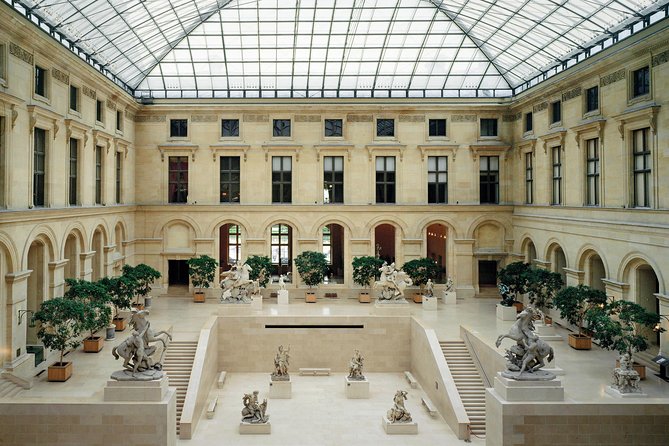
The Jardin des Tuileries stop is brief—about 10 minutes—and the admission element is simple (the ticket is free for this section). But the value is how it changes the tone of your visit.
Think of it like a warm-up lap. You’re transitioning from the city’s motion into the museum’s rhythm. The garden frames the Louvre in a way that helps you understand the building’s scale and grandeur. That makes the inside feel less like you’re walking into a random maze.
Practical tip: bring comfortable shoes. Even on a “short” stroll, your day starts adding up fast. This is the Louvre, and even the calm parts are still part of a walking plan.
Why guided navigation matters in the Louvre (and what your guide does for you)
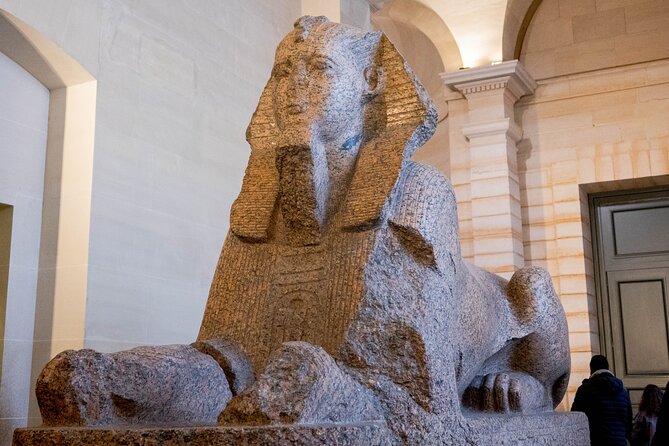
Here’s the honest reason this tour works: the Louvre is difficult to navigate on your own if you want to see the right things within a limited window. There are too many entrances, too many galleries, and too many “wait, where am I?” moments.
With a guide, you’re not just getting facts about famous works. You’re getting a route. You get the logic of where to go first, what to connect, and how to avoid dead ends. That’s what makes a guided visit feel efficient instead of stressful.
The tour is designed as a 2-hour guided walk through major masterpieces, and the timing is tight on purpose. You’re not trying to cover everything. You’re trying to cover the right anchors well. That approach helps you build a mental map you can use after the tour ends.
Language is also part of the value. The experience is offered in English (and it may run in Spanish or English depending on the departure), so you’re getting the explanations in a language you can follow without effort. That matters when the guide is sharing little-known facts and artist context, not just repeating basic labels.
Mona Lisa and Leonardo: why the story sticks better with a guide
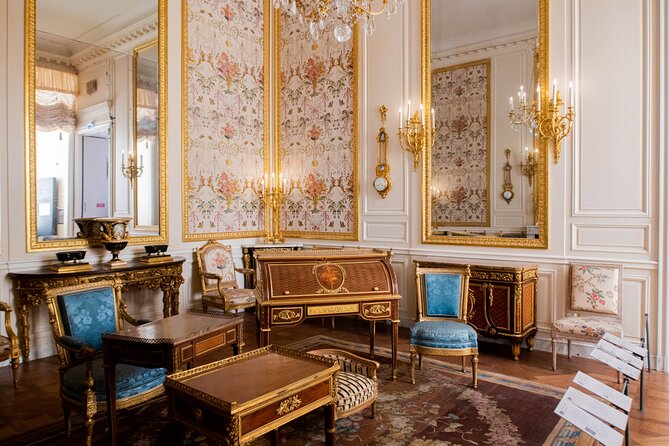
The big star moment is Leonardo da Vinci’s Mona Lisa. Even if you’ve seen photos a thousand times, seeing it in person is still a shock. The guide’s role here is what turns the experience from crowd-viewing into real understanding.
You get a deeper description than the standard museum label. You also learn the kind of details that help you look longer instead of just taking one quick glance. The tour specifically highlights what you want to know about Leonardo and the Mona Lisa—enough to connect the painting to the person and the period, so it doesn’t feel like a random icon behind glass.
Timing is another quiet advantage. With timed entry and a guided route, you’re more likely to spend your focus on the moments that count instead of losing time to detours and bottlenecks.
A practical note: the Mona Lisa area can be crowded. When it is, your best move is to listen rather than fight for position. A guide helps you track what to notice while the flow of people changes around you.
Winged Victory of Samothrace: the 18-foot sculpture moment
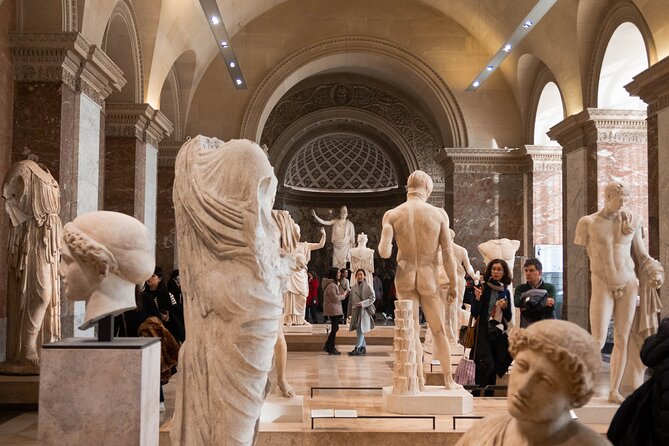
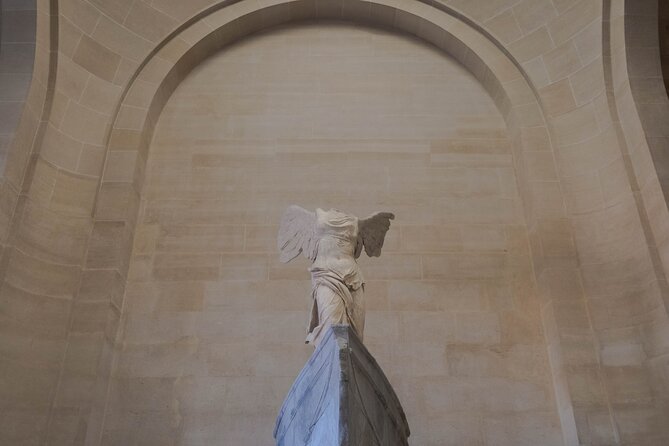
Next comes the Winged Victory of Samothrace, described here as an imposing 18-foot tall sculpture. This is one of those works where scale hits you before details do. It’s hard to appreciate it correctly if you don’t know what you should be watching—pose, movement, the dramatic sense of motion.
A guide gives you that pointing-where-to-look effect. You’ll hear how the sculpture became one of the world’s most renowned images of classical art, and you’ll get context that helps it feel more than just a famous photo spot.
This stop is also where you feel the tour’s pacing. You’re moving in a way that keeps your attention fresh, and the guide’s explanations give the sculptural details a purpose. Without that, you can end up walking past and thinking you should have stared longer.
You can also read our reviews of more museum experiences in Paris






Venus de Milo: what you’ll notice when the story is explained
Then it’s over to Venus de Milo. The tour explicitly calls out that it’s the famous armless sculpture, which you’ll notice immediately once you’re close.
But the point of the guided stop is not the obvious detail. It’s the way the guide frames the work—artist context, meaning, and why it matters in the Louvre’s story. When you understand how critics and audiences have interpreted the piece over time, your viewing becomes more active. You start looking at shape and pose differently, not just at the missing arms.
And yes, by this point your museum stamina matters. You’re likely to feel “museum hungry” in the best way. The tour ends the guided portion after these major masterpieces, and that’s a good design choice: you get the big anchors first, then you’re free to wander with a clearer head.
The 2.5 hours: what to expect from the pacing and timing
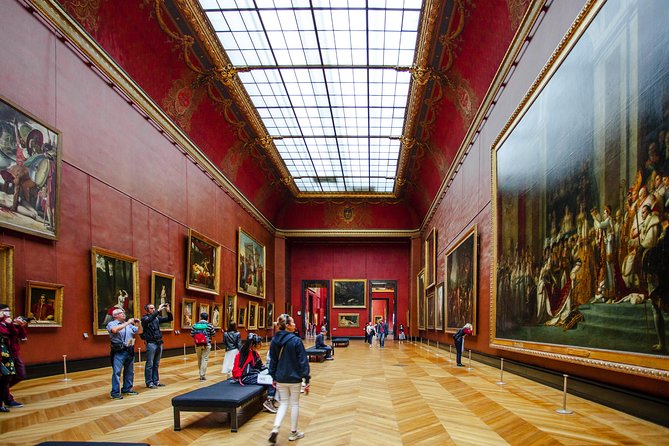
This experience runs about 2 hours 30 minutes total, with around 2 hours of guided time inside. The structure is built for people who want the Louvre highlights without turning the day into a full-week project.
Here’s how I’d think about the pacing:
- Early on, you get orienting context outside.
- In the middle, you focus on a handful of masterpieces with explanations that are meant to be remembered.
- Toward the end, you’re released to explore on your own.
That “release” is a real perk. You’re not stuck in a rigid script after the big stops. You can choose what you want next based on what clicked during the tour.
One limitation to remember: there’s no re-entry once you leave the museum. That means you should plan your own side-trip decisions before you take breaks. If you’re planning lunch nearby, make sure you’re confident you won’t need to come back in later that day.
Also, the museum visit includes no elevators during the visit. That doesn’t mean you can’t do it—it just means you should be prepared for stairs and uneven pacing. If you’re not comfortable with that kind of movement, this specific format may be frustrating.
Price and logistics: is $242.72 good value?
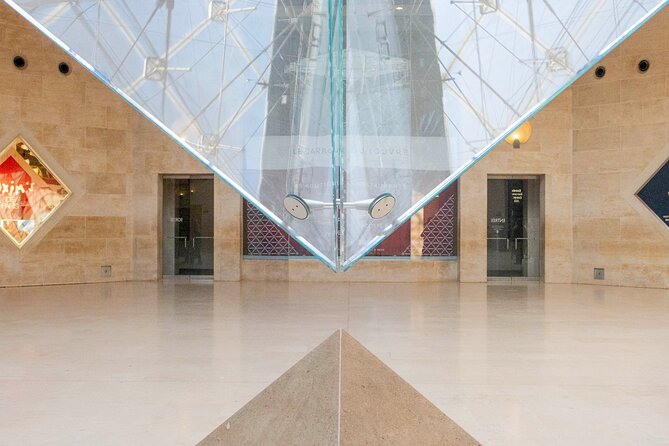
At $242.72 per person, this is not a cheap Louvre ticket. But it’s also not trying to compete with the cheapest self-guided option. You’re paying for three things that add up quickly in the Louvre:
First, guaranteed timed ticket entry. That’s the anti-stress piece. You avoid gambling on lines during a visit window that’s only a couple of hours long.
Second, you get a professional guide who leads a small group of up to 6. In a museum where the difference between seeing something and understanding it can be a few feet and a few minutes, paying for a guide can be worth it.
Third, the tour is intentionally focused: a guided walking tour of major masterpieces like Mona Lisa, Venus de Milo, and the Winged Victory of Samothrace. You’re not buying a “cover everything” ticket. You’re buying a best-of circuit with meaningful explanations.
What’s not included also matters for value:
- Food and drinks are on you.
- Temporary exhibitions are not included, and access isn’t part of the price.
- Hotel pickup/drop-off isn’t included.
- You’ll also need to handle museum systems like the cloakroom rules if you bring umbrellas, luggage, or pushchairs that aren’t meant for exhibition rooms.
So the real question isn’t just the price. It’s whether you want a guided highlights route that saves time and reduces confusion. If yes, the cost starts to feel reasonable for what you get. If you prefer wandering freely with no structure, a self-guided plan may fit better.
One more consideration: this tour is marketed as small-group, but occasionally the group size may not feel as advertised, and hearing the guide can become a challenge. If you’re the type who hates craning to hear, look for a quieter departure time when possible, and arrive early to settle in.
Who this Louvre small-group tour suits best
I’d book this if you want to see the Louvre’s most famous works in a focused way and you appreciate being led. It’s ideal when:
- You’re short on time and want the big masterpieces covered.
- You like museum explanations and will use facts to guide your own exploration afterward.
- You want a small-group feel so the guide can keep an eye on pacing and questions.
It’s also a good choice for first-timers. The Louvre can feel intimidating even if you love art. This format helps you get your bearings fast, so your self-guided wandering later actually makes sense.
If you’re sensitive to crowds, stairs, or heavy walking, take the no-elevator detail seriously. This tour doesn’t suit everyone equally.
Should you book this Louvre tour?
If you want a guided highlights visit with timed entry, a guide for a small group, and a strong focus on Mona Lisa, Venus de Milo, and the Winged Victory of Samothrace, then yes, I think this is a solid book. It’s a smart way to turn a confusing giant museum into a route you can trust.
You should skip it (or at least consider other options) if you want to spend the whole day wandering independently, or if stairs and mobility limitations could slow you down. Also, if you’re the kind of person who gets stressed by meeting-point navigation, show up early—this tour starts at a specific place near the Louvre Pyramid, and you’ll want to be there.
My practical recommendation: treat this as your Louvre foundation. Do the guided part, then use what you learned to choose what you care about most for the rest of your time.
FAQ
Where do I meet the guide?
You start at Arc de Triomphe du Carrousel, Pl. du Carrousel, 75001 Paris, France, facing the Louvre Pyramid.
Where does the tour end?
The tour ends at the Musée du Louvre, 75001 Paris, France.
How long is the tour?
It runs for about 2 hours 30 minutes in total (with around 2 hours at the Louvre).
Is admission to the Louvre included?
Yes. You get a guaranteed timed ticket entry, and the Louvre admission is included.
Is the tour in English?
This experience is offered in English. It may also be offered in Spanish depending on the departure.
How big is the group?
The maximum group size is 6 people.
What does the guided portion cover?
You’ll cover major masterpieces for about 2 hours, including Mona Lisa, Venus de Milo, and the Winged Victory of Samothrace.
Are temporary exhibitions included?
No. Access to temporary exhibitions is not included in the tour price.
What’s not included in the price?
Food and drinks are not included, and there is no hotel pickup or drop-off.
Are there elevators during the visit?
No elevators are available during the visit, so this tour does not suit those with reduced mobility.
What’s the cloakroom situation?
A cloakroom is compulsory for umbrellas, luggage, and pushchairs that are not to be taken into the exhibition rooms.
Is re-entry allowed after you leave the museum?
No. There is no re-entry once you leave the museum.
Is free cancellation available?
Yes. You can cancel for a full refund up to 24 hours in advance.