REVIEW · PARIS
Harlem in Paris : the Birth of Jazz in France (Small Group Walking Tour)
Book on Viator →Operated by Visit the Hidden Paris · Bookable on Viator
Jazz had a Paris address in Pigalle. I loved how this tour turns street corners into story scenes, using music, photos, and videos right where the legends mattered. You get a guide-led intro with PowerPoint-style visuals (including audio/video on a tablet), then a focused walk through a handful of sites tied to African American jazz performers who helped shape Paris nightlife.
Two things I especially liked: the A/V presentation makes the era feel real fast, and the guide’s attention to names and connections (Baker, Armstrong, Django Reinhardt, Eugene Jacques Bullard, and more) keeps the walk from turning into vague nostalgia. One drawback to consider: many original club buildings are gone or closed, so you’ll be doing a bit of imagination work when you’re standing in front of what’s there now.
In This Review
- Quick reasons this tour works
- Meeting at Artemisia Montmartre: the intro that sets the tone
- Place Blanche and Chez Josephine: Josephine Baker’s Paris landing
- Rue Mansart: Armstrong’s rehearsals, choucroute, and Django Reinhardt
- Rue Pierre-Fontaine and Zelli’s: Eugene Jacques Bullard at the heart of the scene
- Place Blanche again: Bricktop and Valaida Snow at Pigalle’s jazz-nights edge
- Rue Victor Massé: when the club is gone, Alberta Hunter still sings
- Walking distance, stroller reality, and what to wear
- Price and value for a 2.5-hour small group
- Who this tour suits best (and who might want a different angle)
- Should you book Harlem in Paris: the Birth of Jazz in France?
- FAQ
- How long is the tour?
- Where does the tour start and end?
- What time does the tour start?
- Is the tour in English?
- Is food included?
- Are admissions needed at the stops?
- Is this a small group or private tour?
- Can I bring a service animal?
- Is the route near public transportation?
Quick reasons this tour works
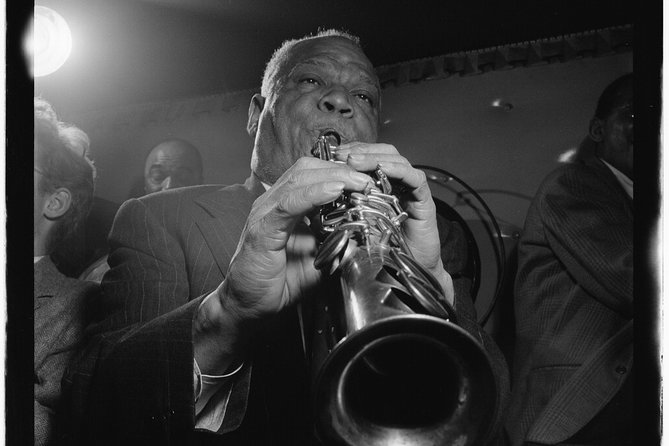
- A/V storytelling built into the walk: you don’t just hear dates, you see recordings and photos as you go.
- Pigalle with performer-level detail: Josephine Baker, Bricktop, Valaida Snow, Eugene Jacques Bullard, Alberta Hunter.
- Strong “connections” thread: Armstrong’s food stop leads to the Django Reinhardt link, not random trivia.
- Small group energy: it’s a private tour for your group only, so questions actually land.
- Easy walking route for most people: around 2 km of walking, with enough time between stops to stay comfortable.
- A special focus on jazz, not literature: if you want writers and social commentary as your main angle, you’ll likely find the music-first approach more satisfying.
Meeting at Artemisia Montmartre: the intro that sets the tone
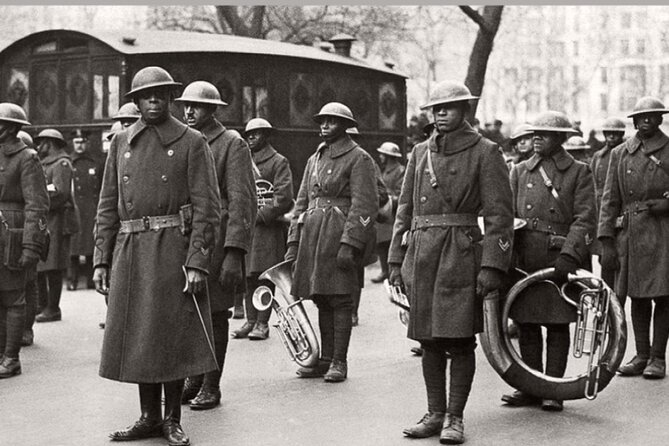
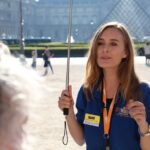
You start at Artemisia Montmartre on Rue Fromentin, and the experience begins with a sit-down intro before you hit the streets. In practice, this first part matters more than it sounds. Instead of spending the walk trying to remember who’s who, Ellen (the guide) sets the stage with a narrative timeline supported by photos and videos, shown like a PowerPoint on a smart tablet.
From the way the session is delivered, you’ll feel the goal is simple: get your bearings fast and make the neighborhood make sense. It’s also a good moment to ask questions before you’re standing outside buildings where you can’t “rewind” the scene and explain it again. Some people like that there’s time to take a breath here, not just keep marching for two and a half hours straight.
Because this is a walking tour, you’ll want to show up ready to move after the intro. The good news: the route is planned to be doable, and the presentation keeps energy high even during the early explanation part.
You can also read our reviews of more walking tours in Paris


Place Blanche and Chez Josephine: Josephine Baker’s Paris landing
The first street stop is at Place Blanche, right next to the spot tied to Josephine Baker’s club, Chez Josephine. This is where the tour’s theme clicks: jazz and African American performers weren’t just visiting Paris—they were leaving a mark.
You learn how Baker was already on a performance track that began in vaudeville shows in Harlem. Then in 1925, she arrived in France to headline the NY Syncopated Orchestra’s new show, the Revue Negre, commissioned for the Theatre des Champs-Elysées. The details given here are what make it stick: 13 dancers, 12 musicians, and Baker at age 18—described as wearing very little more than feathers—plus the fact that the show was audacious enough to fuel her instant rise.
What I like about this stop is the way it connects performance style to cultural impact. You’re not just hearing that she became famous. You’re getting a sense of why French audiences were captivated and how Baker turned the spotlight on a new kind of popular entertainment.
Rue Mansart: Armstrong’s rehearsals, choucroute, and Django Reinhardt
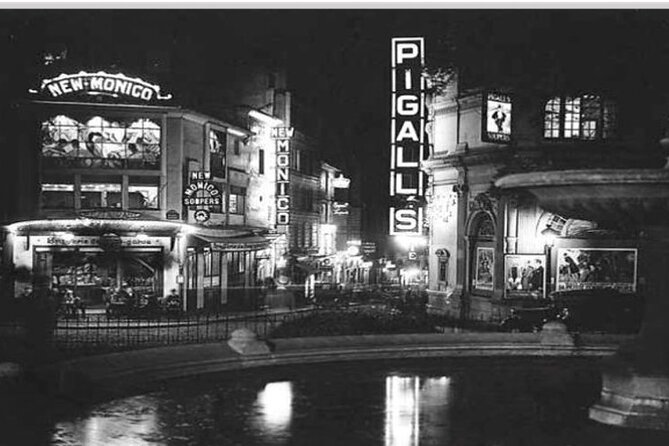
Next you head to Rue Mansart, and this is the sort of stop that makes a jazz history tour feel like a real neighborhood, not a museum lecture. The point here is where Louis Armstrong would dine after rehearsals in a recording studio just up the street.
Then the tour makes the story more specific: Armstrong discovered choucroute (sausage and cabbage) in this area, and it was also where he met local Gypsy Jazzman Django Reinhardt. That pairing matters. It’s not just “Armstrong was in Paris.” It’s the idea of Paris as a meeting ground—where different jazz worlds could brush up against each other and share musical language.
Practical tip: these kinds of street-corner stops are easiest if you take a quick photo or screenshot when the guide mentions key names. The area is active, and it’s nice to have a reference for later when you’re comparing what you saw with what you remember.
Rue Pierre-Fontaine and Zelli’s: Eugene Jacques Bullard at the heart of the scene
At Rue Pierre-Fontaine, you stop in front of Zelli’s, described as a mythical cabaret from the 1920s and one of the city’s most popular jazz clubs at the time—known for avant-garde jazz.
This stop is built around Eugene Jacques Bullard, whose story the tour presents in a way that’s hard to forget. Bullard was the son of a freed enslaved person from Martinique. He became the first African American fighter pilot in history, flying 30 missions for France and downing two German planes—earning promotion to Corporal and the nickname Black Jacques.
Then the tour bridges war to nightlife: after the war, Bullard learned drums and worked as a musician at Zelli’s, eventually rising to manager. With support from Joe Zelli, he opened his own night club, the Grand Duc, which offered a mix of hot jazz and soul food—positioned here as a major crowd-pleaser.
Why this works on the ground: Bullard’s presence gives the tour weight. It’s not only about style and dance. It’s about survival, reinvention, and building a business in a foreign city while staying tied to a sound people were still inventing.
Place Blanche again: Bricktop and Valaida Snow at Pigalle’s jazz-nights edge
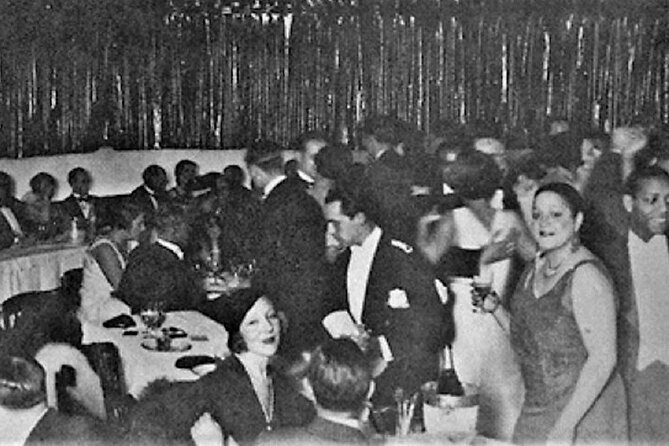
Back at Place Blanche, the focus shifts to the jazz ladies and their legends—two names in particular.
First is Bricktop, Queen of Pigalle, presented as someone who arrived with $24 and later rubbed shoulders with royalty and celebrities. The tour frames her as more than a performer; she becomes part of how Pigalle ran and how reputations were made.
Then you get Valaida Snow, described (with Louis Armstrong’s words) as the second best trumpet player in the world. The tour emphasizes her range: eight instruments plus singing and dancing. She was a European star in the 1930s, and the story turns darker in 1940 when she was arrested by Nazis while playing in Denmark.
The recovery part is also included: saved in a prisoner exchange, she returned to the US with what’s described as a broken state, then rebuilt her career and kept pushing forward in jazz.
If you like your history with character, this is where the tour shines. The street locations connect to big names, but the details keep it human—how the women performed, how they moved through audiences, and what happened when politics slammed the brakes.






Rue Victor Massé: when the club is gone, Alberta Hunter still sings
The final stop is at Rue Victor Massé, and here the tour gets honest about change. The club connected to the story is said to be closed, blamed on Covid. Even so, the tour uses the space to keep the jazz line from snapping.
In front of the closed venue, you hear the Alberta Hunter story. Hunter is presented as an extraordinary blues singer who lived the Jazz Age in both Harlem and Paris. She left music in the 1940s to work as a nurse for 20 years. Then at age 83, she was persuaded to come out of retirement and relaunched her singing career—becoming a star all over again.
This ending is a good lesson for anyone who wants “authentic Paris.” Old nightlife doesn’t always survive intact, but the people behind the sound—and the reason you came—still can.
Walking distance, stroller reality, and what to wear
This tour is built around a walk that’s planned to be manageable. One explanation given for the route length is about 2 km of walking, covering 6 locations. That’s helpful because the guide doesn’t just speed you from stop to stop. You get small chunks of story time at each point.
If you’re traveling with kids, you should know the walking route was described as straightforward even with a stroller. Still, I’d dress for street conditions: comfortable shoes, a light layer, and weather-proof gear if the sky looks uncertain. The experience requires good weather, so if Paris is doing its usual surprise thing, you may be offered a different date or a full refund.
Price and value for a 2.5-hour small group
The price is $107.84 per person for about 2 hours 30 minutes. That’s roughly $43 per hour, which sounds like “a choice,” not a casual add-on. The value comes from what’s included: mobile ticket, and music/photos/videos throughout the tour—plus the guide’s tablet-based media presentation before you walk.
Also, the format is a private tour for your group only. In plain terms: you’re not competing with strangers for time, and questions can stay in the conversation.
To decide if it’s worth it for you, ask a simple question: do you want performer-focused jazz history tied to real Paris streets? If yes, this tour gives you a compact route with strong storytelling. If you’re more into museums, or you want a longer march through dozens of sites, you might prefer a different kind of tour. The lineup here is tight on purpose.
Who this tour suits best (and who might want a different angle)
This is a strong match if you’re a jazz fan, you like names and connections, or you enjoy history that moves at a story pace. You’ll probably love it if you care about African American artists who made Pigalle and Paris nightlife run in the interwar years and beyond.
It also fits well for families who can handle a short walking route plus media presentation. The guide’s style is consistently described as prepared, professional, and energetic—so the tour has momentum even when you’re standing still.
One consideration: this experience stays focused on jazz and performers, not writers or literary figures. So if your ideal Harlem-in-Paris tour would be heavy on famous authors and themes beyond music, you may feel the emphasis is elsewhere.
Should you book Harlem in Paris: the Birth of Jazz in France?
Book it if you want a short, focused jazz history tour that connects major figures—Josephine Baker, Louis Armstrong’s Paris ties, Django Reinhardt’s link through real conversation, Eugene Jacques Bullard’s fighter-pilot-to-drummer arc, Bricktop, Valaida Snow, and Alberta Hunter—into a route you can picture later.
Don’t book it if your priority is covering lots of sites over many miles, or if you want a purely outdoor, “no sit-down intro” format. This one uses the intro to make the walking part land, and some people may prefer more street time.
If you’re on the fence, think of it like this: Pigalle is a place you can wander for hours and still miss the stories. This tour hands you the names, the audio/video context, and the why behind what you’re seeing—so your stroll has a spine.
FAQ
How long is the tour?
It runs about 2 hours 30 minutes.
Where does the tour start and end?
It starts at Artemisia Montmartre, 11 Rue Fromentin, 75009 Paris, and ends at Place Pigalle, Pl. Pigalle, Paris.
What time does the tour start?
The start time is 2:00 pm.
Is the tour in English?
Yes, it’s offered in English.
Is food included?
No, food and beverages are not included.
Are admissions needed at the stops?
The tour notes that admission tickets are free at each of the listed stops.
Is this a small group or private tour?
It’s private for your group only.
Can I bring a service animal?
Yes, service animals are allowed.
Is the route near public transportation?
Yes, it’s near public transportation.