REVIEW · PARIS
Guided tour of the Louvre Museum with tickets included
Book on Viator →Operated by Matteo Allavena · Bookable on Viator
Skip the shuffle at the Louvre. This tight, skip-the-line highlights tour sends you to major works with art-history context that you will not get from a quick walk-through. Led by Matteo Allavena, the pace is designed so the museum does not swallow your day.
I especially liked how the route strings together different eras in a way that makes the Louvre feel like one changing story. You also get a small-group feel, capped at 6 travelers, which makes it easier to ask questions and not just watch from the back. The only drawback to flag: 2 hours is still a sprint in a museum the size of a small city, so you are choosing what matters most rather than seeing everything.
In This Review
- Key Things to Know Before You Go
- Why This Louvre Highlights Tour Feels Manageable
- Getting There: Le Café Marly and the Skip-the-Line Start
- Medieval Louvre Walls and the Tanis Sphinx
- Greek Department Highlights: Athena, Venus de Milo, and Samothrace
- Galerie Apollon: Where the Louvre Stages Its Big Moments
- Medieval Painting and Giotto’s Saint Francis Stigmata
- Grande Galerie: The Louvre as a Building, Not a List
- Classicism Room: Napoleon’s Coronation and David’s Leonidas
- Romanticism Room: Géricault and Delacroix in Full Force
- How the Guide Changes Your Louvre Experience (Matteo Allavena)
- Price and Value: What $114.93 Buys You
- Best for Who: First-Timers, Art Curious People, and Families
- Should You Book This Louvre Highlights Tour?
- FAQ
- Where does the tour start and end?
- How long is the tour?
- Is the tour in English?
- Is skip-the-line entry included?
- How big is the group?
- Are children or young adults eligible for free admission?
- Can I cancel for free?
Key Things to Know Before You Go

- Skip-the-line entrance so you start seeing art instead of standing in heat and crowd noise
- Small group size (max 6) for a more personal, question-friendly tour
- Medieval to Modern jump points: 13th-century walls, ancient stone, Greek masterpieces, and 19th-century paintings
- Galerie Apollon spotlight connects showpiece works and explains why they mattered beyond the Louvre
- Two themed rooms (Classicism and Romanticism) that help you compare styles fast
- Matteo Allavena as guide with quick answers and a clear teaching style in English
Why This Louvre Highlights Tour Feels Manageable
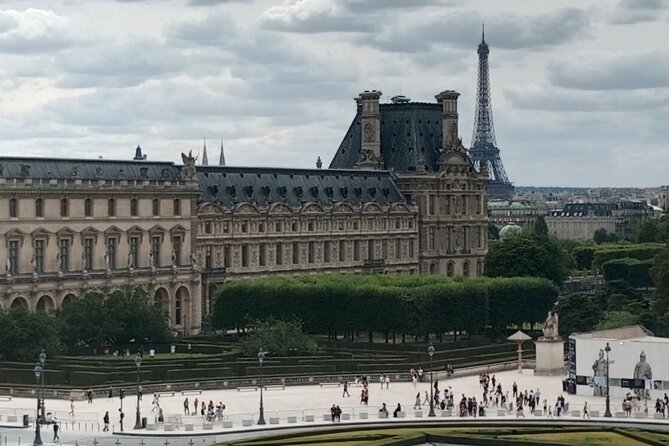
The Louvre is famous for being overwhelming. Not because the art is hard, but because the museum is huge and the decision-making is exhausting. This tour solves that problem with a focused plan that targets the works people actually want to understand, not just stand near.
You are also not paying just for access. You are paying for time, direction, and context. The format is a guided speaker tour (in English) that moves you through a handful of top stops, so you can walk out feeling like you saw the Louvre’s “why,” not only its “what.”
One more smart point: the tour is time-efficient by design. Two hours is short, but it is long enough to connect the dots if you listen and look in the right order.
A few more Paris tours and experiences worth a look



Getting There: Le Café Marly and the Skip-the-Line Start
Your tour begins at Le Café Marly, 93 Rue de Rivoli, 75001 Paris, and it ends back at the same meeting point. That matters because the Louvre area is crowded, and you do not want your meetup to become a mini-hunt.
The good news is the entrance piece is included. Your ticket includes skip-the-line access, plus the entrance fee (28 euros) and the guided experience. Practically, that means you can spend your energy inside, not in the queue.
Also, your group stays small (up to 6). In real life, that changes everything. You can actually hear explanations, and you are not constantly being moved along by a stream of people.
Tip for your sanity: arrive a little early. Even with a guide, the street and storefront area can be hectic.
Medieval Louvre Walls and the Tanis Sphinx
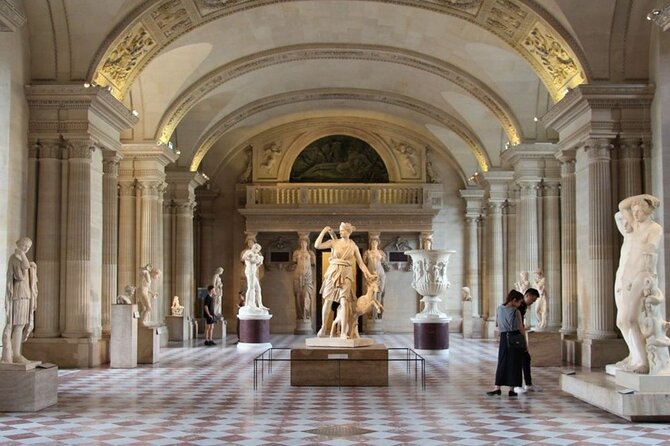
The Louvre is not one “style.” It is a time machine. This tour starts with that idea by taking you to the Medieval Louvre section, including 13th-century walls. Even if you came for painting and sculpture, those walls help you see the museum as a building with layers, not a blank white maze.
From there, you move to the Tanis Sphinx, a 4000-year-old piece. This is a great early choice because it resets your expectations fast. You see something ancient, monumental, and completely different from what most first-time visitors assume the Louvre is.
What I like about this start: it builds curiosity. If you begin with the story of the building and then place an ancient object in your path, you will pay more attention the rest of the tour.
Greek Department Highlights: Athena, Venus de Milo, and Samothrace

Next comes the Greek department, where the tour hits recognizable icons and uses the guide to put meaning behind the famous names.
You will focus on:
- Athena of Velletrie
- Venus de Milo
- Victory of Samothrace
These are exactly the pieces that can be “pretty but blurry” if you are just drifting on your own. A guide helps you slow down and notice details that you would normally miss when you’re trying to beat the crowd.
Also, this part of the tour is a nice reality check. You see how the Louvre can make even well-known works feel new, especially when someone explains how people have looked at them over time.
Galerie Apollon: Where the Louvre Stages Its Big Moments
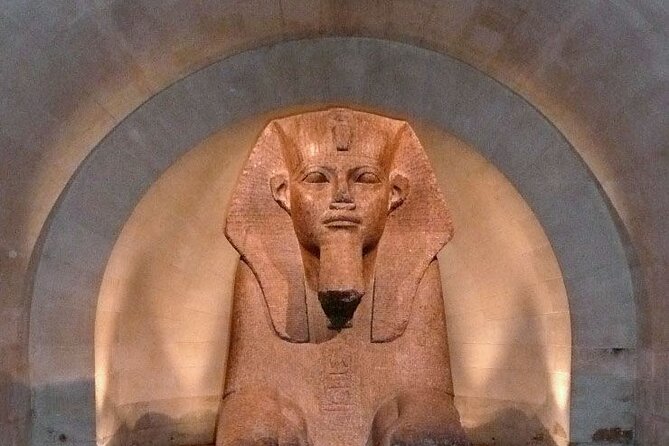
Galerie Apollon is one of those spaces that makes you understand why this museum became a symbol. The tour treats it like a centerpiece rather than a random hallway.
Here, you get to connect multiple showpieces in a single flow:
- Guirlandao’s L’enfant et l’ancien
- Veronese’s Les noces de Cana
- Leonardo da Vinci’s Mona Lisa
The key value is not that you get to see the Mona Lisa. Everyone sees the Mona Lisa. The value is the context: the tour is built to help you understand why it has become iconic and how it fits into the bigger story of the Louvre.
Even better, Galerie Apollon is also tied to a lasting influence: the experience specifically notes that this was the finest piece that inspired Versailles. That kind of link is useful because it helps you see the Louvre as an engine that shaped culture far beyond its own walls.
If you only have a day in Paris and you want the most important rooms without wasting hours guessing where to go, this stop is where you will feel the tour earning its price.
You can also read our reviews of more guided tours in Paris





Medieval Painting and Giotto’s Saint Francis Stigmata
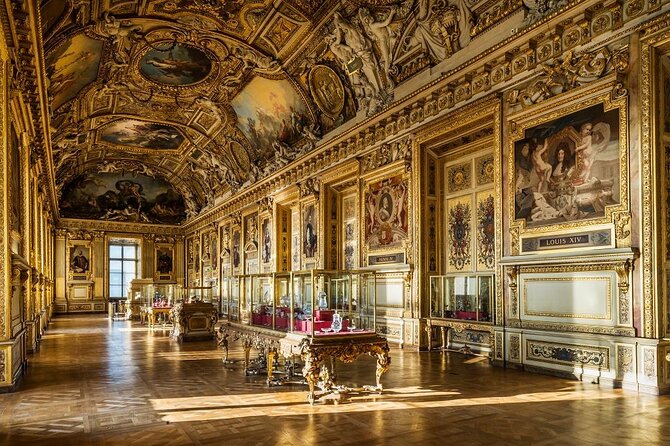
After the ancient and classical stops, the tour shifts into a painting moment that anchors the medieval side of the Louvre.
You will get an explanation of Saint Francis receiving the stigmata by Giotto, described as one of the most important paintings in art history. Even if you are not an art nerd, this is a smart inclusion because medieval painting can feel abstract until someone gives you the entry points to look for.
What you gain here is a better sense of how themes traveled and changed. The guide’s job is to connect subject, style, and meaning so it does not become just a famous title on a wall.
If you tend to skip paintings because you think you will understand them later, this section is a good reason to stop and pay attention.
Grande Galerie: The Louvre as a Building, Not a List
The tour also takes time in the Grande Galerie, described as the Louvre’s immense building. This is not filler. It helps you understand scale, layout, and how the museum frames masterpieces.
You will see works such as:
- Guirlandao’s L’enfant et l’ancien
- Veronese’s Les noces de Cana
- and, again, the Mona Lisa within the flow of the experience
That repeat of major works is intentional. It is how a guide keeps your mental map straight. If you are going to be in a place where everything looks like it belongs in a museum, you need a guide to help you remember what you saw and where you saw it.
Classicism Room: Napoleon’s Coronation and David’s Leonidas
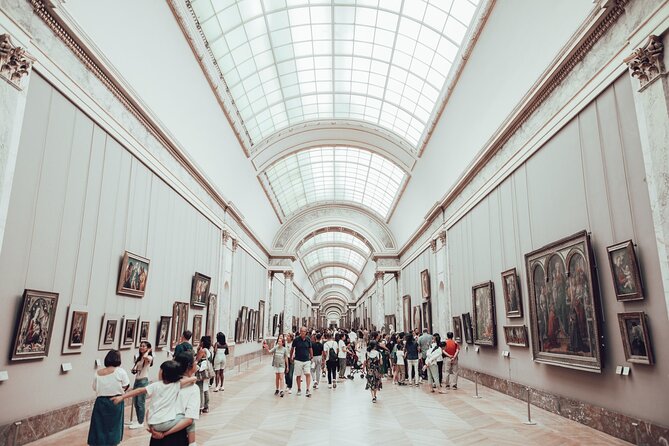
The tour then moves into the Classicism room, where you focus on power, politics, and the strict clarity of neoclassical style.
Two big anchors here:
- The Coronation of Napoleon (painted by Jacques-Louis David)
- Leonidas at Thermopylae by Jacques-Louis David
This is a strong combo because it shows how one artist can treat heroism and leadership through different subject matter. Even without deep art jargon, you will likely feel how the tone shifts from story to spectacle.
I like this part of the tour because it gives your eyes a new job. Instead of hunting for who painted what, you start noticing composition and how the scene is arranged to push you toward certain ideas.
Romanticism Room: Géricault and Delacroix in Full Force
Next is the Romanticism room, where the mood changes.
You will see:
- Raft of the Medusa by Géricault
- Liberty Guiding the People by Eugène Delacroix
This section is valuable because Romanticism can feel different from Classicism in a very immediate way. The subjects lean into emotion and drama, so your attention stays sticky. It is also a good late-stage inclusion since it leaves you with images that feel alive and not just “museum stillness.”
In fact, one of the strongest takeaways from visitor feedback is how the guide turns large history into something you can picture. That approach works particularly well with paintings like these, because the scene practically begs for storytelling.
How the Guide Changes Your Louvre Experience (Matteo Allavena)
Matteo Allavena is the guide behind this tour, and his name comes up again and again in the feedback. The pattern is clear: people liked his professionalism, his friendliness, and his skill at keeping the tour paced so it feels valuable instead of rushed.
A few practical things you will probably notice during the tour:
- The guide handles the order of viewing so the museum does not turn into chaos
- Explanations add context beyond what most guidebooks give you
- The group stays small enough that questions do not get ignored
- The tour aims to maximize what you see in two hours, not just get you inside
One real-life bonus from the experience description and feedback: when there was a small ticket-related snafu for one booking, Matteo handled it and provided a refund for part of the tour. That is not something you can plan for, but it speaks to how the experience is managed on the ground.
Price and Value: What $114.93 Buys You
At $114.93 per person, this is not a bargain tour. But it is also not a random markup.
The entrance ticket is included (28 euros), and the real value is the skip-the-line access plus an English-speaking guide who helps you see more of the right things in the right order. In practical terms, that can mean the difference between:
- spending your energy stuck in a queue and rushing through rooms later, versus
- entering, understanding what you are seeing, and leaving with a mental map
There is also the small group size. Up to 6 travelers means you are less likely to feel like a number.
If your day is tight, or you do not want to gamble with a self-guided route through the Louvre’s biggest rooms, this looks like strong value.
Best for Who: First-Timers, Art Curious People, and Families
This tour fits best if you:
- want the Louvre’s top highlights without spending your morning planning
- feel overwhelmed by huge museums and prefer a firm route
- like having context that makes famous works easier to understand
- want a tour that keeps moving but still leaves room to absorb
It also appears to work for families. A couple of bookings specifically call out that the guide did well keeping kids interested and answering questions patiently.
If you are an expert who wants to spend hours in one department, this likely will feel short. But if you want a high-impact overview that makes the Louvre feel less intimidating, it is a good match.
Should You Book This Louvre Highlights Tour?
I’d book it if you want a time-efficient Louvre experience with included tickets and a real guide plan. The skip-the-line entry, the small group size, and the specific focus on major stops like Galerie Apollon and the Classicism vs Romanticism rooms all point to a tour that is built to reduce stress and increase understanding.
I’d think twice if your main goal is total depth across the entire museum. This is a highlights route in about 2 hours, so you will leave wanting more. The difference is that you will know exactly where to go next.
FAQ
Where does the tour start and end?
It starts at Le Café Marly, 93 Rue de Rivoli, 75001 Paris, France, and it ends back at the same meeting point.
How long is the tour?
The tour lasts about 2 hours.
Is the tour in English?
Yes, it is offered in English.
Is skip-the-line entry included?
Yes. The tour includes skip the line, plus the Louvre entrance fee.
How big is the group?
The tour has a maximum of 6 travelers.
Are children or young adults eligible for free admission?
Free admission applies to visitors under 18 and EEA residents under 26, with valid ID and proof of residency.
Can I cancel for free?
Yes. You can cancel up to 24 hours in advance for a full refund. Changes within 24 hours of the start time are not accepted.